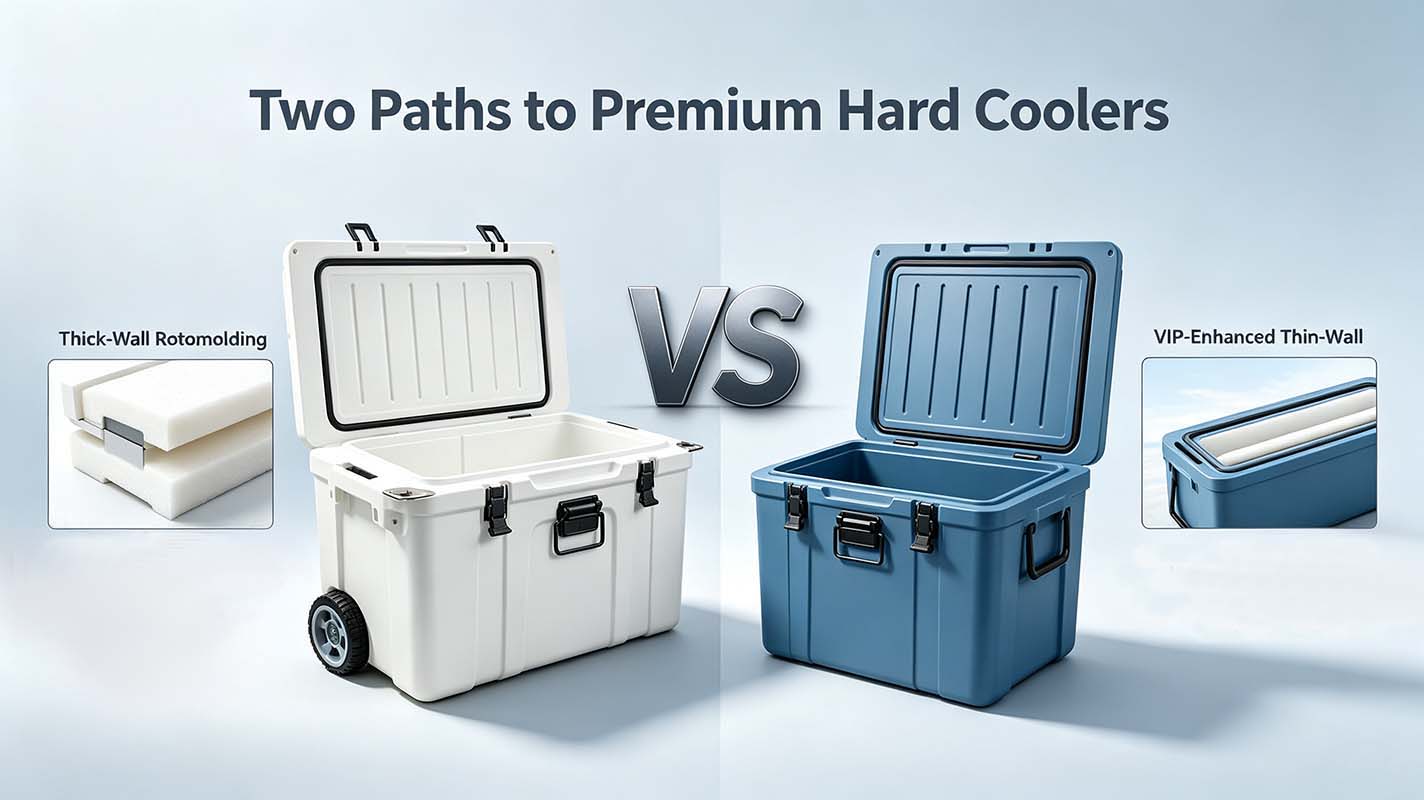
Nowadays, the premium hard cooler market is dividing into two major tracks. One is the rotomolded plastic cooler: thicker walls, more foam, larger boxes. This mature technology has made famous brands such as Yeti and RTIC, and the ice retention time of the box can reach 5-7 days. The other is an emerging player—a cooler equipped with a vacuum insulation board (VIP). The wall of the box is extremely thin and light, and the thermal performance rivals foam five times its thickness; However, the production process threshold is extremely high, and the production problems such as easy breakage of plates, edge sealing, and temperature leakage, are endless.
Both types of products belong to high-end racetracks, which have the same outstanding ice retention effect, and the consumer markets and target groups are very different, and the whole supporting supply chain system is completely incompatible.
From the perspective of manufacturers, this guide compares and disseminates two technical paths one by one. And as an experienced manufacturer of hard coolers, KingStar is here to help you identify your brand positioning and make the right decision of sourcing.
What Is Rotomolding & Why Does It Dominate Premium Cooler Manufacturing?
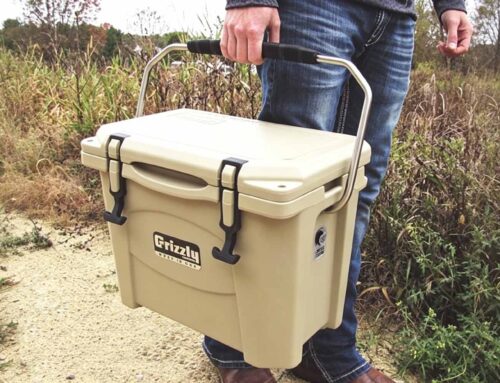
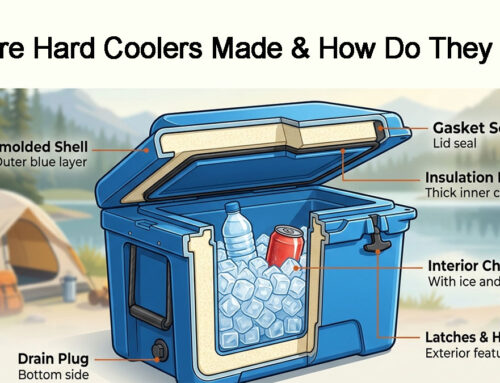
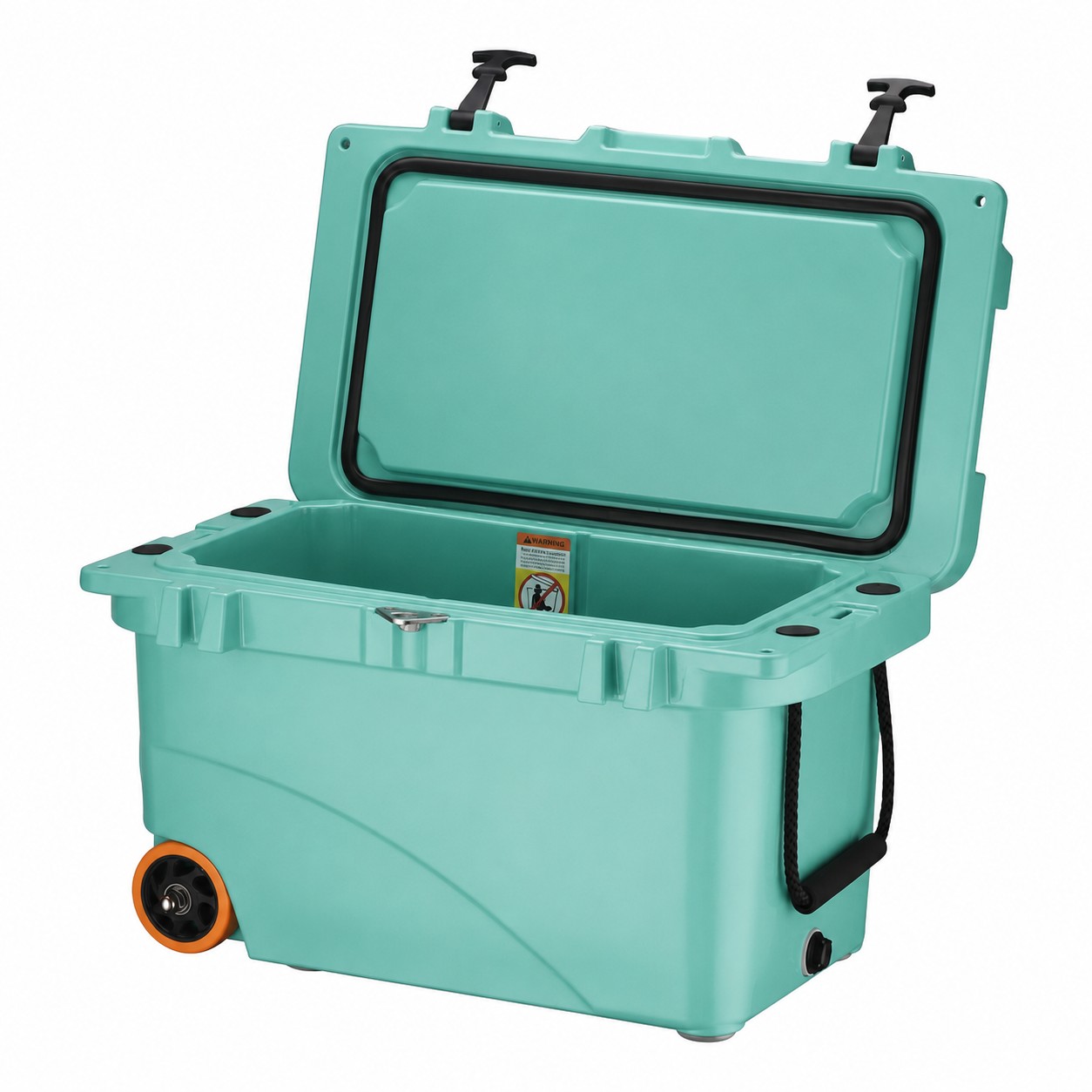
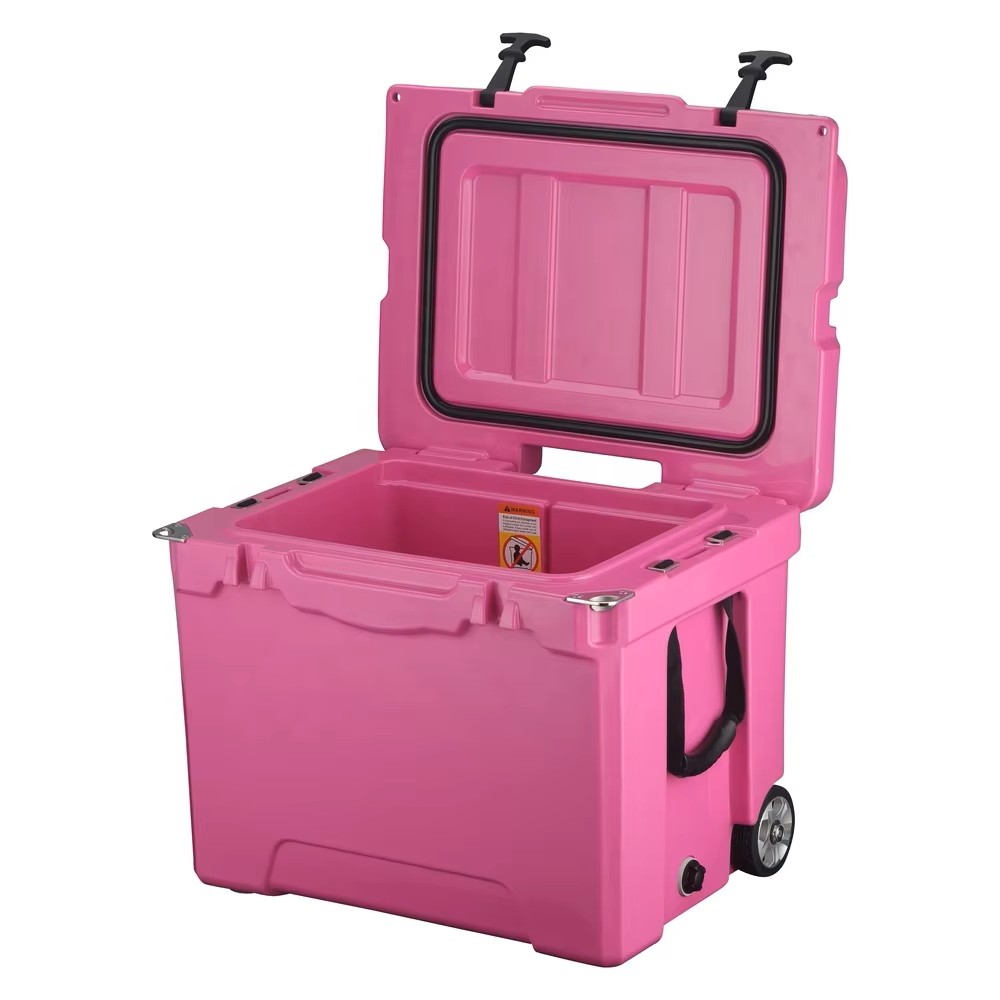
Rotomolding is also known as rotational molding. During production, polyethylene plastic powder is first poured into a hollow steel mold with the same shape as the cooler, and then the mold is sent to a large industrial oven for multi-axis slow rotation and heating. After the plastic is heated and melted, it is uniformly attached to the inner wall of the mold, and after cooling and demolding, an integrated box body can be obtained, and there are no bonding gaps and welding weak points, and the wall thickness of the box body is thicker.
The distinctive characteristics of rotomolded coolers
Cost and production considerations
Rotational molding is a slow production process. The complete production process of a single box takes 30-45 minutes, which takes a long time to cool and needs manual post-trimming; it takes nearly one hour to finsh 2-3 rotomolded plastic coolers.
| Cost item | Rotational molding process | Notes |
|---|---|---|
| Mold opening cost | 5,000–20,000 dollars | Compared with injection molding, the cost is moderate. |
| Single production cost (50 quart specification) | 25-60 dollars | The manufacturing process of various boxes has high cost. |
| Single production cycle capacity | About 2–3 units/hour | Heating and cooling processes take a long time, which restricts productivity. |
| Box wall thickness | 5–15mm | The overall thickness is even, and the corners are extra thickened. |
| Terminal retail pricing range | More than $160–600 | Covering professional durability to flagship top allocation |
What Is a Vacuum Insulation Panel and How Does It Work in Cooler Design?
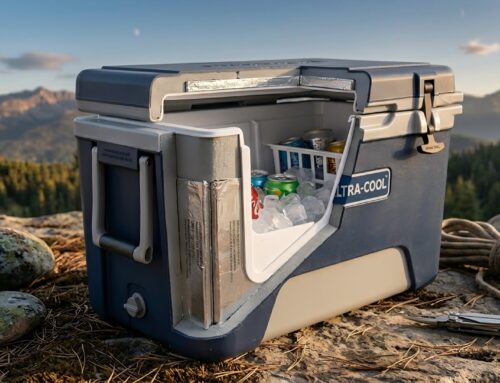
Vacuum insulation board is a completely different heat insulation solution. The interior of the plate is a porous core material, and the mainstream is fumed silica, glass fiber and other materials; The outer multilayer aluminum-plated barrier film is completely sealed, and the internal air is pumped to extremely low pressure, and the air pressure is controlled within 0.07 PSI.
The working principle is elegantly simple
The thermal conductivity of the final product is only 0.004–0.008 W/(m·K), so it is clear to visually compare the differences of various thermal insulation materials:
| Heat insulating material | Thermal Conductivity (W/m·K) | Thermal insulation performance comparison |
|---|---|---|
| Vacuum insulation board VIP | 0.004–0.008 | Top level |
| Polyurethane foamed PU | About 0.024 | The thermal insulation effect is only 1/5–1/10 of that of VIP. |
| Extrusion/polystyrene foaming XPS/EPS | 0.033–0.040 | The thermal insulation effect is only 1/8–1/10 of that of VIP. |
| Glass wool/mineral wool | 0.030–0.050 | The heat insulation effect is only 1/10 of that of VIP. |
However, the production difficulty of vacuum insulation board is very prominent: the board itself is very fragile. In the assembly process, once the barrier film is punctured, scratched, and cracked, air will flow in instantly, and the thermal insulation performance of the board will be greatly reduced. Edge sealing is also a big problem, and the thermal bridge formed at the edge of the plate will continue to leak temperature and must be carefully treated. A large number of patent documents have also confirmed that VIP production has always been difficult to overcome with two major pain points: ensuring uniform edge sealing thickness and avoiding the formation of thermal bridges around the plate.
What Are the Key Performance Trade-offs Between Rotomolding and VIP-Enhanced Coolers?
There is no absolute difference between the two processes. The key is whether the product choice matches the brand market positioning.
| Performance dimension | Rotational molding process box | Vacuum insulation board VIP box | Actual impact |
|---|---|---|---|
| Impact resistance and fall resistance | ★★★★★ | ★★☆☆☆ | Rotational molding, thick corners, strong cushioning and impact resistance; The VIP core plate is fragile, and the heat insulation ability is directly lost when the plate is damaged. |
| Thermal insulation and cold preservation performance | ★★★★☆ | ★★★★★ | VIP insulated ceiling when the plate is in good condition; In-situ injection foaming of rotational molding has stable and reliable performance, and there is no risk of single-point damage and scrapping of the whole machine. |
| Overall weight | Heavy | light | The VIP box body is thin, the whole machine is light, the handling is labor-saving, and the logistics freight can be reduced. |
| Single production cost | 25-60 dollars | Significantly higher | VIP raw materials are expensive and the assembly process is complicated, which drives up the cost of a single piece. |
| Service life of products | Long—handles abuse well | Limited by the life of vacuum plate | Rotational molding box can be used for decades in normal use; The vacuum inside VIP will decay with time, and the outer barrier film will age. |
| production efficiency | Low productivity (2–3 units per hour) | The productivity is faster, but the assembly process is complicated. | The biggest shortcoming of rotational molding is that the heating and cooling cycle is too long, which slows down the overall production capacity. |
| Mainstream applicable scenario | Outdoor recreation, sea fishing, hunting and camping | High-end cold chain transportation, drug insulation, light and luxurious portable refrigeration equipment |
The core difference: mass production of tens of thousands of units, stable performance of rotational plastic box, minimal fluctuation of quality control; The insulation effect of VIP box is top-notch, but the premise is that the plate is in good condition, the edge is in place, and a damage will completely pull the crotch.
What Does a 50 QT Rotomolded Cooler Cost to Produce?
Take the mid-range 50 QT rotomolded cooler as an example, the FOB range of domestic factories is 30-60 USD/set; The total landing cost of shipping to the west coast of the United States, including shipping, customs duties and distribution, is about $52.
| composition of cost | Amount (USD) | F.o.b. ratio |
|---|---|---|
| Linear low density polyethylene raw material (about 4.5 kg) | 6.50 | 12% |
| High pressure pouring polyurethane foaming | 5.00 | 9% |
| Stainless steel hardware (lock, hinge, handle, drain valve) | 7.50 | 14% |
| Rubber sealing strip | 1.50 | 3% |
| Production labor and energy consumption cost | 8.00 | 15% |
| Packaging (color box, instruction manual, sticker label) | 3.00 | 6% |
| Sharing the cost of testing and certification. | 2.00 | 4% |
| Factory operating expenses+manufacturer's profit | 8.00 | 15% |
| Total FOB unit price | 41.50 | 78% |
As a reference, the factory production cost of the Yeti 50 QT cooler with a retail price of $300-350 is in the range of 60-100 dollars, and the difference is all from the brand premium.
On the other hand, the cost of raw materials for a vacuum insulation board box is much higher. The unit price of a 20 mm thick VIP sheet is over €70/m, and the 50 mm thick EPS foam material under the same area only needs €7-8. This also determines that VIP coolers can only seize the top track of the market and are mostly used for cold chain logistics, drug transshipment, and high-end luxury consumer brands.

Click and read more about VIP coolers: Cooler Structure: Why Vacuum Insulation Panels Are the Secret to Extended Ice Retention
When Should You Choose Rotomolding Over VIP? And When Does VIP Make Sense?
Choose Rotomolding When:
- Target customers value sturdiness and durability: sea fishing, wild hunting, cross-country self-driving, and offshore operation, and boxes are often dropped, bumped, and roughly handled.
- Large-scale shipment requires stable quality control: the failure rate of rotomolded products is much lower than that of the VIP assembly process, and the performance of tens of thousands of units is unified and stable.
- The retail price of the terminal is set at $160-290 or less: the rotational molding cost system is suitable for this price, and it is difficult for VIP to make a profit.
- Users expect the product to last for more than ten years: there is almost no upper limit for the service life of the rotomolded box, and the vacuum performance of VIP will decline year by year.
Mature solutions that want to be verified by the market: Yeti, RTIC, Pelican, Grizzly, and other head brands all rely on the rotational molding process to build tens of millions of mass product lines.
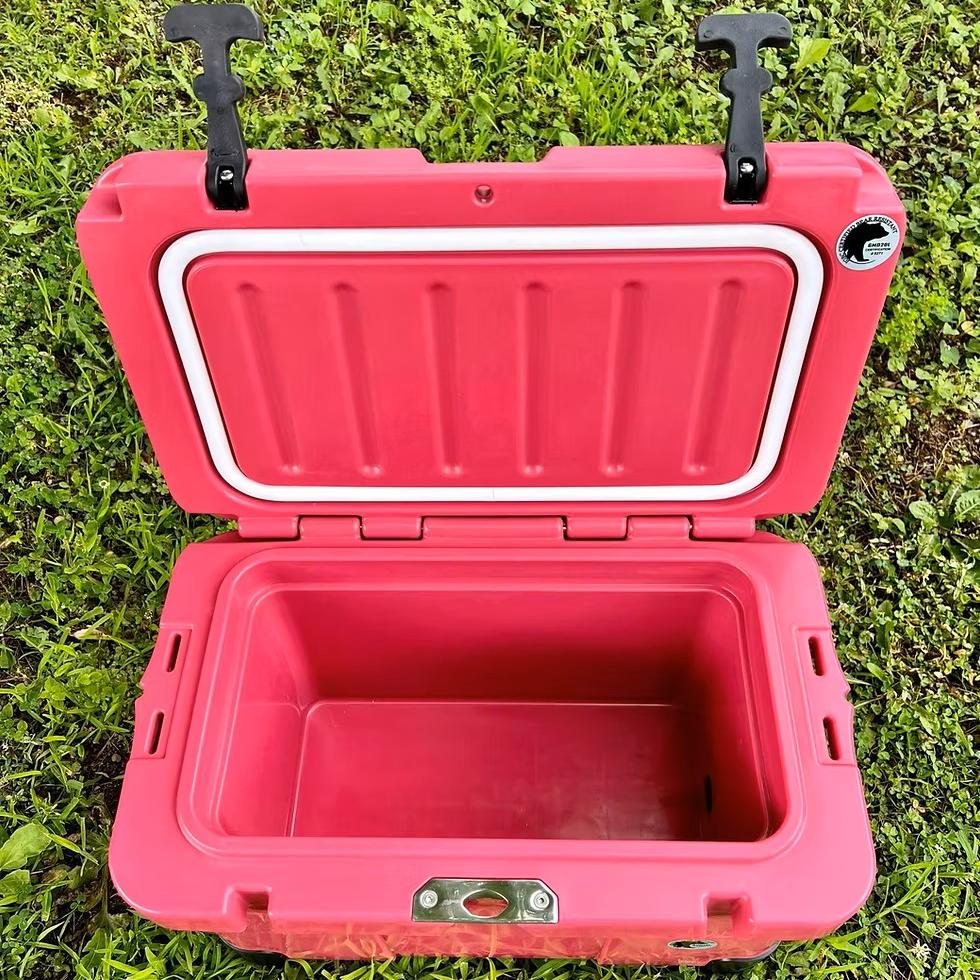
Rotomolded Plastic Coolers

VIP-Enhanced Hard Coolers
Choose VIP-Enhanced When:
- Ultra-thin box and lightweight are hard requirements: every millimeter of wall thickness and every point of weight are very important, and weight reduction can save freight and enhance portability.
- Customers attach great importance to the effect of cold preservation, rather than the ability to resist falling: cold chain logistics, medical drug transshipment, high-end luxury product lines, and temperature control are the first appeals.
- Products are stored and transported in a standardized way throughout the whole process, and there will be no smashing, heavy pressure, or rough loading and unloading.
- Brand positioning is high-end and can support high pricing: the high production cost brought by VIP can be passed on to the terminal price of more than $600.
- The Red Sea market creates a differentiated selling point: equipped with a VIP thin-walled design, it can produce innovative and top-notch cooler labels.
Which Production Partner Should You Choose for Your Cooler Project?
The manufacturer that can master the rotomolding and VIP production lines at the same time is the best partner for the following reasons:
One-stop production with a single supplier reduces the risk of cooperation. With the separate docking, rotomolding, VIP assembly, and hardware fittings factory, the communication cost doubles, and it is difficult to trace the quality problems. At the same time, manufacturers that master two sets of processes can smoothly complete the whole process from proofing to mass production, no matter which scheme is finally selected.
The advantages of regional industries cannot be ignored. More than 60% domestic professional cooler manufacturers are concentrated in Zhejiang, where the industrial chain is highly integrated, and heat insulation materials, rotational molding equipment and hardware accessories can be purchased locally, and the delivery cycle can be shortened by half at most; Guangdong production area is good at mass production, and its export facilities are mature, which is suitable for large-scale orders.
Conclusion: Two Technologies, One Decision
Rotational molding technology and VIP thin-walled design are two completely different ways to solve the problem of ice retention performance. One prioritizes durability and predictable performance; the other is the pursuit of extreme heat insulation, at the cost of greatly reducing the resistance of the box.
There is no universal optimal scheme, and the final choice depends entirely on brand positioning, target customers, and cost budget. The most successful cooler brands—whether they follow Yeti’s rugged rotomolded path or VIP’s thin-walled efficiency—share one thing in common: a manufacturing partner who understands the trade-offs and can execute flawlessly. If you have any questions about hard cooler manufacturing, welcome to contact us through sales@waterbottle.tech. We will reply to you within 24 hours.
FAQ
References
Global Insulated Cooler Market (2025-2031), https://www.6wresearch.com/industry-report/global-insulated-cooler-market
Popular Mechanics — Rotomolded vs. Injection-Molded Coolers (2025), https://www.popularmechanics.com/adventure/outdoor-gear/a69275052/rotomolded-vs-injection-molded-coolers/
KingStar Industries — Hard Cooler Production Cost Breakdown (2026), https://www.waterbottle.tech/hard-cooler-production-cost-breakdown/
RSC Advances — Aging behavior of polymeric-fiber based VIPs (2025), https://www.sciencedirect.com/org/science/article/pii/S2046206925022788
ScienceDirect — Double envelope vacuum insulation panel (2024), https://www.sciencedirect.com/science/article/abs/pii/S0042207X24006456

Specializing in custom manufacturing, quality control and marketing of vacuum-insulated drinkware and coolers.