Kickstarter is the most reliable reward-based crowdfunding platform in the world, which specializes in supporting creative, design, and technology projects and adopts the all-or-nothing funding model. It is a high-risk, high-reward game to launch cooler products on it.
Only by understanding what the backers want can you raise enough funds and gain a group of loyal customers. But once you can’t control the production quality or misjudge backers’ needs, your project will probably become one of many failure cases.
This guide combines our real first-line production experience and, at the same time, analysis of some Kickstarter cooler projects during the past few years. The article will make it clear what buyers of high-end coolers value, why Yeti, Coleman, ORCA and Grizzly set the industry production quality benchmark, and how to screen factories that can match the standard. And also we’ll teach you how to avoid the common cost and production mistakes.
What Do Kickstarter Backers Actually Want From a Premium Cooler Campaign?
Many first-time creators take it for granted that everyone is hoarding coolers on Kickstarter for either a lower price or the most features. However, after comparing the successful and failed projects, we come to the opposite conclusion: the backers value credibility first, and the products rank second. They are betting that you can hand over a high-quality product that matches your promises. As long as you can prove your reliability, they are willing to pay the bill even if the price is higher.
The Top 5 Decision Drivers for Cooler Project Backers
We disassembled the campaign page, update history, buyer’s comments, and final funds of each project and then sorted out several key factors related to high funds and conversion rates and ranked them by weight.
| Rank | Decision Factor | Estimated Weight in Conversion | Notes |
|---|---|---|---|
| 1 | Project credibility | 35% | Projects with physical prototypes can raise funds about 2-3 times more than those with only 3D renderings. |
| 2 | Niche Market | 25% | Projects that focus on fishing, boating, cross-country self-driving have about 30% higher success rate than those that have general-purpose positioning. |
| 3 | Early bird price positioning | 20% | We found 55%-65% of the planned retail price is perfect for coolers crowdfunding. |
| 4 | Clear manufacturing & delivery timeline | 15% | Projects with clear manufacturing partners and transparent production plan are 1.4 times more likely to hit promised delivery dates. |
| 5 | Founder story & brand mission | 5% | The cases that we have compiled show that the conversion rate of coolers that focuses on "Made in USA" or environmental protection is expected to increase by 8%–12%. |
Credibility is the most critical factor. Many backers have seen crowdfunding failures, so they will take the initiative to look for all kinds of risk signals: generic renderings, vague production plans, and exaggerated promotion.
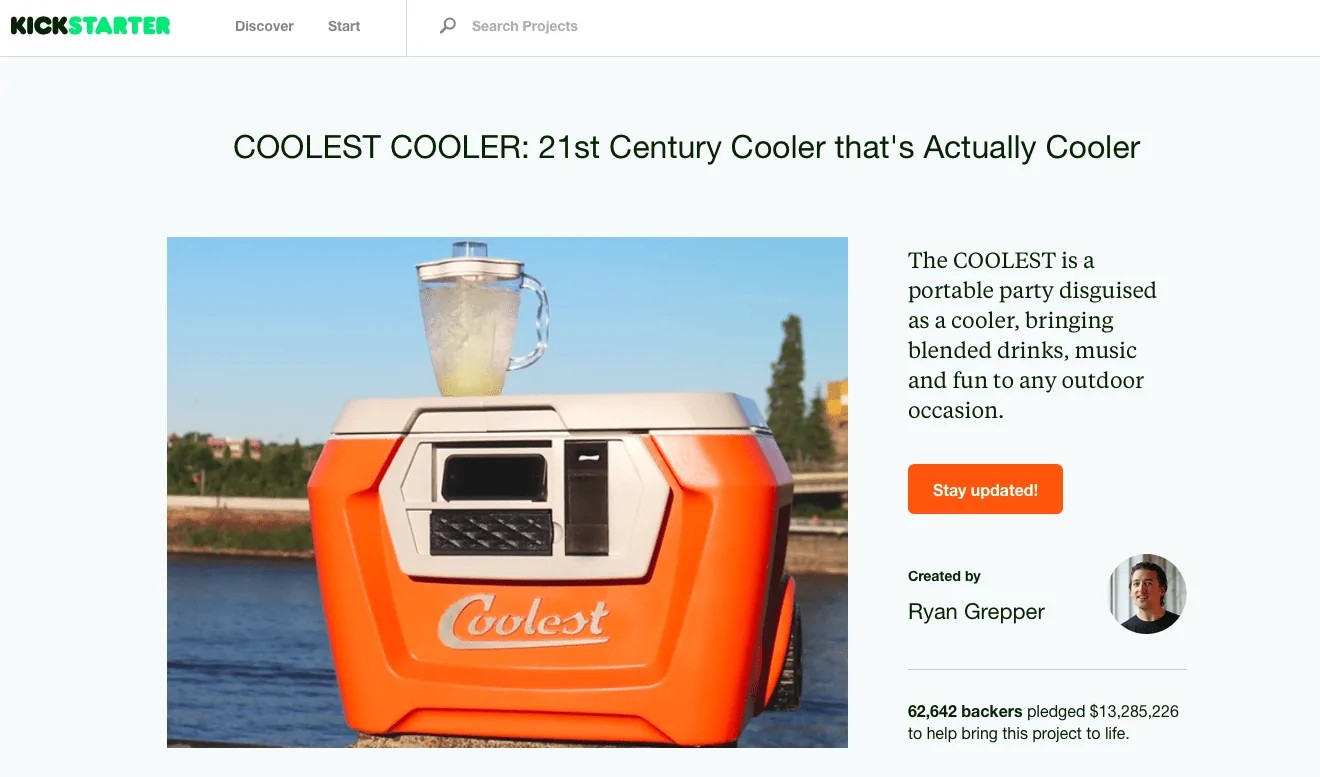
A typical example: the 2014 Coolest Cooler campaign attracted 62,642 backers and raised a total of $13.3M, which once ranked second on the Kickstarter platform. However, this project completely collapsed in 2019, and nearly 20,000 supporters are left empty-handed. The reason is simple: underpricing and unforeseen 25% import tariffs. It is no wonder that backers will regard the reliability of the project and delivery certainty as the most important standard.
What Successful Campaigns Get Right (And Failures Miss)
The well-done coolers crowdfunding project will not directly compete with Yeti. They will find a niche segmentation market and own it. For example, floating coolers for boaters, mini models for backpackers, and fishing coolers with fishing consoles and built-in rulers for fishing lovers have better performance than general-purpose 45 QT coolers.
Successful projects also have one thing in common: they set a conservative fundraising goal. Kickstarter data shows that the target amount of outdoor hardware projects is set at $5,000 to $10,000, and the success rate is about twice that of projects with a target of $50,000 and above. The threshold is set low, so it can quickly reach the fundraising standard and trigger the platform algorithm support.
On the other hand, there are three kinds of common mistakes in failed projects: they only have CAD renders and no prototype, pricing is close to established brands, or they simply pile up many functions.
Reward Tier Design That Maximizes Backer Conversions
How to plan the reward tier structure directly determines the quality of your conversion rate. For coolers, the best solution is very simple: a low-cost early-bird tier, a regular standard tier, a multi-pack tier, and a high-end tier with all the accessories.
During the crowdfunding period, it is enough to make only one or two sizes for the main product specifications. If the size and color options are piled up, the later delivery will be a mess, and the production risk will increase exponentially. After the mass production process is stable, you can always add SKUs.
Finally, be conservative with your delivery estimate. You can add 4-6 weeks of buffer to the factory’s quoted lead time. Backers can accept short-term delays, but they can’t tolerate repeated delays and keep silent all the time. So instead of giving an optimistic delivery date that you can’t catch up with at all, it is better to synchronize the production schedule regularly and truthfully, and transparent communication is easier to retain the trust of customers.
What Makes ORCA and Grizzly Coolers the Gold Standard for Manufacturing?
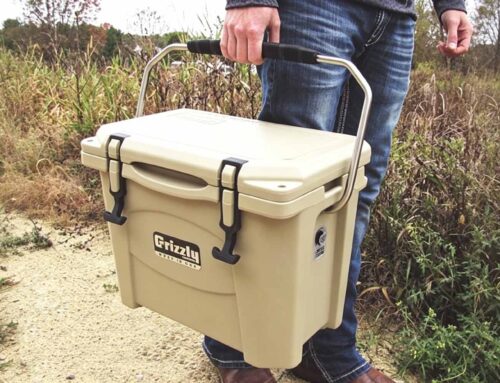
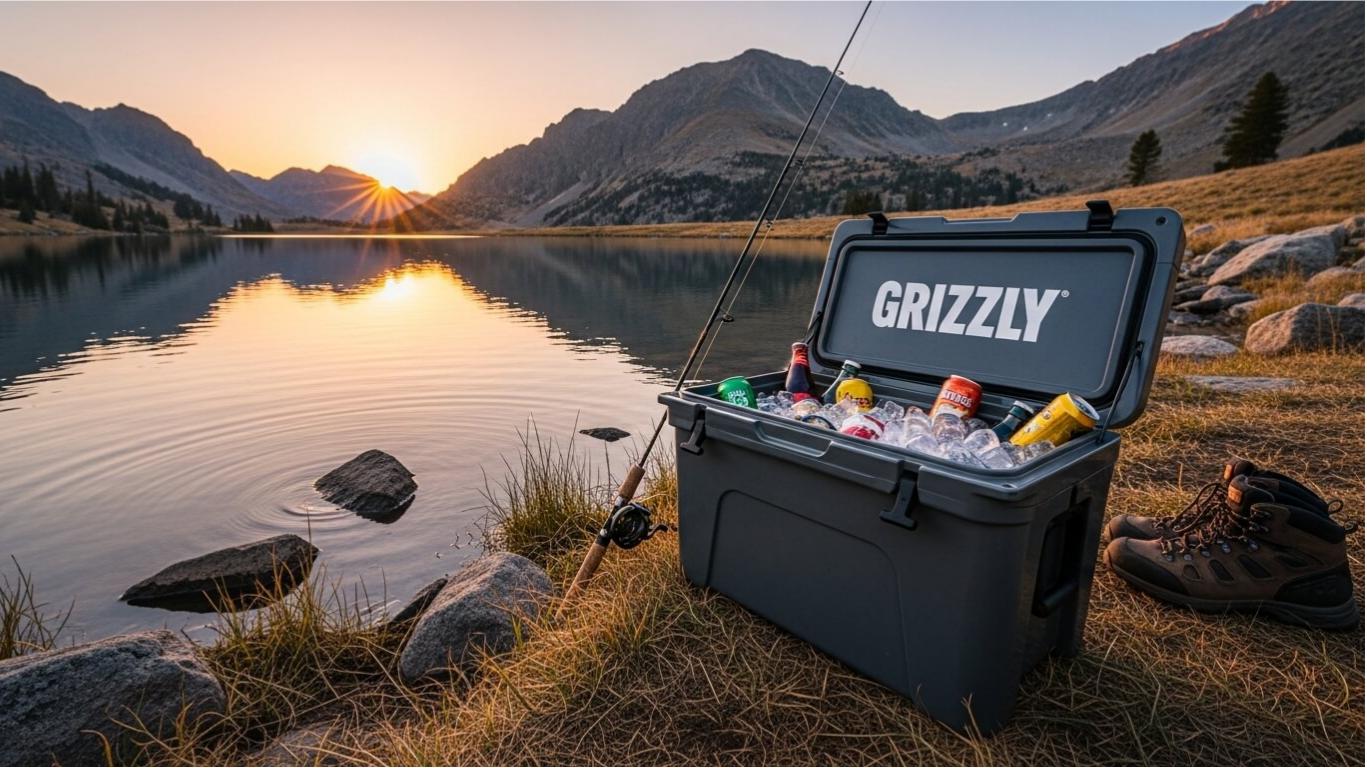
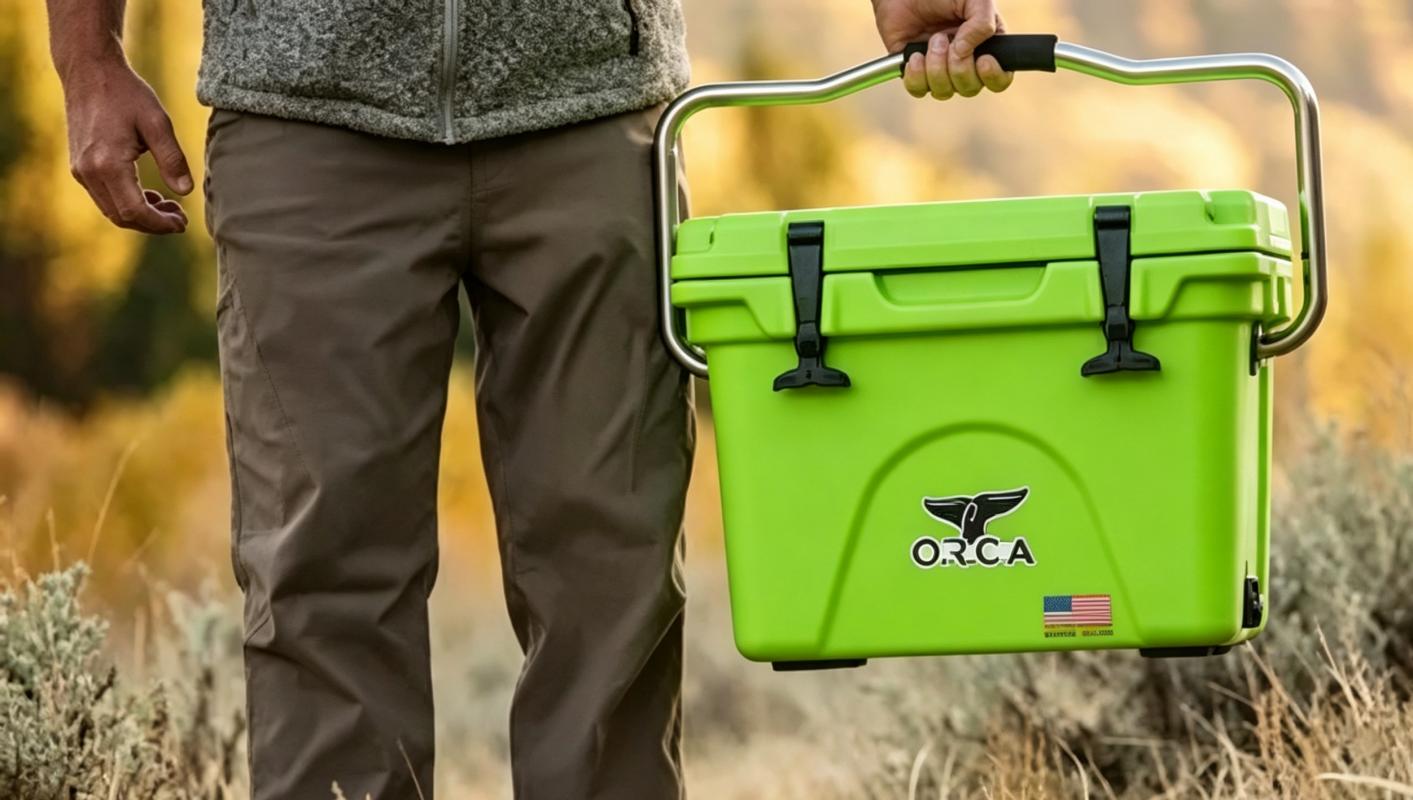
When backers see the phrase “premium rotomolded cooler” on a Kickstarter page, they will subconsciously compare your products to Yeti, Coleman, ORCA and Grizzly. These are cooler brands made in the United States with top reputations. You need to understand why these two brands can stand out among countless ordinary imports on the market.
Rotomolding Craft & Material Science: The Core of Premium Quality
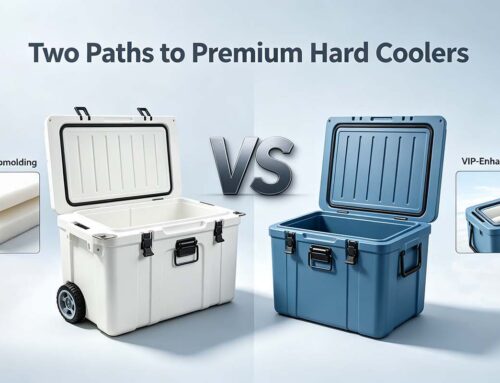
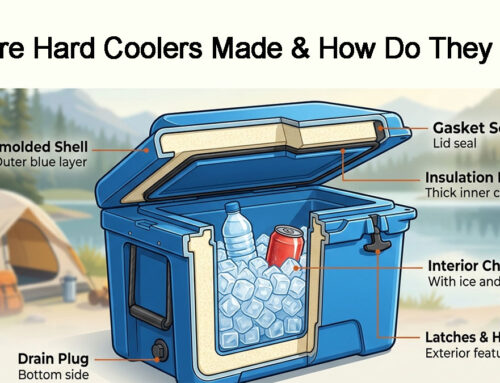
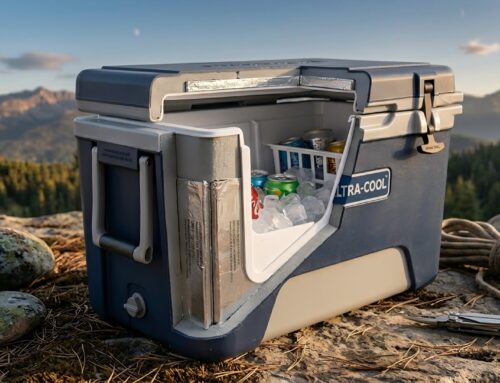
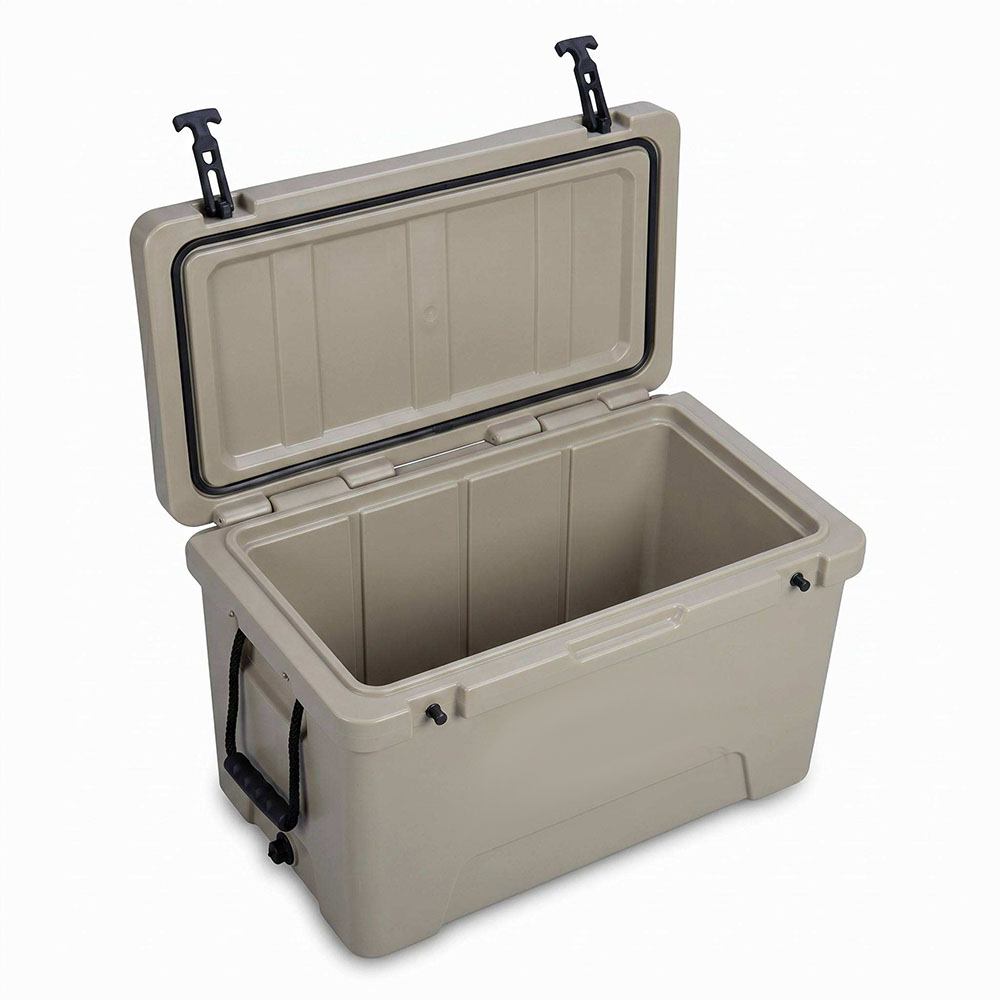
All high-end coolers are produced by rotational molding technology, which can integrally form a jointless box with uniform wall thickness. The differences between ORCA and Grizzly premium coolers and other cheap alternatives are mainly reflected in three points:

Consistent wall thickness: The insulation wall thickness of the high-end cooler is maintained at 2-3 inches, including corners and lids. Coolers made by cheap molds easily wear out, and it’s easy to cause weak points, thus undermining ice retention performance.

High-density foam insulation: High-end coolers are filled with polyurethane foam with a density of 40kg/m³ under high pressure without voids. Low-density foam is often used in budget coolers and their ice retention performance is greatly reduced.

Food-grade LLDPE resin: Top brand only uses brand-new and ultraviolet-resistant linear low-density polyethylene. Recycled materials and low-grade resin will become brittle under sun exposure and low temperature, and they will easily crack on impact.
The differences between these materials and processes are completely invisible in the 3D renderings. But once backers actually use the coolers, it’s easy to find out quality problems.
Performance Benchmarks: Ice Retention, Durability & Certifications
Both ORCA and Grizzly products are built according to strict outdoor standards, but their design focuses are slightly different. The following table visually compares the core production process and performance parameters of the two brands.
| Specification | ORCA Coolers | Grizzly Coolers |
|---|---|---|
| Construction | Rotomolded one-piece LLDPE shell | Rotomolded one-piece LLDPE shell |
| Insulation wall thickness | 2–3+ inches | 2–3 inches |
| Foam type | Pressure-injected polyurethane | Ecomate polyurethane (zero GWP) |
| Ice retention (80°F, 2:1 ice-to-contents) | 8–10 days | 7–9 days |
| Seal system | Freezer-grade rubber gasket | Heavy-duty rubber gasket |
| Latch system | Heavy-duty T-handle latches | Patented Bearclaw™ latches |
| Hinge design | Integrated full-length hinge | Full-length stainless steel pin hinge |
| Key certifications | FDA food-safe, IGBC bear-resistant (select models) | IGBC bear-resistant, FDA food-safe |
| Warranty | Lifetime | Lifetime |
Experienced backers will use this set of standards to measure all crowdfunding cooler projects advertised as “premium.” Third-party authority certification such as IGBC bear resistance is also a powerful bargaining chip to build trust, especially suitable for backers who often camp in bear country.
Made in USA vs. Overseas Production: The Quality Reality
ORCA and Grizzly are all manufactured in the USA, and “Made in USA” is a big selling point for many Kickstarter backers. However, the disadvantages of local manufacturing are also very prominent: higher costs, higher MOQ, and longer delivery times for new molds. For first-time creators, they usually can’t afford to manufacture “Made in USA” coolers.
Fortunately, people’s evaluation of cooler quality does not depend entirely on the place of production. A few experienced overseas factories, equipped with modern rotational molding equipment, improved quality control, and selected high-end raw materials, have made finished products that can fully meet the standards of American brands and, in some cases, are even better.
Fewer than 15% of factories can meet the standard, so you need to strictly inspect the factory on the spot, comprehensively test the sample, and report where your cooler is made truthfully.
How Do You Source a Rotomolded Cooler Manufacturer That Delivers ORCA/Grizzly Grade Quality?
It is not easy to find a reliable rotomolding factory. Most factories only specialize in one route: either low-cost mass production or small-batch customization, and few can do both modes well.
7-Point Factory Audit Checklist for Premium Cooler Production
We have been deeply involved in the cooler supply chain and production industry for many years and sorted out a set of standardized audit systems to screen cooler manufacturers. Before signing any contract, all the following 7 areas must be checked in place:
- 1
Equipment & mold capacity: equipped with 4 or 6-arm bi-axial rotomolding machine, and digital temperature control.
- 2
Raw material supply channel: It can stably supply brand-new ultraviolet-resistant LLDPE raw materials and high-density polyurethane foam, and its qualification can be verified.
- 3
In-house foam injection: independent foam work area, equipped with foam filling equipment with controllable pressure.
- 4
Complete quality control process: simultaneous detection of box wall thickness, sealing performance and drop test of the whole machine during production.
- 5
R&D strength of self-developed engineering: have their own mold design and prototype iteration team.
- 6
Compliance certification: ISO9001, FDA food contact certification and BSCI, and IGBC.
- 7
Mature OEM case: once worked for a well-known outdoor brand with premium coolers.
MOQ, Lead Times & Mold Costs: Real Industry Benchmarks
Many people who just start a cooler business will be surprised: a finished cooler has not yet been produced, and a lot of time and money will be invested in molds. The following table will show realistic industry benchmarks for rotomolded coolers:
| Project Stage | 20qt Cooler | 45qt Cooler | 75qt Cooler |
|---|---|---|---|
| Aluminum mold cost | $8,000-12,000 | $12,000-18,000 | $18,000-25,000 |
| Mold development lead time | 4 weeks | 4–5 weeks | 5–6 weeks |
| Production MOQ (first order) | 50 units | 100 units | 100 units |
| Mass production lead time | 25–30 days | 30–35 days | 35–45 days |
Aluminum molds are most commonly used in Kickstarter crowdfunding and medium-batch production. Compared with steel molds, aluminum molds can be processed faster, the cost is lower, and they can handle 5000-10000 cycles stably. That is completely enough for cooler startups.
Red Flags That Signal a Low-Quality Cooler Manufacturer
When choosing a supply chain, you can walk away if there’s any situation that is mentioned below. Those factories always have quality rollover, delayed delivery, or various hidden charges:
- The quoted price is 30% lower than the average price of the above industries.
- Refusing to provide payment confirmation samples before placing a large order.
- Unable to provide material spec sheets or third-party test reports for resin and foam
- Promise to complete the whole set of molds in two weeks or even less.
- Suddenly reduce MOQ when you hesitate to sign.
- No OEM experience of premium coolers, only budget coolers.
- slow and vague communication, avoiding technical questions.
Counting the losses caused by rework loss, defective product scrapping, and delay, the factory with the lowest quotation at the beginning often ends up with the highest cost.

How Much Does It Cost to Manufacture a Custom Cooler for a Kickstarter Campaign?
Cost misestimation is the NO.1 reason for Kickstarter cooler project failure. Many creators will only set the retail price according to the price tag of Alibaba, and only after the actual landing will they find that the total cost of molding, product inspection, shipping, and tariffs adds up, and the landed cost far exceeds what you expected.
Full Cost Breakdown: Mold, Production, Testing & Logistics
The following table is based on the standard of 500 premium coolers’ mass production orders and shipping to the US West Coast.
| Cost Component | 20 QT Cooler | 45 QT Cooler | 75 QT Cooler | Notes |
|---|---|---|---|---|
| Raw material (LLDPE shell + foam) | $14-18 | $22-28 | $32-40 | The price of LLDPE fluctuates with the crude oil, with the range of 10-15% in peak seasons. |
| Rotomolding & assembly labor | $8-10 | $12-15 | $16-20 | The labor cost is roughly increased by 20% in the peak seasons. |
| Hardware (latches, hinges, drain plug) | $5-7 | $8-11 | $11-15 | Using cheap hardware can save 30% of the cost, but after-sales complaints will be triple. |
| Packaging & accessories | $3-5 | $5-7 | $7-9 | Adding $1-2 per unit for corner protection can reduce the transportation damage rate of crowdfunding batches by 80%. |
| Mold cost amortization (500 units) | $16-24 | $24-36 | $36-50 | Based on 500 units, when the output reaches 2000 units, the amortization cost of a single unit will be reduced by about half. |
| Testing & certification (per unit) | $2-3 | $2-3 | $3-4 | Certification is a one-time investment, and the first batch of small batch production has the highest cost sharing per unit. |
| Sea freight + US customs + tariff | $6-8 | $9 -2 | $12-16 | The current benchmark tariff is 25%. |
| Total landed cost per unit | $54-75 | $82-112 | $117-154 | Building a 15% contingency buffer is suggested. |
It should be noted that the batch of crowdfunding orders is not large, and the cost of mold amortization will account for a large part. When the follow-up orders reach more than 2,000 units, that cost will be greatly reduced, and the profit margin will be significantly improved.
Budgeting for Small-Batch Kickstarter Production Runs
To run a Kickstarter project, the overall production budget should be controlled within 40% to 50% of the total fund-raising target. The remaining funds should be distributed to marketing, payment processing fees, rewards fulfillment, after-sales customer service, and a contingency buffer.
We strongly recommend that the pricing of your early-bird tier be designed to cover your mold and tooling costs. In this way, even if the project is just up to standard, there are still enough funds to start production. Never price your early-bird tier below your landed cost—even as a loss leader.
The reason why we suggest 15-20% contingency money is that there will always be all kinds of extra expenses in the project: mold modification, extra inspection, shipping delay, tariff adjustment, and so on. Almost all projects without contingency will have a funding gap before delivery.
Hidden Costs That Derail Crowdfunding Campaign Budgets
The biggest hidden cost is basically mold revisions. It is difficult to make the mold perfect for the first time, and the box fit, appearance, workmanship, and product function must be adjusted more or less once.
There are still more missed costs included:
- Third-party inspection fees before shipment
- Costs caused by rework and replacement of defective coolers
- Revise package if the outer package fails to pass the drop test
- Tariff fluctuation and customs clearance fee
- Local terminal delivery freight to backers
- Customer support and returns during fulfillment
Therefore, even if the 2014 Coolest Cooler raised $13.3M, it still ran out of the money in the end. The root cause is that they greatly misestimated hidden costs.
Why Do So Many Kickstarter Cooler Projects Fail at the Manufacturing Stage?
About 60% of Kickstarter hardware projects that have successfully raised funds will be delayed in delivery, and quite a few of them have not been delivered at all. Products such as coolers are particularly risky: they need custom tooling, heavy shipping, and high expectation to insulation performance from backers.
The 3 Most Common Manufacturing Fail Points for New Brands
We have assisted dozens of cooler projects in crowdfunding, and summed up three production problems that are most likely to cause delivery delays and user complaints:

Poor ice retention performance:
The root cause is the uneven wall thickness of the box, insufficient density of insulation foam, and poor sealing of the rubber strip of the lid, which is also the problem that buyers complain about the most.

Cosmetic defects:
The parting line on the plastic surface is easily noticeable, uneven in color, scratched, and shrunk. Although they don’t affect use, they can make a premium cooler feel cheap.

Hardware failure:
Latches, hinges and drain plugs are made of inferior materials, and they break after only a few months. Hardware accounts for a small proportion in the material cost, but it directly determines the user’s perception of product quality.
As long as the testing standards are clear, all the above three types of problems can be investigated and rectified in the first batch of samples.
Pre-Campaign Validation Steps to De-Risk Your Project
Never launch a Kickstarter campaign without completing the following 5 production verifications:
- 3D-printed prototype: Before cutting metal, confirm the grip, overall size, and foundation fit of each component.
- First-article rotomolded sample: The actual ice-retention performance, overall workmanship, and performance of various hardware fittings were measured.
- Small trial run (30–50 units): Only relying on manual samples has no reference significance, and small batch trial production can verify the stability of mass production.
- Factory capacity lock-in: Finalize the production station and let the factory issue a written delivery guarantee agreement.
- Finalize the supply chain quotation: Lock the unit price of raw materials and the supply cycle of spare parts with suppliers.
The probability of on-time delivery of projects that have completed a full set of verification before going online is 70% higher than that of projects that raise funds first and then temporarily solve production.
Conclusion
The success of a Kickstarter cooler project depends not on a viral video, nor on a fancy slogan. The core of real success lies in understanding what your backers really care about, making premium coolers that benchmark ORCA and Grizzly, and then finding a reliable factory with stable supply, timely delivery, and controllable cost.
KingStar is dedicated to serving creators and emerging outdoor brands to turn crowdfunding ideas into mass-manufactured premium coolers. And we are also a very mature high-end cooler manufacturer, covering coolers with wheels or speakers, fishing coolers, medical coolers, and metal coolers.
If you want to sort out and check the production plan or customize the quotation for your Kickstarter project consultation, you can contact us through sales@waterbottle.tech. We will reply within 24 hours.
FAQ
References
Global Industry Analysts, Inc. (2025). Refrigeration Coolers – A Global Strategic Business Report. https://www.strategyr.com/market-report-refrigeration-coolers-forecasts-global-industry-analysts-inc
360iResearch. (2026). Air Coolers Market by Product Type, Technology, Power Rating, Distribution Channel, End User – Global Forecast 2026-2032. https://www.360iresearch.com/library/intelligence/air-coolers
Data Bridge Market Research. (2025). Global Insulated Cooler Market – Industry Trends and Forecast to 2032. https://www.databridgemarketresearch.com/reports/global-insulated-cooler-market
Research and Markets. (2026). Refrigeration Coolers Market – Global Strategic Business Report. https://www.researchandmarkets.com/reports/6070586/refrigeration-coolers-market-global-strategic
QY Research. (2025). Rotomolded Coolers: Global Market Share and Ranking, Overall Sales and Demand Forecast 2026-2032. https://www.qyresearch.com/news/13516/rotomolded-cooler

Specializing in custom manufacturing, quality control and marketing of vacuum-insulated drinkware and coolers.