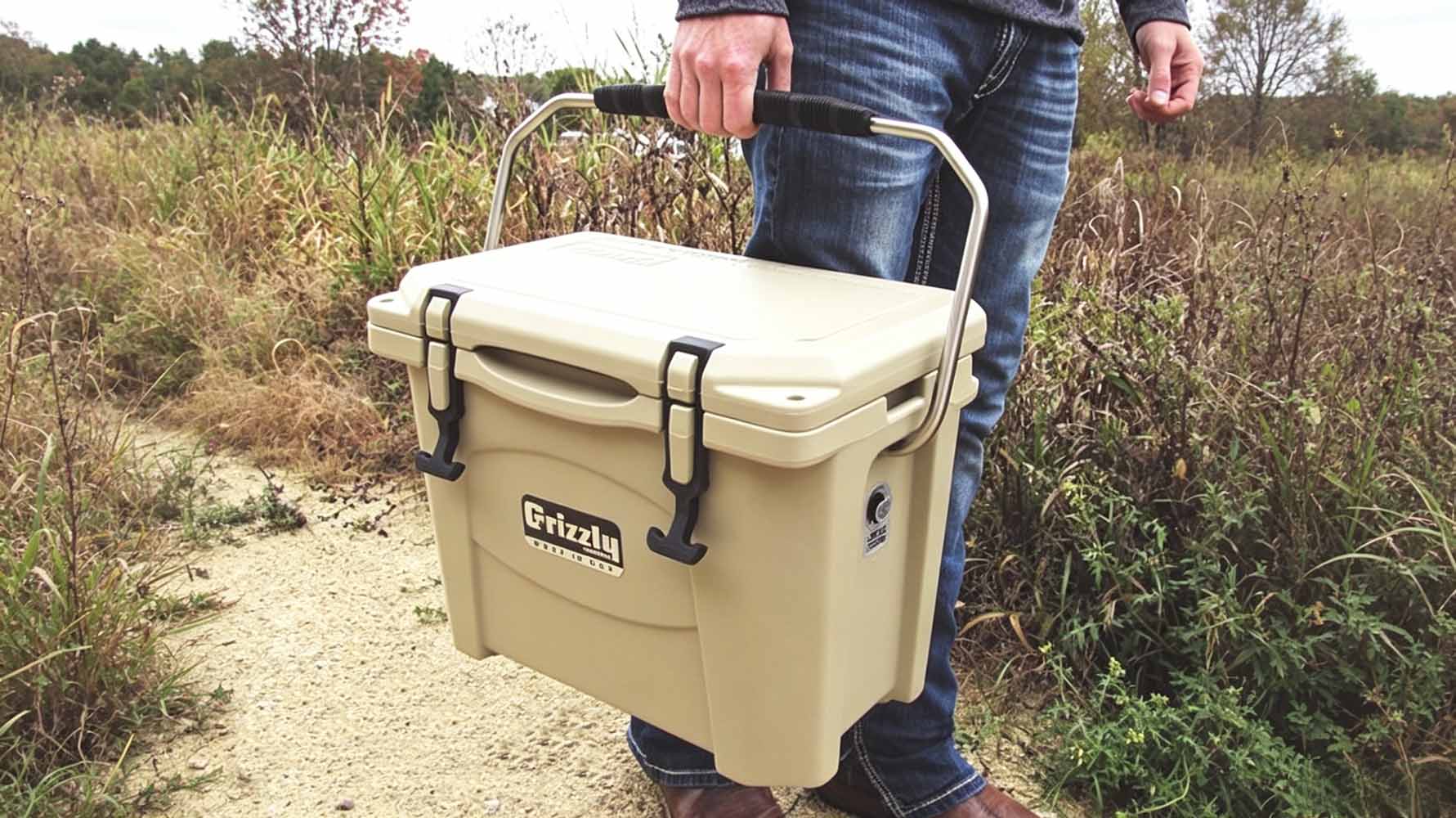
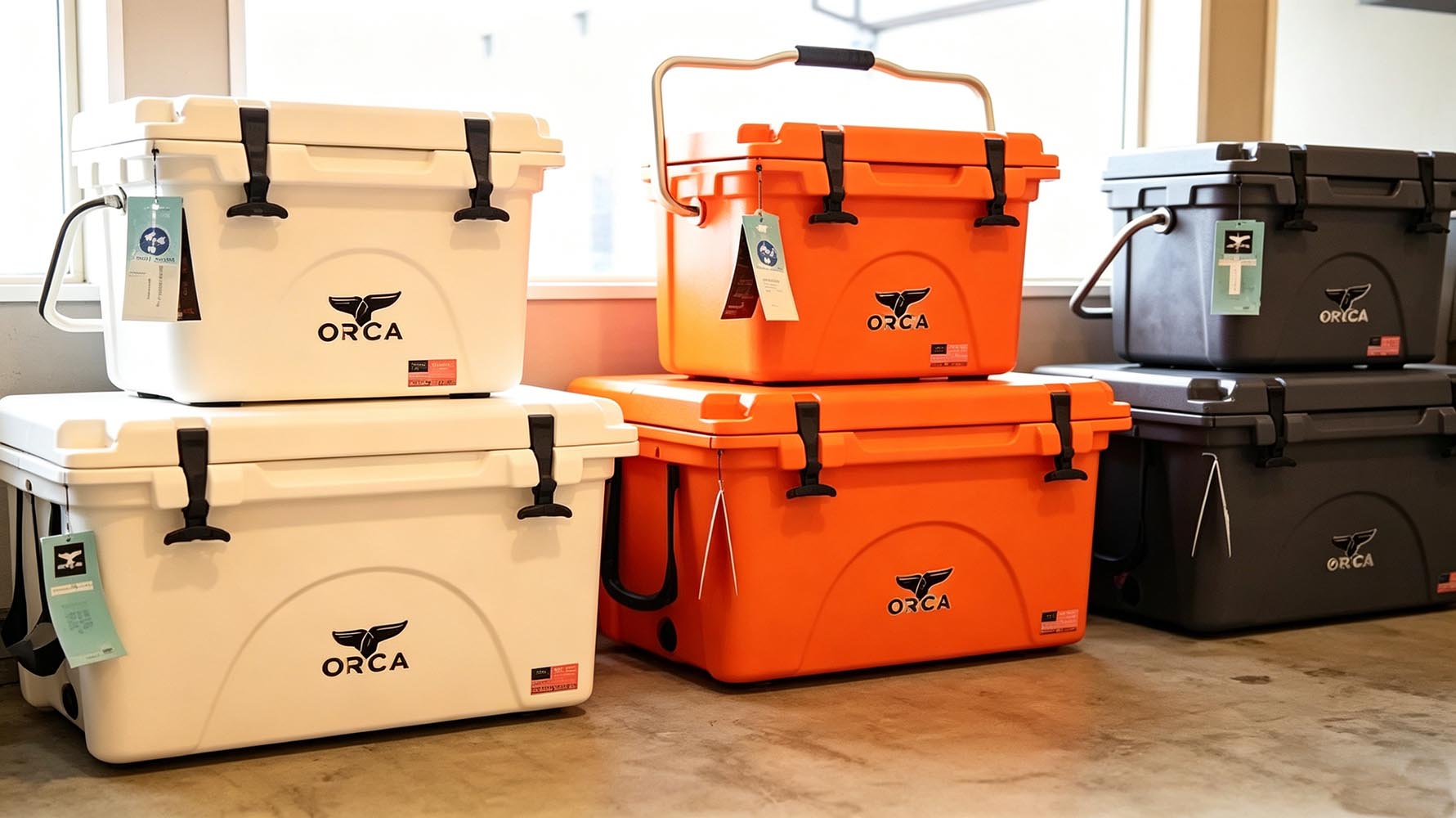
The selection of raw materials for high-quality coolers is by no means a simple process design. The material selection directly determines whether the product can be guaranteed for life or is prone to functional failure when used outdoors. Many brands will adopt customized modes to produce coolers. They can set clear quality and performance standards for the selection of head brands in industries such as ORCA and Grizzly.
Kingstar, an experienced manufacturer of high-end coolers, has long provided professional supporting services for major brands all over the world, helping customers overcome various problems in material selection and parameter setting, and successfully launched cooler products with stable performance. Industry data and first-line production experience are integrated, and two high-end benchmark brands, ORCA and Grizzly, are taken as research samples to dismantle three core material selection plates of the cooler: LLDPE shell, polyurethane foam insulation layer, and hardware accessories.
Whether you are a product manager evaluating OEM partners or a brand owner looking to understand what separates premium hard coolers from budget alternatives, this guide provides the technical foundation you need.
What Makes a Cooler “High-Performance”? The Role of Material Selection
The Three Pillars of Cooler Performance
Ice Retention: It’s the most intuitive criterion for consumers to judge cooler quality. This performance is not an independent product advantage but a final effect brought by reasonable material matching. ORCA’s hard-shell coolers can keep ice for up to ten days, and Grizzly also focuses on long-day ice storage performance rather than short-hour heat preservation effects in its product publicity.
Structural Integrity: It’s another essential attribute of high-end coolers. These products need to cope with rough handling in outdoor scenarios, bear the weight of humans sitting, and keep intact without cracking in extreme temperature environments. Therefore, the production and manufacturing process must eliminate all structural weak points of the products.
Long-term Reuse: Accessories such as buckles, connecting hinges, and sealing strips need to maintain stable functions after years of repeated opening and closing and long-term exposure to outdoor environments. In the cooler industry, hardware accessory damage is one of the most frequent user complaints about product quality.
The IGBC Bear-Resistant Standard
Both ORCA and Grizzly’s cooler products have obtained the anti-bear certification issued by the Interagency Grizzly Bear Committee (IGBC). This certification is not a simple promotional label. It puts forward strict requirements for product design, and these requirements guide the whole process of cooler material selection.
The outer shell of coolers must resist piercing and cracking when impacted by external forces. The product buckles need to bear strong prying force from the outside. The locking parts must be sturdy enough to match external padlocks for safe fixation.
Products that meet IGBC certification standards need to be equipped with thick and tough outer shells and durable hardware accessories, and they also need reasonable and integrated structural design. For brands that want to occupy a place in the high-end outdoor product market, passing the IGBC certification is the basic standard for ensuring product material quality.
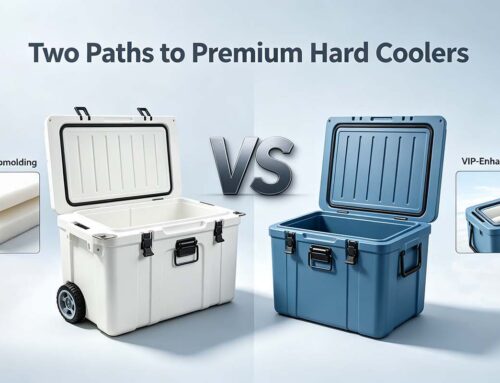
Manufacturing Methods: Rotomolding vs. Injection vs. Blow Molding
- 1
Rotomolding will put LLDPE plastic powder into a rotating mold for heating. The powder is uniformly attached to the inner wall of the mold to form a seamless box shell with a wall thickness of 6-10 mm. The whole process takes a long time, and a single cycle takes 10-15 minutes, which is only suitable for small and medium-sized batch production. High-end cooler brands such as ORCA and Grizzly all adopt rotomolding technology; therefore, the unit price is generally more than $200-500.
- 2
The injection molding relies on high pressure to press the melted polypropylene or high-density polyethylene into the mold, and it can be cooled in a few seconds, which is suitable for mass shipment. However, the fusion line will be left at the junction of plastic melt, which belongs to the structural short board and is easy to crack. The wall thickness of the injection box can only be 3-5 mm, and it is basically impossible to get the bear-resistant certification. These coolers retail at $50-$200.
- 3
The blow molding is similar to balloon blowing: the heated plastic tube is inflated in the mold to quickly make a hollow thin-walled shell with a wall thickness of only 2-4 mm. The hollow cavity can’t be filled with polyurethane thermal insulation foam, so this kind of box basically has no thermal insulation function, which can’t meet the IGBC bear-resistance standard at all. Most of them are sold as gifts and simple daily models, and the price is only $20-80.
| Aspect | Rotomolding | Injection molding | Blow molding |
|---|---|---|---|
| Raw Materials | Linear low density polyethylene (LLDPE) | Polypropylene / High density polyethylene (HDPE) | polyethylene |
| Whole Box Structure | Has no splicing, integrally formed | A plurality of plates with uniform wall thickness are spliced, with welding lines | Hollow structure integrally formed, box wall is thinner |
| Impact Resistance Performance | Excellent, will only stretch when hit, not easy to break | The weld line is easy to break | The short board is not thick enough |
| Cost | Low | High | The lowest |
| Adapted Production Scale | Suitable for small and medium-sized batch production | Suitable for large-scale mass production | Suitable for large-scale rapid shipment |
| Market Price Range | High-end, above $200-500 | Parity to mid-range, $50-200 | Economical simple model, $20-80 |
| IGBC Bear-resistance Certification | Can meet the standard | Difficult to pass | Impossible to obtain certification at all |
| Conventional Box Wall Thickness | 6–10mm | 3–5mm | 2–4mm |
What Is LLDPE and Why Is It the Industry Standard for Hard Cooler Shells?
LLDPE Material Properties: The Numbers That Matter
Linear low-density polyethylene (LLDPE) resins such as M72 and S15 from Siam Chemical Company in Thailand are common raw materials for the shell of rotomolded coolers, and all core properties have passed ASTM standard testing and certification.
The elongation at break of the material can reach 700% to 800%, and it will only be stretched and deformed when it is hit and will not be directly broken; Even in the low-temperature environment of -60 degrees Celsius, it still maintains good toughness.
Polypropylene and high-density polyethylene (HDPE) are easy to become brittle and crack after repeated stress at low temperature or for a long time, while LLDPE has excellent impact resistance and low temperature resistance, and its advantages are outstanding.
Falling into the actual use scene: even if the incubator falls from the height of the rear of the car or is repeatedly pressured as a camping stool, it will only be slightly deformed after impact and will not crack or be damaged. The cheap raw materials can’t achieve this durable performance at all.
Processing Guidelines: What Manufacturers Must Know
No matter how good the raw materials are, no qualified products can be made without proper processing. SCG Chemical’s technical data sheet clearly indicates several considerations of LLDPE rotomolding.
There is no room for compromise in the above specifications. If factories blindly use recycled materials, add more toner, and shorten the cooling cycle in order to reduce costs, it will only lead to a sharp increase in defective coolers and a sharp decrease in their service life.
| Stage | Temperature | Duration | Notes |
|---|---|---|---|
| Pre-heat | 250-300°C | 10-15 min | Dependent on mold size and wall thickness |
| Peak internal air temperature (PIAT) | 180-200°C | — | Critical for proper melt and sintering |
| Cooling | Gradual | 15-30 min | Rapid cooling causes warpage and residual stress |
What Role Does Polyurethane Foam Play in Hard Cooler Insulation?
PU Foam: The Thermal Core of Premium Hard Coolers
Most budget coolers use expanded polystyrene (EPS) as an insulation layer.
It is light and cheap, but the long-term ice retention effect is very poor.
ORCA, Grizzly, and other high-end coolers use an injection-molded polyurethane (PU) foam layer.
The ORCA ChillMax 12 L product specification can confirm this set of material collocation: LLDPE shell + commercial polyurethane foam layer. Grizzly goes a step further, using Ecomate polyurethane foam, which has no hidden danger of greenhouse effect, does not destroy the ozone layer, and does not contain volatile organic compounds.
Here is why PU foam outperforms EPS for hard cooler applications:
| Insulation Material | Relative Thermal Performance | Durability | Bonding to Shell | Best Application |
|---|---|---|---|---|
| Expanded polystyrene (EPS) | Poor—air gaps compromise performance | Fragile, crumbles | Minimal, loose fill | Budget injection-molded coolers |
| Extruded polystyrene (XPS) | Moderate | Better than EPS | Moderate | Mid-range coolers |
| Conventional PU foam | Excellent—closed-cell structure | Durable | Requires pre-treatment | Premium rotomolded coolers |
| Ecomate PU foam | Excellent—consistent closed-cell | Excellent | Good with S15 grade | Premium sustainable coolers |
The comprehensive performance of a polyurethane foam layer is far superior to EPS for the following reasons: The foam layer on the side wall of the ORCA box can be up to 5 cm thick, and the foam layer on the box cover is 7.5 cm thick. This is also the core key that it can claim to keep ice for 10 days.
The LLDPE-PU Adhesion Breakthrough: SCG’s S15 PU-Stick Series
In the cooler industry, the most critical technical breakthrough in recent years is to solve the pain point of the weak adhesion between the LLDPE shell and the polyurethane foam layer.
In the past, manufacturers could only sandblast and polish the inner wall of the box to make a rough surface so that the foam layer could be attached. The shortcomings of this process are obvious:
- 1
The bonding effect is uneven: the dead angle inside the box is not polished properly, and it is easy to delaminate and deform the pits in the later stage.
- 2
Serious loss of raw materials: plastic crumbs dropped by polishing are scattered on the ground, making it difficult to recycle.
- 3
Labor is time-consuming: the whole production line has one more processing procedure out of thin air.
After more than ten years of joint research and development, SCG Chemical of Thailand and COMOS, a local manufacturer of head cooler, have launched a series of special raw materials for SCG™ LLDPE S15.
Ecomate: The Green Alternative in Hard Cooler Insulation
Grizzly ice chests adopt Ecomate polyurethane foam, which has outstanding advantages. The test data show that the thermal conductivity of this foam material is linearly related to temperature, and even in the extremely low temperature environment of -85°C, there will be no condensation inside. Simply put, its thermal insulation effect is always stable in all kinds of daily temperature difference scenarios.
At the same time, its environmental performance is very bright:
No ozone depletion potential
No global warming potential
No VOCs
For brands that focus on environmental protection, the use of Ecomate insulation can not only maintain excellent thermal insulation performance but also create a highly competitive differentiated selling point.
How Does Hardware Selection Affect Hard Cooler Durability and Seal Integrity?
The Seal System: Latches, Gaskets, and Hinges
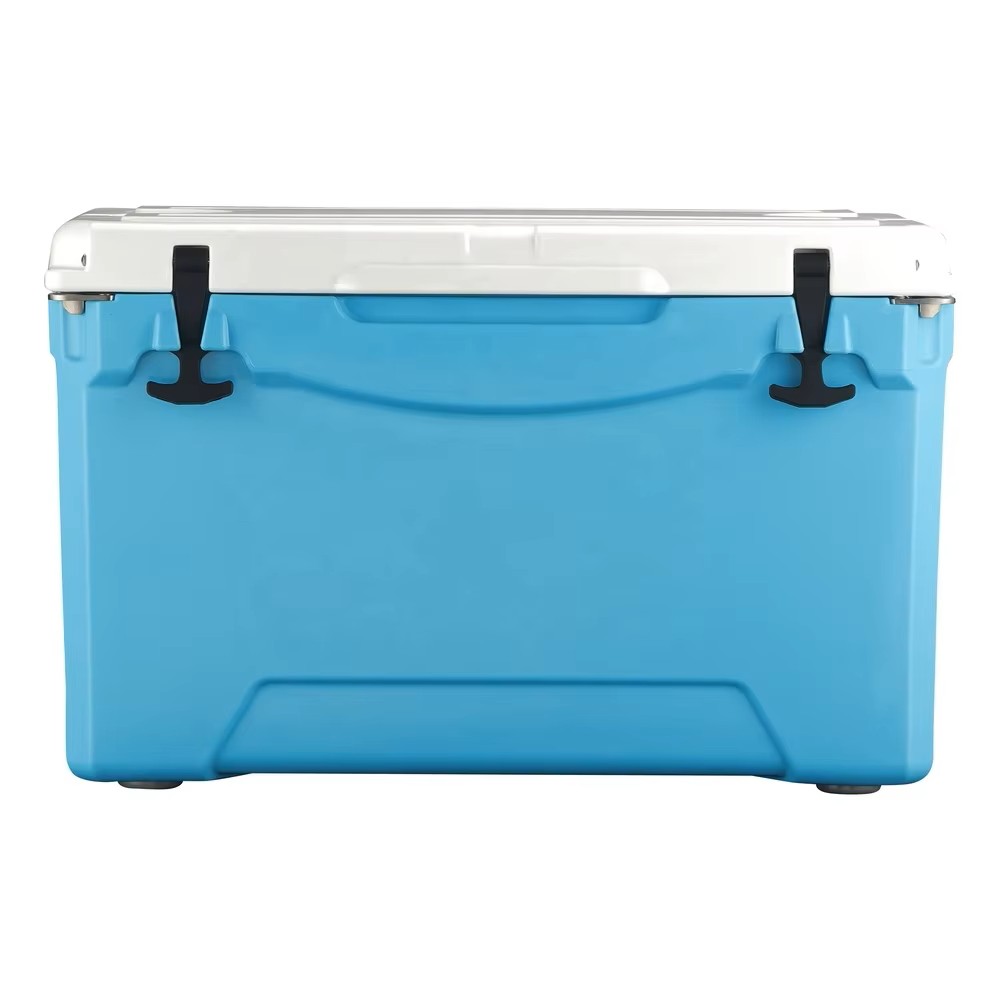
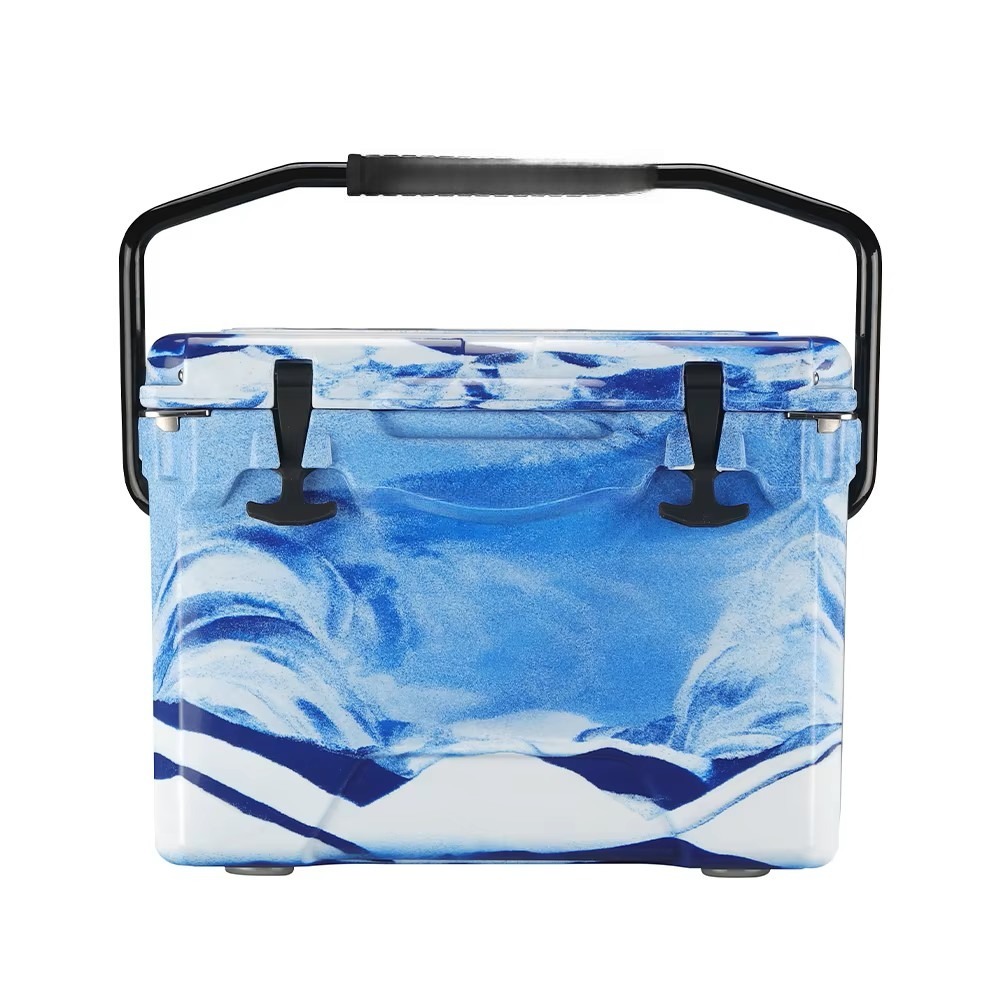
Even if the materials used for the box shell and insulation layer are no matter how good, the poor sealing of the box cover will be all in vain. Both ORCA and Grizzly have invested heavily in sealing hardware fittings to ensure that the cover is tightly closed every time.
ORCA hardware features:
-Push-down latch to fasten the lid firmly.
-Rubber/silicone box cover sealing strip for complete sealing.
-Stainless steel elastic handle, easy and labor-saving for a single person to carry.
-Large-diameter drainage spout, which is convenient to drain accumulated water quickly.
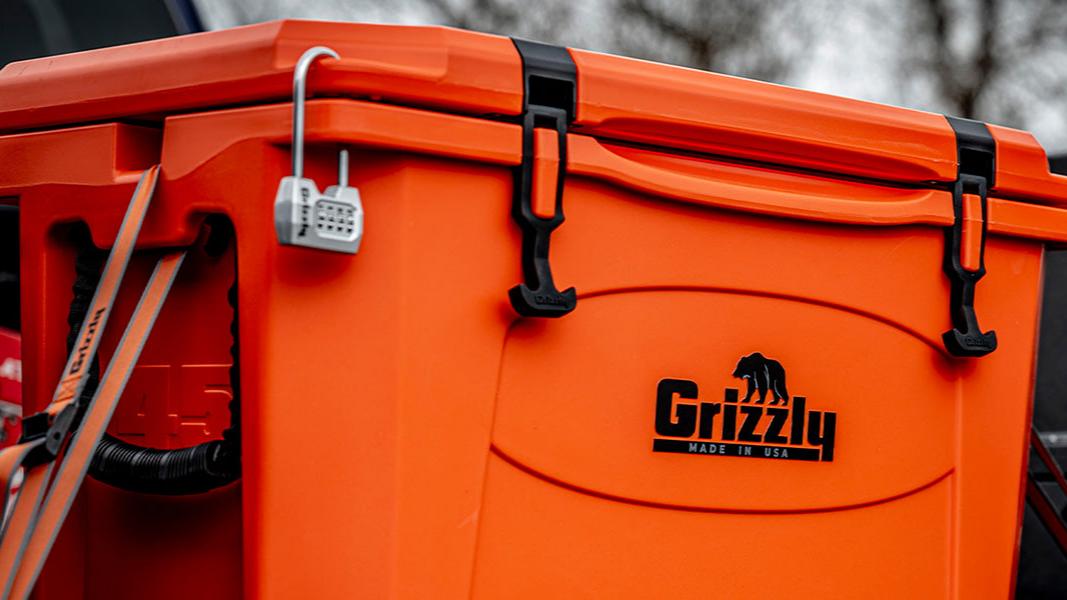
Grizzly hardware features:
-BearClaw latches: No additional fasteners are needed, and the locking force is durable and stable.
-Integral hinge with stainless steel pin shaft
-A rubber sealing strip is built in the box cover.
-Two-corner keyhole, with padlock, which meets the IGBC compliance.
Hardware Material Selection: Stainless Steel and Silicone
Stainless steel is preferred for hard coolers’ hardware for three reasons:
- Corrosion resistance: The cooler is exposed to ice, water, and salt environments for a long time, and the corrosion resistance of 304 stainless steel is enough for daily use; 316 stainless steel can improve coolers’ corrosion resistance in salt environments, but the cost is 20-30% higher.
- Fatigue life: frequent opening and closing are required for latches and hinges. Stainless steel can withstand hundreds of thousands of cycles and is not easy to be damaged.
- Low-temperature performance: Stainless steel can still maintain its original mechanical strength at sub-zero temperature.
Silicone material is generally used for sealing rubber strips, and the advantages are as follows:
- Flexibility is maintained in a wide temperature range, and the applicable range is -40℃ to 200℃;
- Not afraid of ozone and ultraviolet radiation, not easy to age and crack;
- meeting FDA safety standards for food contact;
- Good resilience and no permanent deformation after long-term extrusion.
Comparison: ORCA vs. Grizzly Hardware Strategies
| Hardware Element | ORCA Approach | Grizzly Approach |
|---|---|---|
| Latches | Pull-down style for pressure seal | BearClaw design for secure grip |
| Handles | Flex-grip stainless steel | Molded-in with stainless pins |
| Drainage | Easy-flow spout | Standard drain (some models) |
| IGBC Certification | Yes | Yes |
| Gasket Material | Silicon (ChillMax series) | Rubber |
| Hinge | Molded-in with metal pin | Molded-in with stainless pin |
| Locking | Corner padlock holes | Corner padlock holes |
Both brands deliver hardware that meets IGBC requirements for bear-resistance—a standard that demands significant mechanical integrity.
How Should OEM Buyers Select Materials for Their Own Cooler Projects?
If you want to customize the hard cooler, the core of material selection is to fit the actual use scene, rather than blindly piling up high-end raw materials. The purchaser should consider the quality of raw materials, thermal insulation performance, hardware durability, compliance standards, and factory productivity as a complete system.
The key to the selection of materials for the cooler is to find a balance between performance, cost, and product positioning. When the special cooler for sea fishing faces a corrosive seawater environment for a long time, it is necessary to choose anti-ultraviolet raw materials and anti-rust hardware. For the gift promotion cooler, priority should be given to controlling the weight and production cost. Senior product research and development will not blindly upgrade all accessories but only use raw materials that adapt to product positioning.
Before mold opening and mass production, OEM procurement must finalize the core parameters of various raw materials with the factory. It can not only stabilize the quality of finished products and avoid hidden dangers in production but also avoid repeated scheme changes in the later stage of development, resulting in high mold modification costs.
| Component | What Buyers Should Verify | Why It Matters |
|---|---|---|
| Shell Material | Virgin LLDPE grade and UV stabilizers | Improves impact resistance and outdoor durability |
| Insulation | Closed-cell polyurethane foam | Provides reliable thermal performance |
| Hardware | Corrosion-resistant stainless steel or equivalent | Extends service life in outdoor conditions |
| Gasket | Food-grade silicone | Maintains a long-lasting airtight seal |
| Testing | Drop, UV aging, leak, and thermal retention tests | Verifies product performance before mass production |
Finding an experienced foundry to cooperate can greatly simplify the material selection process. Reliable manufacturers not only supply products but also combine product positioning, performance requirements, and target markets to match the most suitable raw material combination. This cooperation mode makes it easier to find the optimal balance between durability, production efficiency, and overall project cost.
Conclusion
Whether you are a B2B buyer or an outdoor enthusiast, it is suggested to choose a hard cooler according to the following priorities: ice retention performance, overall durability, warranty service, and, finally, the price.
The data collated in this paper can be used as the technical basis for judging products, and it is not necessary to just listen to propaganda so that everyone can make rational choices according to their own use needs.
Kingstar, the leading outdoor product manufacturer, always adheres to open and transparent material research and development and standardized and compliant production technology and is committed to promoting the upgrading of outdoor equipment industry standards. Welcome to contact us by email at sales@waterbottle.tech, and we will reply within 24 hours.
FAQ
References
MK Library. Buying An Ice Chest Cooler That Stays Cool Longer. July 2024. https://www.mklibrary.com/buying-an-ice-chest-cooler-that-stays-cool-longer
Polymers Journal 2023 Study on Polyurethane Safety — https://www.mdpi.com/journal/polymers
Foam Supplies, Inc. Ecofoam® Polyurethane Insulation for HVAC Applications. https://fsi.co/ecofoam-polyurethane-foam-hvac-compliance/
WaveMolding. How Is a Rotomolded Cooler Box Made?. https://www.roto-mould.com/wavemolding-may-newsletter/
ASTM International. ASTM D638 Standard Test Method for Tensile Properties of Plastics. https://shop.standards.ie/en-ie/standards/astm-d-638-2014-151072_saig_astm_astm_355145/

Specializing in custom manufacturing, quality control and marketing of vacuum-insulated drinkware and coolers.