Last updated: May 2026
As the global demand for environmental protection daily necessities continues to rise, it is estimated that the market size of stainless steel water bottles will reach $1.59 billion in 2026, with a compound annual growth rate of about 4.60% to 5.52%.
At the same time, consumers’ purchasing standards have also changed significantly. According to market research data, more than 35% of consumers in the world value the effect of high-quality vacuum insulation and cold locking when choosing water bottles; another four adults pay special attention to the recyclable properties and environmental protection value of products.
Many people are curious and want to know how vacuum insulated water bottles are made. Here we will show you the manufacturing process of vacuum insulated stainless steel water bottles step by step in detail to help you understand.
Principle of Thermal Insulation
The vacuum insulated stainless steel bottle is generally a container made of stainless steel and a vacuum structure. The vacuum insulation structure can delay the heat dissipation of the liquid such as water inside to achieve the purpose of heat preservation. Most of the inner walls are made of stainless steel with silver or copper plated. The shiny wall can reflect the radiation of hot water. The vacuum structure can block the heat transfer, thus preventing heat convection and achieve the effect of insulation. This is why insulated water bottles can keep the beverage hot or cold for a long time.
There is still a question: why should the inner wall of a high-end insulation bottle be plated with copper or silver?
The vacuum layer can isolate heat conduction and convection, while the bright copper and silver plating layer on the inner wall can actively reflect thermal radiation. This special metal protective layer can reflect the heat wave back to the drink in the cup, which greatly reduces the heat loss caused by thermal radiation and effectively prolongs the cold and heat preservation time.
Raw Material of Insulated Water Bottles
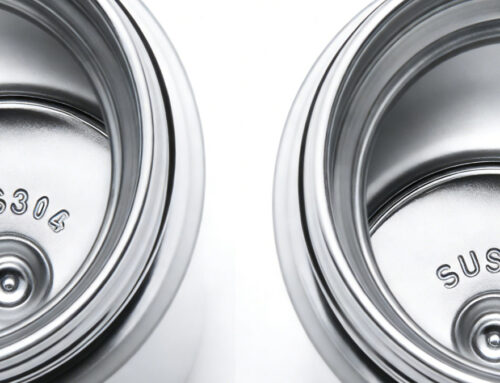
The material used to make insulated water bottles is stainless steel, which forms the inner bottle and the outer bottle. SUS304 (18 / 8 food grade stainless steel) is the most widely used as stainless steel, and is used in food equipment, general chemical equipment, atomic energy industry, etc. SUS304 is corrosion resistance, heat resistance, low temperature strength and good mechanical properties. SUS304 using temperature: -196 to 800 °C.
The following table sorts out the comparison of stainless steel materials commonly used in thermos cups: 304 stainless steel, which is commonly used in the industry, is widely used in food-grade drinking utensils; 316 stainless steel has stronger corrosion resistance and is suitable for high-end special scenes; 201 stainless steel is strictly prohibited for food contact containers.
| Stainless Steel Grade | Food Grade | Corrosion Resistance | Common Application |
|---|---|---|---|
| SUS304 (18/8) | Yes | High | Inner/outer bottle, food equipment |
| SUS316 (18/10) | Yes | Higher (acid/salt resistant) | Medical, high-corrosion environment |
| SUS201 | No | Medium | Industrial use (not recommended for drinkware) |
Vacuum Insulated Stainless Steel Bottle Tumbler Manufacturing Process
Brief description: Stainless steel arrives at the factory in the form of pines and sheets –> Produce outer bottle and inner bottle –> Assembly and welding –> Vacuuming –> Decorating.
Vacuum Insulated Stainless Steel Bottle Manufacturing Process Chart:
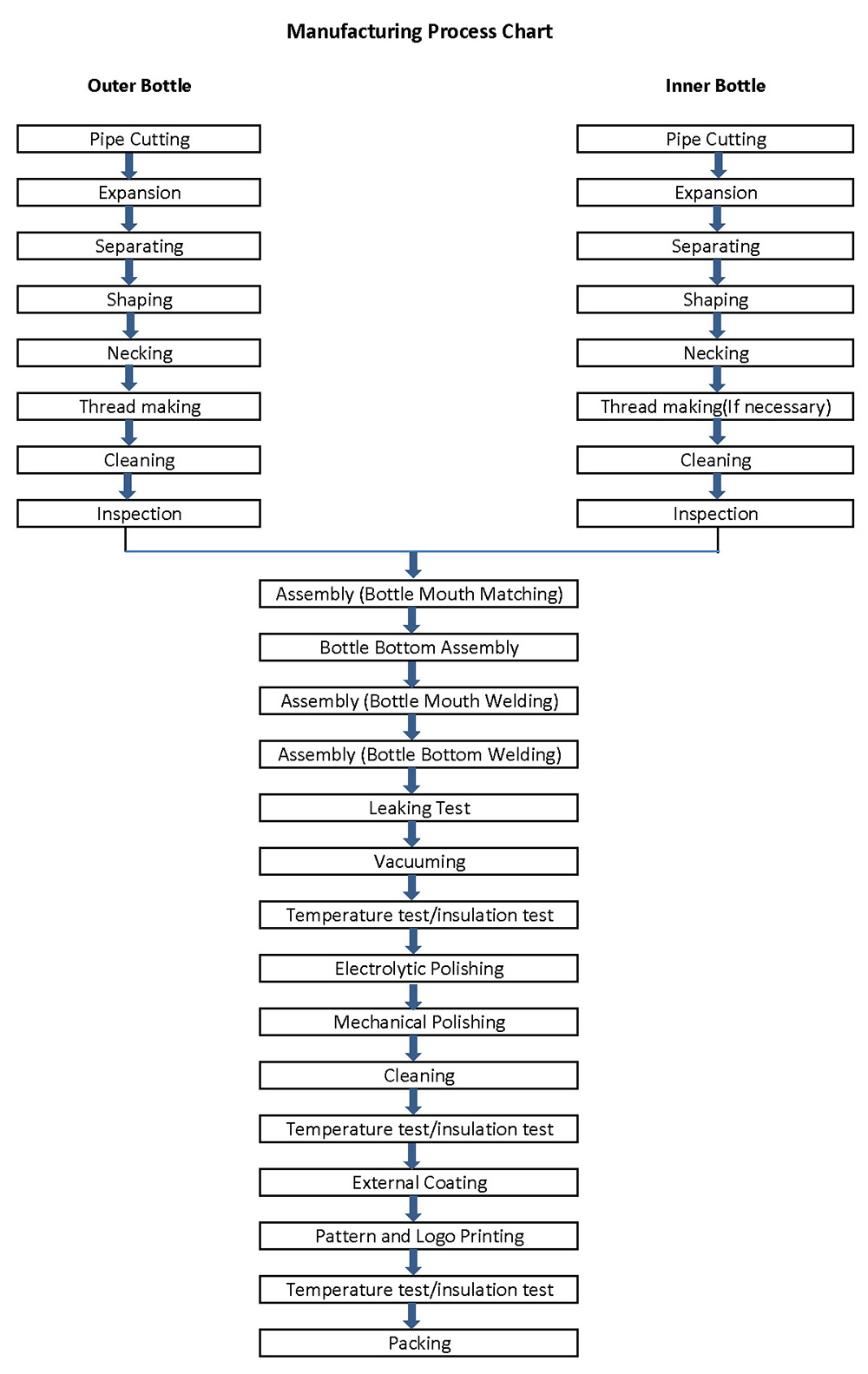
1. Manufacture Outer Bottle
1.1 Pipe cutting: Cut raw material – stainless steel pipe – to the appropriate length.
pipe cutting process video
1.2 Expansion
There are basically two different ways to make stainless steel into the shape of a bottle: water expansion and stretching.
Water Expansion: Water expansion, named hydroforming, is a metal processing technology. With the help of high-pressure hydraulic oil, the original stainless steel pipe is extruded and fitted to the mold to shape it into a specified shape. Stainless steel pipes are raw material for this method. First, stainless steel pipe is put on the water expansion machine. The pipe swells into a bottle shape under the huge pressure of the water. With this method, the bottle formed is with no bottom, so a round stainless steel plate will be welded onto it to form a complete bottle.
water expansion process video
Stretch: Stretch forming, also known as the deep drawing process, belongs to the cold-forming manufacturing method. The flat stainless steel plate is pressed into the molding die with a punch, and the seamless hollow cup can be made integrally. Stainless steel sheets are raw material for this method. First, the stainless steel sheets are cut into round plates at appropriate size, and then we use a punch press to stretch the stainless steel plate into a cylinder with a bottom.
The outer bottle can be formed by any of these two methods. Water expansion is more popular.
automatic and robotic production line
1.3 Separating: If using water expansion process to form outer bottle, then separating process is a must.
separating process video
1.4 Shaping: Use a large press and follow the “Bottle Shaping Guide” to ensure that the pits, size and shape of the outer bottle meet the requirements.
shaping process video
1.5 Necking: Use a machine to squeeze the upside of the bottle to be a bottle neck.
necking process video
1.6 Thread Rolling/Making: Threads are made with a special threading machine. Ensure that the thread meets requirements.
thread making process video
1.7 Cleaning: Removes lubricating oil and dust during molding.
1.8 Inspection
2. Manufacture Inner Bottle
2.1 Pipe cutting: Cut raw material – stainless steel pipe – to the appropriate length.
2.2 Expansion. Water expansion or stretch. The inner bottle can be formed by any of these two methods. Water expansion is more popular.
2.3 Separating
2.4 Shaping
2.5 Necking
2.6 Thread Rolling/Making (Normally if outer bottle is designed with thread, there’s no thread on inner bottle)
2.7 Cleaning
2.8 Inspection
3. Assembly (Bottle Mouth Matching)
Assemble the inner bottle and the outer bottle together by pressing machine.
inner bottle and outer bottle assembly process video
4. Bottle Bottom Assembly
Assemble the bottom to the bottle by pressing machine.
bottle bottom assembly process video
5. Assembly (Bottle Mouth Welding)
Weld the inner bottle and outer bottle together to prepare for vacuum insulation. Ensure smoothness, no bumps or solder joints.
bottle mouth welding process video
6. Assembly (Bottle Bottom Welding)
Weld the outer bottle and the bottle bottom to prepare for vacuum insulation. Ensure smoothness, no bumps or solder joints.
bottle bottom welding process video
7. Leaking Test
Check whether inner bottle and outer bottle were well welded.
8. Vacuuming
Vacuuming with a vacuum machine.
Typical Vacuum Insulation Performance Data:
| Vacuum Level | Typical Heat Retention | Manufacturing Difficulty |
|---|---|---|
| Low Vacuum | 4–6 hours | Low |
| Medium Vacuum | 8–12 hours | Medium |
| High Vacuum | 12–24+ hours | High |
9. Temperature Test / Insulation Test
Blow hot air into each bottle. If the outside of the bottle is kept cool, it means that the heat from the hot air will not be diverted and the bottle is vacuum insulated. On the contrary, if the bottle gets hot, there is a problem with vacuum insulation.
10. Electrolysis Polishing
What is electrolytic polishing? What is the principle?
Electrolytic polishing relies on electrochemical action to eliminate the fine protrusions on the steel surface and effectively reduce the surface roughness.
Through the interaction of current and electrolyte to improve the micro-geometry of the metal surface, reduce the surface roughness of the metal, so as to achieve the purpose of bright and smooth surface of the stainless steel bottle. Surface of inner bottle to be bright and even, no watermark, yellow dot.
11. Mechanical Polishing
Polish the surface of outer bottle to ensure it is smooth and bottle mouth is smooth and bright. There must be no obvious drawing, scratching, black wire and pits.
mechanical polishing process video
12. Cleaning
Clean the bottle and dry it. Make the bottle ready for external coating / decorating.
13. External Coating
The bottle is now ready for external coating –powder coating or spray painting. KingStar is capable of doing both spray printing and powder coating process.
Nowadays, the common options for surface finishing are as followed.
| Finish Type | Durability | Cost | Appearance | Typical Use |
|---|---|---|---|---|
| Powder Coating | High | Medium | Matte | Outdoor bottles |
| Spray Painting | Medium | Low | Glossy | Budget products |
| Electroplating | High | High | Metallic | Premium gift bottles |
| UV Printing | Medium | Medium | Custom graphics | Promotional bottles |
spray painting process video
powder coating process video
To read more about stainless steel drink bottle powder coating process, please check another article: Insulated Stainless Steel Bottle Manufacturing – Powder Coating Process
14. Pattern and Logo Printing
Print the pattern design and logo on the bottle with various techniques – screen printing, thermal transfer printing, water transfer printing, laser etching and so on.
water transfer printing process video
laser engraving logo on water bottles
15. Temperature Test / Insulation Test
Blow hot air into each bottle. If the outside of the bottle is kept cool, it means that the heat from the hot air will not be diverted and the bottle is vacuum insulated. On the contrary, if the bottle gets hot, there is a problem with vacuum insulation.
16. Packing
After inspect each bottle, including visual inspection and lid leak test, the bottle is place in a separate bag for packaging.
Bottle Cap / Lid Manufacturing
What materials are adopted for vacuum bottle lids to achieve leak-proof performance and meet food safety requirements?
High-end lids are mainly made of food-grade BPA-free plastics like PP and Tritan, fitted with outer stainless steel shells for better durability.
To balance practical performance and premium metallic texture, manufacturers commonly apply co-molding technology to combine the two materials into one high-grade integrated lid.
Unlike vacuum flasks, most of the caps of vacuum insulated stainless steel drink bottles are usually made of plastic.
Sometimes the inside of the cap is made of plastic and the outside is wrapped in stainless steel. It is made by pressing a piece of stainless steel onto an injection molded plastic. KingStar has an all stainless steel cap option as well.
If you want to get more videos of vacuum insulated stainless steel container manufacturing, just contact us. We will be more than happy to share with you.
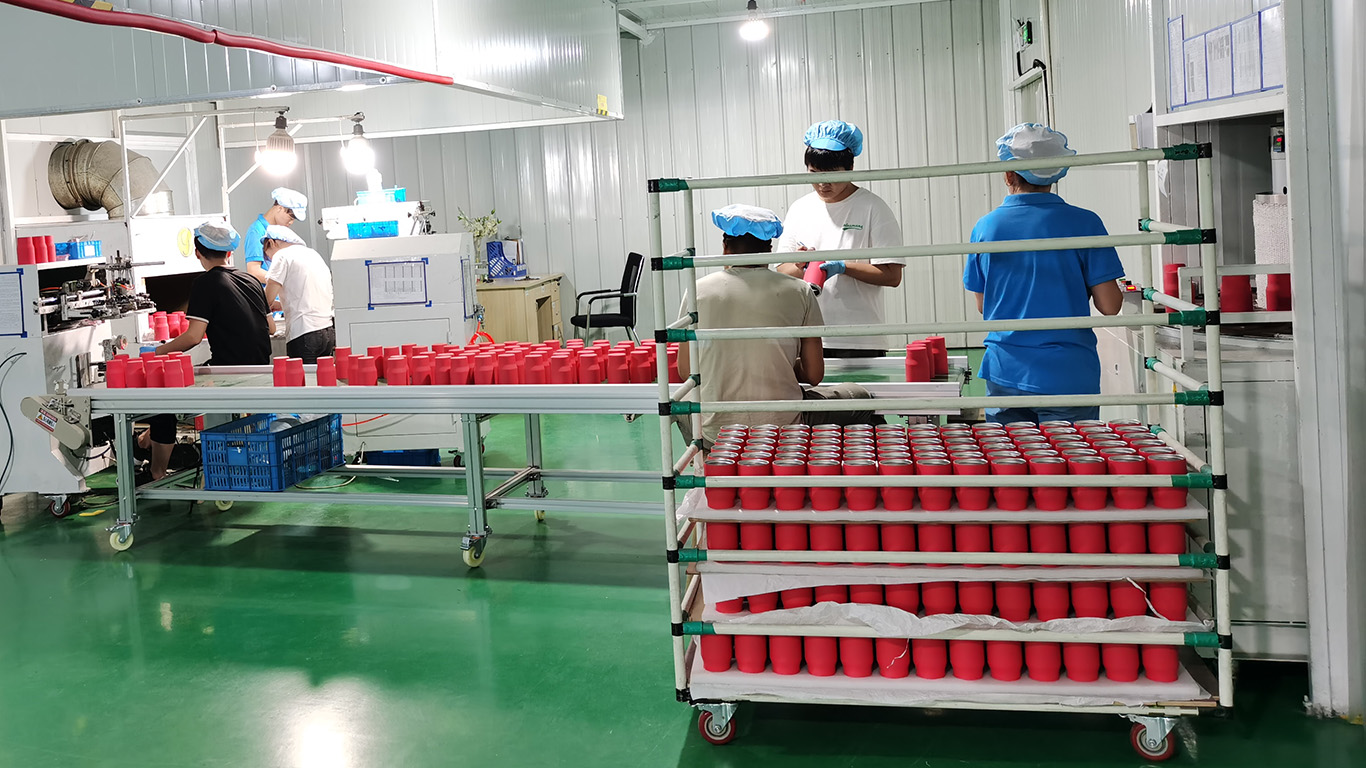
All the videos in this article were took months ago. It is not good to show the latest product equipment on internet due to well-known reason. You are welcome to visit our factory and our latest and most advanced production equipment and production process. Now our production line is more artificial intelligent, more automated, cleaner and better organized.
What OEM Buyers Should Evaluate in a Bottle Manufacturer?
When OEM customers choose vacuum flask manufacturers, they should not only pay attention to the price but also focus on the production stability, quality control strength, and compliance qualification. Mature and stable production technology directly determines the thermal insulation effect and durability of products and is also related to the long-term reputation of cooperative brands.
Among them, the stability of thermal insulation performance is particularly critical. The factory with precise welding technology, mature vacuum technology, and an automatic production line can guarantee the quality uniformity of large-scale orders. Buyers also need to verify whether the factory uses food-grade stainless steel materials such as 304 and 316 and strictly follow the industry production specifications.
The new national standard of stainless steel vacuum cups and pots for food contact in China is GB/T 29606-2026, which was released on January 28th, 2026, and officially implemented on February 1st, 2027, replacing the old version of GB/T 29606-2013. Manufacturers who are familiar with this new regulation can also adapt to all kinds of foreign trade OEM orders and meet the quality requirements of overseas markets.
| Evaluation Area | Why It Matters |
|---|---|
| Vacuum Insulation Consistency | Affects thermal retention performance |
| Welding & Production Precision | Impacts durability and vacuum stability |
| Material Compliance | Ensures food safety and product reliability |
| QC & Testing Capability | Helps reduce defect rates |
| Compliance with GB/T 29606-2026 | Reflects updated manufacturing standards |
KingStar is a professional vacuum insulated water bottle manufacturer. We focus on developing and manufacturing high quality custom vacuum insulated water bottles, wholesale vacuum flasks, bulk tumblers, coffee mugs, thermos coffee cups, blank coffee jugs, beer pints, growlers, food jars, wholesale lunch boxes, dog bowls, and other insulated containers that aim at keeping liquids hot or cold for long hours. KingStar offers one-stop custom stainless steel container vessel / private label drinkware manufacturing service from product idea, design, prototype, molding, to mass production. Have questions or need help? Just send email to sales@waterbottle.tech or leave an online message here.
FAQ: Manufacturing Process of Bottles

Mr. Samuel Liu is Senior Research&Development Engineer of KingStar Industries Co., Ltd. Please feel feel to send email to info@waterbottle.tech if you want to talk with him on technology and manufacturing.