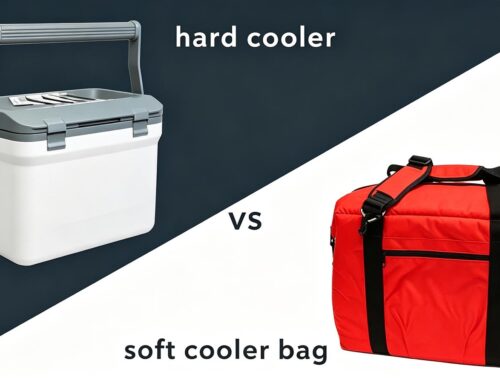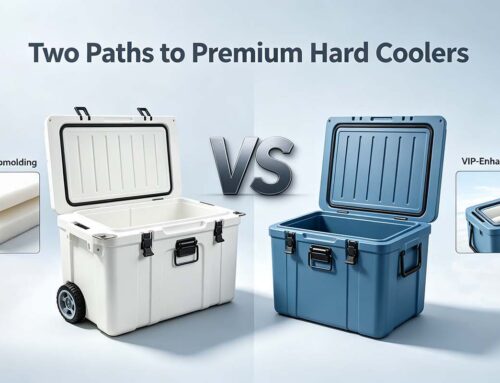

Generally speaking, the Pelican Elite keeps ice for much longer. Under the standard testing, it can last for 96 hours; the Coleman Steel Belted can only last about 48 hours. The core difference lies not in the shell material but in the insulation layer: Pelican uses 2-inch-thick polyurethane foam, combined with rotomolded construction; Coleman’s insulation layer is thinner, and the steel shell will absorb heat in direct sunlight.
At KingStar, as a leading manufacturer of outdoor coolers, we have been testing and evaluating all kinds of coolers for outdoor enthusiasts, campers, and picnickers in the United States for many years. Our team has compared rotomolded coolers, steel-belted classics, and all kinds of products in between. This guide dismantles the performance gap between two popular coolers on the market in real use scenarios and helps you choose the one that really suits you.
Coleman Steel Belted vs. Pelican Elite—Which Keeps Ice Longer in Real-World Conditions?
Official specifications can only reflect part of the situation, and real users can only see the whole picture when they measure it. Both of them have many loyal fans, and each has its own advantages. The key question is, who keeps the ice longer—and under what conditions?
| Metric | Coleman Steel Belted (54 QT) | Pelican Elite (45 QT/70 QT) |
|---|---|---|
| Official ice retention | Up to 4 days at 90°F | Extreme ice retention"—no specific days claimed |
| Reported 70°F performance | ~48 hours to full melt | ~96 hours with ice remaining |
| High-heat real-world reports | ~2 days in 103°F Texas shade | 7–10 days with pre-chill and block ice |
| Weight (empty) | 17 lb 9.6 oz | ~26 lb (45 QT) to 50 lb (70 QT) |
| Construction | Painted steel body + plastic interior | Rotomolded plastic + 2" polyurethane foam |
| Price range | $120–$240 | $290–$400+ |
| Warranty | 6-year limited | Lifetime (excludes drain plug, gasket, feet—90 days) |
Many users have done comparative measurements in normal temperature environments, and the ice retention time of the Pelican Elite is about twice that of the Coleman Steel Belted. A user of the Pelican 45 QT model measured that the actual internal volume of the box is about 35-36 L; If you rarely open the box, the ice can even be kept for 10 days. However, it should be emphasized that pre-cooling treatment and ice type have great influence on the final effect. Before the test, this user precooled the box for one hour with an ice bag and used homemade chunks of ice, not small pieces of ice bought in the supermarket. Without these preparations, even the high-end cold box will have a greatly reduced performance.
OutdoorGearLab, an outdoor equipment evaluation website, has done a comparative test, and the Coleman Steel Belted has won praise for its retro appearance and solid workmanship. However, testers also mentioned that “boxes such as Pelican and Yeti are much more expensive, and their thermal insulation performance far exceeds Coleman.” A group of user-controlled experiments show that Coleman can keep ice for more than 4 days in a cool garage, while Yeti can last until the fifth night. This shows that Coleman is capable, but not in the same tier as rotomolded competitors.
What the Numbers Actually Mean for a Weekend Trip
To put it bluntly: if you put a large piece of ice in the Coleman Steel Belted on Friday morning and put it in the shade, the ice will last until Sunday morning. This is long enough for a picnic at the back of the car, a two-night self-driving camping trip, or a backyard party.
If you fill the Pelican Elite in the same way, there will be a high probability of ice left by Wednesday; if the boxes are opened as little as possible, coupled with the insulation cover of the cold box, the ice can even last until next Friday.
The gap matters most when ice resupply is impossible. On a multi-day river trip, a remote hunting camp, or a boat crossing, the Pelican’s extra days are not a luxury—they’re the difference between cold drinks and warm water.
What Verified Buyers Report
One Pelican reviewer at a four-day camping music festival noted the cooler “almost paid for itself in the first festival” by avoiding $12-per-bag ice purchases. Coleman’s buyer commented that it is “very suitable for a picnic at home,” and the drinks can be kept cold throughout the football-watching weekend. Both have valid using cases, and you just need to choose the right one for your condition.
Does a Metal Exterior Actually Help a Cooler Keep Ice Longer?
This is the most easily misunderstood point in the design of cooler boxes. The steel shell feels stronger and more premium, and its durability is really good. But in thermal performance terms, it can be a liability.
The Thermal Bridge Effect—Why Steel Shells Can Work Against You
 The thermal conductivity of metal is about 1000 times that of polyurethane foam. When the Coleman Steel Belted is placed in the sun, the steel shell will absorb heat and then conduct it to the inside of the box. One user put it bluntly: “This is a metal cooler, which means if you leave it sitting out in the direct sun, that metal shell acts like a heat magnet and your ice will melt way faster.”
The solution is simple: put the Coleman cooler in the shade, or build a sunshade. As long as you avoid the sun, its cold-keeping performance will be improved a lot. However, its natural design shortcomings still exist: the steel shell is not helpful for heat insulation, and steel is selected mainly for appearance style and durability.
Insulation Thickness and Rotomolded Construction — The Real Differentiator
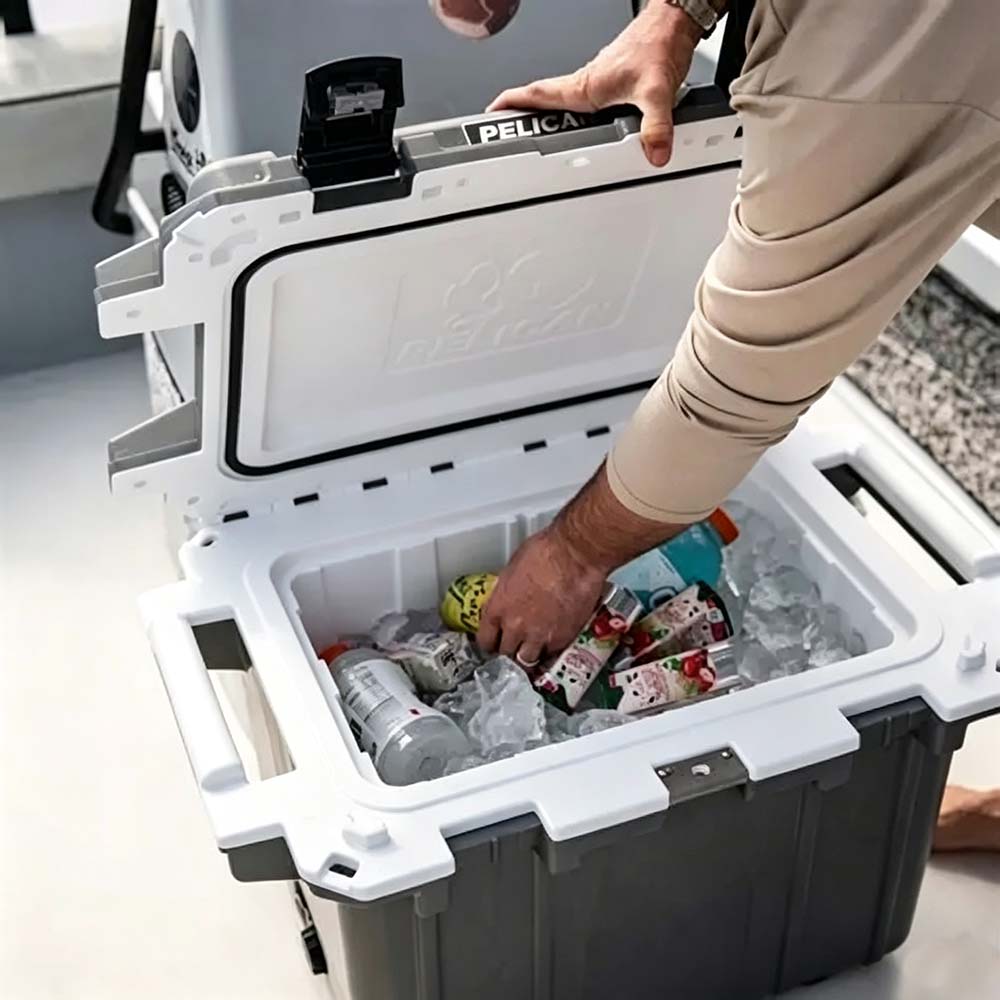
The advantages of Pelican Elite come from the 5 cm (2 inches) thick polyurethane insulation layer and the rotomolded construction. There is no splicing gap in the rotomolded construction, which prevents heat from infiltrating from the joints.
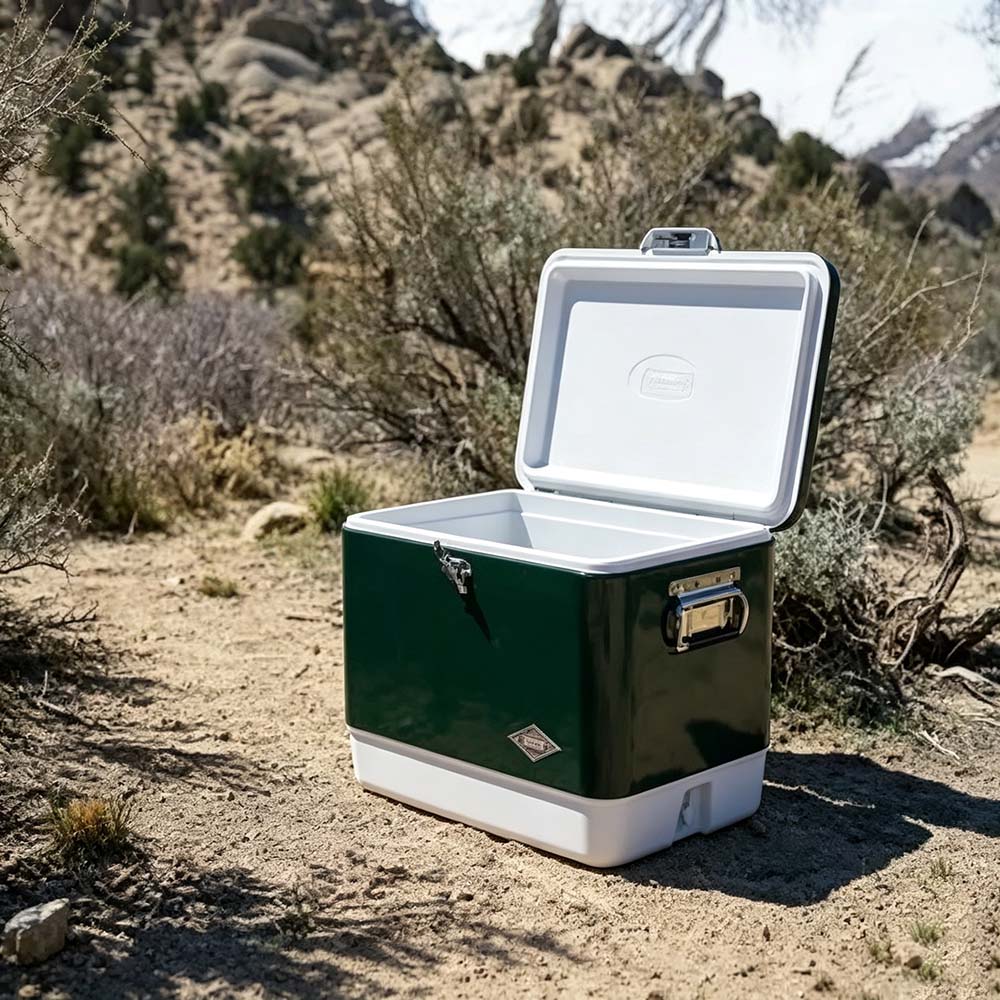
On the other hand, Coleman Steel Belted has a thinner insulation layer, only about 2.5–3.8 cm (1–1.5 inches), and it is a multi-component assembly structure. The sealing strip of the box lid needs to be locked to seal tightly.
There is a general principle in the design of the cooler box: the thickness of the insulation layer is less than 1.5 inches, so it is risky to use it for many days of travel; The foam layer of 2 inches and above is the standard of a high-performance professional cooler box.
| Design Factor | Coleman Steel Belted | Pelican Elite |
|---|---|---|
| Shell material | Painted steel | Rotomolded polyethylene |
| Insulation thickness | ~1–1.5 inches | 2 inches |
| Construction type | Multi-piece, gasketed lid | One-piece rotomolded |
| Thermal bridge risk | High in direct sun | Low |
| Durability against impact | Good (steel dents rather than cracks) | Excellent (rotomolded plastic absorbs impact) |
| UV resistance | Paint can fade/chip | Molded-in color resists UV |
What the “Steel Belted” Name Actually Means for Performance
The steel belt on the Coleman is mainly about durability and aesthetics and has nothing to do with ice retention. OutdoorGearLab mentioned that this design has been tested for decades: “the legion of similarly designed coolers still in active use after 30 or more years.” Compared with plastic, steel boxes are less prone to pits and stains, and the retro appearance is really attractive.
However, if your core requirement is to keep the ice cubes frozen for three days in the hot weather in July, then the steel shell will have no advantage. What you pay for is appearance, not insulation performance. This is not a criticism but an objective explanation. The Coleman Steel Belted is a lifestyle cooler with adequate performance. Pelican Elite is a performance-oriented cooler with a simple and practical appearance.
Is Pelican Elite Worth the Price Premium Over Coleman Steel Belted?
The price difference between the two products is quite substantial: Coleman sells for about $120-240 (depending on retailer and sales), Pelican starts at $290, and the high-profile model even exceeds $400. Let’s teach you to judge whether that premium is justified.
| Factor | Coleman Steel Belted | Pelican Elite |
|---|---|---|
| Typical price | $120–$240 | $290–$400+ |
| Price per quart | ~$2.20–$4.40/ QT | ~$4.15–$8.90/ QT |
| Ice days per dollar | ~0.02–0.03 days/$ | ~0.025–0.035 days/$ |
| Cost per ice-day (est.) | ~$37.50/day | ~$50/day |
| Weight (empty) | ~17.6 lb | ~26–50 lb |
| Warranty | 6-year limited | Lifetime (excludes drain plug, gasket, feet—90 days) |
| Made in USA | Some models | Yes |
The math reveals something interesting: Pelican does not spend every dollar to get a much longer ice retention duration. Coleman, with a price of $150, can keep ice for four days, and the average daily cost is about $37.5. Pelican, which costs $350, keeps ice for 7 days, and the average daily cost of keeping ice is about $50. Pelican’s absolute performance is stronger, but the cost performance of short-distance travel is lower.
Only when it is used for a long time is the high price of a Pelican worth it. If you want to take part in a five-day river rafting or a week-long wild hunting camp, you don’t have to make a special trip to replenish ice, and the saved cost can offset the high purchase cost. One Pelican user at a camping music festival noted the cooler “almost paid for itself in the first festival” by avoiding $12/bag ice purchases.
Weight, Capacity, and Portability Trade-Offs
The Coleman Steel Belted weighs 17 lb 9.6 oz empty. The Pelican Elite 45 QT weighs approximately 26 lb empty, and the 70 QT version approaches 50 lb empty. Add 20 pounds of ice and drinks, and the Pelican becomes a two-person lift.
For tailgating, it is necessary to repeatedly move the box from the car to the dining table and then move it back. Coleman’s lighter weight is a real advantage. But basecamp is different. The box stays where it is for several days, and it doesn’t matter how heavy Pelican is.
Capacity is another consideration. You can put down 85 cans of drinks in a 54 QT Coleman and 53 cans in a 70 QT Pelican. Of course, the actual available capacity depends on the proportion of ice cubes and drinks. If you’re optimizing for can count, Coleman can put more cans of drinks, whether by cost or by weight.
Warranty and Long-Term Durability
Pelican provides a limited lifetime warranty, but drain plugs, sealing strips, rubber mats, and other accessories are not covered by the lifetime warranty, and such accessories are only guaranteed for 90 days. Many users give feedback that the drain plug occasionally leaks water, so this lifetime warranty is not as comprehensive as it seems at first glance.
Coleman has a 6-year limited warranty. The warranty period is shorter, but the whole machine is included in the guarantee, and no accessories are removed separately. For a product at this price, 6 years is enough. Moreover, the Coleman Steel Belted cooler box has always been durable, and the actual service life of many boxes far exceeds the 6-year warranty period and can be used for decades.
Which Cooler Is Better for Tailgating, Camping, and Hunting?
The right choice depends entirely on your use case. There is no single “better” cooler—only a better cooler for your specific trip profile.
| Scenario | Best Choice | Why |
|---|---|---|
| Tailgating (1 day) | Coleman Steel Belted | Lightweight, stylish, adequate ice for game day |
| Weekend camping (2–3 days) | Coleman Steel Belted | 4-day rated performance in shade, easy to carry |
| Multi-day fishing (3–5 days) | Pelican Elite | 7+ day ice retention, rugged rotomolded body |
| Hunting camp (5+ days) | Pelican Elite | No ice resupply needed, locking cable hole |
| Boat / truck bed | Pelican Elite (check drain) | UV-resistant, tie-down points, impact-resistant |
| Backyard party | Coleman Steel Belted | Retro look, seat-rated lid, easy to move |
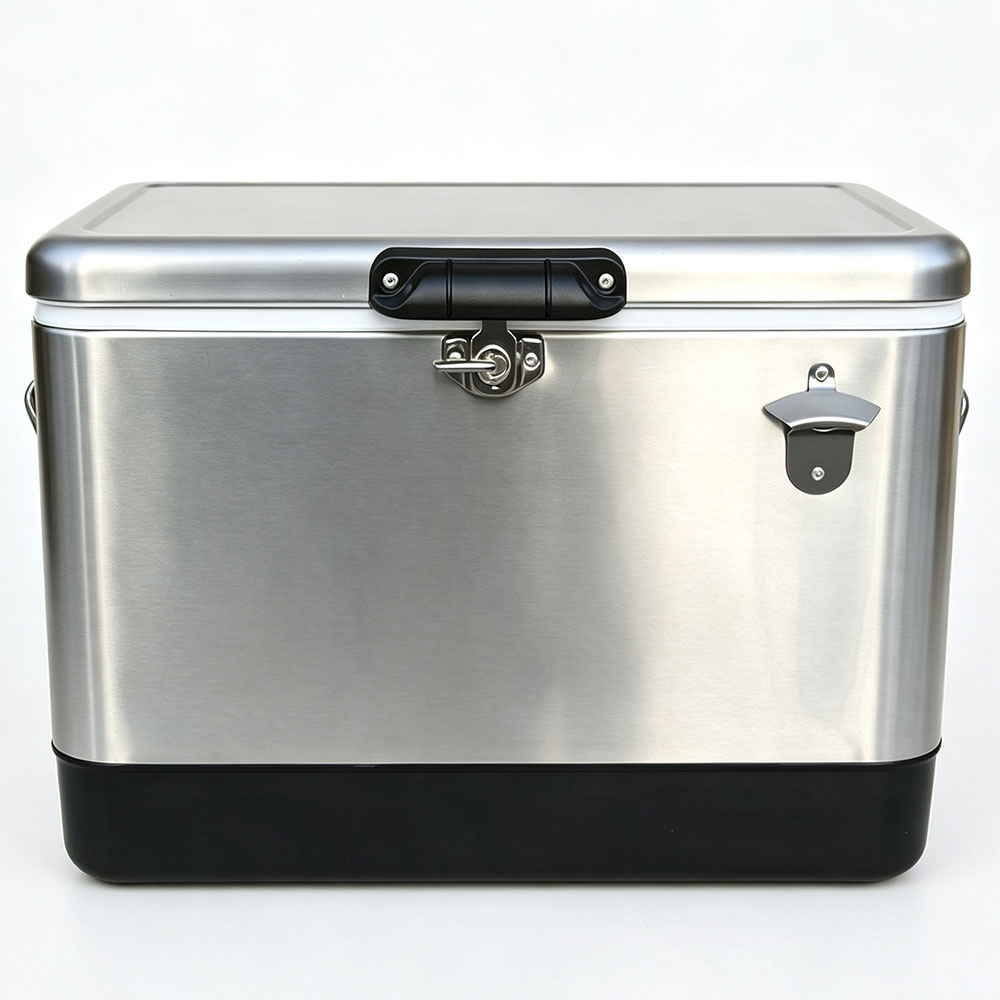
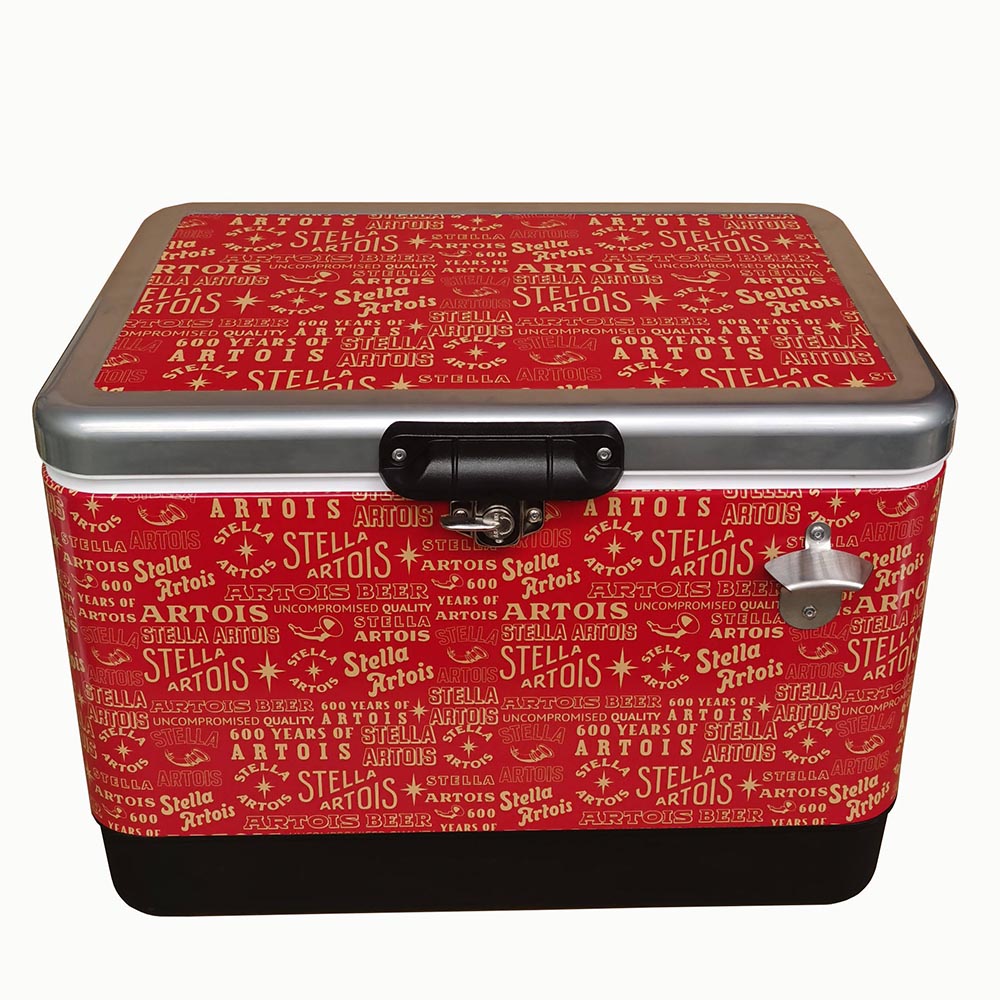
 Suitable for a 1-2 day short trip. Coleman’s nominal 4-day ice retention performance is completely sufficient, and it is better to precool in advance and use it with large pieces of ice. It weighs less (17.6 lb empty vs 26–50 lb for Pelican), and it is much easier to move up and down. The retro steel aesthetic is a genuine conversation piece at tailgates, and the flat lid doubles as a seat (rated to 250 lb).
 Pelican’s rotomolded box is superior to Coleman’s painted steel plate in terms of UV resistance and rough bumping resistance. Once the steel plate is scratched, the paint surface will peel off and rust over time. The Pelican box body is also integrally formed with a strap fixing point, which can firmly fix the box on the cargo hopper or the ship.
Coleman Steel Belted vs. Pelican Elite—Which Should You Buy?
After comparing the specs, third-party testing, and user reports, here’s the honest breakdown.
| If you are… | Buy this | Because |
|---|---|---|
| Budget-conscious | Coleman Steel Belted | $120–$240 vs $290–$400+ |
| A tailgater | Coleman Steel Belted | Lightweight, stylish, adequate |
| A multi-day angler | Pelican Elite | 7+ day ice retention |
| A hunter | Pelican Elite | Rugged, lockable, long ice |
| A boat owner | Pelican Elite | UV-resistant, tie-down points |
| A casual camper | Coleman Steel Belted | Enough performance, less weight |
| A festival-goer | Pelican Elite | Skip $12/bag ice purchases |
Buy the Coleman Steel Belted If…
- Your budget is under $200, and you only need a hard cooler to handle short trips for 1-2 days.
- Give priority to portability: an empty box weighs only 17.6 pounds, which is much easier to move than a box of 26-50 pounds.
- Preference for appearance: retro steel shapes are highly recognizable.
- It is mainly used for tailgating or car camping. And you can always find a shady place and ice resupply.
- Want the peace of mind brought by the original 6-year warranty.
- You want the cooler that doubles a seat and is a conversation piece.
Buy the Pelican Elite If…
- It needs to keep ice for more than 3 days, and it is impossible to replenish ice on the way.
- Willing to pay 2 ~ 3 times the price in exchange for about twice the ice retention performance.
- Don’t worry about the weight: there is a pickup truck, a boat, or someone to help carry it together.
- Intend to use the lifetime warranty, but be sure to confirm the warranty coverage before using it.
- It is used for hunting, fishing and river rafting and needs the strong and durable characteristics of the rotomolded box.
Conclusion
The Pelican Elite keeps ice for a longer time, and the measured comparison can reach about twice that of Coleman. But the Coleman steel belt is superior in cost performance, portability, and appearance style. Coleman is completely enough for a short trip in 1-2 days. If it’s a multi-day field adventure with no ice in the middle, Pelican’s high price is worth it.
The real selection criterion depends on your usage scenario, rather than simply judging which box is “absolutely better.” At KingStar, we advocate that the equipment should be suitable for the purpose, and we don’t have to pay for the high performance that we don’t need. Whether you need a cooler box, the best water bottle for hiking, or a custom water bottle supplier, we can provide relevant references. Just contact us through email at sales@waterbottle.tech, and we’ll reply within 24 hours.
If you still can’t make up your mind, you can look at your longest regular travel time first. If you choose Coleman for two days at most, the money saved can be used to buy ice and gasoline. If the trip reaches three days or more, then choose Pelican, and you don’t have to worry about making up the ice all the time.
FAQ
Reference
-
OutdoorGearLab. (2015, March 24). Coleman Steel Belted Review. https://www.outdoorgearlab.com/reviews/camping-and-hiking/cooler/coleman-steel-belted
-
Backcountry. (2024). Coleman Reunion Steel Belted Cooler – 54qt. https://www.backcountry.com/coleman-reunion-steel-belted-cooler-54qt
-
Woot. (2025, July 25). Pelican Elite 70 Quart Cooler – Customer Review. https://sport.woot.com/review/B07NTZQTCQ
- Amazon Mexico Customer Reviews. (2017–2021). Pelican Elite 45QT Controlled Ice Retention Test. https://www.amazon.com.mx

Specializing in custom manufacturing, quality control and marketing of vacuum-insulated drinkware and coolers.