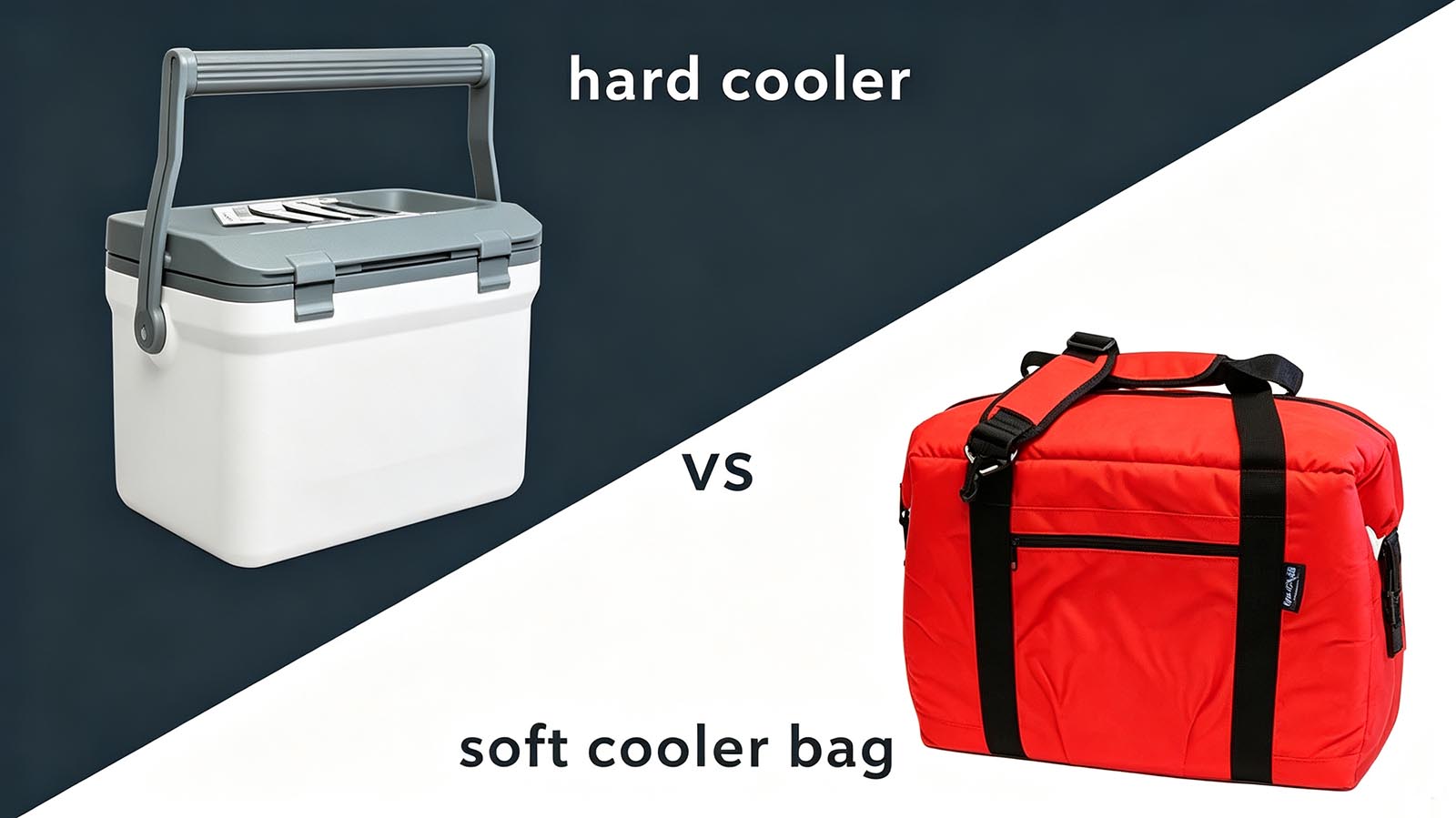
For wholesale buyers, choosing between hard coolers and soft coolers doesn’t mean finding coolers with the longest ice retention duration. More importantly, the cooler that you choose should adapt to your sales channel.
A 45 QT rotomolded hard cooler may be a hot item for outdoor activities such as fishing and camping, but it is not suitable for being a distributor of corporate gifts. The thermal capacity of a 20 can soft cooler backpack is slightly weak, yet it moves faster because it is lighter, easier to brand, and cheaper to ship.
When you purchase hundreds or thousands of pieces, the impact of these gaps will be amplified. KingStar works as a manufacturer of hard cooler boxes as well as soft cooler bags, supporting OEM and ODM customization. This guide jumps out of the common comparison of “hard cooler vs soft cooler” and focuses on more realistic questions: What cooler assortment should you actually buy, in what sizes, and in what proportions?
What Are the Main Differences Between Hard Coolers vs. Soft Coolers?
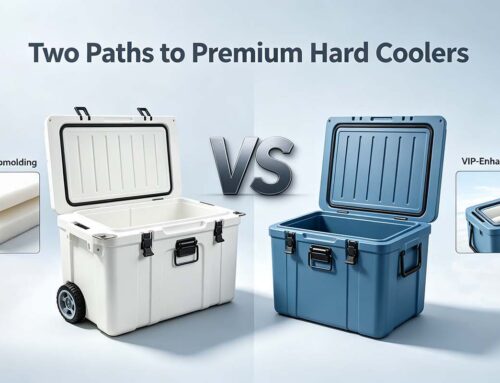
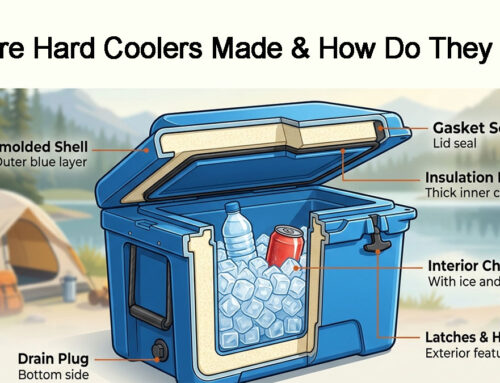
Hard and soft coolers have completely different structures. A hard cooler generally consists of a hard shell, insulation layer, inner wall, and sealing system. According to different styles, the shell can be made by rotomolding, injection molding, and blow molding. Different processes will affect coolers’ wall thickness, structural strength, weight, and tooling requirements and ultimately determine their market positioning.
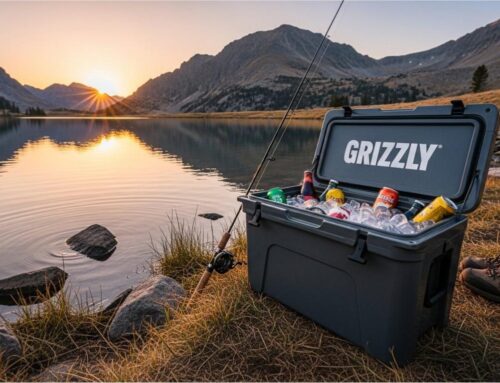
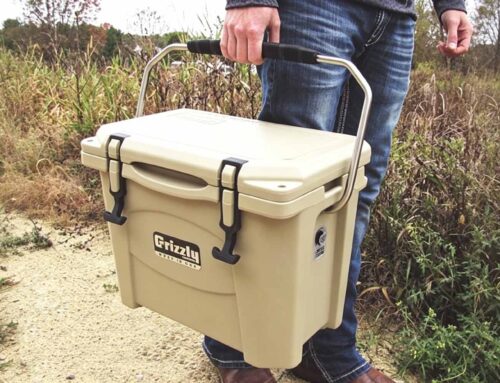
Rotomolding is mostly used for premium plastic hard cooler boxes. Seamless LLDPE shell with polyurethane insulation layer, coolers are always durable and can cope with various harsh outdoor scenes.
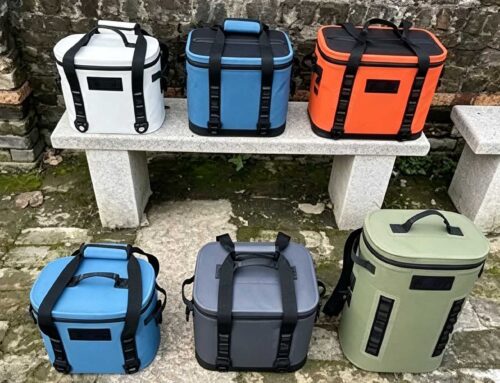
Soft cooler bags usually adopt a flexible multi-layer structure. The outer fabric or film-covering material plays a protective role, and the ice retention effect is realized by the foam insulation layer and waterproof lining. The zipper, hot-pressing edge sealing, handle, strap, and external pocket determine the carrying mode and practicability of cooler bags. This construction makes soft coolers particularly attractive when portability and branding are more important than maximum structural strength.
Hard vs. Soft Cooler Comparison for Wholesale Buyers
| Factor | Hard Cooler | Soft Cooler |
|---|---|---|
| Typical structure | Rigid plastic shell + insulation | Fabric/coated exterior + foam + liner |
| Strongest application | Camping, fishing, boating, rugged outdoor use | Sports, gifts, travel, daily use |
| Portability | Moderate | High |
| Storage efficiency | Lower | Higher |
| Structural durability | Very high in premium models | Depends on fabric and construction |
| Branding flexibility | High | Very high |
| Tooling requirement | Common for deep customization | Often lower for basic customization |
| Typical capacity range | Small to 100+ QT depending on design | Commonly personal to 30+ can formats |
| Premium positioning | Excellent | Good to excellent |
| Freight efficiency | Lower for large rigid models | Generally better |
Which Hard Cooler Size Should You Choose for Your Product Line?
| Hard Cooler Size | Recommended Role | Typical Applications | Product Position |
|---|---|---|---|
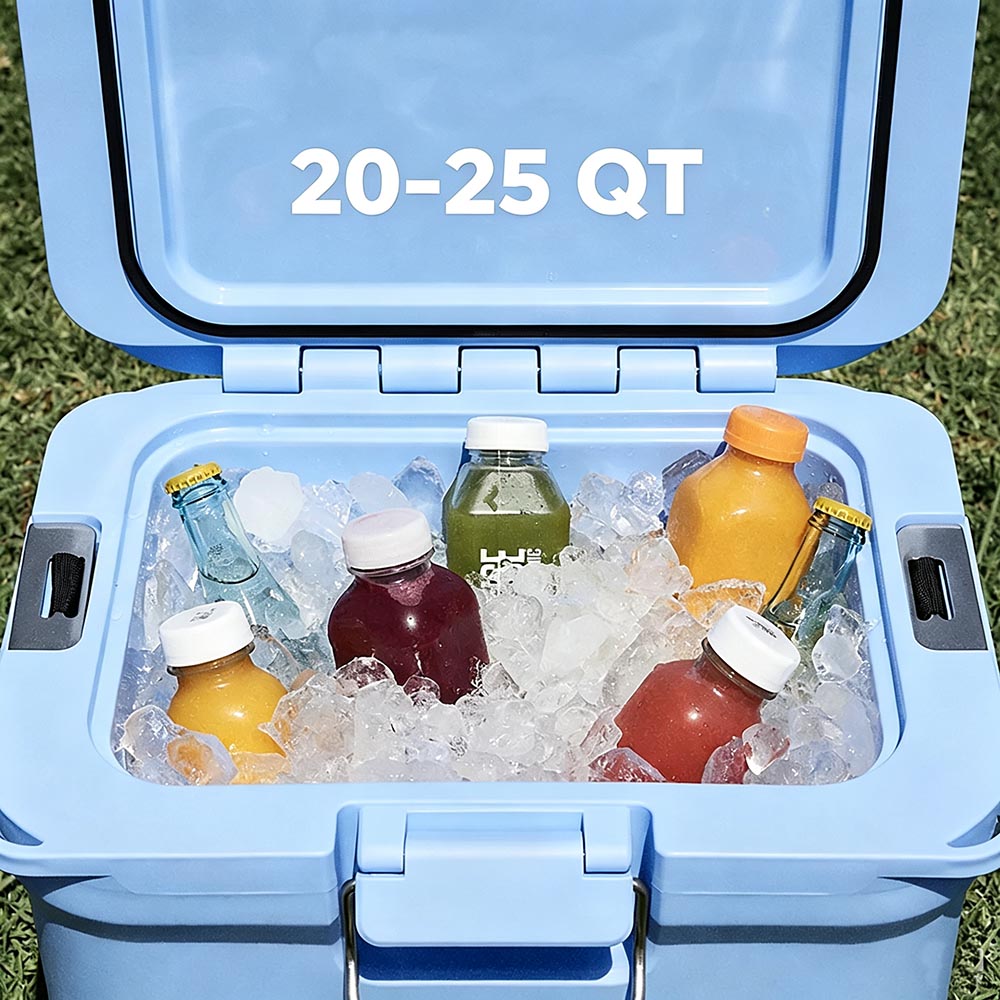
| 20-25 QT | Compact hard cooler | Day trips, sports, personal use | Entry-Mid |
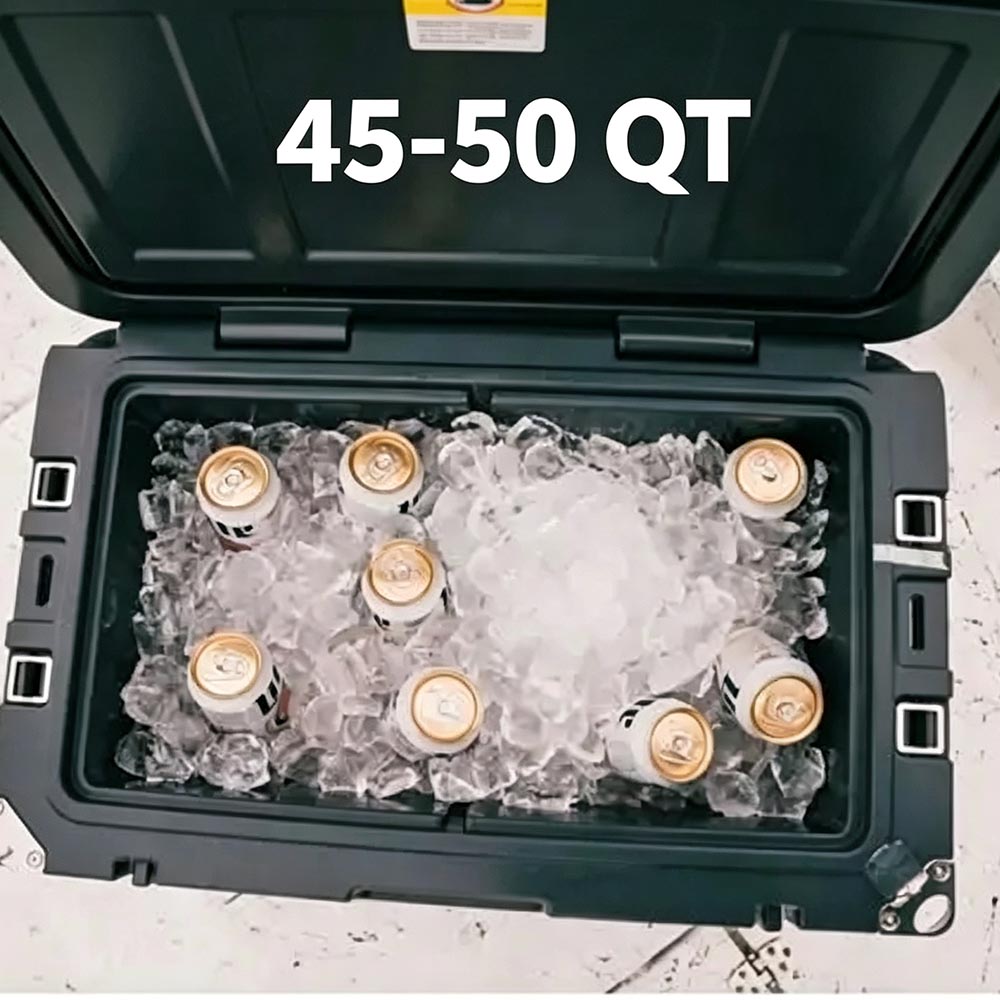
| 45-50 QT | Core hard cooler | Camping, fishing, tailgating | Mid-Premium |
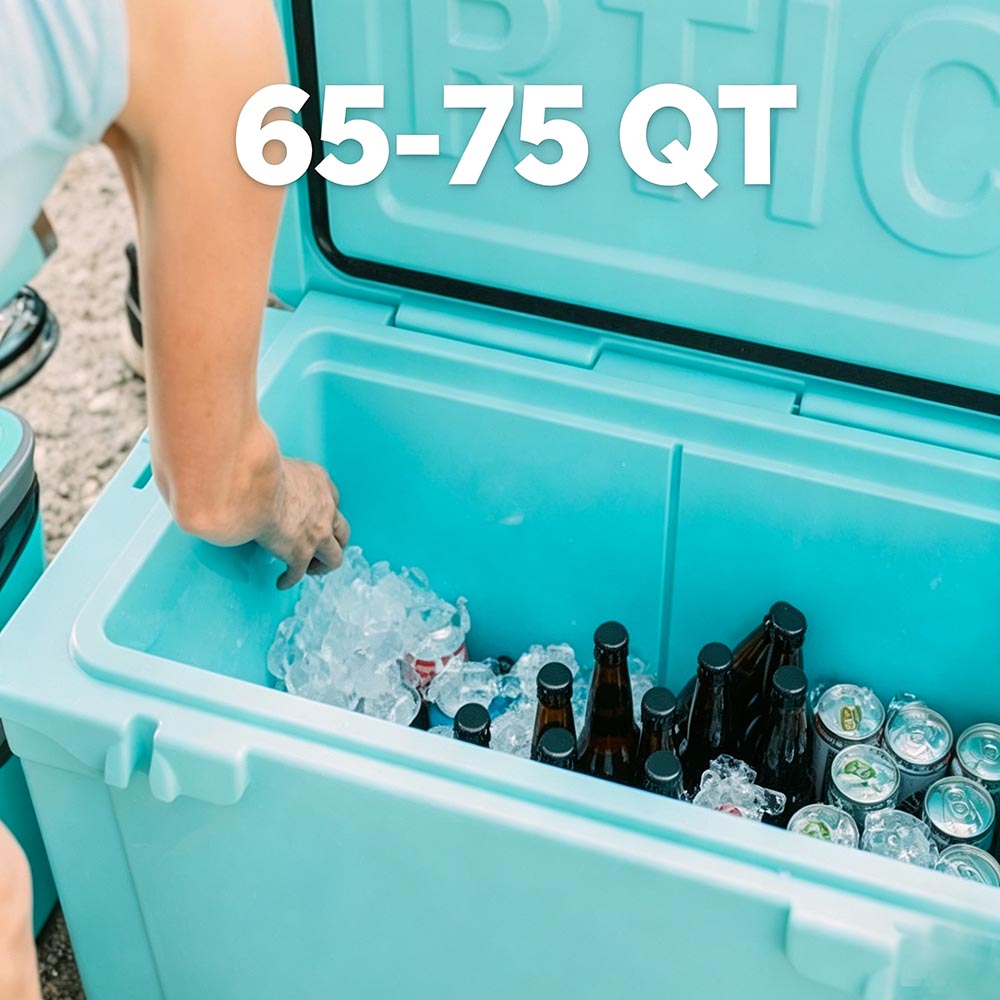
| 65-75 QT | Large-capacity cooler | Hunting, overlanding, extended trips | Premium |
| 80-100+ QT | Specialized cooler | Large groups, professional use | Specialized |
Which Soft Cooler Size Should You Choose for Your Product Line?
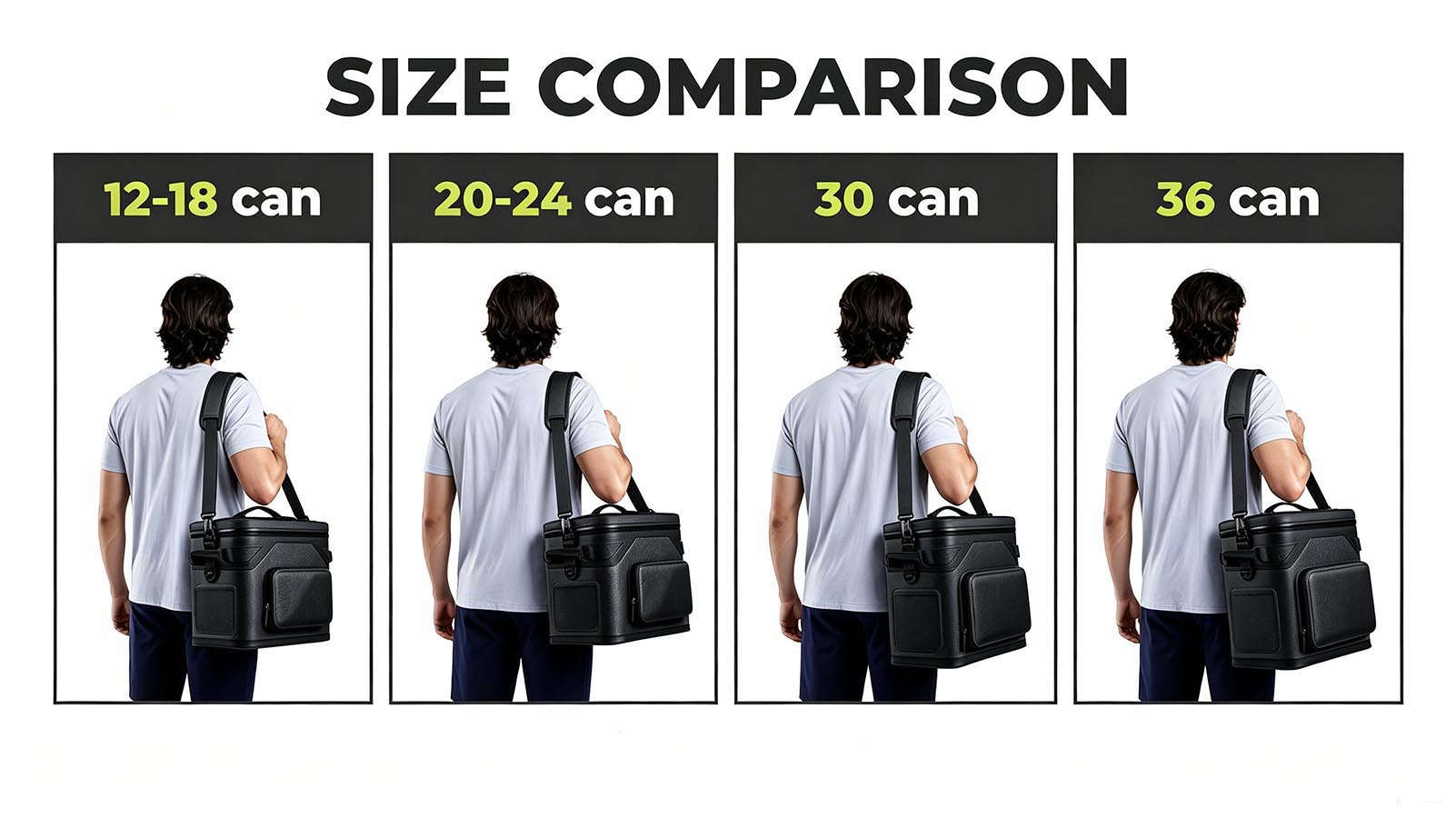
12–18 Can Soft Cooler: the Best Starting Size
Facing lifestyle, promotional gift, sports, and daily-use product lines, 12–18-can soft coolers are the preferred specifications to start with. This capacity holds more than enough room for lunch, drinks, and snacks, and it works perfectly for a one-day short trip without making the bag overly bulky. Equipped with shoulder straps and handles, it is far easier to carry than larger 25–30 can soft coolers.
If you plan to launch a new series of soft coolers, it is suggested to take the 12–18 can size as your main volume option. There is no need to roll out multiple similar small specifications at once. The 12-can and 18-can models have highly overlapping functions. It is not recommended to launch both unless they are positioned at completely different price points or adopt different carrying structures. This size fits well for corporate customization, sports events, picnics, beach trips, commuting, road trips, and various promotional gift scenarios.
When to Choose a 20–24-Can Soft Cooler
20-24 cans of soft cooler bags are a good mid-range choice. It has enough capacity for food and drinks, and it is also easy to carry with shoulder straps and handles. Compared with 12-18 cans, it can put down more drinks and food and is suitable for family trips, weekend leisure, short day trips, and small gatherings. The tote bag is especially suitable, with a spacious opening, which is very convenient for storing and taking things.
If only two types of soft cooler bags are planned for the product line, it is recommended to match the combination of 12–18 cans and 20–24 cans, and do not choose two types with a small capacity difference. The former focuses on daily use, while the latter focuses on scenes that require more space, such as family trips and weekend activities.
When a Large Soft Cooler Makes Sense
25-30 cans of soft cooler bags should be positioned in favor of high-capacity advanced models or high-end portable items and should not be simply regarded as another standard cooler bag.
The advantages of backpack style are outstanding, and the design and capacity of the backpack are equally important. After the bag becomes bigger and loaded with heavy objects, the shoulder strap, cushion, back plate, handle, zipper structure, and load distribution will directly affect the use experience. For the outdoor product line, consider configuring a 20-30 can backpack without adding a regular tote bag. It realizes the differentiation of product forms, not just simply loading a few more cans of drinks.
| Soft Cooler Capacity | Recommended Format | Typical Applications | Product Role |
|---|---|---|---|
| 6–12 Can | Lunch bag / compact cooler | Lunch, commuting, personal use | Entry |
| 12–18 Can | Shoulder bag / tote | Sports, beach, picnic, promotion | Core Volume |
| 20–24 Can | Tote / shoulder cooler | Family trips, weekend use | Mid |
| 25–30 Can | Backpack / large soft cooler | Camping, outdoor events, road trips | Premium |
| 30+ Can | Large specialty bag | Group activities, extended trips | Specialized |
How to match hard coolers and soft coolers to build a complete product line?
A Set of Balanced Five-SKU Cooler Product Lines
Straight conclusion: For the basic product line of general outdoor and lifestyle scenarios, the best combination is 2 hard coolers with 3 soft cooler bags, which can cover most retail channels and light gift orders.
If you plan to build a comprehensive outdoor lifestyle product line, the initial combination plan is very clear: 25 QT hard coolers, 45-50 QT hard coolers, 12-18 cans of portable soft cooler bags, 20-24 cans of tote soft coolers, and 20-30 cans of shoulder soft cooler bags. These five SKUs can cover all the scenes from small-capacity carry-on, daily travel, and moderate outdoor activities to group outings.
Take the first batch of 1000 trial orders as an example; you can directly refer to the following balanced stocking ratio:
| Product | Suggested Specification | Quantity | Proportion |
|---|---|---|---|
| Hard Cooler A | 25 QT | 150 | 15% |
| Hard Cooler B | 45–50 QT | 250 | 25% |
| Soft Cooler A | 12–18 Can | 200 | 20% |
| Soft Cooler B | 20–24 Can | 250 | 25% |
| Soft Cooler C | 20–30 Can Backpack Model | 150 | 15% |
| Total | — | 1000 | 100% |
This is a purchasing model rather than a universal market statistic. Its purpose is to give each SKU a clear role without tying up inventory in multiple products with almost identical applications.
How to build an outdoor product line?
For the outdoor product line that is performance-oriented, it is suggested to adjust the product ratio to about 60% for hard coolers and 40% for soft cooler bags by unit. A set of mature five SKU combinations: 25 QT hard + 45-50 QT rotomolded hard + 65-75 QT rotomolded hard + 20-30 can soft cooler + 20-30 can backpack.
45-50 QT model as the core of the main explosion. 25 QT to meet the needs of small hard insulation equipment; 65-75 QT for customers who really need large capacity.
How to Build a Lifestyle and Promotional Line
For corporate gifts, sports events, promotional items, and daily fashion tracks, it is suggested that the proportion of goods be adjusted to 70% for soft cooler bags and 30% for hard cooler boxes. The 12-18 can cooler bears the main load; secondly, it is matched with 20-24 cans of tote bags or 20-30 cans of backpacks. Coupled with a 20-25 QT hard cooler, as a premium rigid option. In this way, a clear value ladder can be built, and there is no need to add other hard boxes.
Which Cooler Offers Better Ice Retention and Thermal Performance?
- 1
Why Do Hard Coolers Usually Have a Higher Thermal Performance Ceiling?
The rigid box structure can better control the box wall thickness, insulation layer thickness, box cover pressing effect, and sealing structure. Most high-end hard coolers are equipped with thickened shells, polyurethane insulation layers, and complete sealing gaskets. If a product focuses on long-term ice retention, choosing a hard cooler with a polyurethane insulation layer is a more reliable scheme. - 2
Can Soft Coolers Deliver Strong Thermal Performance?
Of course. The performance of soft cooler bags depends largely on the thickness and density of foam, lining structure, zipper quality, top cover design, and edge sealing or welding process. A well-designed soft cooler bag is enough to meet the cold-keeping needs of single-day trips and short-distance trips. At the same time, compared with hard coolers, it is much lighter and easier to carry.In the selection, specifications should be configured according to the actual usage time of target customers, and there is no need to forcibly pursue the ultimate thermal insulation ability of large rotomolded hard coolers.
- 3
How Should Ice-Retention Claims Be Tested?
Test Variable Why It Matters Ambient temperature Determines external heat load Starting temperature Changes initial thermal conditions Ice quantity Affects cooling capacity Ice-to-content ratio Changes thermal balance Opening frequency Introduces warm air Test duration Defines the actual claim For promotional parameters such as “72-hour ice retention,” this data has reference significance only if the manufacturer explains the test standard. For product development, a reproducible test environment is far more important than an isolated performance figure.
Which Cooler Is Easier to Customize for OEM and Private Label Projects?
- 1
Why are soft cooler bags more flexible in appearance customization?
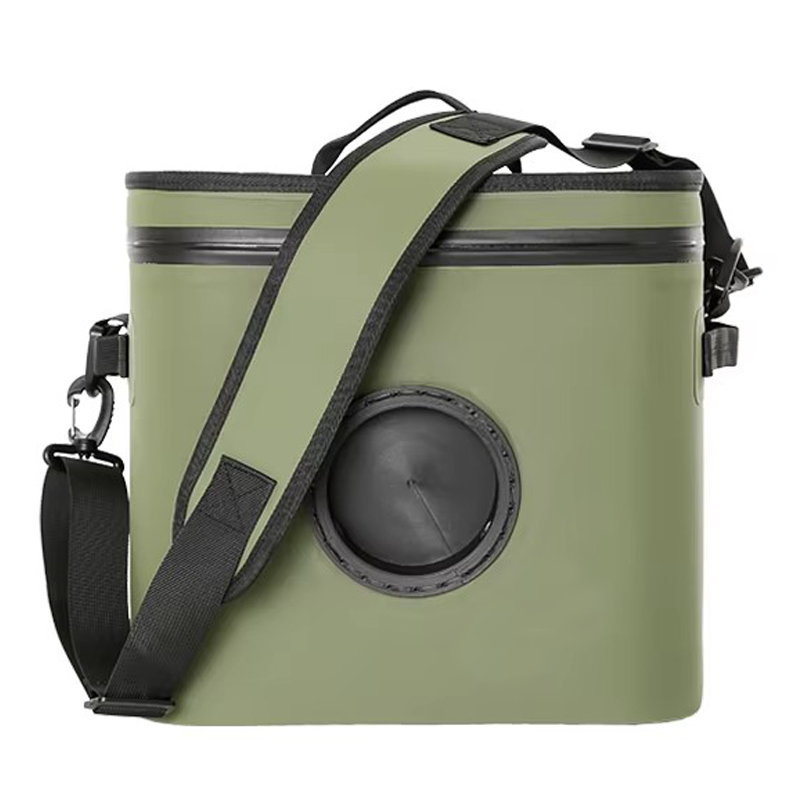
There are many adjustable options for soft cooler ice bags: color matching, pattern, printing, lining, zipper, handle, strap, label, external pocket, and outer packaging. In most cases, it is not necessary to reopen a set of new structural molds. It is very suitable for brands that want to launch a variety of color schemes and create distinct visual differences. - 2
What structural customization can hard coolers achieve?
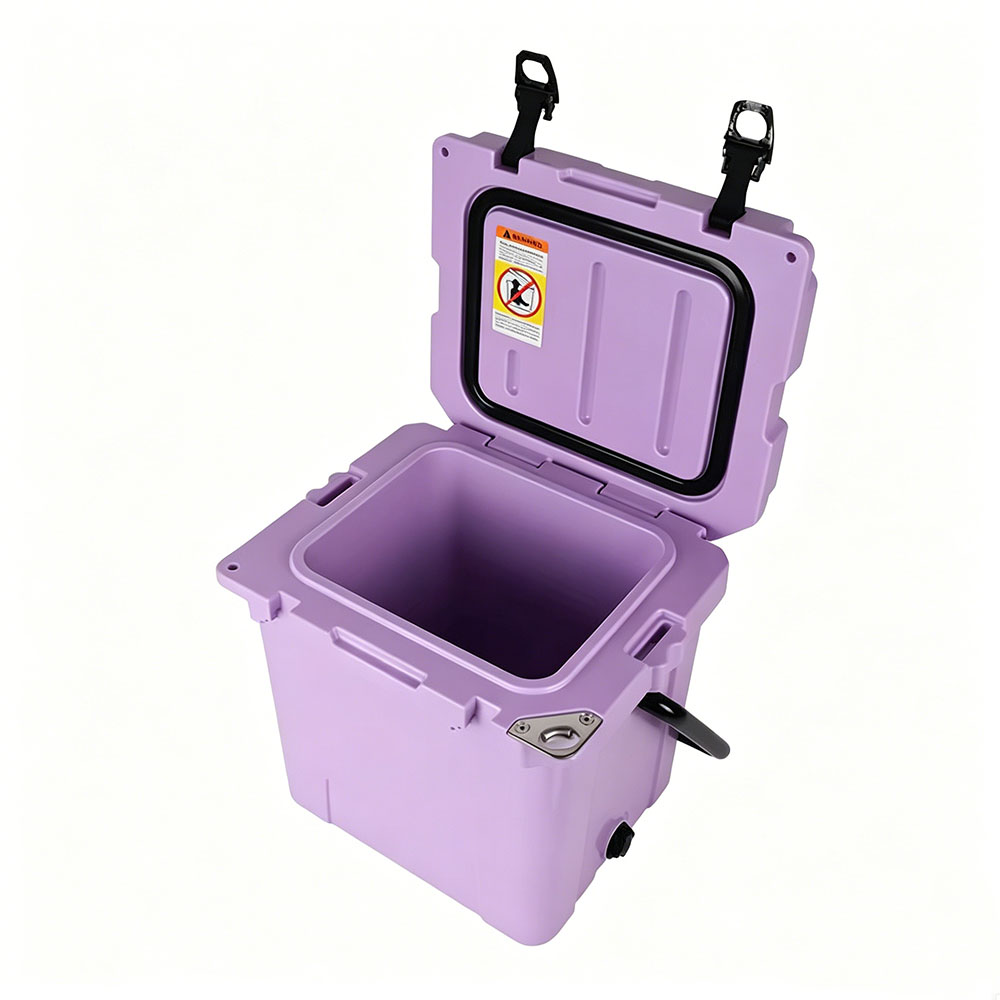
Hard ice coolers support deep structural changes, including capacity, overall size, barrel body modeling, barrel cover design, hardware accessories, drainage structure, integrated LOGO, cup holder, bottle opener, fixed binding points, and so on. If you want to build high-end products, this kind of integrated functional structure is easier to stand out compared with simply printing LOGO. - 3
To what extent should new products be customized?
When developing a product for the first time, you don’t have to create a new mold immediately. Relying on the existing mature mold platform can shorten the development cycle and reduce mold opening costs. In-depth OEM customization development can be carried out after the product scheme has been verified by the market.
| Customization Level | Typical Changes | Complexity |
|---|---|---|
| Private Label | Logo, color, packaging | Low |
| Light ODM | Existing structure + modifications | Medium |
| Deep ODM | Materials, accessories, dimensions | Medium–High |
| OEM | New structure and tooling | High |
Conclusion
To judge hard coolers and soft cooler bags, we cannot merely compare insulation effect and durability. If the idea of product selection wants to have practical guiding significance, it is necessary to bind the capacity, process structure, and positioning of each SKU together.
For most outdoor product lines, 25 QT and 45–50 QT hard coolers are solid basic specifications. If customers have special needs for large capacity, they can supplement the 65–75 QT model. On the soft cooler bag side, 12–18-can styles are high-quality items, and 20–30-can tote bags and soft shoulder cooler bags can be used as portable high-end choices.
KingStar targets brands, retailers, distributors, and gift enterprises and undertakes the customization of hard coolers and soft cooler bags as well as various OEM/ODM projects. We can adapt to a variety of molding processes, ice retention schemes, capacity specifications, raw materials, printing methods, and customization needs of different depths. You can contact us through sales@waterbottle.tech, if you have any questions. We will reply within 24 hours.
FAQ
Reference
ASTM International. (2024). ASTM D4169-23e1: Standard Practice for Performance Testing of Shipping Containers and Systems. Retrieved from https://store.astm.org/standards/d4169
Federal Trade Commission. (2024). Complying with the Made in USA Standard. Retrieved from https://www.ftc.gov/business-guidance/resources/complying-made-usa-standard
International Organization for Standardization. (2019). ISO 18601:2013 — Packaging and the Environment — General Requirements for the Use of ISO Standards in the Field of Packaging and the Environment. https://www.iso.org/standard/55870.html

Specializing in custom manufacturing, quality control and marketing of vacuum-insulated drinkware and coolers.