If you are reading this article, the high probability belongs to one of the following two situations. One is that you need a factory that can produce products on the ground; Or have you ever stepped on a supplier’s pit-the sample looks excellent in quality, but the finished product is not satisfactory. These two situations are very common.
We produce insulated drinking water bottles and rotomolded coolers for brands in Europe, Australia and America, and we have seen many buyers roll over their first orders, with a loss of $15,000–$40,000. And these problems, originally only need a 30-minute video review factory can be found in advance. This guide is not a list of suppliers, but a supplier verification framework that we would use if we were in your position.
The following will introduce the five core standards of whether the pre-judgment order can land smoothly, the technical and compliance points that American buyers are most concerned about, and all kinds of questions that must be raised before paying the deposit.
What Makes a Rotomolded Cooler Manufacturer in China “Reliable” for a US Brand?
The reliability of this category rarely depends on the unit price of a single item. The core lies in that whether the factory can stabilize the quality shown to you in the replica sample room on the mass production line; In mass production, the wall thickness will not be secretly reduced or the foaming density will be reduced.
The Difference Between “Can Make” and “Can Repeat”
Most China rotational molding factories can produce well-made hand-made samples. However, there are few factories that can reproduce the quality of this sample in 1000 mass production batches. The gap between these two abilities is the main reason why the cooler boxes or bags received by American buyers leaks, deforms or loses its ice retention performance in the first use season. Factory audits continue to show that this mismatch between mass production capacity and sample quality is the primary cause of the failure of the first order.
The judgment method is simple: ask the factory to provide an unedited two-minute video about the foam injection station when it is producing for existing American customers. Don’t take photos of the finished cooler, don’t promote the renderings of the artwork, and want continuous real shots with the production line running. If the factory sends an inventory video or a visit video between samples, it is directly judged as unqualified.
Five Verification Criteria That Actually Predict Order Success
When evaluating factories (including our own production partners), we will adopt a list of quantifiable indicators. These indicators are not empty talk on paper, and each item corresponds to all kinds of quality failures we have seen in real orders.
| Criterion | What to Ask For | Why It Matters |
|---|---|---|
| Production repeatability | Unedited video of foam injection during a live run | Confirms the sample can be mass-produced |
| Batch-level test reports | Foam density report from a production batch, not a sample batch | Detects cost-cutting on insulation |
| On-time delivery rate | Historical OTD ≥98% for US orders | Late coolers miss retail seasons |
| Response time | ≤6 hours during RFQ and production | Signals operational discipline |
| Verifiable US references | Two clients willing to take a reference call | Separates real exporters from traders |
Foaming density is worthy of special attention. If a factory can only provide test reports of sample batches, this actually indirectly shows that the factory will not conduct routine tests on mass-produced finished products. This is a defect in the quality system, not a problem of missing documents.
Red Flags US Buyers Miss in the First RFQ Exchange
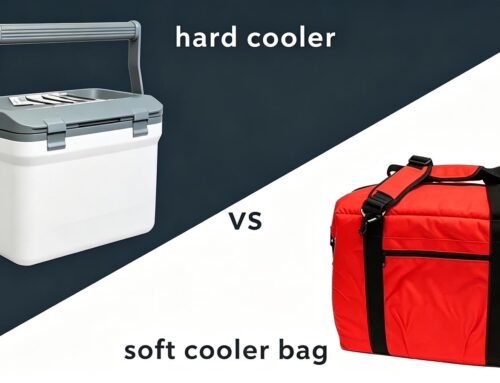
Once there are three kinds of signals, we should terminate the negotiation as soon as possible. First, the quotation only indicates the price of a single item, but there is no mold cost detail or mold ownership clause. Second, they don’t want to provide the FDA documents corresponding to the liner materials separately, but only provide the general factory certificate. Thirdly, the quotation is far below the bottom line of the cost of rotational molding high-density polyethylene and polyurethane foam materials. If the factory offers $18 for a 45-quart rotomolded cooler with a 2-inch foam layer, either the other party misunderstood the product requirements or planned to replace the raw materials. Click and read more: Hard Coolers VS. Soft Coolers: A Practical Guide to Product Selection
Why Does Rotomolding Matter for Your Brand‘s Positioning and Ice Retention?
The manufacturing method you choose not only determines the product performance, but also determines the price range and competitive track of the brand. Rotational molding process is the production process adopted by YETI, RTIC and most high-end rigid freezers in the American market. In 2024, the global market for rotomolded freezers will be about 573 million US dollars, and the compound annual growth rate is expected to be about 3.9% in the next six years, which is mainly driven by the outdoor leisure demand in North America and the trend of high-end products.
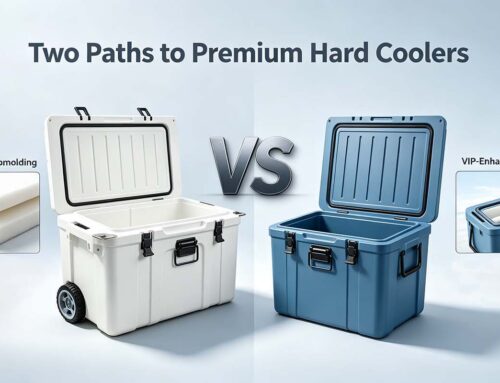
Rotomolded vs Blow-Molded Coolers: What the Ice Retention Data Shows
The performance difference between rotomolded and blow-molded coolers is not marketing. It is a direct consequence of wall thickness and insulation cavity volume.
| Attribute | Rotomolded | Blow-Molded |
|---|---|---|
| Shell construction | Seamless, one-piece | Two halves bonded |
| Typical wall thickness | Uniform, controlled | Thin, variable |
| Insulation cavity | Room for 38–65mm PU foam | Typically ≤25mm |
| Ice retention (typical) | 3–5+ days | 1–2 days |
| Impact resistance | High | Moderate |
| Relative unit cost | Higher | Lower |
Test conditions: The data of ice holding time is based on the premise that the ambient temperature is lower than 30℃, the cooler is full and the lid is kept closed. Frequent opening of the lid will reduce the thermal insulation performance.
The description of the condition column is not a cliche. In the actual use scenario, the performance of the rotomolded cooler with reduced wall thickness and low foaming density will not be as good as that of the blow-molded products with excellent workmanship. The manufacturing process determines the upper limit of performance, and the level of control of raw materials in the factory determines whether you can really get this performance.
How Wall Thickness and Foam Density Determine Real-World Performance
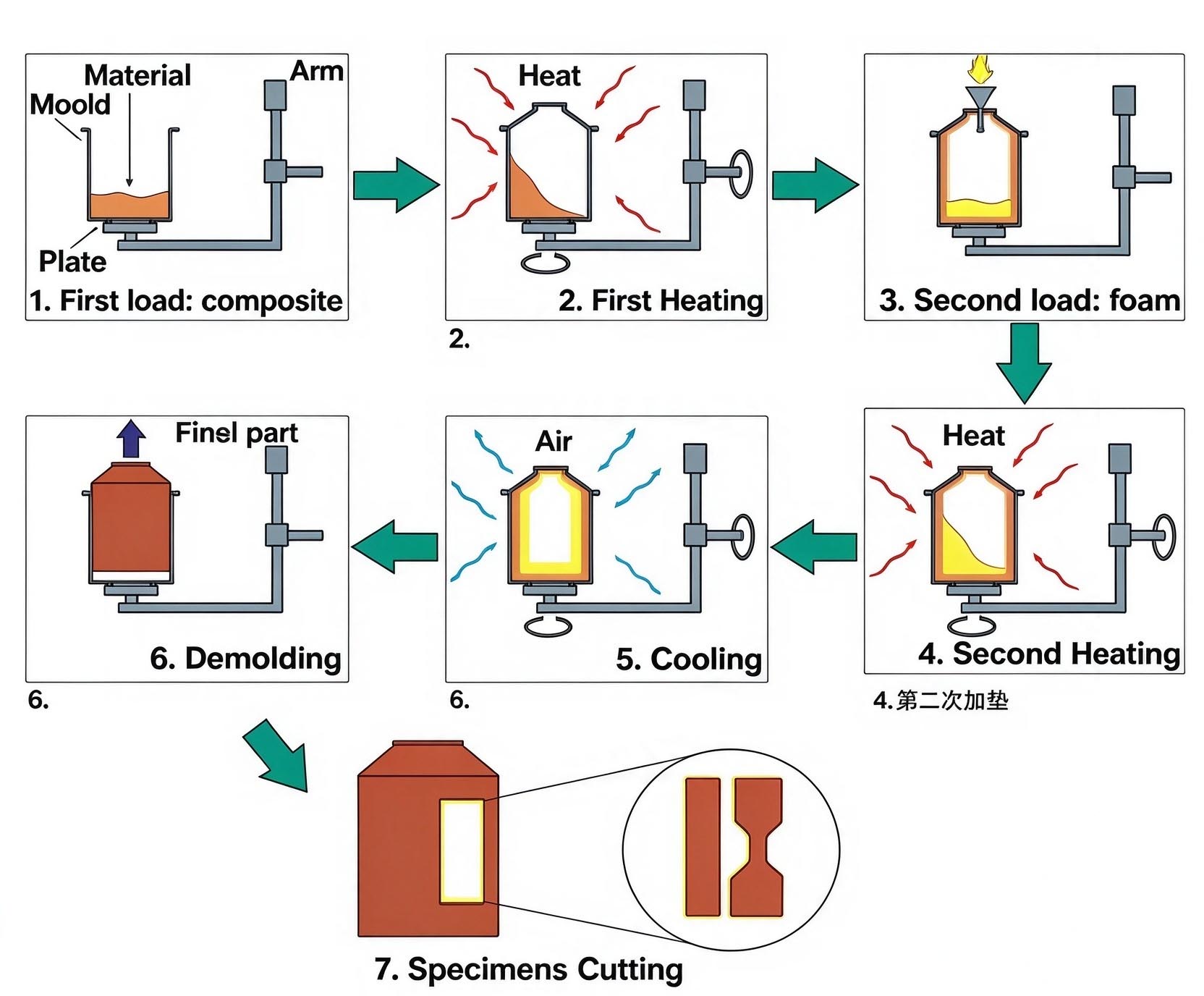
Rotational molding technology allows manufacturers to build seamless boxes, forming a controllable cavity between the inner wall and the outer wall, and heat preservation materials are filled in this cavity. High-end rotational plastic cooler will use pressure injection polyurethane foam material, and its foam density can prevent the foam layer from settling and absorbing moisture in years of use. For example, YETI’s Tundra series, the polyurethane foam layer in the box and box cover can be up to 3 inches thick. When the factory reduces the thickness of thin wall to save raw materials, the cavity space will be reduced and the filling amount of thermal insulation materials will be reduced. The appearance of this cooler is still like a rotomolded box, but its performance is greatly reduced.
This is why the batch foam density test report is more important than the sample ice preservation test. Samples can be carefully crafted, and mass production batches can reflect the real production level of the factory without supervision.
When Rotational Molding Is the Wrong Choice for Your Brand
Rotational molding is not suitable for all brands. If the target retail price of your 45-quart cooler is less than $150, the amortization of molds and the cost of raw materials will reduce the profit margin, and then the blow molding or injection molding process may be more feasible. If you test the first order quantity in the water market is less than 500 pieces, it will be difficult to return the investment in the first round of production. And if your brand focuses on ultra-light and portable, rather than durable, the advantages of rotational molding technology will no longer exist.
As a manufacturer that relies on rotational molding orders for profit, we honestly inform the above points. Buyers who have a clear understanding of these trade-offs are far more suitable to become long-term partners than those customers who find problems after the purchase order is signed.
Which US Import Compliance Requirements Should You Verify Before Ordering?
Compliance failures do not always show up at customs. They show up when a retailer asks for documentation, or when a customer complaint triggers a review. The two areas that matter most for rotomolded coolers are food-contact materials and tariff classification.
FDA Food-Contact and LFGB Documentation: What a Factory Must Provide
The inner container of rotomolded cooler belongs to the food contact surface. When exported to the United States, the applicable regulatory framework is FDA 21 CFR Part 177, which regulates polymer materials used in food contact scenarios. Polyethylene and polypropylene liners are generally evaluated according to 21 CFR 177.1520 standard.
What the factory should provide is not a general “FDA certificate”, but a special material document corresponding to the resin used in mass production, and it is best to attach a migration test report issued by an authoritative laboratory. LFGB is the corresponding European standard; American buyers sometimes refer to the LFGB report as a reference, but it cannot replace the FDA compliance certificate. If the factory can’t distinguish between these two standards, this can reflect its export experience level.
HTS Classification and Section 301 Tariffs for Chinese Coolers
Rotomolded coolers typically enter the US under HTS 8418.69.01, the classification for “other refrigerating or freezing equipment.” The general (Column 1) duty rate is Free. However, Section 301 tariffs apply to most Chinese-origin goods in this category.
| Duty Component | Rate | Basis |
|---|---|---|
| HTS 8418.69.01 general rate | Free | USITC Column 1 |
| Section 301 (List 1) | +25% | China-origin goods |
| Effective rate (typical) | 25% | Stacked on customs value |
Section 301 lists are subject to revision. Confirm the current rate with your customs broker before finalizing landed cost.
This is the data that your profit calculation model must use. Before freight, insurance and other expenses are incurred, a cooler with a FOB price of $40 will have to bear an additional tariff of $10 when entering the country. If the purchaser only calculates the cost according to FOB price and general tariff rate, it will often underestimate the total landing cost.
The Compliance Checklist to Attach to Your Purchase Order
Before confirming the production schedule, please confirm the following items in writing:
- Specification of liner resin and 21 CFR 177.1520 compliance statement.
- Production batch migration test report (sample batch report is not allowed)
- Confirmation document of HTS customs code provided by customs broker.
- The origin identification scheme for the cooler body and outer packaging.
- If it is sold in California, it is required to provide the warning evaluation document of California Proposal 65.
- Mold ownership clause and mold storage agreement
What Do Custom Rotomolded Coolers Really Cost—and What MOQ Should You Expect?
The cost discussion of this category often confuses the unit price of a single item with the total investment of the first order. They are different numbers, and the gap between them is where budgets break.
Mold Costs, Lead Times, and the 1,000-Unit Break-Even Threshold
The cost of a brand-new rotomolded cooler mold is usually between 2000 and 8000 dollars, depending on the box size, structural complexity, and whether it includes integrated handle, drainage tank and other functional designs. The mold production cycle needs to be reserved for an additional 4 to 6 weeks before the first production sample can be produced. When the order quantity is less than about 1000 pieces, the die cost allocated to a single product is still high, which will greatly reduce your profit margin. If you are evaluating custom molding services for a specific cooler design, ask the factory whether the tool includes interchangeable inserts for different sizes.
| Cost Component | Typical Range | Notes |
|---|---|---|
| New mold (45–65 qt class) | $2,000–$8,000 | Complexity-dependent |
| Tooling lead time | 4–6 weeks | Before first production sample |
| Sample lead time | 2–3 weeks | After tooling |
| Mass production | 30–45 days | After sample approval |
| Economical MOQ (custom mold) | ≥1,000 units | Below this, tooling amortization hurts margin |
For brands testing the water market, a better way is usually to choose existing molds and plain basic products, and then add brand logo through simple customization. This can not only control the first purchase quantity, but also complete the market demand verification. For this reason, we have plain spot stock, which supports low-order logo customization service.
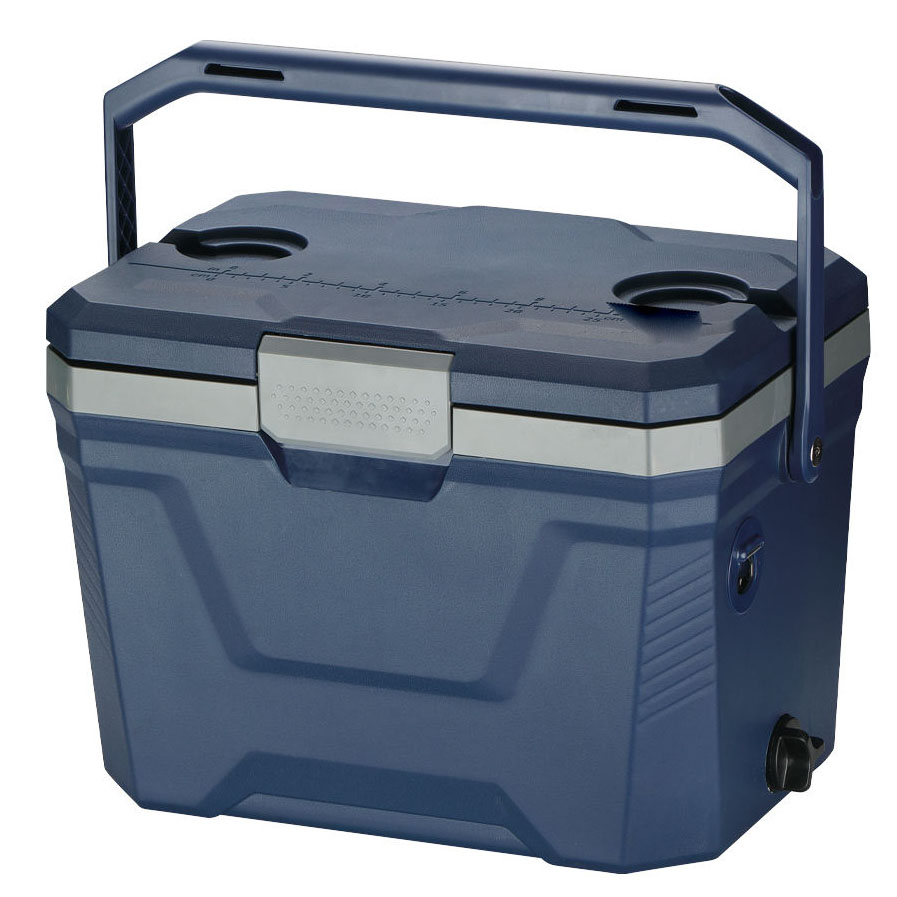
21 QT Portable Injection PP Camping Cooler Box 20 L Insulated Thermal Multifunctional CBX021A023
Unit Price: $18.05-19.00
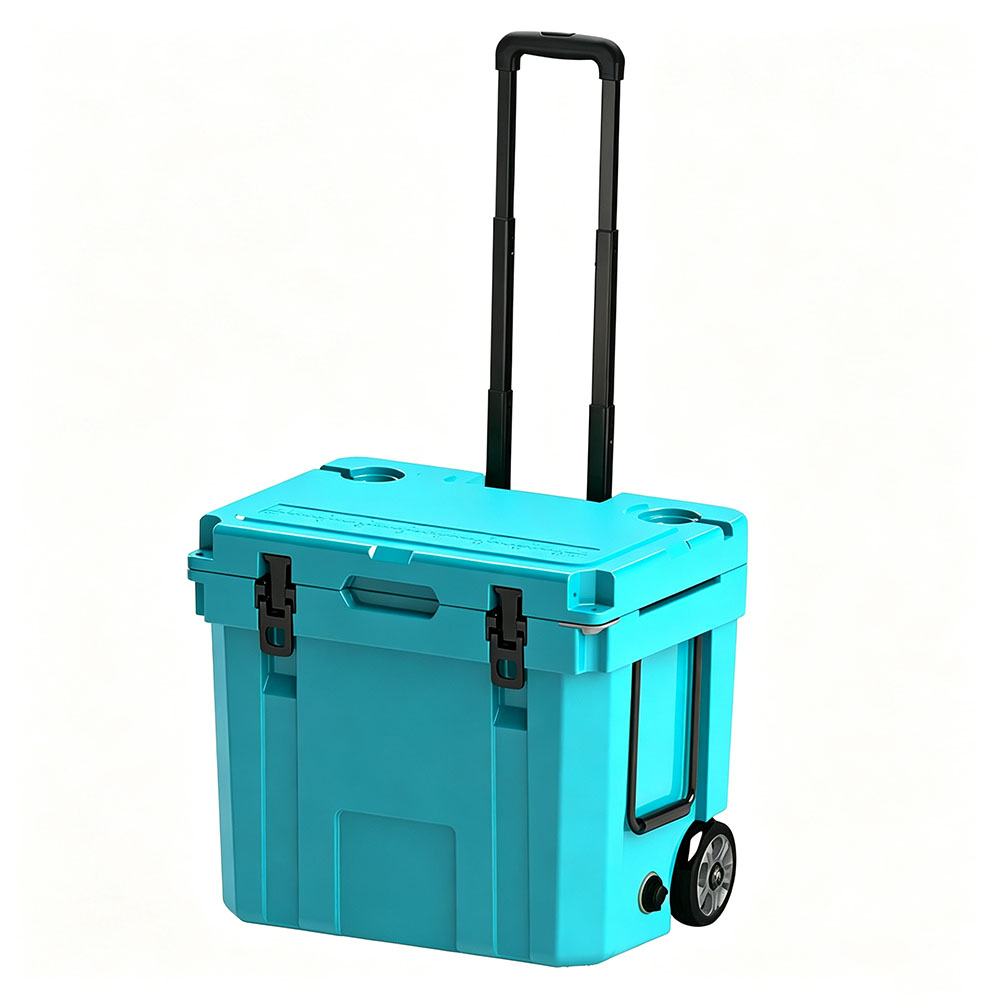
35 QT LLDPE Rotomolded Wheeled Cooler Box 33 L Telescope Handle Food Storage CBX035A026
Unit Price: $62.70-71.25
How to Structure a First Order That Doesn’t Overcommit Your Brand
The most defensible plan consists of three parts. First, the existing molds are selected in the trial production stage to avoid mold investment. Second, negotiate the terms of mold ownership before paying the custom mold fee. Even if the supplier is changed later, the mold ownership will still be yours. Third, finalize the sealing sample confirmation process in written form, and clarify the person in charge of examination and approval and the treatment plan when the mass production quality deviates.
For brands testing the market, a better path is often to start with an existing mold in a neutral color and add your brand through custom decorating or custom logos. This keeps the first order at a manageable volume while you validate demand.
How Do You Move from Golden Sample to Pre-Shipment Inspection Without Surprises?
From sample confirmation to order delivery, quality deviation is most likely to occur. Samples are made under controlled conditions, while mass production orders are produced under the pressure of delivery deadline. The inspection scheme is just a means to bridge this gap.
The Four-Stage QC Protocol for Rotomolded Coolers
A set of reliable quality inspection process of rotomolded coolers includes four inspection nodes. First, sample sealing confirmation: both parties seal and sign the physical samples, and record the detection data of wall thickness and foaming density. Second, the first article inspection: the first product produced from the production line is measured against the sealed sample. Third, process inspection: during mass production, the wall thickness is regularly sampled and the appearance is inspected. Fourthly, AQL inspection before shipment: take statistically valid samples from finished products to test product functions, surface treatment and packaging.
What a Production-Ready Spec Sheet Should Include
Specification is the document on which the actual production of the factory is based. The wall thickness parameters with tolerance requirements, foaming density range, resin grade of inner container, fatigue cycle requirements of lock and hinge, color tolerance (refer to Pan Tong color number), logo technology and location, and packaging drop test standard should be indicated. Fuzzy specification requirements will only bring unstable finished products. For an example of writing the cooler specification document, please see our 55-quart rotomolded cooler product page.
Questions to Ask During a Factory Video Audit
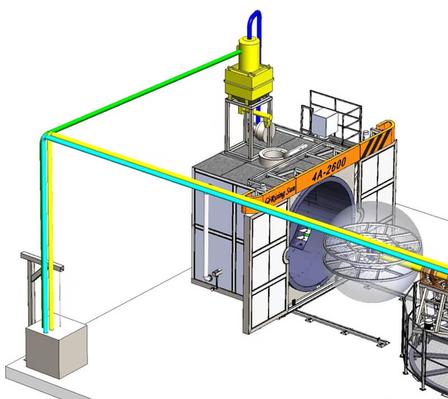
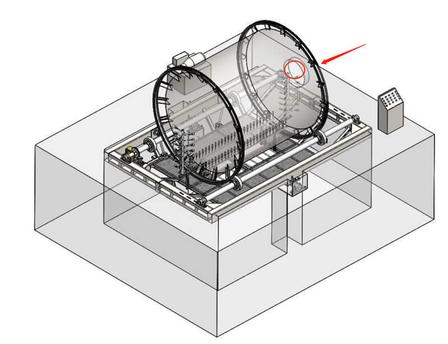
It is required to provide real-time video of three stations: the feeding area of the rotational molding oven, the foaming injection station and the assembly line for lock installation. At each station, let the operator show the products being processed, not the finished products. At the same time, ask for the latest batch of foam density mass production test report. If the factory can’t provide this report within one day, it means that its quality system is not as perfect as it claims.
How Can You Compare Chinese Cooler Manufacturers Without Visiting the Factory?
Most first-time US buyers do not visit China before placing an order. That is acceptable, provided you use remote verification methods that create a documentary trail.
How Do You Score Chinese Cooler Factories Side by Side?
You don’t need a spreadsheet to compare factories, but you must prepare a set of fixed questions and ask each candidate supplier in the same order. The key is the consistency of questions, not the form of documents.
Start with the stability of mass production: ask each factory for unedited real-time mass production videos, and pay attention to whether the other party sends continuous real shots or edited selected clips. Secondly, ask for the batch-level inspection report and record the time required to obtain the report. A factory that can provide a report on the foaming density of mass production batches within one working day has a mature quality system; Factories that take a week or can only provide sample batch documents are not. Third, ask about the historical on-time delivery rate of orders for the United States, and confirm whether you can provide evidence of shipment records. Fourth, ask technical questions in the quotation consultation stage, and record the time-consuming response of the other party. Fifth, ask the other party to provide two American customers who are willing to accept the phone call back, and both customers should follow up and verify
Record the answers side by side. The factory with the lowest quotation for a single product, but the slowest batch document and the most vague customer endorsement information is most likely to make you suffer losses in the future. The formal supplier audit is also based on this logic, and the reason why the third party organization conducts the audit is precisely because the subjective impression is not reliable.
Remote Verification Methods That Actually Work
There are four ways to cover most of the risks: (1) audit the production station without editing video; Third-party factory inspection (cost hundreds of dollars, can issue a written report); Call existing American customers to do background checks (regular exporters are mostly willing to arrange); Document verification, that is, ask for batch-level test report and check the resin grade against FDA compliance statement. None of these methods need to fly to the factory in person.
When to Walk Away from a Quote
In the following three situations, the negotiation should be terminated: refusing to provide real-time mass production video; Only sample batch files can be provided, but mass production batch data cannot be provided; The quoted price is significantly lower than the raw material cost of high-density polyethylene and polyurethane foam materials under the specified density. The first two items are transparency issues, while the third item means that quality hidden dangers are about to break out.
If you have completed the above verification steps and want to discuss the customization project of cooler, you can know our production capacity of rotomolded cooler and apply for quotation according to your product specifications.
Conclusion
Looking for a reliable manufacturer of rotomolded cooler in China, the key point is not to find the lowest price, but to find a factory that can prove that it can stabilize the quality of replica samples through real video, batch inspection report and customer endorsement. The five standards in this guide are also the standards we use to evaluate our own production partners. This set of rules is not complicated, but it requires the purchaser to take the initiative to ask for evidence, rather than just listening to verbal assurances.
KingStar has been manufacturing insulated drinkware and coolers in China since 2002, and today operates as a wholesale custom stainless steel water bottle manufacturer as well as a cooler producer. We wrote this guide because we have seen too many US brands enter the category with a promising product and a preventable supply chain failure. If you are evaluating suppliers for a rotomolded cooler project, we are happy to show you our production line, our batch reports, and our references. You can start by reviewing our cooler product specifications or sending us your requirements.
Frequently Asked Questions
References
QY Research. “Rotomolded Cooler Research: CAGR-6 of 3.9% in the Next Six Years.” qyresearch.com, December 2025. https://www.qyresearch.com/news/13516/rotomolded-cooler
Open Gov by Base. “HTS 8418.69.01 — Duty Rate, CBP Rulings & Classification.” , October 2026. https://open-gov.usebase.io/tariffs/us/84/8418.69.01
Gateway Tariff Calculator. “HTS 8418.69.01.80: Other refrigerating or freezing equipment — Duty Rates and Section 301.” tariff.gatewaylines.com, September 2026. https://tariff.gatewaylines.com/hts/8418690180
Pro QC International. “Supplier Verification Audits in China – Vendor Evaluation Services.” proqc.com, June 2025. https://proqc.com/china/inspection-and-audit-services/supplier-verification/
KingStar Industries. “About KingStar – Manufacturing Capabilities and Certifications.” waterbottle.tech. https://www.waterbottle.tech/about-us/

Specializing in custom manufacturing, quality control and marketing of vacuum-insulated drinkware and coolers.