If you have been sourcing standard water bottles and are considering an upgrade to smart versions, the key—simply put—is not the sensor itself. Instead, it depends on whether your manufacturing partner can seamlessly integrate three essential components: the bottle body, the circuit board, and the supporting app. This eliminates the need for you to coordinate across multiple different suppliers.
Achieving this seamless integration requires a partner with deep expertise in precision machining and custom manufacturing. As an insulated stainless steel water bottle manufacturer, KingStar produces double-wall insulated bottles and the precision hardware components critical to smart water bottles, working closely with brands worldwide to bring these connected products to life.
The global smart water bottle market, valued at approximately $2.3 billion in 2025, is projected to reach $4.46 billion by 2032—a compound annual growth rate (CAGR) of nearly 9.87%. While this growth potential is real, the market is also flooded with products that are “smart” in name only—often featuring nothing more than a blinking LED light. This article outlines the critical selection criteria to help you create a product that consumers will actually keep, rather than return.
What Are the Three Customization Paths for a Smart Water Bottle Brand?
Before requesting a quote, you need to clarify the type of project you are undertaking. The approach you choose will determine the ownership of the molds, control over the app, and the amount of capital required before the first batch of products can be shipped.
OEM vs. ODM vs. Private Label—What Changes When “Smart” Is Involved
This is a crucial distinction between smart water bottles and standard ones: the inclusion of an electronic module introduces a new question regarding ownership—specifically, who owns the firmware? I have encountered many brands that opted for an ODM (Original Design Manufacturer) model, assuming it would grant them control over the software, only to discover that the exact same circuit board was being supplied to three other clients. Before comparing price quotes, review the three options outlined below to clarify your requirements concerning molds, the mobile app, and minimum order quantities (MOQs).
| Path | Tooling Ownership | App Control | Realistic MOQ Range | Time to First Shipment |
|---|---|---|---|---|
| Private Label | Factory | White-label container, limited UI changes | 50–500 pcs | 3–5 weeks |
| ODM (modified existing mold) | Factory (unless bought out) | Branded container app, shared backend | 500–3,000 pcs | 6–10 weeks |
| Full OEM (new mold + custom PCBA) | Negotiable—insist on brand ownership | Custom or SDK-embedded, brand-owned developer account | 3,000–10,000 pcs | 12–20 weeks |
Which Path Fits a Brand with More Ambition Than Capital
If you have a limited budget and want to test a smart product, opting for a “white-label” app solution is a safe starting point. It allows you to validate market demand and gauge return rates without the need for a five-figure investment in custom molds.
The potential pitfall here is assuming that a future upgrade will be straightforward. Transitioning from a white-label solution to your own proprietary firmware typically requires a circuit board redesign and a new round of product certification—a process that can end up costing more than choosing a semi-custom ODM solution from the outset. Before placing any white-label purchase orders, be sure to request a roadmap for the circuit board’s version iterations.
Can You Mix Private Label Hardware with a Fully Custom App?
Yes, but compatibility must be the top priority. If you are developing your own app to interface with a factory-standard BLE module, the module’s firmware must support an open data protocol with proper documentation. Some factory modules transmit only proprietary data packets that can only be parsed by the manufacturer’s own companion app. If you intend to develop custom software, be sure to request the BLE GATT profile specifications before finalizing any partnership; without this documentation, your developers would be forced to resort to reverse engineering rather than standard integration.
What Goes Inside and Outside a Custom Smart Water Bottle?
While the cup body is the part that consumers come into direct contact with, it is the electronic components that determine whether a user will continue using the app after two weeks. This section covers key considerations for hardware selection—decisions that impact both the unit cost and the defect rate. As a one-stop manufacturer of custom water bottlers, we build these components to work together, not just stack them.
Which Bottle Body Specs Actually Matter for a Smart Build
For stainless steel insulated tumblers, 304 is the standard, widely used material; 316 offers superior corrosion resistance, making it better suited for acidic beverages or sports drinks. We can also customize the material to meet your specific requirements. The wall thickness of the tumblers typically ranges from 0.4 to 1.2 mm, depending on the forming process and vacuum insulation specifications. Our injection molding services allow us to create a sealed feed-through that survives washing.
Smart tumblers present a unique constraint due to the compartment for electronic components: models featuring a sensor module at the base require a sealed wiring structure capable of withstanding washing. If the target users are expected to rinse their tumblers daily, an IPX5 rating should be considered the absolute minimum, not a high standard. Whenever electronic components are positioned below the water line, I recommend an IPX7 rating—what consumers describe as “daily rinsing” in surveys often translates to occasional submersion in water during actual use.
What Sensors and PCBA Modules Drive the Real Cost
A basic water intake monitoring module consists of an accelerometer or a capacitive liquid-level sensor paired with a BLE (Bluetooth Low Energy) chip. Adding a temperature-sensing function requires an additional thermistor, along with a calibration process. While a UV-C sterilization module can be integrated, it significantly increases both the bill of materials (BOM) cost and the complexity of the certification process. Click and read more: Hidrate Spark Smart Water Bottle 3.0 & PRO Manufacturing.
Under FCC regulations, any Bluetooth-transmitting device is classified as an “intentional radiator” and must obtain an FCC ID certification; standard Bluetooth-enabled water bottles do not qualify for the simplified SDoC (Supplier’s Declaration of Conformity) certification path. Please ensure that certification costs are included as a separate line item in your budget, rather than being added as an afterthought. The cost ranges provided below reflect typical market rates I have encountered when comparing various module configurations during the inquiry phase.
| Configuration | What It Measures | Indicative BOM Add (volume) | Certification Burden | Fit for Your Brand |
|---|---|---|---|---|
| BLE + timer only | Pairing status, drink reminders on a fixed schedule | $2–$4 | FCC ID (BLE) | Weak "smart" claim—review risk |
| BLE + accelerometer | Sip detection, approximate volume | $4–$7 | FCC ID (BLE) | Good entry point for DTC |
| BLE + capacitive level + temp | Actual volume, temperature, timestamp | $7–$12 | FCC ID + calibration protocol | Strongest tracking claim |
| Add UV-C module | Sterilization cycle status | $12–$20+ | FCC ID + UV safety documentation | High complexity, narrow use case |
How the Smart Module Is Sealed, Tested, and Assembled
The assembly sequence is critical: electronic modules must be tested before being enclosed in the base, as any attempt to rework them after potting will inevitably damage the components. Please confirm the method for leak testing (e.g., air pressure decay test or immersion test) as well as the drop test height. For water bottles / food containers / coffee cups / coffee pots featuring an electronic compartment in the base, a drop test from a height of 1.2 meters onto a concrete surface serves as a reasonable factory acceptance standard.
How Do You Integrate an App Without Building a Tech Team?
Many brand founders get stuck at this stage. The good news is that you don’t need to hire separate iOS and Android development teams to launch an app with a solid user experience; what you really need to determine is the extent to which you want to control that user experience.
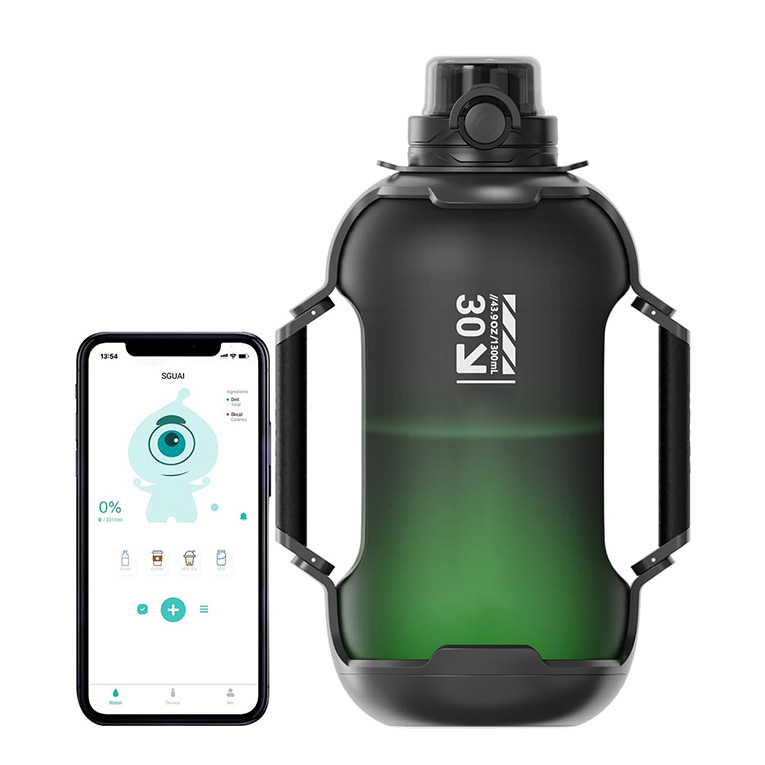
The Two App Paths: SDK Embedding vs. Branded Container
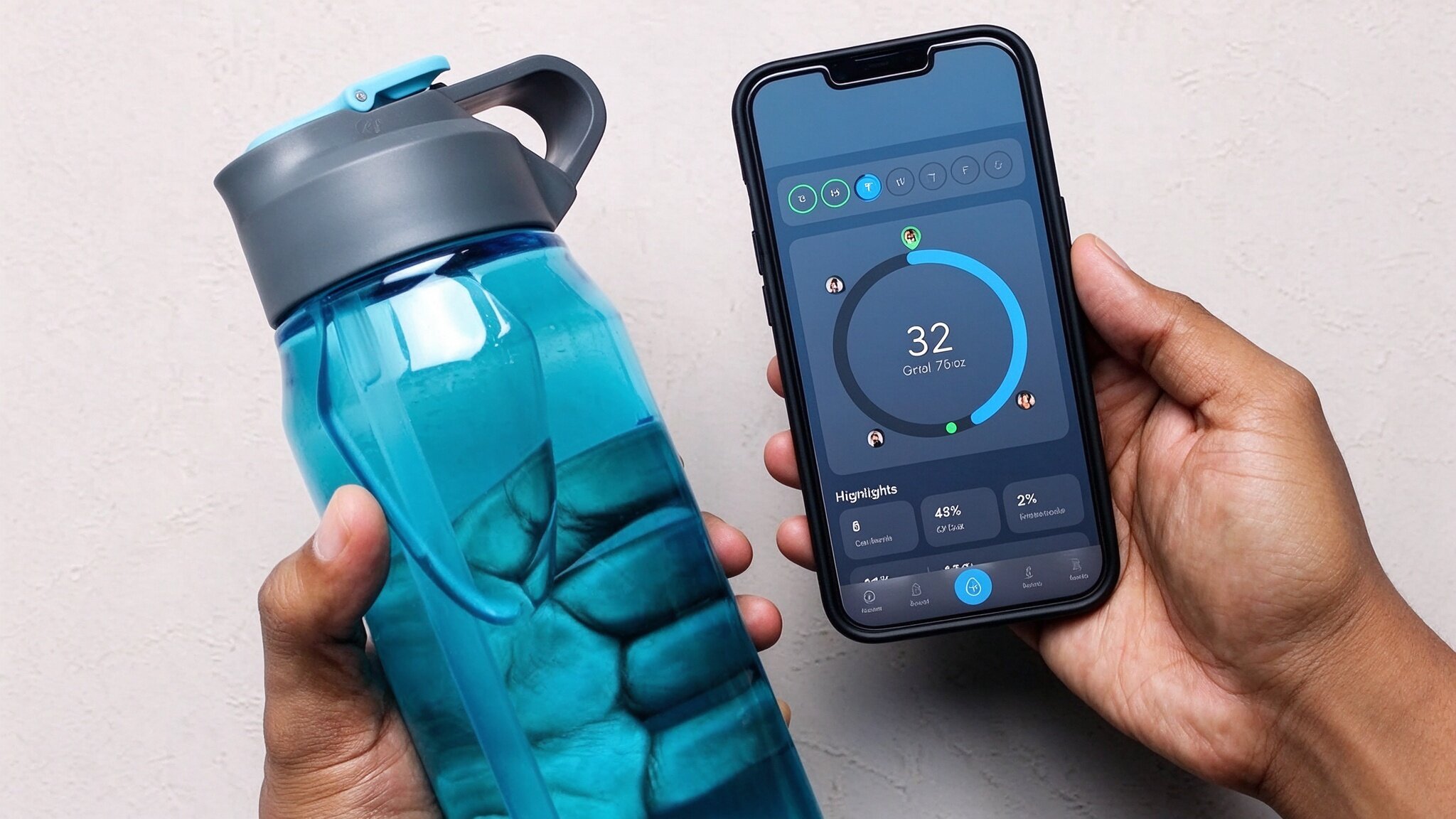
The SDK allows your existing application to read the Bluetooth data of the water cup. The branded shell APP is a white label framework, with the backend hosted by the factory or software partner. You can only customize the interface appearance. If you choose the SDK solution, you have full data ownership and can achieve a native user experience, but it requires in-house or outsourced application development resources. Shell solutions are faster to launch and less expensive, but usually limit the depth of data export and interface customization. The following comparison is what I explain to founders before they finalize the scope of software development.
| Factor | SDK Embedding | Branded Container App |
|---|---|---|
| Upfront software cost | $8,000–$25,000+ (depends on scope) | $0–$5,000 |
| Data ownership | Brand owns | Often shared or platform-held |
| UI control | Full | Template-bound |
| Time to launch | 8–14 weeks | 2–4 weeks |
| Exit cost if you switch vendors | Low | High—data migration may be blocked |
Who Owns the Firmware and the Data
Ownership of firmware source code is negotiable, but it must be explicitly stated in the tooling and development agreement. The factory developing custom firmware for your circuit board should provide the source code—or, at the very least, supply program files that can be flashed by a third party. Regarding data ownership, there is a practical litmus test: can you export the complete set of user records without the factory’s permission? If not, the data does not belong to you.
How Long Does Firmware Adaptation and App White-Labeling Take?
The firmware adaptation cycle for custom PCBA typically spans 4–6 weeks, while the development of a white-label app requires an additional 2–4 weeks; these two processes can generally be carried out in parallel. The critical path for a project often lies not in code development, but in the certification phase—for instance, FCC ID certification alone can take an extra 3–6 weeks, depending on laboratory scheduling. When planning your product launch, you should work backward from the certification timeline rather than basing your schedule on software delivery dates.
What MOQ, IP, and Cost Questions Should You Ask Before Signing?
The questions in this section are the ones that separate a smooth launch from a six-month delay.
Realistic MOQ Tiers for Logo Customization vs. New Tooling
For existing water bottle models, you can add your own logo (white-labeling) with a minimum order quantity (MOQ) as low as 50–500 units, depending on the surface finishing technique. Creating a new mold for the bottle body requires an MOQ of 3,000–10,000 units, as the mold costs must be amortized. Smart water bottles fall somewhere in between: while you can reuse the existing mold for the bottle body, the bottom cap—which houses the electronic components—typically requires a new mold, with an MOQ of approximately 1,000–3,000 units for a single-cavity mold.
Who Owns the Mold After the Project Ends
We support a business model where customers own their own molds, and also provides mold storage and maintenance services. The key issue is not whether you can own the mold, but rather what it would cost to relocate it. Molds customized for a specific injection molding machine may not necessarily be directly compatible with equipment at another facility. If mold portability is important to you, please ensure that the injection molding machine tonnage and tie-bar spacing are specified in your mold development agreement.
How Tariffs and Landed Cost Change the Math
Section 301 tariffs on goods originating from China remain a significant cost factor that cannot be overlooked. While the Office of the United States Trade Representative (USTR) has extended certain exclusions through January 2027, items such as drinkware and consumer electronics are not consistently covered by these exemptions. Please calculate your landed costs based on specific HS codes, rather than relying on rough estimates for broad product categories. The table below outlines the cost structure I used for my preliminary landed cost analysis; please note that the percentages provided are for planning purposes only and do not constitute a formal price quote.
| Cost Component | Planning Range (share of landed cost) | Common Surprise | Guidance |
|---|---|---|---|
| Ex-works unit price | 55%–65% | None—this is the quote | Get 3 quotes minimum |
| Ocean freight + insurance | 6%–12% | Volumetric weight on gift boxes | Confirm CBM before booking |
| Section 301 duty | 7.5%–25% depending on HS code | Electronics may classify separately | Verify HS code with broker |
| Customs brokerage + fees | 1%–3% | ISF filing penalties | Budget ISF as fixed cost |
| Domestic drayage + warehousing | 4%–9% | Port congestion surcharges | Varies by standard |
We’ve seen landed cost estimates miss by 8–10 percentage points because the broker used the wrong code. Check our Amazon FBA and Shipping & Logistics support to avoid this.

Click and read more about Custom Options: Custom Bottle Tumbler Decorating, Custom Logos of Water Bottles, Custom Water bottle Packaging
How Do You Separate a Smart Bottle Manufacturer from a Bottle Manufacturer?
A factory capable of producing high-quality vacuum-insulated tumblers may not necessarily be able to deliver stable firmware. That’s why our OEM Manufacturing goes beyond the bottle. The following questions will help you discern the difference.
Five Questions That Reveal True Hardware-Software Integration
Why “One-Stop” Beats a Lower Unit Price
While a factory that only manufactures the cup body might offer a lower unit price, that advantage quickly vanishes the moment a firmware bug arises. You would then need to hire independent software vendors and certification consultants, while also assigning a project manager to coordinate between the various parties. An all-in-one model, by contrast, shortens the feedback loop: the engineers who tune sensor thresholds and the staff who adjust the fit tolerances for the lid work together at the same facility.
Conclusion
Customizing a smart water bottle is fundamentally a three-layer engineering challenge: the bottle body must endure daily wear, the electronics must withstand washing and drops, and the app must retain user engagement beyond the first week. The most reliable smart water bottle manufacturers succeed by treating firmware and hardware as a single integrated product, not two separate components. As an experienced OEM/ODM partner for global brands, KingStar supports smart drinkware projects end-to-end—from tooling and precision machining to PCBA integration and white-label software. We also extend these manufacturing capabilities to adjacent wellness categories, such as custom pill organizers, helping brands scale their product lines. If you are scoping a smart bottle project, we recommend evaluating potential partners with the five supplier questions above before comparing unit prices—because the cheapest quote is rarely the one that ships on time. To discuss your hardware and software integration needs, reach out to our team at sales@waterbottle.tech.
Frequently Asked Questions
References
KingStar Tooling & Mold Development—wall thickness, cavity, and tooling lead time data. https://www.waterbottle.tech/tooling-mold-development/
GII Research, Global Smart Bottle Market 2026–2030—market sizing and segment data. https://www.giiresearch.com/report/infi1937195-global-smart-bottle-market.html
Taiwan, Smart Water Bottles Market by Connectivity—2025 valuation and CAGR. https://www.gii.tw/report/ires1978978-smart-water-bottles-market-by-connectivity.html
U.S. Food and Drug Administration, Understanding How FDA Regulates Substances that Come into Contact with Food. https://www.fda.gov/food/food-packaging-other-substances-come-contact-food-information-consumers/understanding-how-fda-regulates-substances-come-contact-food
Regfollower, USTR Extends 178 China Tariff Exclusions Until January 2027—Section 301 exclusion status. https://regfollower.com/us-ustr-extends-178-china-tariff-exclusions-until-january-2027/

Specializing in custom manufacturing, quality control and marketing of vacuum-insulated drinkware and coolers.