Injection Molding Capabilities

Kingstar provides precision injection molding services for B2B water bottle or cooler programs. We focus on the parts that decide whether a bottle leaks, feels durable, ships efficiently, and survives real use: plastic lids, cup handles, hard coolers, and cup hold expanders. We also provide DFM manufacturability analysis and mold flow analysis and support food-grade raw materials such as PP, Tritan, PC, and PPSU for brands, importers, wholesalers, and promotional suppliers.

Kingstar Injection Molding Capabilities Overview

If you need to customize injection molded water bottle lids, handles, plastic hard coolers, or cup holder expanders, Kingstar will be the ideal choice. We use food-grade raw materials, provide DFM design support, and can produce in large quantities stably and continuously.

Part FamilyWhy It Is HardHow We Mold ItRecommended Materials
Water Bottle LidsLeakage, thread mismatch, sealing groove accuracyOptimize thread pitch, sealing groove, cooling, and packing profilePP, Tritan, PPSU
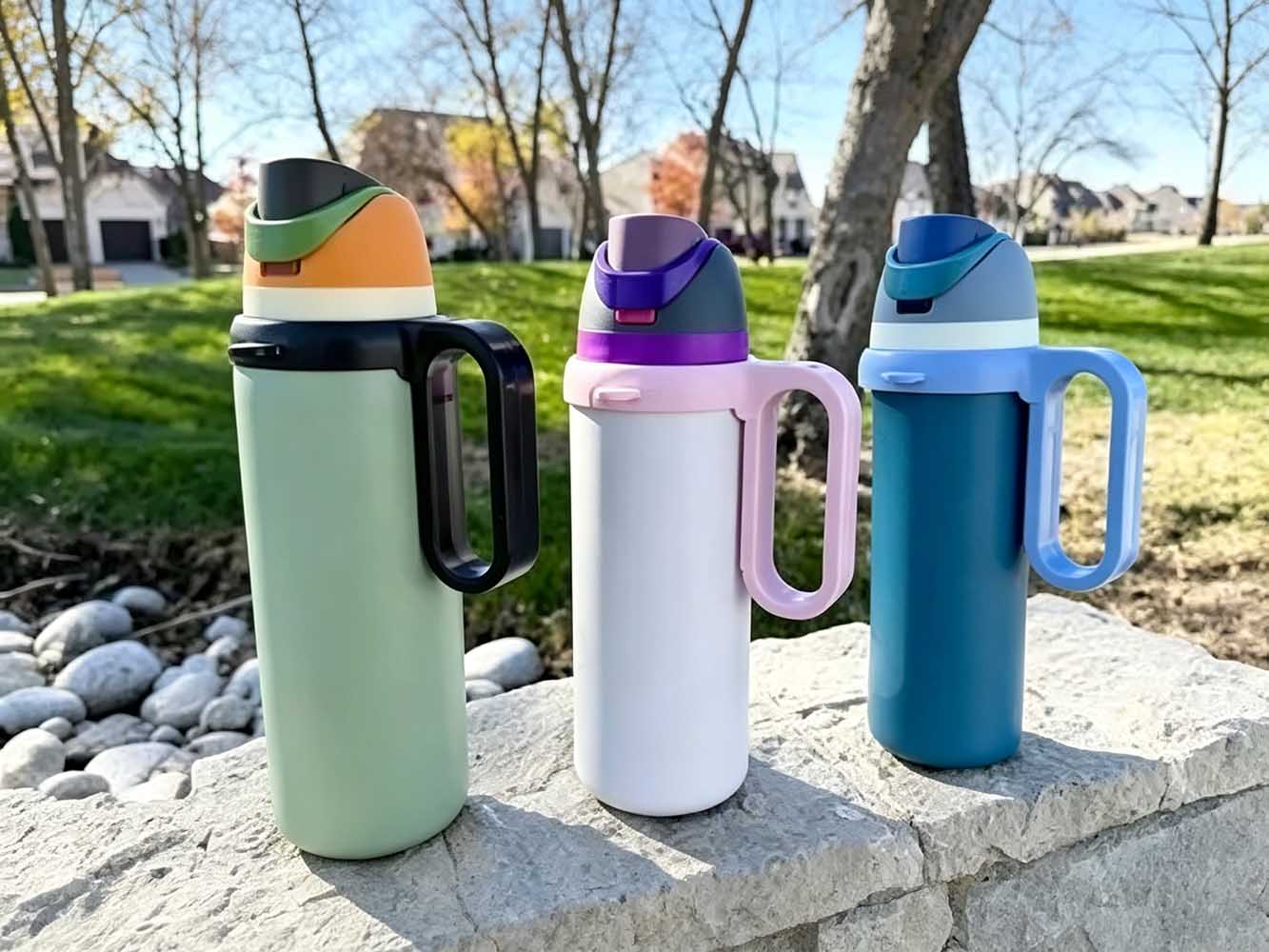
Cup HandlesLoad bearing, ergonomics, assembly fitRib design, gate location, weld-line control, tolerance stack reviewPP, PC, PA
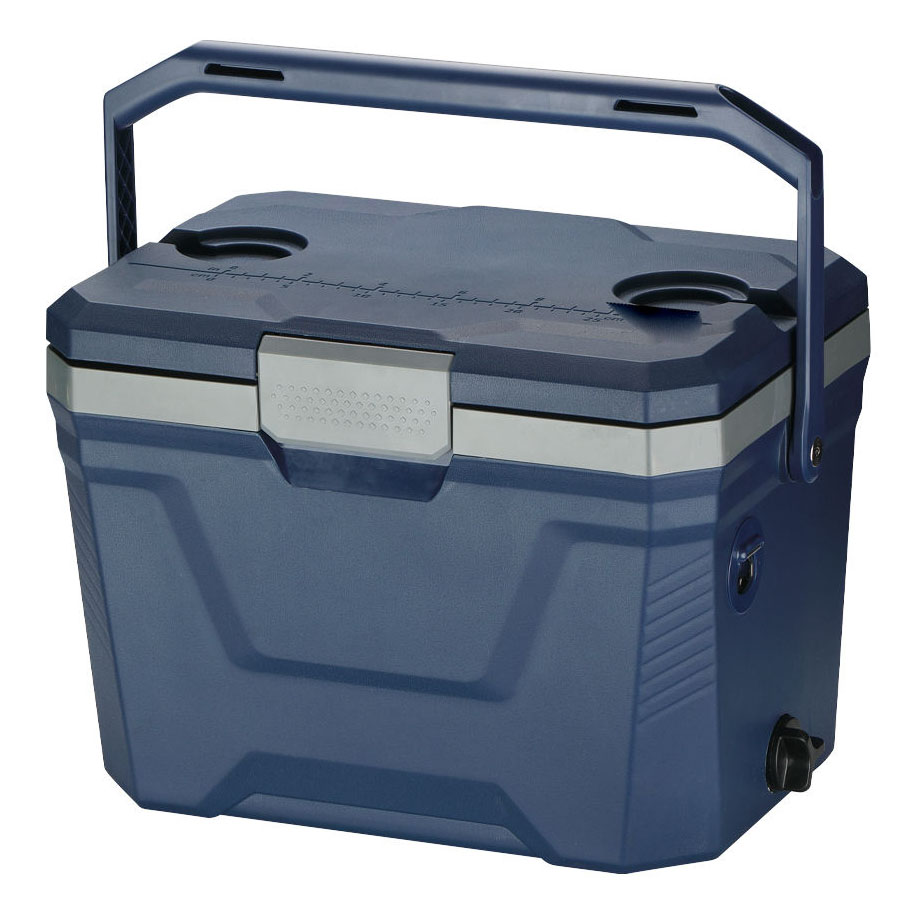
Hard CoolersThick-wall shrinkage, impact strength, warpageCooling optimization, packing profile, ribbed structure, UV-stable gradesPP copolymer, HDPE
Cup Hold ExpandersVehicle fit, tolerance, structural strengthSnap-fit review, rib geometry, gate placement, heat-resistant materialsABS, PC, PP

Injection Molding Equipment and Tooling

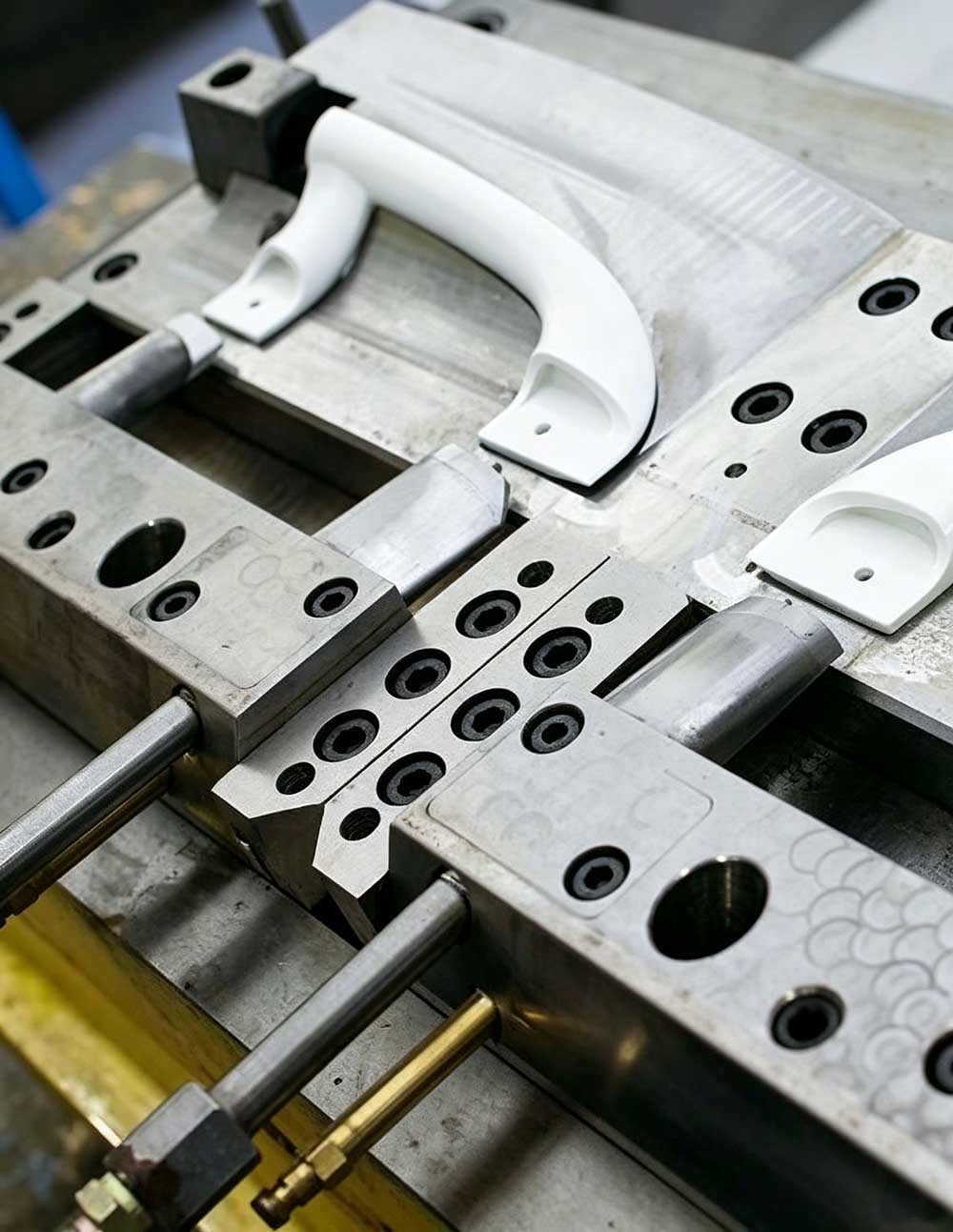
KingStar has a flexible injection molding production platform, specializing in the manufacturing of water bottle lids, cup handles, hard coolers, and cup holder expanders. Our equipment has a wide selection of tonnage and supports multi-cavity molds. According to your annual order volume and molding cycle target, you can match the appropriate model and cavity number. We use food-grade raw materials and can also be equipped with automatic equipment to stabilize the production rhythm and reduce the quality fluctuation caused by labor.

Our team is responsible for mold making, thread control, sealing structure design, and mold trial. For B2B projects, we can also provide online detection and batch traceability services.
injection molding tools and engineering
Key SpecDetails
Machine tonnage120–470 tons
Mold cavities1–48+ cavities
AutomationRobotic take-out, auto sprue cutting, in-line inspection options
Tooling lead time25–45 days
Mass production lead time15–30 days after sample approval
MOQAccording to your demands
ComplianceISO 9001, FDA 21 CFR, LFGB, EU 10/2011, REACH, BSCI

Injection Molding Working Principles

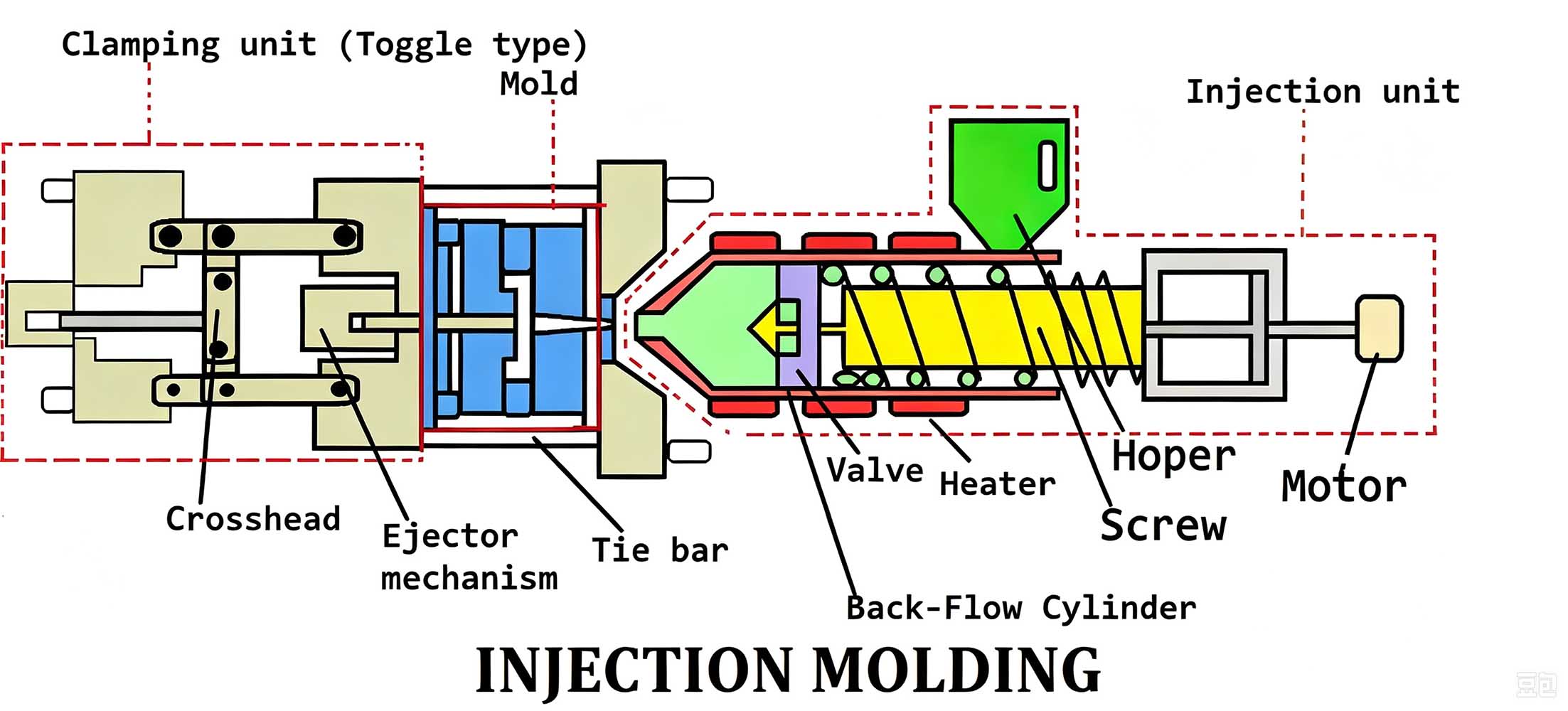
what is injection molding working principles

Custom Injection Molding for Drinkware & Cooler Components

From DFM analysis and mold flow simulation to multi-cavity tooling and validated mass production. We deliver consistent, compliant plastic components for insulated drinkware and cooler programs.

What Our Injection Molding Delivers
injection molding wholesale water bottle lids

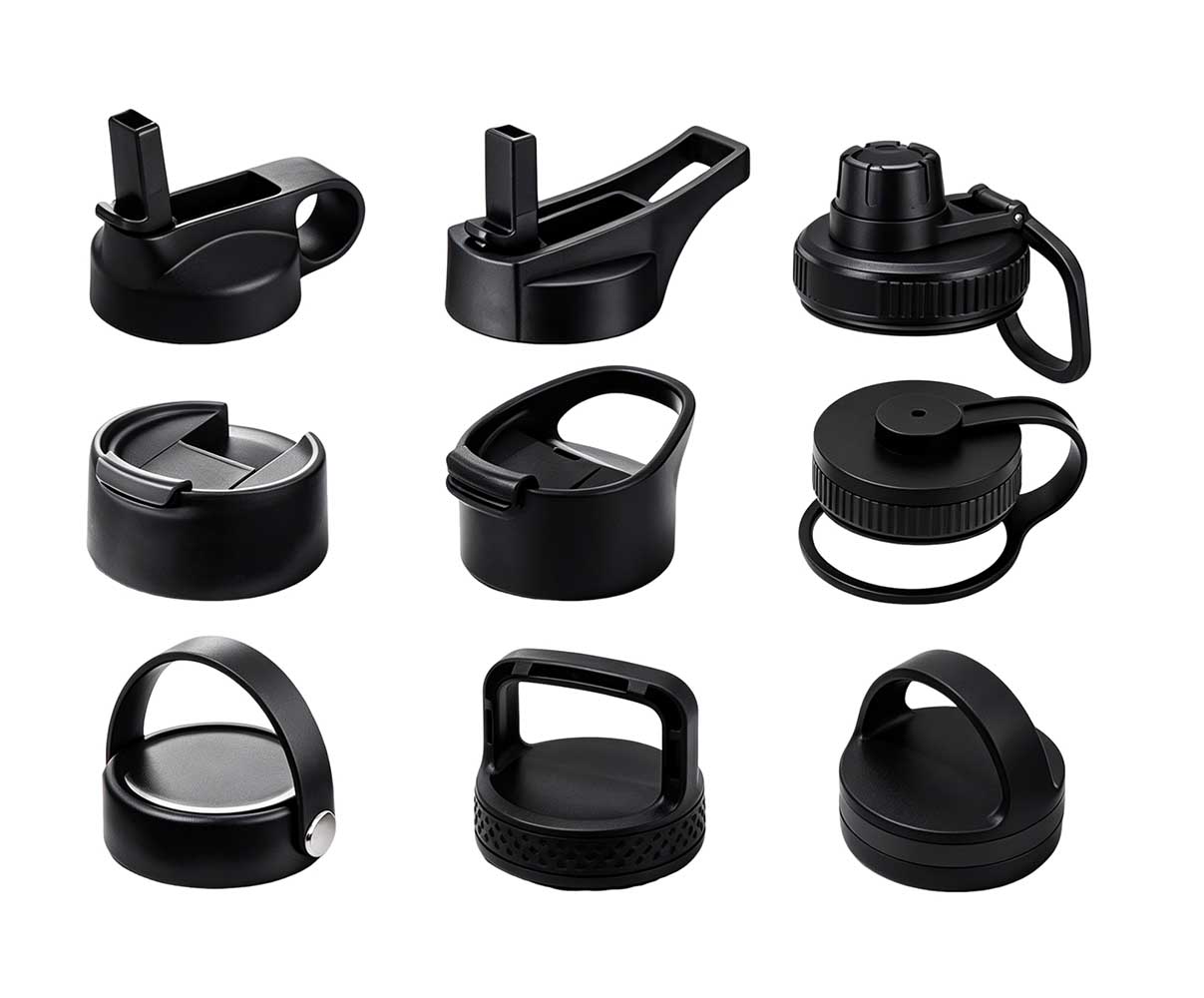
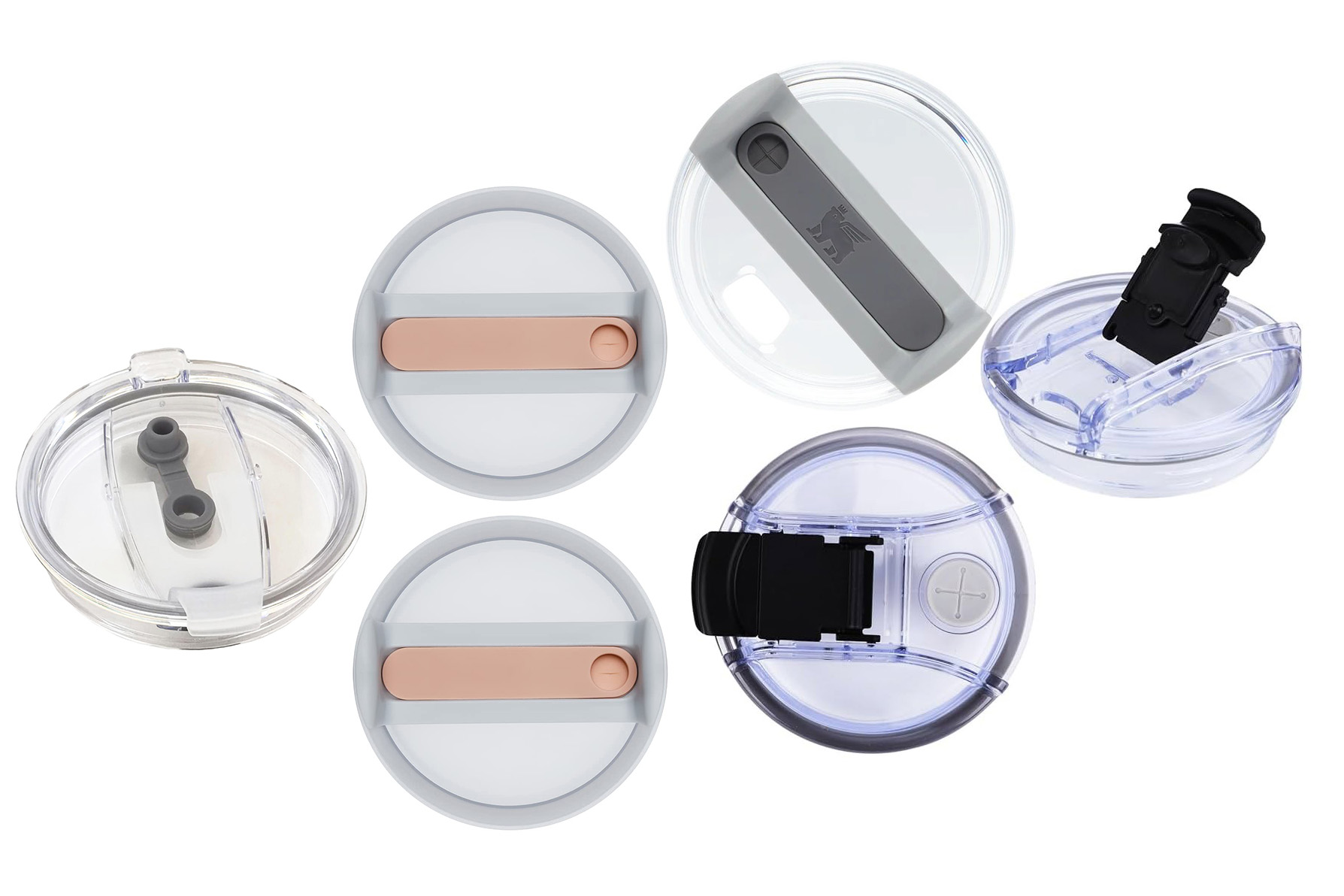
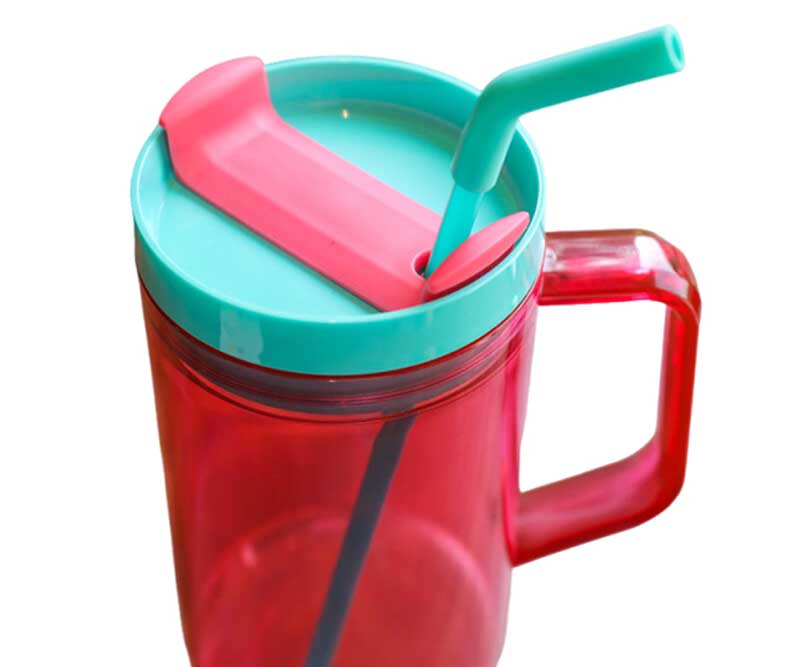
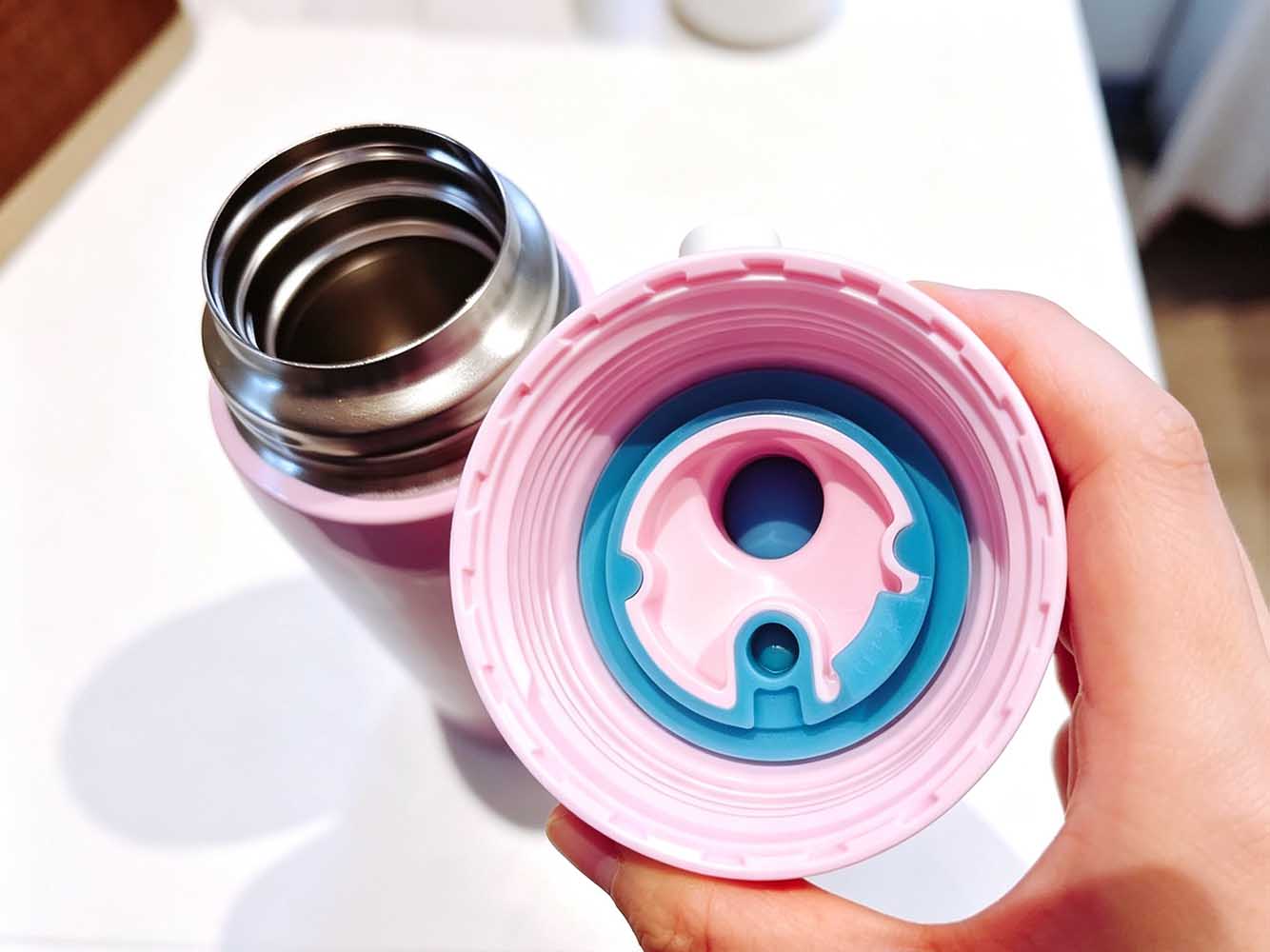
Water Bottle Lids: Our injection-molded bottle or tumbler lid has excellent precision of screw thread and sealing groove and stable and reliable leak-proof performance. The tolerance of key thread size is controlled within 0.05 mm. Before packing, each batch of products will be tested by thread gauge, and a leakproof test will be completed. According to the GB/T 17876 standard, the tests were carried out under the pressure of 200 kPa and 350 kPa, respectively. For carbonated drinks, 690 kPa and 1207 kPa pressure tests are used. In the DFM stage, we will evaluate the pitch and seal groove structure in advance to avoid the problems of slipping teeth and leakage of finished products.

cup handles injection molding delivers

Cup Handles: For the handle produced by injection molding, we added the rib structure and optimized the gate position so as to enhance the bearing capacity. The handle assembly will undergo a drop test and load detection to verify its durability in the real lifting scene. The rated load can reach up to 500 N, and it will not deform until it exceeds this load. The drop test is carried out according to industry standards, and the free drop height is set at 1.2 m. In the injection molding stage, we will control the position of weld marks to avoid the stress concentration area and prevent the product from cracking.

wholesale custom coolers injection molding

Hard Coolers: We mold thick-walled plastic coolers by injection molding, adopting a balanced cooling scheme and anti-ultraviolet stable raw materials. The wall thickness of conventional engineering plastic parts is controlled at 1.5–3.0 mm. If the local wall thickness reaches 5–15 mm, it is necessary to redesign the stiffener structure or match with a special cooling scheme to avoid shrinkage marks and warping deformation. When the production control is stable, our waste rate can be controlled within 2%-5% of the industry standard; thick-walled parts with complex structures will also strengthen the whole process monitoring.

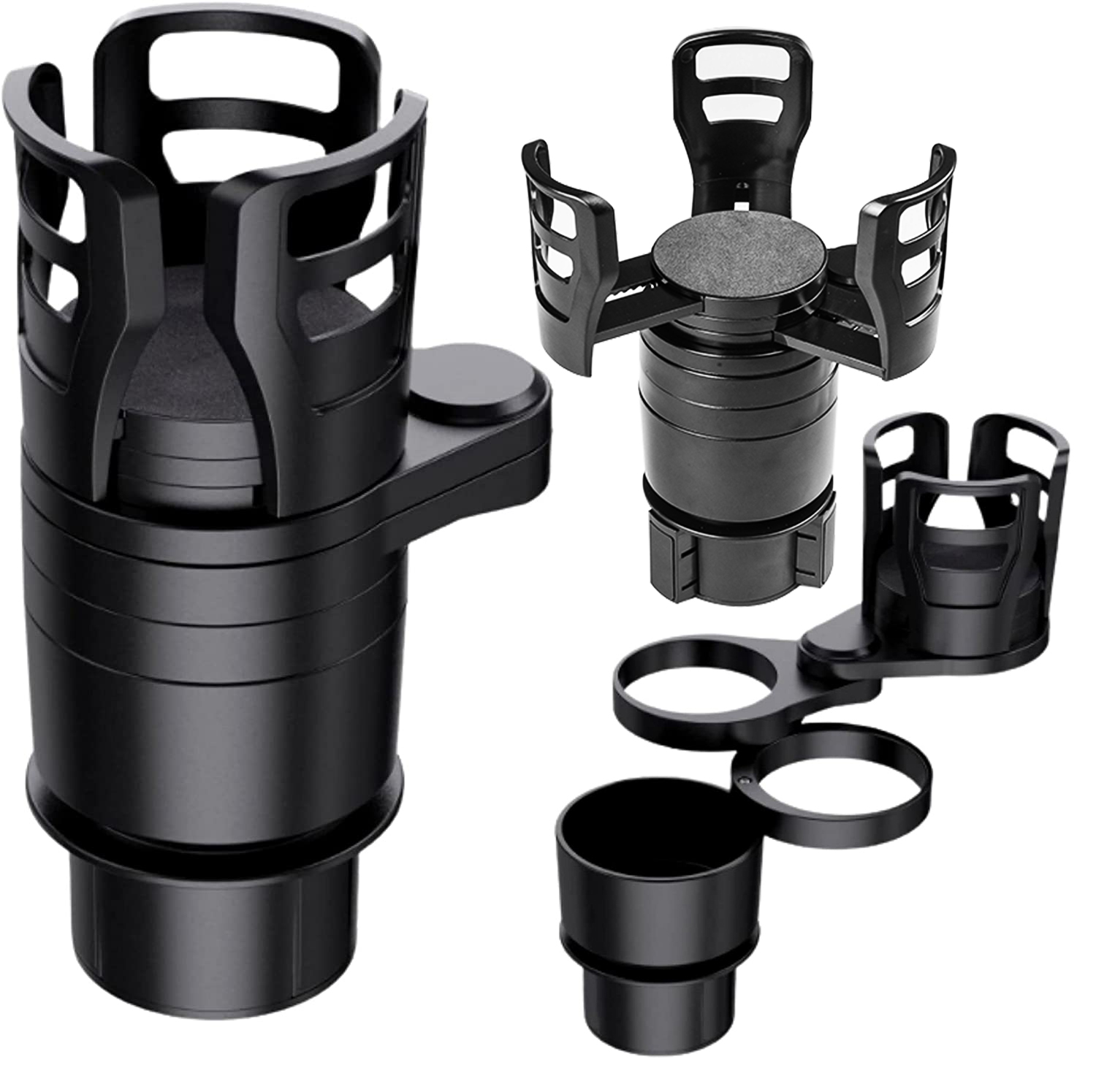
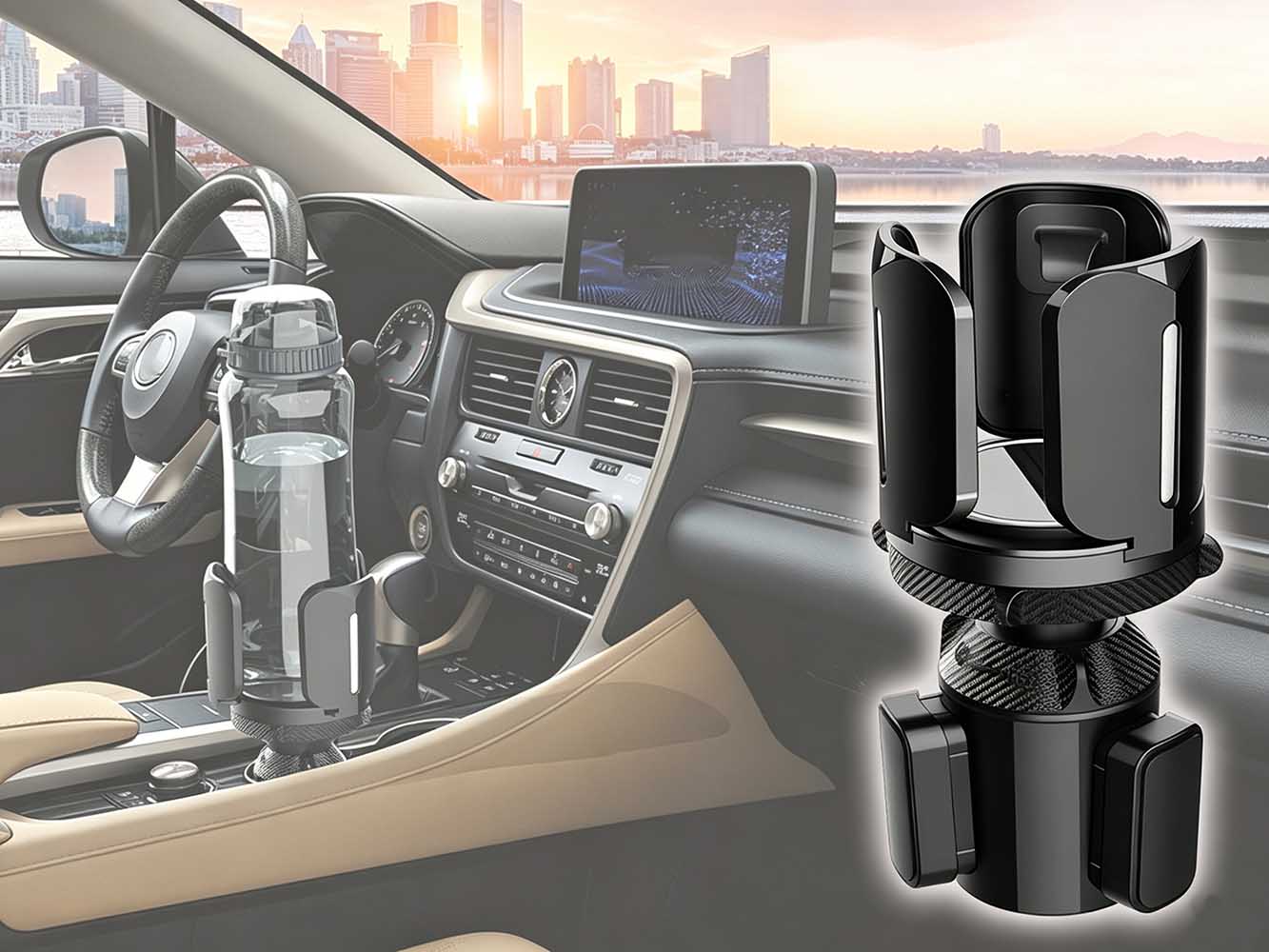
Cup Hold Expanders: We produce car cup holder expanders by injection molding, and strict dimensional tolerances ensure a proper fit with vehicle cup grooves. The key fit dimension is controlled within ±0.1 mm. The base can be adjusted to fit slot sizes of 60–90 mm; the top opening can accommodate 3.4–4.0 inch cups. We evaluate the buckle structure and the shape of the reinforcing ribs to ensure stable clamping while not making insertion and removal of the water cup difficult. Surface treatment is customized according to SPI standards, ranging from A-grade high-gloss surfaces to D-grade matte surfaces, which can be flexibly selected based on grip feel and appearance requirements.

Injection Molding Quality Control in Action

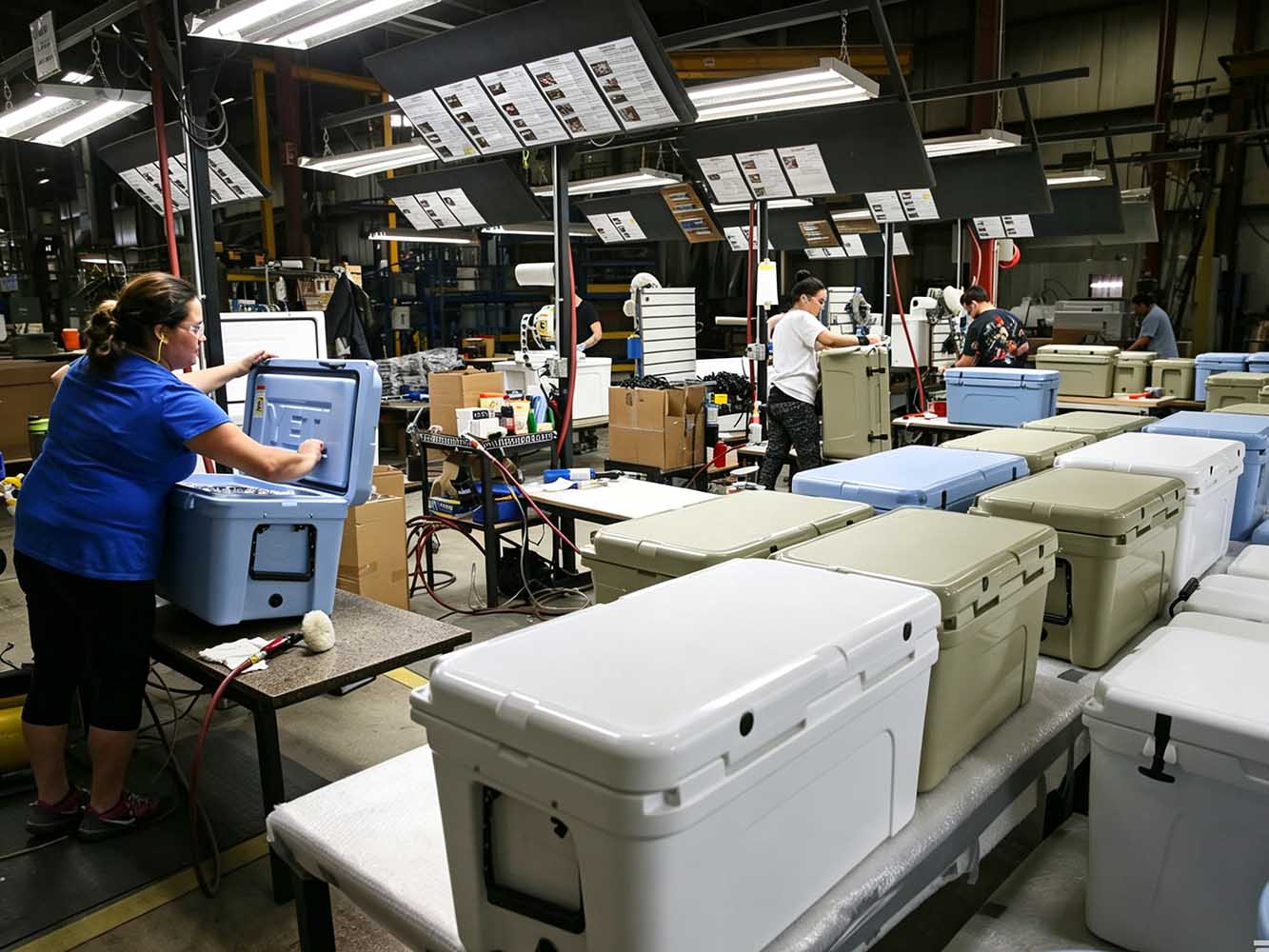
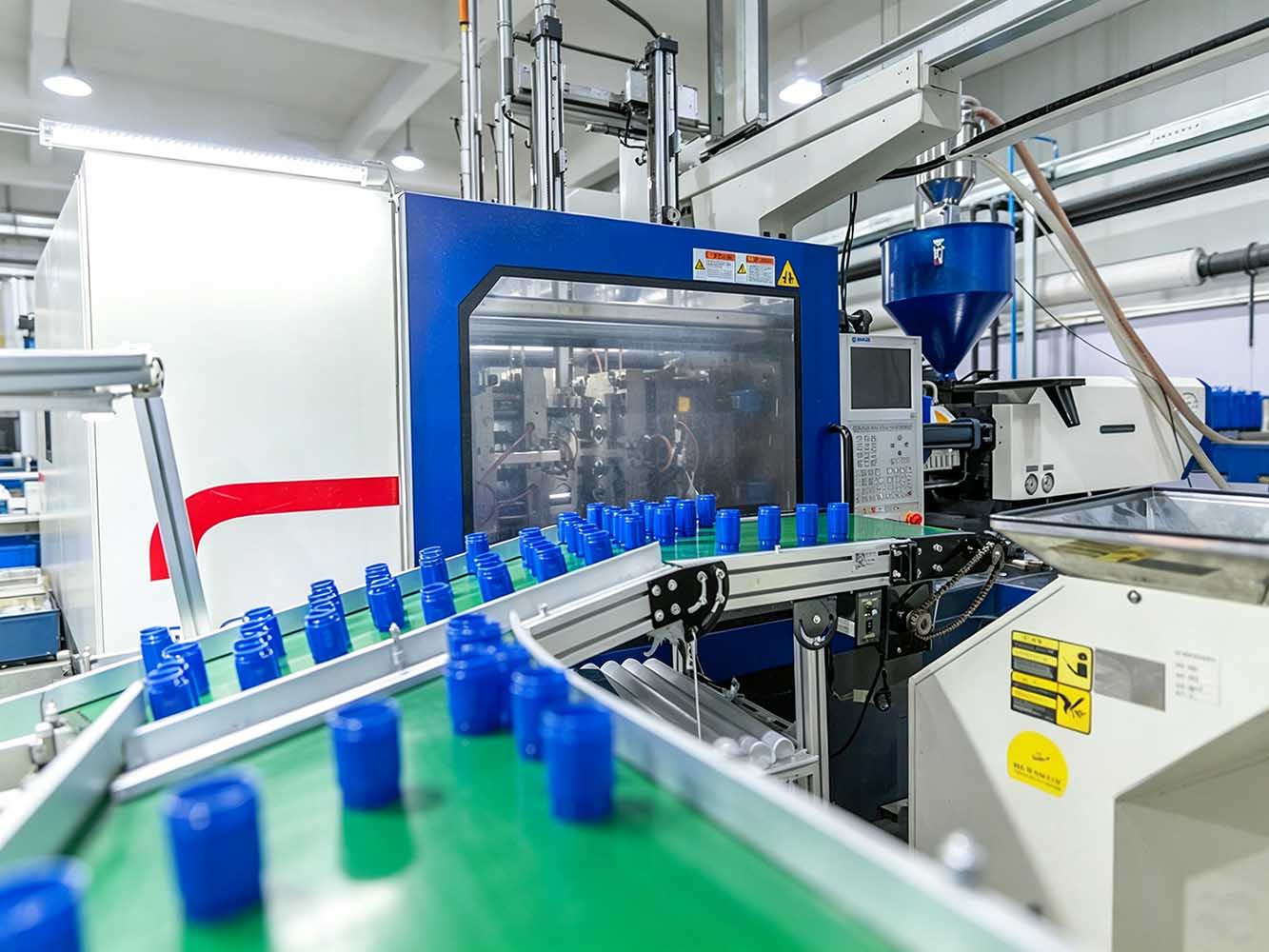
Kingstar delivers high-precision, application-driven injection molding tailored for drinkware, coolers, and automotive accessory industries. We focus on structural stability, dimensional consistency, and real-scene durability rather than basic mold shaping. Every plastic component is engineered with optimized wall thickness, rib distribution, and cooling balance to minimize common molding defects and ensure long-term product reliability after mass production.

Our in-house molding process covers full-process quality control from material selection, DFM optimization, and mold parameter calibration to batch inspection. We adapt molding strategies according to different part structures—thin-wall threaded parts, thick-wall structural components, and functional snap-fit parts all receive customized molding solutions to meet industrial-grade tolerance and usage performance.
injection molding quality control in action
  • Precision Tolerance Control

    We adopt targeted shrinkage compensation and stable mold cycling to maintain high dimensional accuracy. Critical assembly and functional surfaces are strictly controlled to tight tolerance ranges, ensuring perfect matching for thread assembly, buckle connection, and equipment installation without loosening or jamming.

  • Structural & Durability Optimization

    We optimize gate position, weld-line distribution, and rib layout based on mechanical stress analysis. All structural parts are verified through professional drop tests, load tests, and long-term cycle tests to enhance impact resistance, bearing capacity, and deformation resistance for daily and outdoor scenarios.

  • Standardized Batch Consistency

    With standardized cooling systems, stable masterbatch color calibration and complete batch traceability, we effectively control warpage, sink marks, color difference and surface defects. All finished parts comply with SPI surface standards and industrial testing specifications, maintaining stable quality across large-scale orders.

Let’s Engineer Your Injection Molded Parts!

From DFM to mass production—custom lids, handles, hard coolers, and cup hold expanders for brands, wholesalers, and OEM/ODM buyers. Consistent quality from batch 1 to batch 10,000.

FAQs About KingStar Injection Molding

We’ve compiled a list of the most frequently asked questions to make it easier for you to find the information you need. Whether you’re looking for details about our wholesale blank bottles or injection molding services, you can quickly access helpful answers here.

Commonly used food-grade materials are PP, Tritan, and HDPE. PC will only be used in scenes requiring high transparency when BPA-free grades are selected. Which material to choose depends on whether the lid requires transparent appearance, high temperature resistance, hinge durability, or a low unit cost.

  • Polypropylene (PP) is the most common material for cup lids. It’s lightweight and chemically resistant, and the upper limit of heat resistance is about 100℃. It is no problem to put hot drinks into the dishwasher and clean them. The integrated hinge of PP has outstanding performance, and it is not easy to break after repeated opening and closing thousands of times. Therefore, it is the mainstream choice for flip-top and snap-fit lids. Its weakness is that it is translucent, not crystal clear.
  • Tritan copolyester is a high-end choice when pursuing clarity. Its impact resistance is far better than acrylic, and it does not contain BPA. This material is widely used in premium tumbler lids, straw lids, and flip caps. Its price is higher than PP, but it can improve the texture of the product and attract more attention on the shelf.
  • HDPE is a low-cost material, which is mostly used to make threaded caps, water spouts, and inner lid components. It is opaque, tough, and waxy to the touch. It is rarely used on the exposed visible surface of the cup cover and is more suitable for parts that don’t pay attention to appearance and focus on structural bearing.
  • Polycarbonate (PC) has good transparency and impact strength. However, due to the controversy of BPA, it is no longer popular in food-contact cups. If you still want to use a PC, you must choose a food-grade version without BPA certification. Many brands now specify Tritan instead to simplify their marketing claims.
MaterialClarityHeat ResistanceHinge PerformanceTypical Lid Use
PPTranslucentGoodExcellentFlip-top, snap-fit, threaded caps
TritanHigh clarityGoodGoodPremium tumbler lids, straw lids
HDPEOpaqueModerateLimitedSpouts, inner caps, structural parts
PC (BPA-free)High clarityGoodModerateLegacy clear lids

Material selection will also affect mold design. The shrinkage of PP is greater than that of Tritan, and the die size and cooling scheme should be adjusted accordingly. Tritan needs to be fully dried before processing. HDPE has good fluidity, but it is easy to overflow if the mold is not tightly sealed. Reliable suppliers will recommend suitable materials according to the actual function of the lid, instead of blindly recommending the cheapest solution.

We provide one-stop service for OEM brands of water bottles, from product conception to finished products that can be sold directly on shelves. The whole service is divided into five stages.

  • Design for manufacturability (DFM). Before the formal mold opening, we will review the customer’s 3D model files and check the wall thickness, draft angle, gate position, parting line, and buckle structure. Investigate hidden dangers in advance to avoid subsequent product defects, prolonged production cycles, or expensive mold modification. After DFM optimization, products such as cup lids, handles, car cup holder expanders, and hard coolers can greatly improve the feasibility of mass manufacturing by only fine-tuning the structure.
  • Prototyping and sampling. We provide three proofing schemes: 3D printing is used to check the shape and assembly size, CNC machining is used to make functional prototypes, and simple transition molds are used to produce prenatal samples. Customers can take samples for real-life measurement, confirm whether the accessories can be perfectly matched with water bottles and coolers, lock the material selection, and then put them into large formal molds. Prototype samples can also be used for trade shows, buyer presentations, and crowdfunding campaigns.
  • Custom mold design and fabrication. We will choose a single-cavity mold, multi-cavity mold, family mold, or hot runner mold according to the order quantity and the complexity of parts. The selection of die steel, the layout of the cooling system, and the design of the ejection structure will match the parts themselves and the plastic raw materials used. Before opening the mold, the mold flow analysis will be done to predict the problems such as filling, pressure keeping, and product warping.
  • Mass production. After the mold is qualified, it enters the mass production stage and monitors the production parameters in real time. Complete color matching, insert injection molding, secondary encapsulation, and product assembly as required. For water bottles, it is often necessary to produce cup lids, handles, and all kinds of accessories simultaneously and package and ship the whole set.
  • Quality control and documentation. We provide the first article inspection report (FAI), dimensional inspection report, material certificate, and compliance declaration documents such as FDA and LFGB. To be an OEM brand, retailers and e-commerce platforms generally require such information.

For brands that sell direct to consumers, we can also support packaging design and private label branding to assist in the docking of one product. The most common demand of OEM customers of water bottles is to customize the cup lid, match the handle with the same color and surface technology or cup holder expanders, and have the visual style of the whole set of products be unified.

The core of a good cup holder expander is to solve a pain point: let the original car cup holder put down the large water bottle, tumbler, or super-capacity water bottle steadily. It has been placed in a stuffy car for a long time, and it has to hold heavy drinks, so the requirements for structural design are far more stringent than it looks.

Five factors matter most.

  • Accurate sizing. The opening size of the original cup holder varies greatly among different models. The high-quality expander will adopt an outer conical surface or a stepped shape, which is suitable for a variety of original car cup holders. The inner diameter should match the mainstream bottles on the market, usually 3-4 inches. The inner diameter is too small to put the cup down; If the inner diameter is too large, the cup will sway. Reliable manufacturers will not only produce according to a single nominal size but also take a variety of common models and cups for actual measurement.
  • Load-bearing structure. A 32 oz tumbler filled with liquid can weigh more than two pounds. The cup holder expander must bear this weight without bending, cracking, or toppling. It is usually achieved by vertical reinforcing ribs, a reinforced base, and a uniform wall thickness. Sharp corners should be avoided in design, which are prone to stress concentration and easy to break after repeated load bearing.
  • Heat resistance. In summer, the temperature of the closed compartment can reach 140°F or even higher. Plastic materials can’t soften, deform, or give off a peculiar smell at this high temperature. PP and ABS are commonly used materials. PP is superior to chemical corrosion resistance; the surface texture of ABS is smoother. Some styles will also be covered with a layer of TPE soft glue at the contact position to enhance friction and reduce abnormal noise.
  • Fit stability. The cup holder expander must not rotate, slide, or rattle when the vehicle is moving, and it can’t make a loud noise. An elastic fin, rubber base ring, or micro-interference assembly structure can solve this kind of problem. These structural designs should also take into account one thing: you can’t scratch the original car cup holder, and it won’t be too hard to disassemble and assemble.
  • Manufacturability. The product structure should be suitable for multi-cavity mold injection, with uniform wall thickness and a smooth surface. Many docking stations belong to brand accessories and often need to support custom color matching and printing LOGO.

The shell, box lid, buckle, handle, hinge, and inner partition of the hard cooler are all produced by the injection molding process. The insulation foam core is made separately, but the shape, structural strength, and precise fit between accessories of the box are all realized by injection molding.

  • Part design and material selection. Generally, PP or HDPE is selected for the hard cooler shell. These two materials are resistant to impact, chemicals, and low-temperature toughness. The cooler will inevitably fall and be pressed, and it will also be exposed to the sun and low temperature, so it cannot be easily cracked. PP has stronger rigidity and excellent fatigue resistance and is mostly used for load-bearing structural parts. If the surface layer needs better toughness and impact resistance, HDPE is selected.
  • Mold design. The accessories of the cooler are bulky, and the corresponding molds are large in size and high in cost. Engineers need to carefully plan the gate position to avoid weld marks on the appearance surface and at the same time ensure that the melt can fill the cavity evenly along the long runner. The design emphasis of the cooling channel is to control warping deformation. Once the shell warps, the box lid cannot be tightly sealed. The ejection mechanism must be strong enough, and when ejecting large products, no indentation can be left, nor can the top of the parts be deformed.
  • Molding. A large-tonnage injection molding machine is needed to produce box bodies and box covers to meet the required injection amount and clamping force. Compared with small plastic parts, its molding cycle is longer because the cooling of thick-walled parts takes a long time. Injection molding speed, holding pressure, and cooling time should be strictly controlled to ensure the product size is stable and consistent.
  • Assembly and testing. After the injection molding is completed, the box body, box lid, hinge, buckle, and handle are assembled together, and usually sealing strips and drain plugs are added. Some coolers are sealed by TPE secondary encapsulation, and there are also styles that use independent rubber strip accessories. After the assembly is completed, the box lid’s fit, buckle strength, and leak-proof performance will be tested.
Cooler ComponentCommon MaterialManufacturing Note
Outer shellPP or HDPELarge mold, controlled warpage
LidPP or HDPEMust seal against shell
LatchesPP, ABS, or nylonHigh-cycle fatigue resistance
HandlesPP or glass-filled nylonLoad-bearing, reinforced ribs
HingesPP or nylonLiving hinge or pin design

Hard coolers are a strong differentiator for an injection molding supplier because the parts are larger, the tooling investment is higher, and the quality requirements are stricter than for simple lids. This question targets “injection molded cooler parts,” “hard cooler manufacturing,” and “custom cooler shell molding.”

Injection molding is usually the best solution for these two types of accessories. This kind of product requires precise size and complex structure, and the cost of a single piece can be controlled in mass production. Other processes can be used to make prototypes or simple parts, but when mass-producing water bottle accessories, the performance is not as good as that of injection molding.

  • Precision. The tumbler lid has threads, buckles, sealing grooves, and hinge points, which requires high assembly tolerance. The injection molding process can ensure the stability and uniformity of the tolerance of each product, which is the key to achieving a leak-proof effect. The expansion seat of the car cup holder also requires accurate inner diameter and wall thickness to adapt to the original car cup groove and water bottle at the same time.
  • Surface finish. Depending on the mold, injection molding can directly produce smooth, matte, textured, or glossy effects without subsequent secondary processing. For the brand, this can keep the appearance of the whole product line uniform.
  • Complex geometry. Injection molding can integrate multiple functions into a single part. For example, the hinge, the sealing lip and the suction pipe mouth of the tumbler lid are integrally formed so that the assembly process is reduced and the product durability is improved. The expansion seat of the vehicle-mounted cup holder can also be used for injection molding elastic fins and reinforcing ribs at one time and can also simultaneously complete the secondary encapsulation of soft rubber.
  • Cost of scale. The investment in mold opening in the early stage is higher than that in some processes, but after the output goes up, the cost of a single piece will drop rapidly. If the sales volume of products reaches tens of thousands, the overall cost of injection molding is the lowest.

It will be more cost-effective to produce the insulation box shell with a large volume and simple structure in small batches. Silicone sealing strips are generally molded; 3D printing is suitable for early prototype proofing. However, the core product in the product line of water bottle accessories, injection molding is still the industry standard.

Products need to follow two categories of standards: the lid should meet the food contact safety standards, and the cooler and cup holder expanders should focus on structural durability. The specific requirements depend on which market the product is sold to.

The mainstream standards for food-contacting accessories such as cup lids and tumbler lids are FDA 21 CFR 177, EU 10/2011, and LFGB of Germany. Standard control of base materials, color masterbatch, and various additives. The supplier must be able to provide a material certificate and migration quantity test report. Even if there is no mandatory requirement in local regulations, consumers generally need a BPA-free statement; moreover, when entering the offline supermarket and e-commerce platform, this document is often a hard requirement.

Insulation box accessories, car cup holder expanders, and the implementation of structural performance standards. The drop test simulates the accidental drop scene of the product; the load test checks the handle, buckle, and bearing surface. The vibration test is used to verify whether the expansion seat of the cup holder can remain stable when the vehicle is driving; the high and low temperature cycle test confirmed that the product was still stable in the alternating hot and cold environment. The finished products of the cup lid and the whole set of coolers should also be tested for sealing and leakage.

Standard / TestApplies ToPurpose
FDA 21 CFR 177Lids, food-contact partsU.S. food safety compliance
EU 10/2011Lids, food-contact partsEuropean food safety compliance
LFGBLids, food-contact partsGerman market compliance
Drop testCoolers, expandersImpact durability
Load testHandles, latchesStructural strength
Vibration testCup holder expandersVehicle fit stability
Leak testLids, cooler assembliesSealing performance

In addition to the above regulations and standards, reliable suppliers will also build an internal quality management system, such as ISO 9001, and use statistical process control to monitor production throughout. When the new mold is delivered, the first inspection report and the size inspection report belong to the conventional delivery documents. In the mass production stage, process capability analysis will be carried out to confirm that the production process can keep the tolerance range continuously and stably.

Leak LocationLikely CauseDesign or Process Fix
Thread areaThread pitch unstable, lid stops at different positionsTighten thread tolerance, control start position
Sealing lipLip too thin or too thickAdjust lip thickness and interference fit
Gasket contactUneven compressionAdd continuous sealing groove, balance mold cavities
Hinge areaWall thickness too thin at hingeIncrease local wall thickness, adjust gate location
After dishwasherMaterial loses elasticitySwitch to higher-temperature gasket material
After temperature cyclingLid body warpsImprove cooling layout, reduce molded-in stress

The core of the leak-proof effect depends on three points: seal structure design, dimensional stability, and material selection.

  • Design of sealing structure. Most leak-proof cup lids will be matched with silicone or TPE aprons or integrated sealing lips, and there are also plans to use them in combination. When closing the lid, the apron must be evenly stressed. Designers will adopt continuous sealing grooves and circular contact surfaces and control reasonable interference to ensure uniform compression. The thread pitch and thread starting position of the threaded cup cover must be stable so that the cup cover can stop at the same sealing position every time it is tightened.
  • Dimensional stability. The sealing surface must be round and flat, and the size should not exceed the tolerance. If the lid becomes oval, it cannot be sealed; if the sealing lip is too thin, it will leak water, and if it is too thick, it will make the lid difficult to buckle. As long as the mold is balanced and the production process of each cavity is stable, injection molding can control this kind of size well.
  • Material selection. The body of the cup lid should be rigid enough to maintain the compression state of the apron; The apron needs good elasticity and can fit the contact surface. PP and Tritan are commonly used raw materials for cup lids, and silica gel is the most mainstream apron material, which can maintain elasticity in a large temperature difference range.

Tests are used to verify the final effect. The supplier will do pressure or vacuum leak detection tests on the mass-produced samples, and the samples will be retested after high and low temperature cycling and dishwasher cleaning. For OEM brands, these test reports are also good sales materials.

Quality stability in mass production can not be separated from four points: stable production technology, well-maintained molds, production process monitoring, and a written quality management system.

  • Stable process. Scientific injection molding will delimit the process window for each set of molds and solidify various parameters. The equipment runs in the window interval, instead of being stuck at the critical limit, so as to reduce the difference between each module product.
  • Mold maintenance. The gate, vent, and thimble will wear out slowly with use. A preventive maintenance plan can make the mold meet the standard continuously; for large-scale projects, spare parts are usually always available.
  • Process monitoring. Cavity pressure, filling time, and molding cycle are all monitored in real time. Visual inspection equipment and automatic measuring tools will detect key dimensions according to sampling rules.
  • Documented quality system. Standard operating procedures, first article inspection, process inspection, and product traceability are all standard. Statistical process control charts track key dimensions for a long time, and process capability analysis is used to verify that the process can hold the tolerance stably.

For OEM brands, consistency also includes color matching, surface texture, and packaging effect. These details will directly affect the display effect of products at the retail end.