
Tooling & Mold Development
At KingStar, tooling and mold development is the foundation of all our products—including stainless steel insulated water bottles, tumblers, mugs, cooler boxes, cooler jugs, dog bowls, hip flasks, can coolers, and coffee pots we manufacture for OEM and ODM buyers worldwide. From product conception, manufacturability analysis, mold design, sample testing, and mass production, we control the whole tooling chain.
Whether you need a brand-new stainless steel water bottle mold, a custom tumbler mold, or a multi-cavity family mold for a complete drinkware line, we focus on stable mass production from the beginning of design: ensuring uniform wall thickness, sealing and leakage prevention, and consistent quality from batch 1 to batch 10,000.
Tooling & Mold Development: Key to Water Bottles
From concept design to stable mass production
For stainless steel insulated water bottles, tumblers, and mugs, molds are not just tools for shaping. It directly determines the vacuum insulation effect, thread bite, sealing performance of the lid, product surface texture, wall thickness uniformity, drop resistance, and quality control stability of long-term shipment, ensuring brand reputation.


A poorly developed mold may pass the audit, but it is easy to go wrong in mass production. Common faults include unstable vacuum insulation performance, obvious weld marks on the surface, uneven thread tolerance, water leakage, deformation of the bottom, uneven adhesion of powder coating, and high scrap rates. These issues cost brands time, money, and market trust.
KingStar approaches tooling as a production system, not a one-time sample. Before cutting steel, we will evaluate the product structure, material selection, material shrinkage, gate position, cooling water channel design, demoulding slope, and assembly tolerance. For OEM/ODM customization projects, this means that your products are designed for manufacturing from the beginning.
Our Tooling & Mold Development Capabilities
We have a complete set of mold processing capabilities, covering product manufacturability analysis, 3D mold design, electrode design, CNC machining, EDM, wire cutting, mold assembly, mold trial, sample testing, and mold modification and repair until it is handed over to mass production.
For stainless steel vacuum products, we focus on controlling the mold accuracy of the inner and outer shell, the reliability of the vacuum port, thread and lid matching, bottom embossing, handle integration, and the adaptability of the mold and the surface treatment process. As for plastic parts, we will choose the corresponding mold scheme of rotational molding, injection molding, and blow molding according to the product structure and order volume.

Tooling & Mold Development Process for OEM/ODM Programs
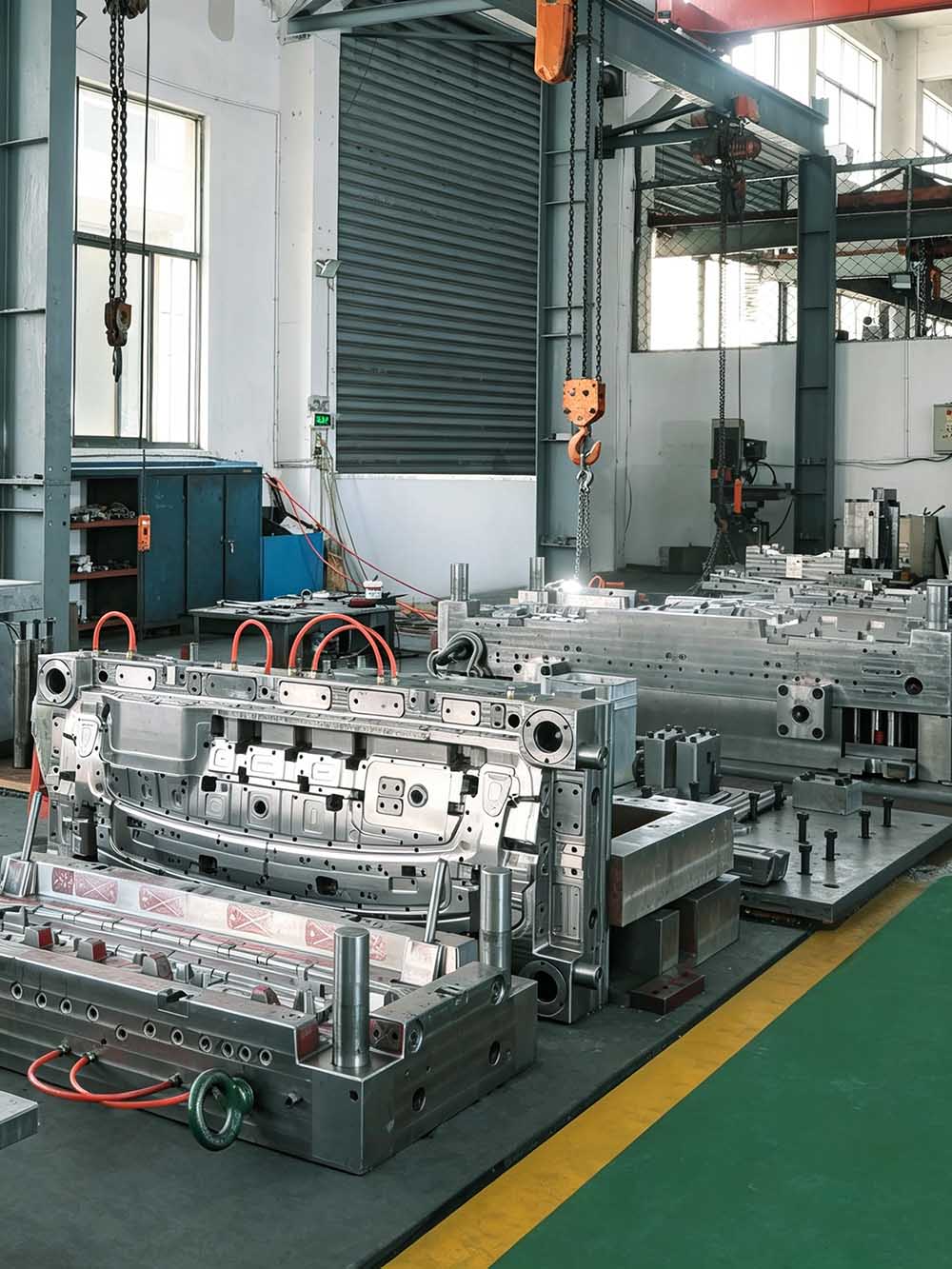
Each project follows a set of standardized mold development processes. The core goal is simple: from product conception to stable mass production, try to avoid repeated mold changes. This process is suitable for all kinds of stainless steel products. For plastic parts with simple structure, tooling lead time can be faster. For complex vacuum drinkware with threaded lids, handles, powder coating, or multi-color logos, more validation steps are included.
| Stage | Key Activities | Deliverables | Typical Lead Time |
|---|---|---|---|
| 1. Inquiry & Technical Review | Review product drawings, reference samples, target capacity, insulation requirement, material, surface finish, logo method, and order volume | Feasibility feedback, initial tooling suggestion, RFQ response | 1–2 days |
| 2. DFM & Product Optimization | Analyze wall thickness, draft angle, shrinkage, gate location, cooling, thread tolerance, vacuum structure, assembly fit, and packaging constraints | DFM report, 3D optimization proposal, mold structure plan | 2–5 days |
| 3. Mold Design & Approval | Complete 3D mold design, 2D drawings, cavity layout, runner system, cooling system, ejection system, and steel selection | Mold design drawings, mold specification, approval sheet | 3–7 days |
| 4. Tooling Manufacturing | CNC machining, EDM, wire cutting, polishing, heat treatment, mold base assembly, and precision inspection | Mold inserts, cavities, cores, electrodes, assembly records | 15–30 days |
| 5. Trial Molding & Sample Validation | Run T1 samples, check dimensions, wall thickness, vacuum performance, leak test, thread fit, surface finish, color, and assembly | T1 samples, inspection report, issue list, correction plan | 3–7 days |
| 6. Mold Correction & T2 | Modify mold according to sample report, optimize cooling and ejection, improve thread and sealing structure | T2 samples, updated inspection report | 3–7 days |
| 7. Sample Approval & Pilot Run | Confirm golden sample, packaging, logo, lid matching, and performance testing | Approved sample, pilot production report | 5–10 days |
| 8. Mass Production Handover | Lock process parameters, train operators, set inspection standards, and start stable production | SOP, QC plan, production schedule | 15–30 days after sample approval |
One Team, Full Tooling Control
Tooling Specifications & Production Capacity
Our tooling & mold plastform can not only support new product research and development but also undertake long-term OEM/ODM supply. In the same factory, we can land small-batch promotional orders and complete product lines of outdoor brands.
For buyers who want to build a complete set of drinkware or cooler line, this means that it can be handed over to the same mold team as a whole. Mold development is handled internally, so repeat orders do not wait for an external mold factory.
Standard Tooling Lead Time
Max Product Size
Monthly Production Capacity
| Key Spec | Details |
|---|---|
| Product categories | Insulated stainless steel water bottles, tumblers, mugs, hard cooler boxes, dog bowls, hip flasks, cooler jugs, water jugs, can coolers, coffee pots |
| Mold types | Injection mold, blow mold, rotational mold, vacuum shell mold, lid mold, handle mold, thread mold, family mold |
| Main materials | 304/316 stainless steel, PP, Tritan, AS, ABS, TPE, silicone, LLDPE, PU foam |
| Bottle capacity range | 250 ml to 2,000 ml for water bottles and tumblers; 2 L to 150 L for cooler jugs and cooler boxes |
| Wall thickness control | Stainless steel drinkware: 0.4–1.2 mm; rotomolded coolers: 4.5–6.5 mm; insulated shells: up to 10 mm+ |
| Mold cavities | 1–4+ for large parts; 2–16+ for small components such as lids, plugs, handles, and can coolers |
| Max product size | Up to 2,200 mm for large cooler boxes and insulated shells |
| Max product weight | Up to 80 kg for rotomolded parts |
| Machine arm swing | 2,000–4,500 mm |
| Tooling lead time | 25–35 days for standard projects; 35–50 days for complex vacuum drinkware or multi-cavity molds |
| Sample lead time | 3–7 days after T1; 7–15 days for full functional samples |
| Mass production lead time | 15–30 days after sample approval |
| Monthly capacity | 80,000 pcs per month for rotomolded products; scalable capacity for stainless steel drinkware and plastic components |
| MOQ | According to your demands; flexible for trial orders and OEM/ODM programs |
| Compliance | ISO 9001, FDA 21 CFR, LFGB, EU 10/2011, REACH, BSCI |
| Quality control | Incoming material inspection, in-process inspection, leak test, vacuum test, drop test, thermal test, color tolerance check, final audit |
| Automation | Robotic demolding, auto trimming, in-line inspection, standardized molding parameters |
| Tooling ownership | Customer-owned tooling available; mold storage and maintenance programs supported |