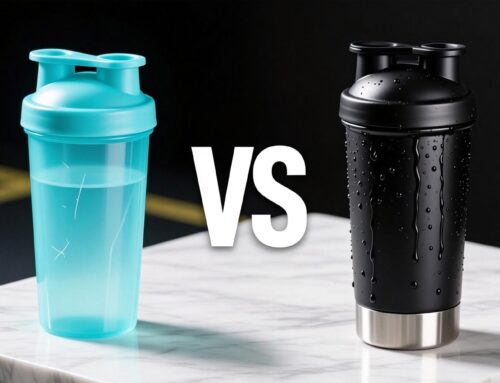
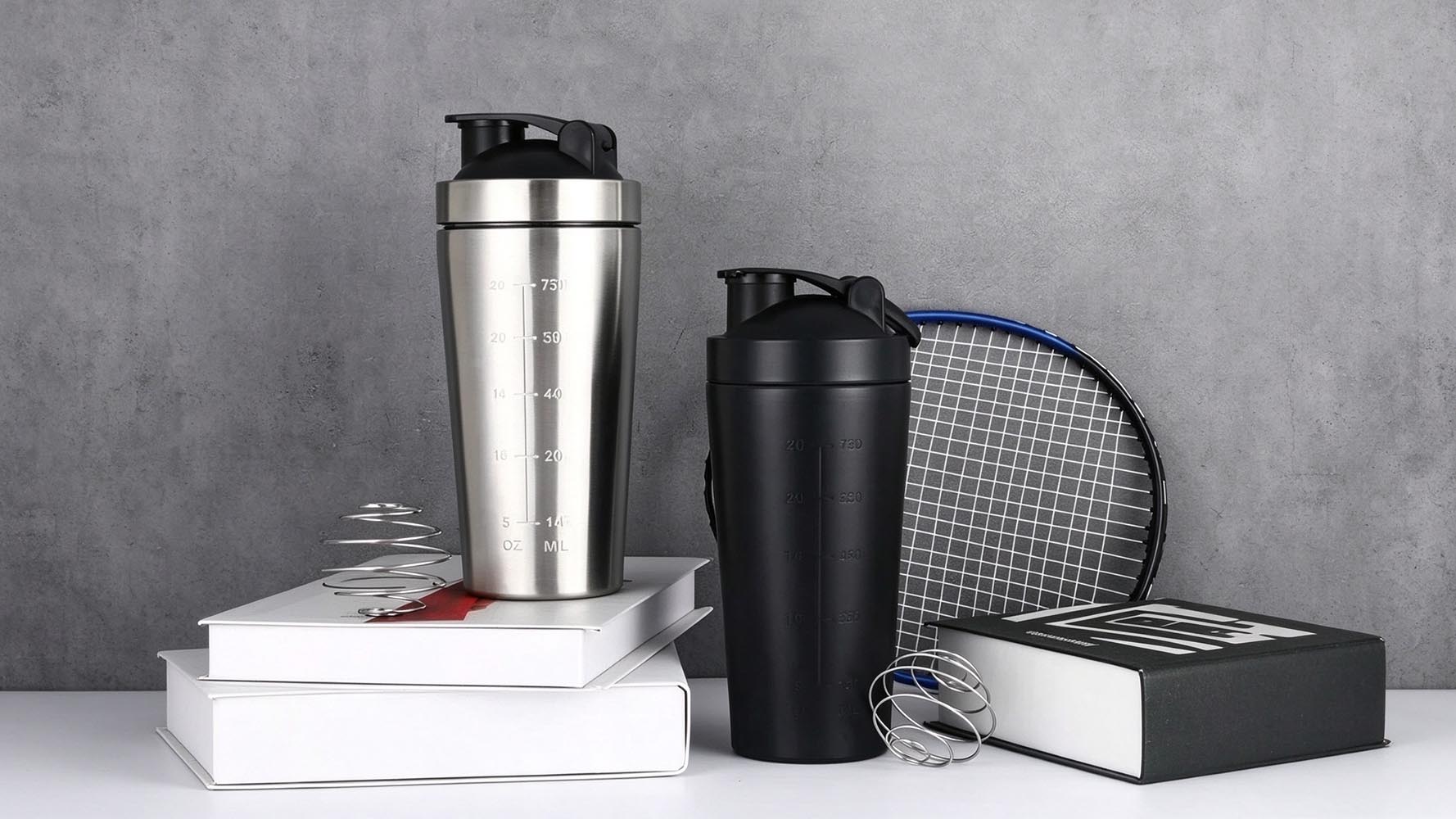
For private brands and sourcing teams, “leak-proof” is not just a marketing phrase but a set of rigid system requirements. It depends on the shape of the bottle body, thread structure, sealing gasket technology, overall design of the bottle cap, material selection, and assembly control, and it must pass the verification test in real use scenarios.
This guide is aimed at U.S. and global brand owners, supplement companies, fitness-equipment businesses, and promotional-product buyers. If you want to turn the vague “leak-proof” promise into the applicable engineering standards and quality control requirements, it can come in handy. This paper will talk about the most vulnerable position of shake bottles, how to design and control the key sealing parts, and which materials are suitable for different positioning products, and will also teach you to build a practical leak-proof test scheme and a checklist to be used when making an inquiry.
As the leading water bottle manufacturer, we focus on making custom shake bottles and undertake OEM and ODM customization projects. The following engineering principles are practical methods for professional factories to design bottle cap structures, deal with sealing contact surfaces, and carry out production verification when doing their own brand projects.
What Makes a Protein Shaker Bottle Leak-Proof in Real Use?
For a leakproof protein powder shake bottle, the judging standard is clear: it can keep tightly sealed under specified fill levels, shaking strength, placing angle, temperature, closure torques, cleaning cycles, and expected use scenarios. For brands, the core is to implement this set of standards into design specifications, supplier requirements, and test programs suitable for mass production of finished products.
Most water leakage problems are not caused by the failure of a part itself but by one of the four sealing contact surfaces. Understanding these helps brands ask the right questions during development and supplier audits.
The Four Critical Leak Interfaces in a Shaker Bottle
| Leak Interface | Typical Failure Mode | Common Root Causes |
|---|---|---|
| Bottle-to-cap thread | Seepage along threads or under cap | Cross-threading, incomplete engagement, tolerance variation, flash or burrs |
| Internal gasket / seal | Liquid bypassing the gasket | Incorrect seating, compression set, material incompatibility, dimensional drift |
| Flip-cap or spout closure | Leaks from drinking opening | Incomplete closure, worn latch, debris, inadequate sealing surface |
| Accessory ports (straw, powder chamber) | Leakage at additional joints | Extra sealing interfaces, poor fit, assembly misalignment, stress from use or transport |
Brands should regard the shake as a complete system of bottle body and cap. No matter how well the bottle cap itself is made, it can’t make up for the problems caused by thread design defects, unstable gasket assembly, or uneven screwing methods of users.
Why Bench Samples Can Seal While Mass-Produced Units Leak
Engineering samples often look perfect: the threads are smooth, the gaskets are carefully installed, and the cover is screwed properly. But once it enters mass production, various deviations will appear, which will directly destroy the sealing effect:
For self-owned brand projects, the leak-proof test must use samples consistent with mass production: materials, toner, assembly process, surface printing, and packaging, all of which are the same as the final product. Only in this way, “leak-proof” is not empty talk in the ideal state of the laboratory but a promise that can stand the real use.
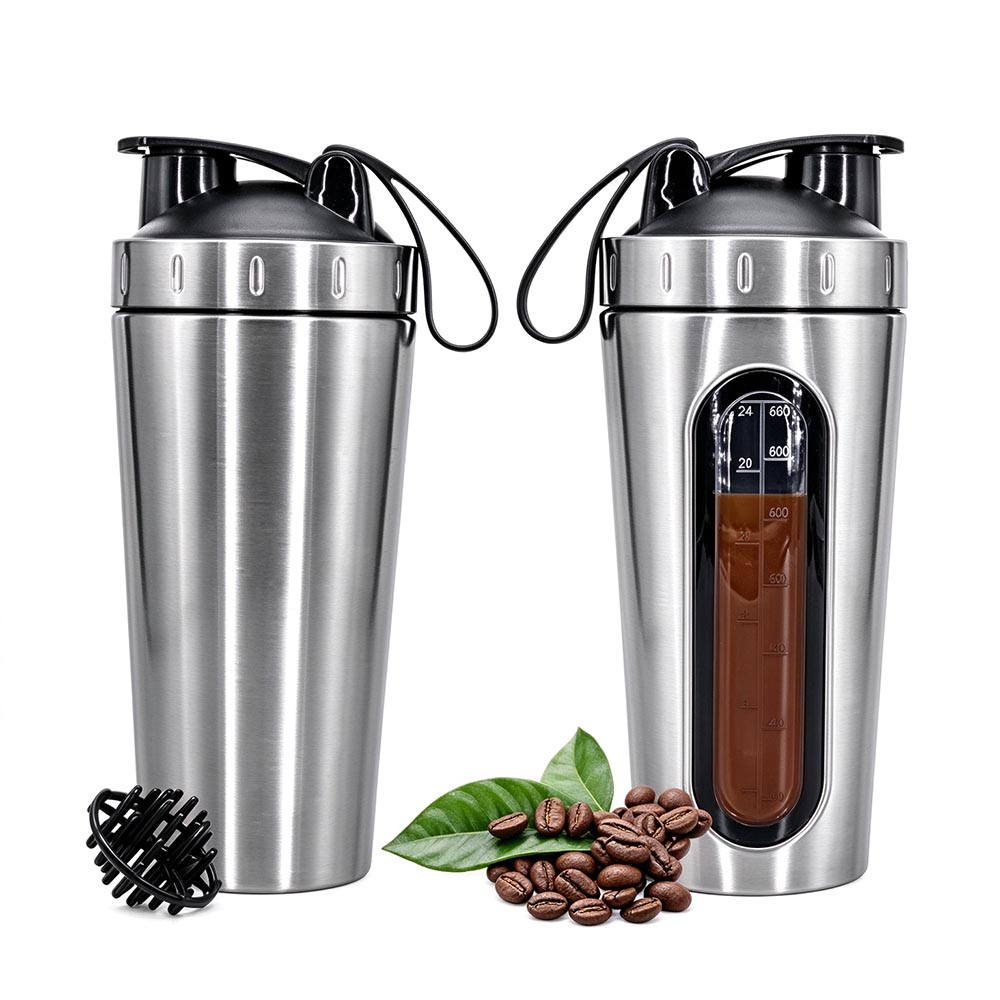
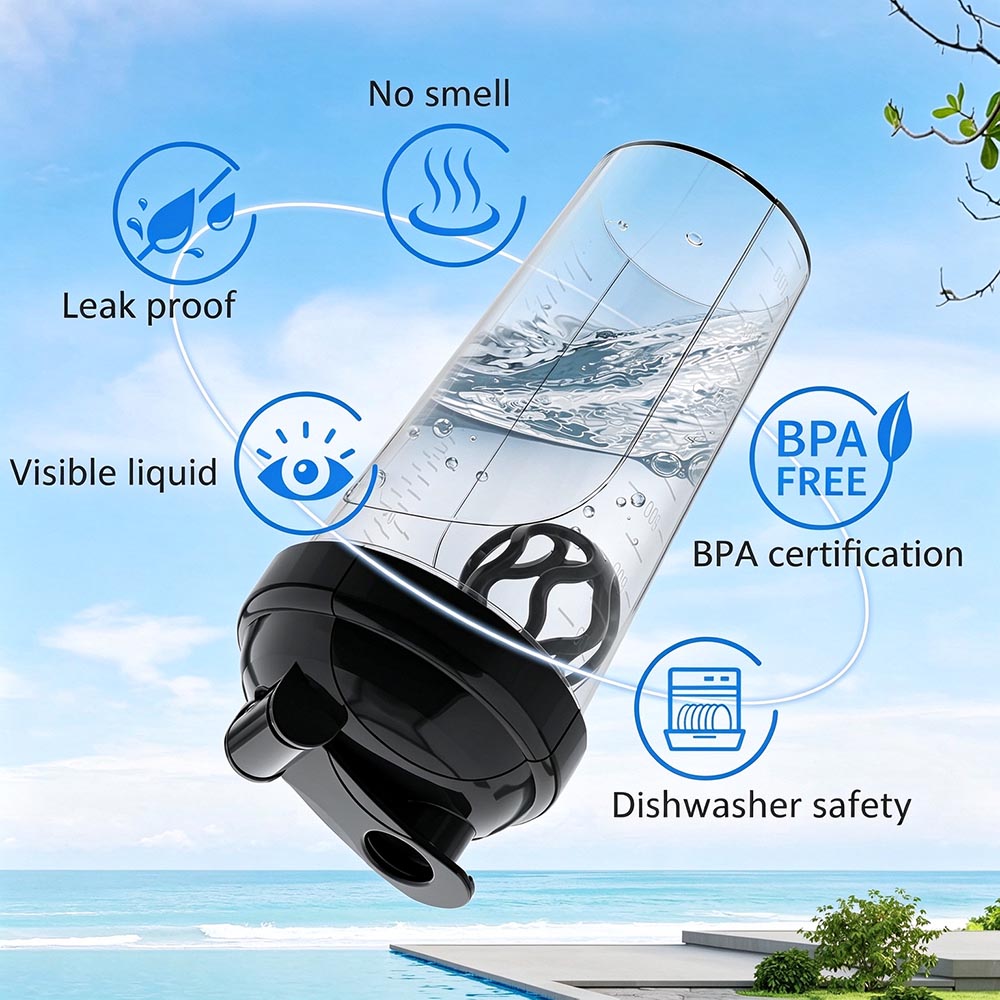
How Should Brands Engineer Threads, Gaskets, and Closures for Leak-Proof Performance?
In order to make “leak-proof” become a stable and reliable product performance, it is necessary to design three core structures: threads, gaskets, and closures. These three factors directly determine the sealing performance of the shaker when it is shaken, transported, and used repeatedly.
Thread Geometry, Tolerance, and Cross-Thread Prevention
The threaded contact surface is the foundation of sealing the bottle body and cap. Focus on these points:
The brand can reduce the risk by clearly defining the torque range of the screw cap, requiring the addition of an anti-tooth structure, and verifying the thread size during the first sample and mass production sampling inspection.
Gasket Material, Profile, and Assembly Control
The function of a sealing gasket (mostly silicone or other elastic materials) is to fill in the tiny gaps on the sealing surface. Whether it can hold back the leakage is not just as simple as “having a rubber ring.”
| Gasket Factor | Why It Matters for Leak Resistance |
|---|---|
| Material selection | affects permanent compression deformation, temperature resistance, and chemical compatibility with drinks and cleaning agents. |
| Cross-section profile | determines the distribution of contact pressure, and whether it can contain the tiny dimensional deviation of the sealing surface. |
| Dimensional stability | ensures that the gasket can maintain a stable compression state under long-term use and different production batches. |
| Assembly method | depends on reasonable positioning, orientation and fixing structure, so as to reduce assembly errors and avoid displacement during use or cleaning. |
For all products that come into contact with food, gasket materials need to be matched with compliance documents corresponding to the target market. In the U.S., rubber products that can repeatedly come into contact with food comply with the provisions of FDA 21 CFR §177.2600, which stipulates the use conditions and precipitation limits of such materials.
According to this regulation, reusable rubber products will adopt different precipitation test standards according to the food-contact scenario. For aqueous-food conditions, the finished product contacts the surface of food, and the limit of distilled water precipitation is no more than 20 mg/in² in the first 7 hours and no more than 1 mg/in² in the next 2 hours. For fatty-food simulants, the limit is 175 mg/in² in the first 7 hours and 4 mg/in² in the next 2 hours.
For brands, just saying “food-grade silicone” is not a complete compliance certificate. The relevant testing data must be aimed at the finished gasket and the actual use scenario, and it is not enough to just get a general raw material certificate.
Flip-Cap, Spout, and Locking Mechanism Trade-Offs
Flip-top lids and spouts are more convenient to use, but the structure is also more complicated:
Hearing a “click” can only show that the lid is buckled but does not mean that it must be leakproof. The brand needs to verify and test the structure of the bomb cover: inversion, shaking, and simulated transportation conditions must be tested. At the same time, the product description should remind users to fasten the lid completely before shaking or putting it in the bag.
Which Materials Are Best for a Leak-Proof Private-Label Protein Shaker Bottle?
Material selection not only affects the leak-proof performance but also relates to durability, good cleaning, texture, and compliance documents. There is no omnipotent “optimal material,” and the appropriate choice depends on brand positioning, target price, and usage scenarios.
PP, Tritan, and Stainless Steel: When to Choose Each for Shaker Bottles
| Material | Main advantages | Common trade-offs | Typical uses |
|---|---|---|---|
| PP (polypropylene) | Light in weight, cost-effective, and good in chemical resistance. It is easy to make bottle caps with complex shapes by injection molding. | Lower premium feel, and it is easy to leave off odor after being used for a long time. The high-temperature resistance is not as good as that of some other materials. | Popular fitness shake bottles, promotional gifts, and gifts attached with goods. |
| Tritan (copolyester) | Transparent, close to glass in texture, good in impact resistance, free of BPA. | Higher in price than polypropylene, plastic in essence, and less durable than stainless steel. | Premium transparent shake bottles and lifestyle brands facing direct consumers. |
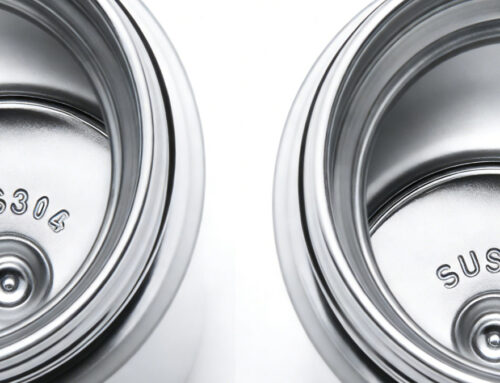
| 18/8 stainless steel | Durable, the vacuum insulation effect is excellent, the texture is advanced. | The cost is higher, and it is opaque. The bottle cap design needs fine polishing to stabilize the leakage-proof. | Premium fitness and outdoor brands, and the beverage containers that need temperature control. |
Brands often use a variety of materials: for example, a stainless steel bottle body, a polypropylene or Tritan bottle cap, and a silicone gasket. The core point is that all materials that come into contact with drinks should be adapted to the types of drinks and cleaning methods planned.
Food-Contact Compliance for Gaskets and Bottle Materials (U.S. and EU Markets)
Different markets and different materials have different compliance standards. Shake bottles focus on two sets of specifications:
For brands sold in many countries, the target sales area should be stated in the RFQ document, and suppliers should be required to provide the corresponding compliance statement (DoC), test report, and material description according to each market.
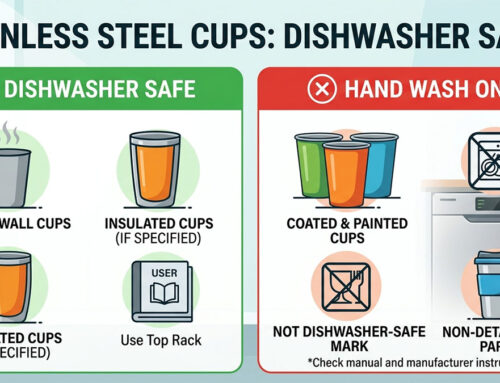
Durability, Cleaning, and Dishwasher-Use Claims
Once the brand is marked “Dishwasherable” or given cleaning instructions, such statements must be tested and verified:
Clear user tips can reduce water leakage caused by improper use and prolong product life, such as taking out gaskets during cleaning, avoiding high-temperature drying, and only washing some accessories by hand.
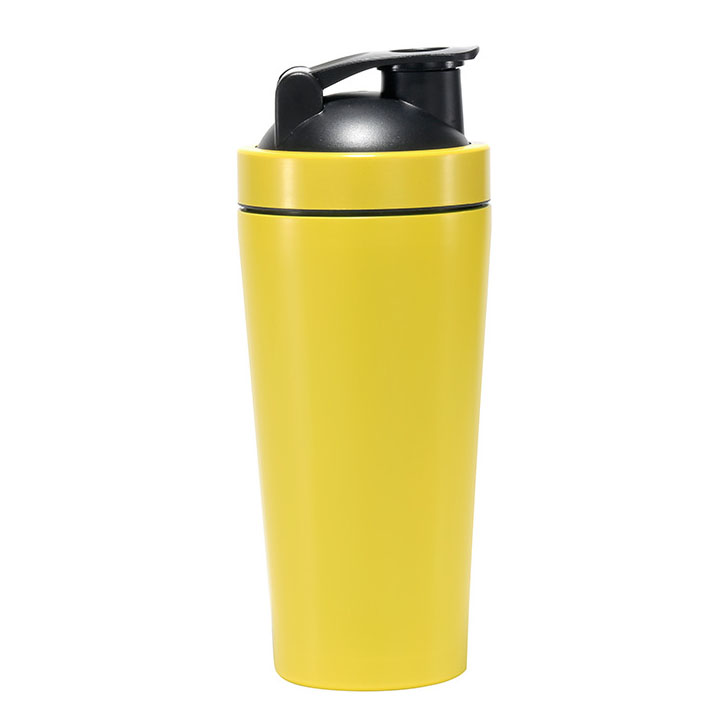
How Can Brands Test a Protein Shaker Bottle for Leaks Before Mass Production?
A set of practical leak-proof protocols is an important chip for brands to communicate with OEM and ODM manufacturers. It turns the subjective problem of “no leakage” into a set of evaluation criteria with process and repeatable verification.
A Practical Leak-Test Protocol for Development and Pilot Runs
The following framework is used as a reference for R&D and acceptance and is not a general certification standard. The brand can flexibly adjust the test conditions according to the cup capacity, the planned drinks, and the target sales market.
| Test Items | Test Conditions (refined by the brand itself) | Pass Criteria |
|---|---|---|
| Invert static test | Liquid to the specified scale, completely cover it tightly, and place it upside down for a specified time | In all sealed positions, without visible leakage or water drop precipitation |
| Shake the test | Liquid to the specified scale, and shake according to the rhythm and duration of simulating daily use | No leakage from threads, gasket, spout, flip-cap, or accessory ports |
| Temperature/service cycle test | Completes temperature change or service cycle as required, and then retest the sealing performance | Without cracking, gasket displacement and new water leakage point |
| Opening/closing durability test | Perform a specified number of opening and closing operations on the bottle cap structure | The structure can be used normally, the locking is firm, and no leakage problem is added |
| Torsion consistency test of screw cap | Tightening the bottle cap in the specified torque range | Sealing is stable, and there will be no problems due to over tightening or wrong thread sliding |
| Post-wash retest | Complete the specified number of hand washing or dishwasher cleaning, and then carry out the core leak-proof test | The sealing performance remains stable and there is no leakage-proof ability attenuation |
Records shall be kept for all tests, indicating the number of samples, defect classification, and qualified/unqualified results. The test must adopt samples consistent with mass production, and the materials, color matching, assembly technology, surface decoration, and packaging must all be the same as the final product.
From Lab to Line: Extending Leak Testing to Mass Production and QC
Testing in the R&D stage must be transformed into a quality inspection scheme for mass production:
Packaging and transportation cannot be ignored. ASTM D5276 is a standard test method for free fall of liquid containers, which can be used to evaluate the packaging scheme and check whether it can protect the cups under the impact of transportation. It is not a “leakproof certification,” but it can prevent the goods from being damaged in transit and destroying the sealing performance.

Click and read more about Custom Options: Custom Bottle Tumbler Decorating, Custom Logos of Water Bottles, Custom Water bottle Packaging
What Should a Brand Include in a Leak-Proof Shaker Bottle RFQ and Supplier Checklist?
A complete RFQ document can reduce ambiguities, unify the expectations of both suppliers and demanders, and facilitate brands comparing suppliers from the perspective of technical strength, rather than just focusing on prices.
Key Product and Performance Specifications to Define Up Front
The brand shall specify the following contents in the inquiry document:
- 1
Capacity and usage scenarios: target volume, applicable beverage types (water, protein powder milkshake, acidic beverage, etc.), maximum filling scale, and main usage scenarios.
- 2
Material and compliance requirements: the material and color masterbatch of the cup body and bottle cap, as well as the relevant documents of food contact required by the target market.
- 3
Bottle cap structure: screw cap, spring cap, locking structure, suction nozzle style, and whether a straw or powder storage bin is needed.
- 4
Details of gasket: gasket material, section drawing (if any), assembly method, and whether the gasket needs to be taken out for cleaning or replacement.
- 5
Leak-proof test requirements: specify the test method, liquid volume, placement angle, test duration, temperature conditions, and qualified standards.
- 6
Torque and anti-malocclusion of screw cap: specify the torque range and the structural design to reduce the probability of thread slipping.
- 7
Durable cycle index: the expected opening and closing times of the bottle cap structure in the product life cycle.
- 8
Cleaning and dishwasher labeling: whether the product is labeled as dishwasher-washable and the corresponding conditions of use.
These technical specifications are not immutable documents, and can be continuously adjusted and optimized with sample testing and user feedback.
Conclusion
The design of a leak-proof protein powder shake bottle is a difficult problem in engineering and supply chain, and it is by no means a marketing slogan. It requires collaborative control of threads, gaskets, lock cover structure, raw materials, assembly procedures, and testing links, and at the same time, complete information and a product traceability system are supported. For private brands, the most efficient way is to set the leak-proof performance as a set of quantifiable indicators in the inquiry document, verify the indicators with mass production samples, and implement this casing control standard in the quality inspection of bulk goods.
KingStar can provide customized development, OEM/ODM, and quality system construction services for brands and help you turn performance requirements into stable mass production outcomes. If you plan to start a new shake bottle / water bottle / coffee cup / insulated tumbler / can cooler / food container / thermos coffee pots project, or the existing product line is troubled by quality issues, contact us through sales@waterbottle.tech. Our team can assist in reviewing the technical specifications, give the structure and material scheme, and make a matching test and verification scheme according to your sales market and usage scenarios.
FAQ
References
21 CFR §177.2600 – Rubber articles intended for repeated use, https://www.ecfr.gov/current/title-21/chapter-I/subchapter-B/part-177/subpart-C/section-177.2600
Commission Regulation (EU) No 10/2011 on plastic materials and articles intended to come into contact with food, https://eur-lex.europa.eu/eli/reg/2011/10/oj/eng
Food Network: Best Protein Shakers, https://www.foodnetwork.com/how-to/packages/shopping/product-reviews/best-protein-shakers
Thewearify, 11 Best Protein Shake Bottles | What Real Daily Use Reveals, https://thewearify.com/best-protein-shake-bottles/

Specializing in custom manufacturing, quality control and marketing of vacuum-insulated drinkware and coolers.