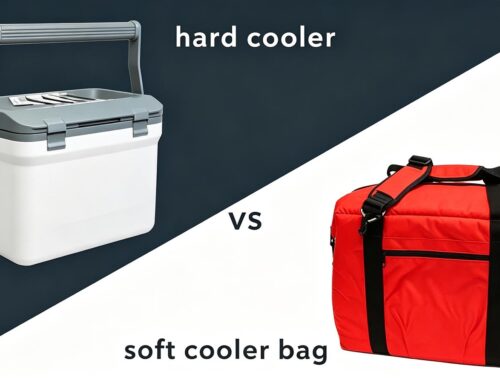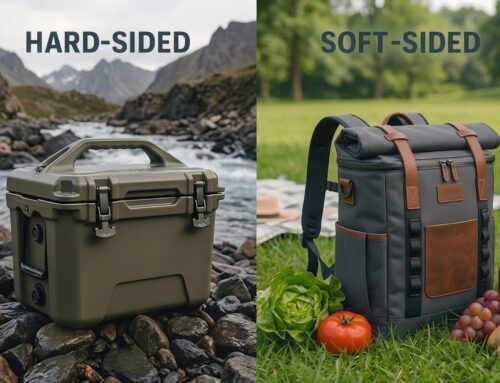
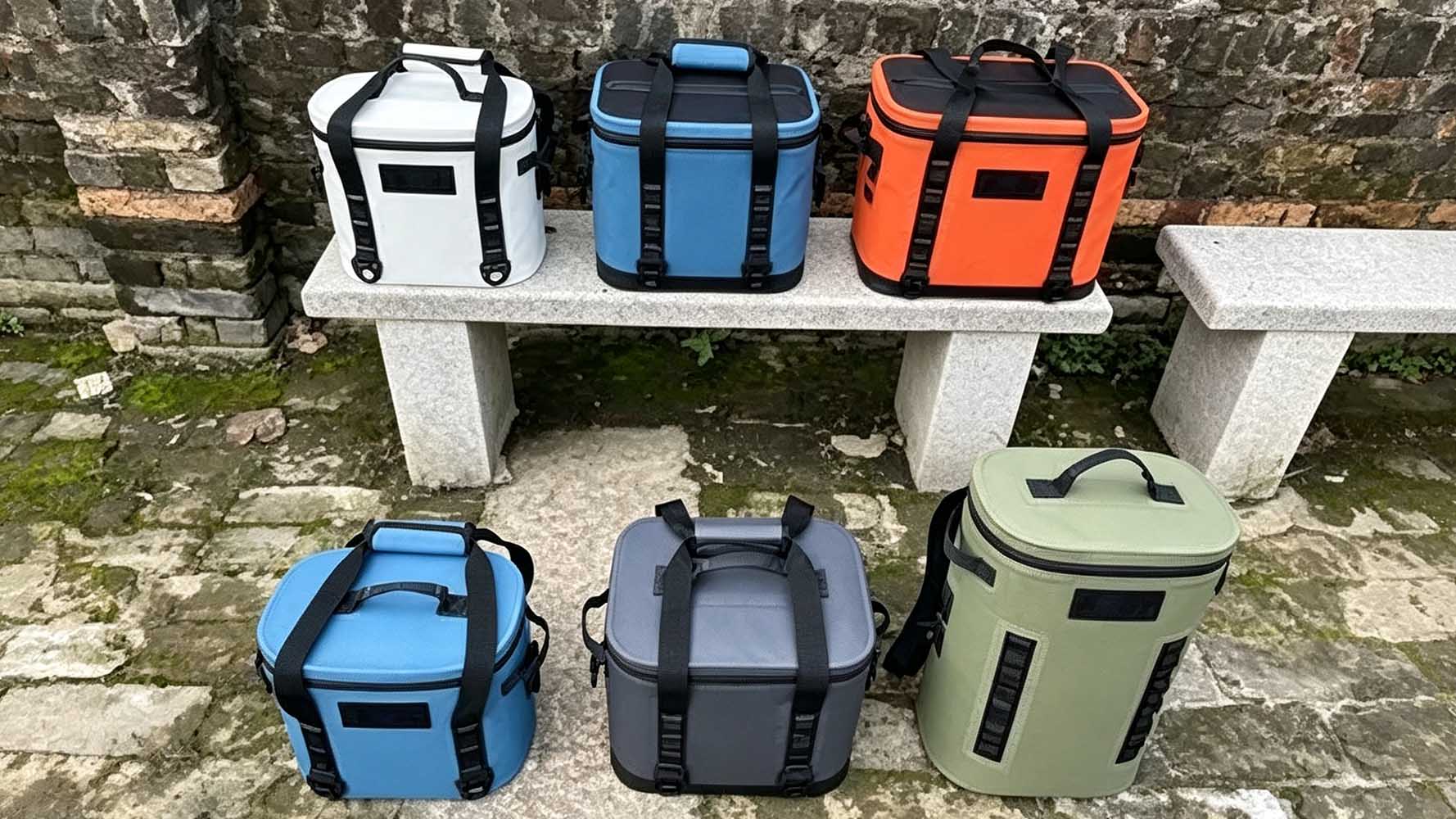
A soft cooler bag is no longer an ordinary lunch bag with a zipper. Sometimes it can completely replace the hard cooler because of its lighter weight, convenience, and stronger ice retention effect, enough to last a whole weekend. However, such a category is very crowded in the market, the parameters are confusing, and the actual performance is often far from the marketing claims.
So what points should we really pay attention to when choosing a soft cooler bag? We analyzed more than 1,500 real user reviews from Amazon, REI, and the official website and compared the measured data from Outdoor Gear Lab and Consumer Reports and finally summarized four core criteria of soft cooler selection: thermal insulation performance, capacity fit, leak-proof construction, and material durability.
This guide will disassemble these key criteria one by one and help you avoid most common buying mistakes. And we are an experienced manufacturer of soft cooler bags, focusing on portable hydration and cooling gear that holds up under real outdoor use. You can contact us for more professional help.
What Is a Soft Cooler and How Is It Different from a Hard Ice Chest?
A soft cooler is a portable thermal insulated bag, which relies on flexible fabrics to keep food and drinks cold. It is generally composed of a wear-resistant outer layer, a closed-cell foam insulation interlayer, and a waterproof and spill-proof inner layer. On the other hand, a hard cooler is made of rigid plastic or metal with either foam or air-gap insulation.
The Core Trade-Off: Portability vs. Ice Retention
Hard coolers generally hold ice longer. A high-end rotomolded hard cooler under the right environment, the ice can last for 5-7 days. Even the top soft cooler bags typically can keep ice last for 24-48 hours in warm weather. It seems that the hard cooler wins a complete victory—until you factor in weight and bulk.
| Feature | Soft Cooler | Hard Ice Chest |
|---|---|---|
| Empty weight (24-can equivalent) | 2–5 lbs | 15–30 lbs |
| Ice retention (90°F ambient) | 12–48 hours | 48–168 hours |
| Carry style | Shoulder strap, backpack, tote | Side handles, wheels (large models) |
| Storage when empty | Folds or compresses | Takes up full volume |
| Durability against impact | Moderate | High |
| Price range (mid-tier) | $60–250 | $150–500+ |
| Best for | Beach days, short camping, fishing, picnics | Multi-day camping, hunting, long road trips |
When a Soft Cooler Is the Better Choice
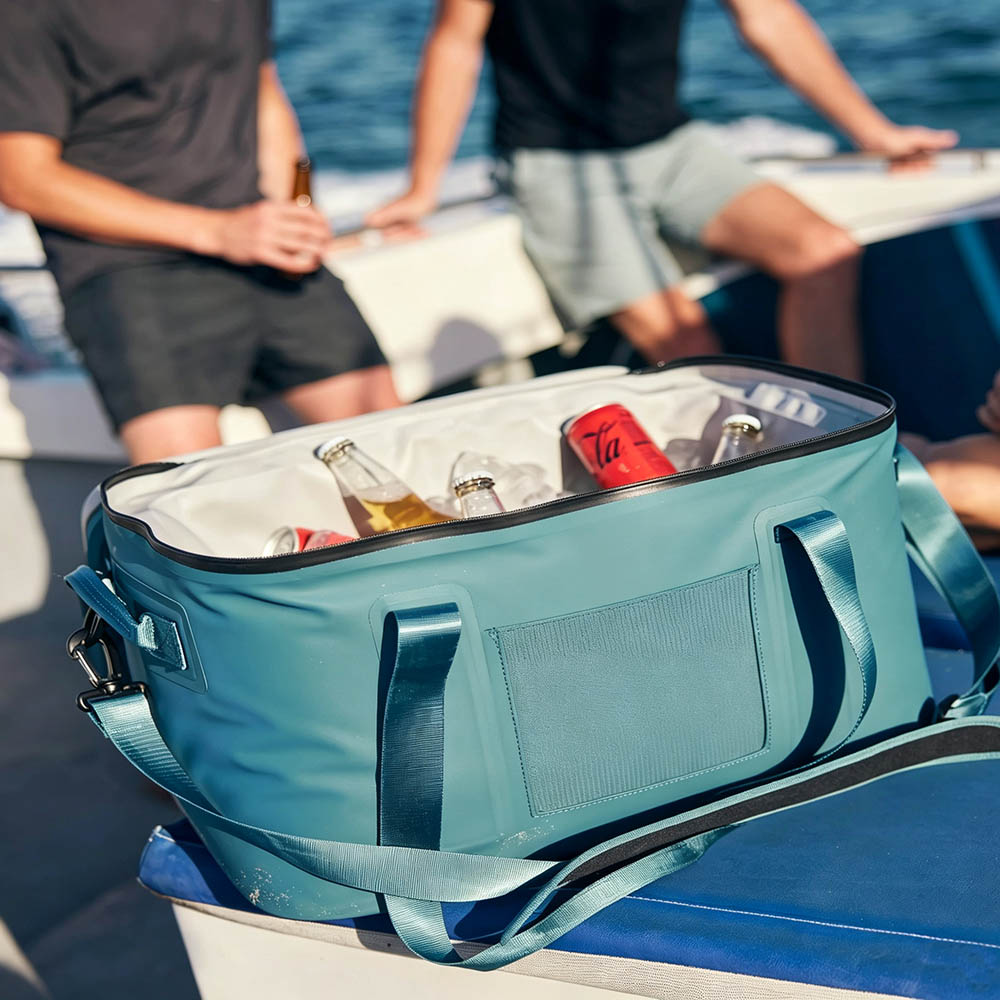
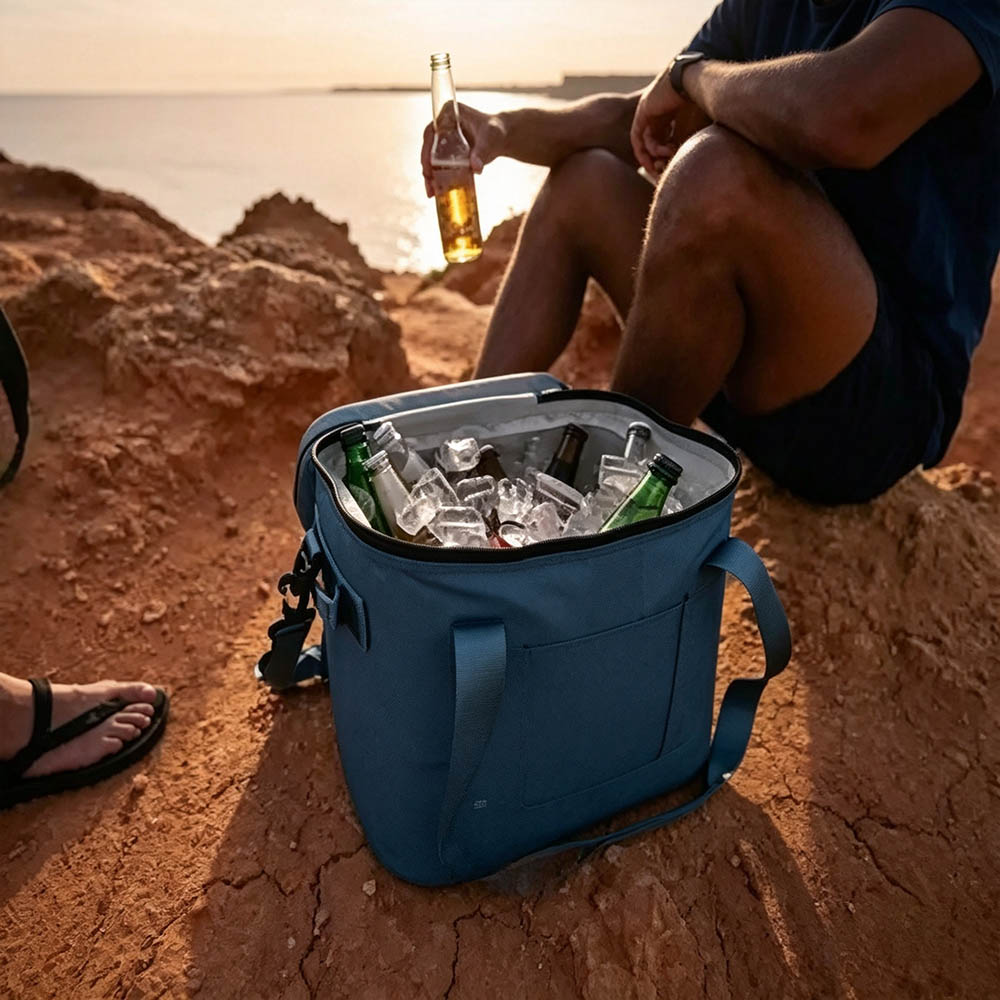
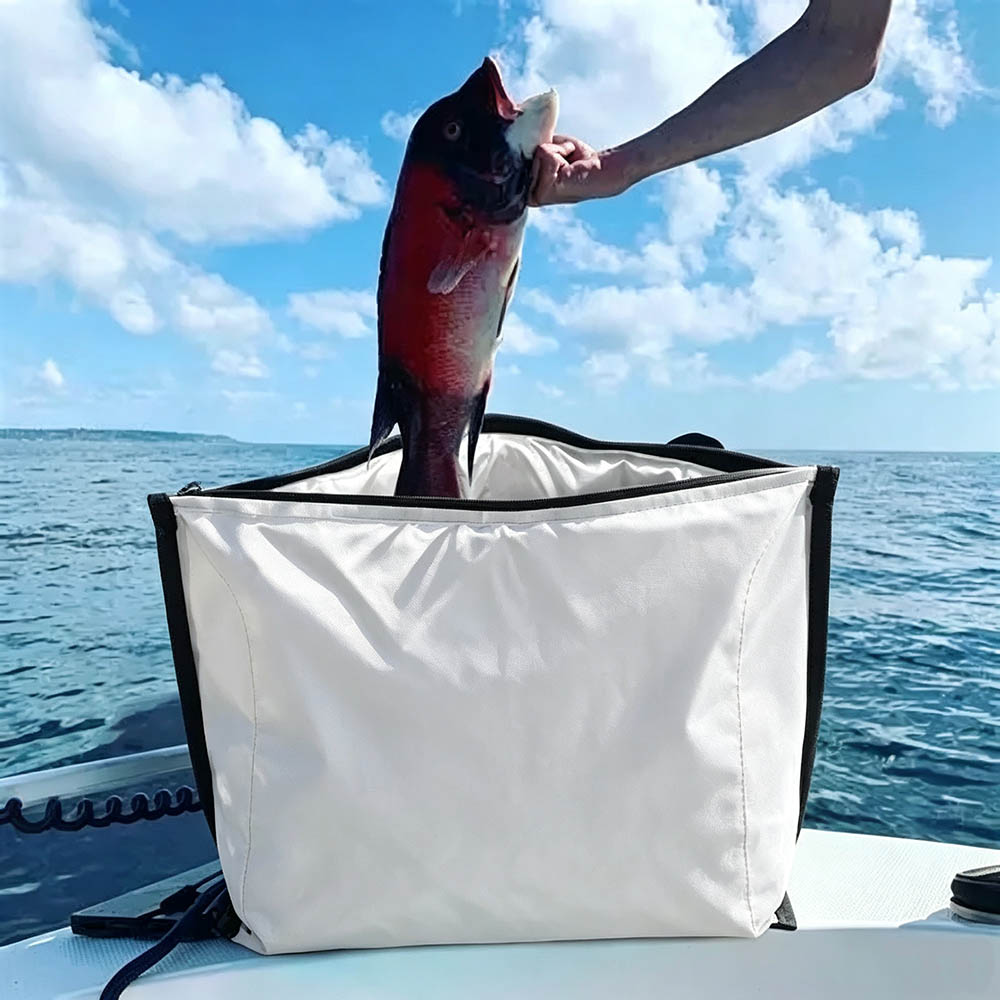
How Long Do Soft Coolers Keep Ice in Real-World Conditions?
This is the first concern of every buyer, and it is also the biggest problem between marketing claims and reality.
What the Numbers Say: Ice Retention Ranges Across Price Tiers
Outdoor Gear Lab and Consumer Reports have done independent testing, and combined with a large amount of user feedback, under the condition that the ambient temperature is about 32℃, the realistic ranges for soft coolers are roughly as follows:
| Price Tier | Typical Ice Retention | Example Construction |
|---|---|---|
| Under $50 | 8–14 hours | Thin foam (5–10mm), stitched seams |
| $50–$120 | 16–30 hours | Medium-density foam (15–20mm), mixed seam quality |
| $120–$250 | 24–48 hours | High-density closed-cell foam (25mm+), welded seams |
| $250+ | 36–72 hours | Premium multi-layer insulation, RF-welded, often with additional radiant barrier |
There are several preconditions for the above data: pre-cooling ice bags in advance, a reasonable ice-to-contents ratio, and less opening of lids. If you put it in a place where the sun shines directly, open the lid frequently, or put warm items inside, the ice retention duration will be greatly reduced.
Three Factors That Affect Ice Retention More Than Anything Else
Quick checklist for maximizing ice retention: Pre-cool the cooler for 30-60 minutes; use a 2:1 ice-to-contents ratio; Keep the cooler out of direct sunlight; Minimize lid openings; Use block ice or large ice packs rather than small cubes.
What Size Soft Cooler Do You Actually Need?
Size is the second most common mistake in B2B procurement. If the cooler is too small, it cannot hold enough food and ice for your whole group. If you buy one that is too large, it will be hard to carry and waste cold air in the empty space.
Can Capacity vs. Real Capacity: Why the Label Can Mislead You
Most manufacturers of soft coolers will use “can capacity,” that is, how many standard 12 oz cans can be put inside. However, this figure usually represents the maximum filling amount without ice.
In actual use, these factors have to be taken into account:
- Ice cubes or ice packs (usually 30‑50% of the total volume)
- Food items cannot be packed as efficiently as cylindrical cans.
- There will inevitably be air gaps in the soft‑sided bag.
Based on user feedback from many brands, the actual available capacity is only about 70‑80% of the number of cans marked on the label. A soft cooler labeled “can hold 24 cans” can actually hold about 18‑20 cans of drinks, plus a practical amount of ice.
Size Recommendations by Group and Trip Length
| Labeled Capacity | Realistic Capacity | Best For | Suggested Trip Length |
|---|---|---|---|
| 12-can | 8–10 cans + ice | Solo or 2 people | Half-day to full day |
| 24-can | 18–20 cans + ice | 2–4 people | Full day |
| 30-can | 22–25 cans + ice | 3–5 people | Full day to overnight |
| 40-can+ | 30–35 cans + ice | Family of 4+ | Overnight to 2 days |
If You’re Torn Between Two Sizes
Give most people a useful decision rule: if your trips are consistently at the upper end of your typical group size, or if you often pack food that has not been pre‑chilled, choose a larger size. You can always make use of the extra insulation space.
If you mostly take only short trips and need to carry coolers for a long time, then choose the smaller size—weight savings matter more than spare space.
For example, if a family of four goes to the seaside for a whole day, it is appropriate to choose a soft cooler with a nominal capacity of 30 cans as the basic model. If this same family occasionally goes overnight camping, it will be safer to choose the style with welded seams and a nominal 40‑can capacity.
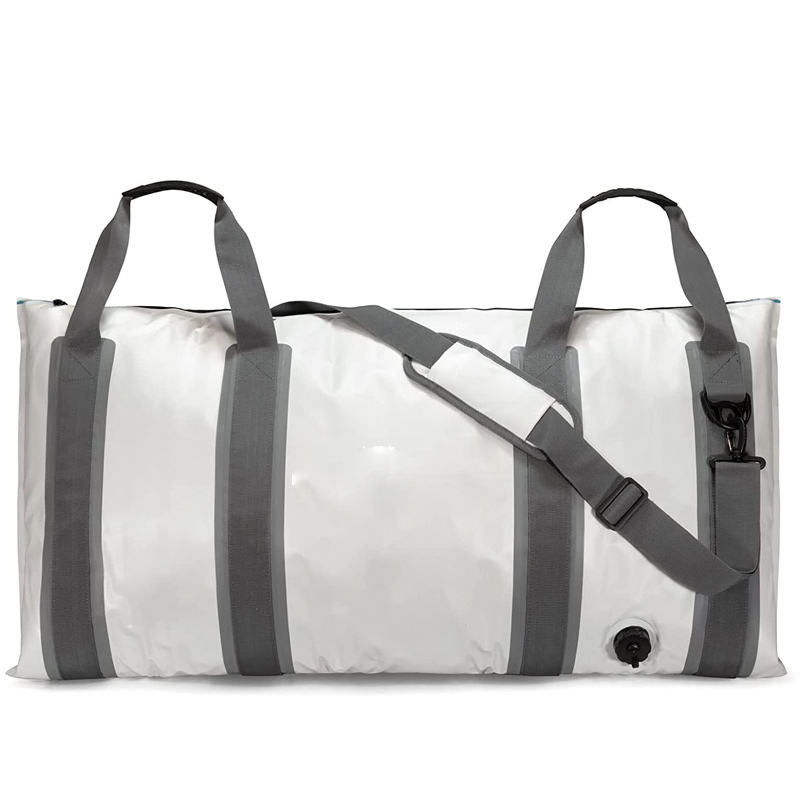
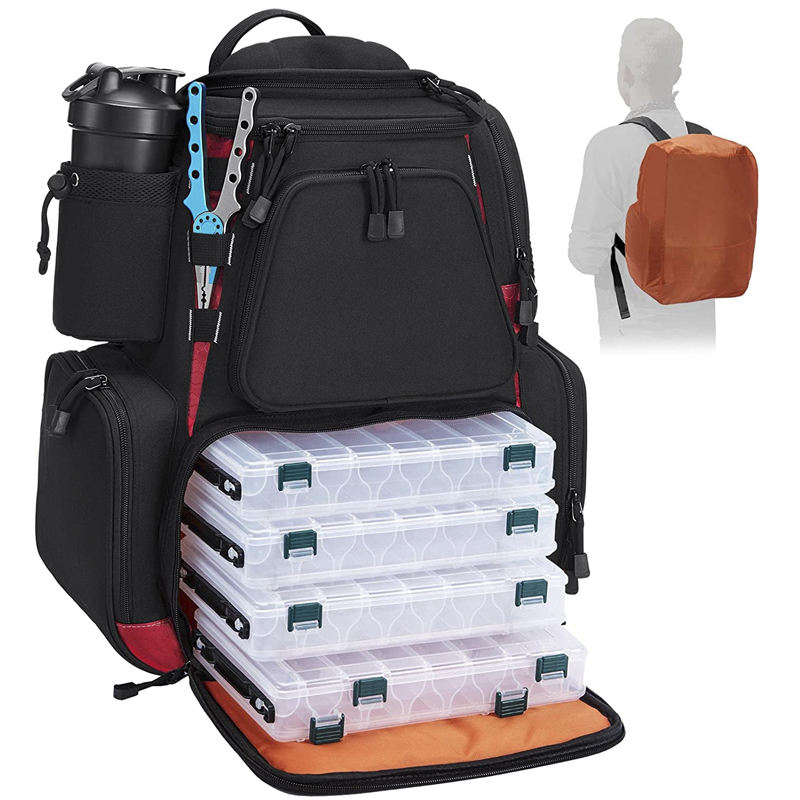
Are Soft Coolers Actually Leakproof? What to Check Before You Buy
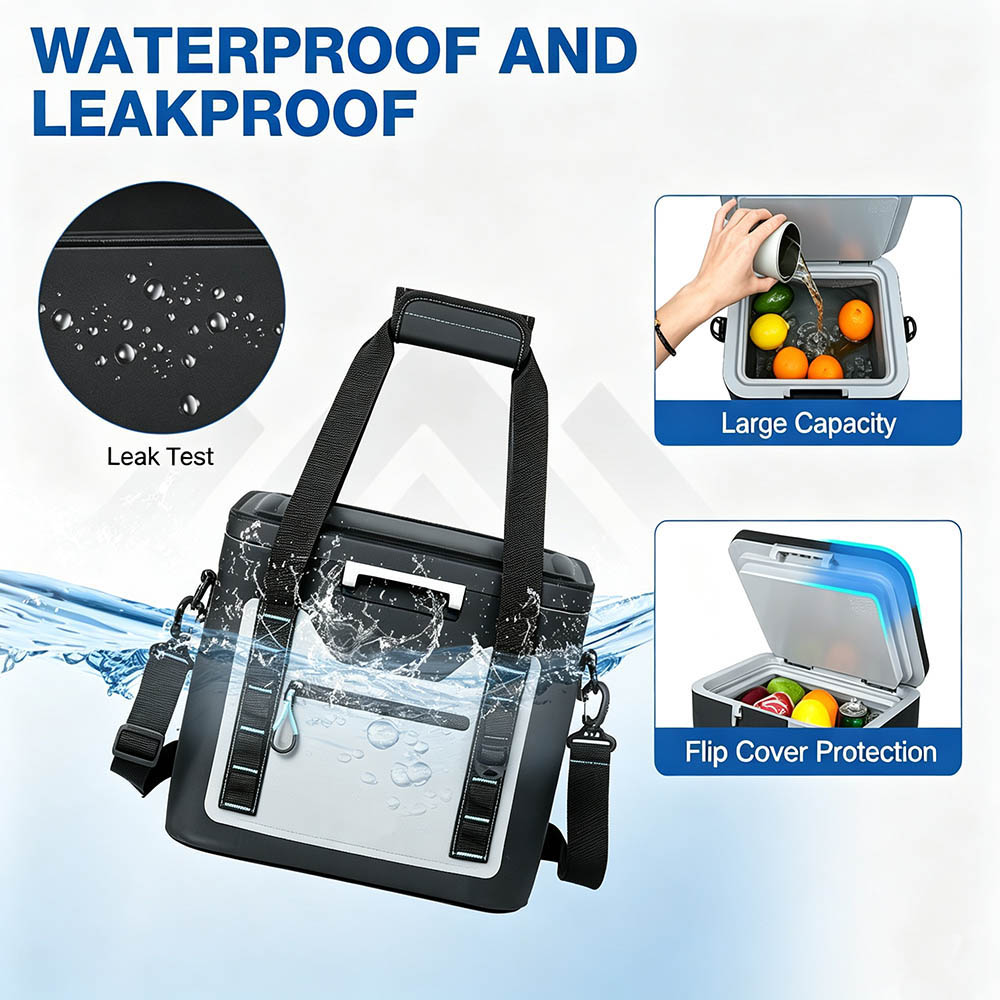
Looking at user evaluations of soft coolers, water leakage is one of the most‑complained‑about problems. Once the soft cooler tips over in the car or on a boat, melted ice water will seep out from the seams or zipper, wet your equipment and make a mess. Not all soft coolers are designed to be leakproof.
Welded Seams vs. Stitched Seams: The Leak-Proof Divide
The key factor that determines the leakproof effect is the manufacturing process of the liner.

RF welding is a manufacturing process that uses RF energy to heat and fuse thermoplastic materials to form a joint layer without splicing gaps. Its leakproof effect is far superior to the traditional stitching.
If the product description does not clearly mark welded seams or taped seams, you should assume the liner is stitched. It can only resist splashing water but cannot deliver true leakproof performance.
Zippers, Liners, and the Tip-Over Test
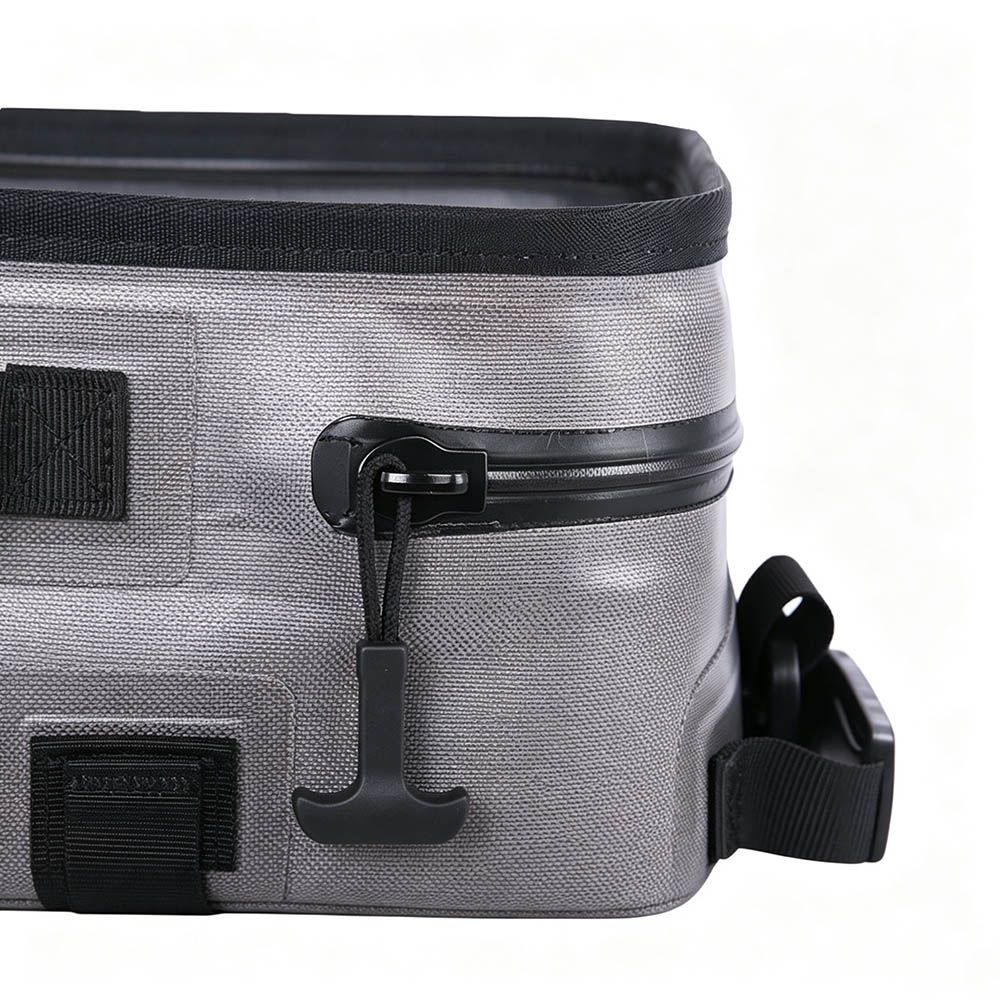
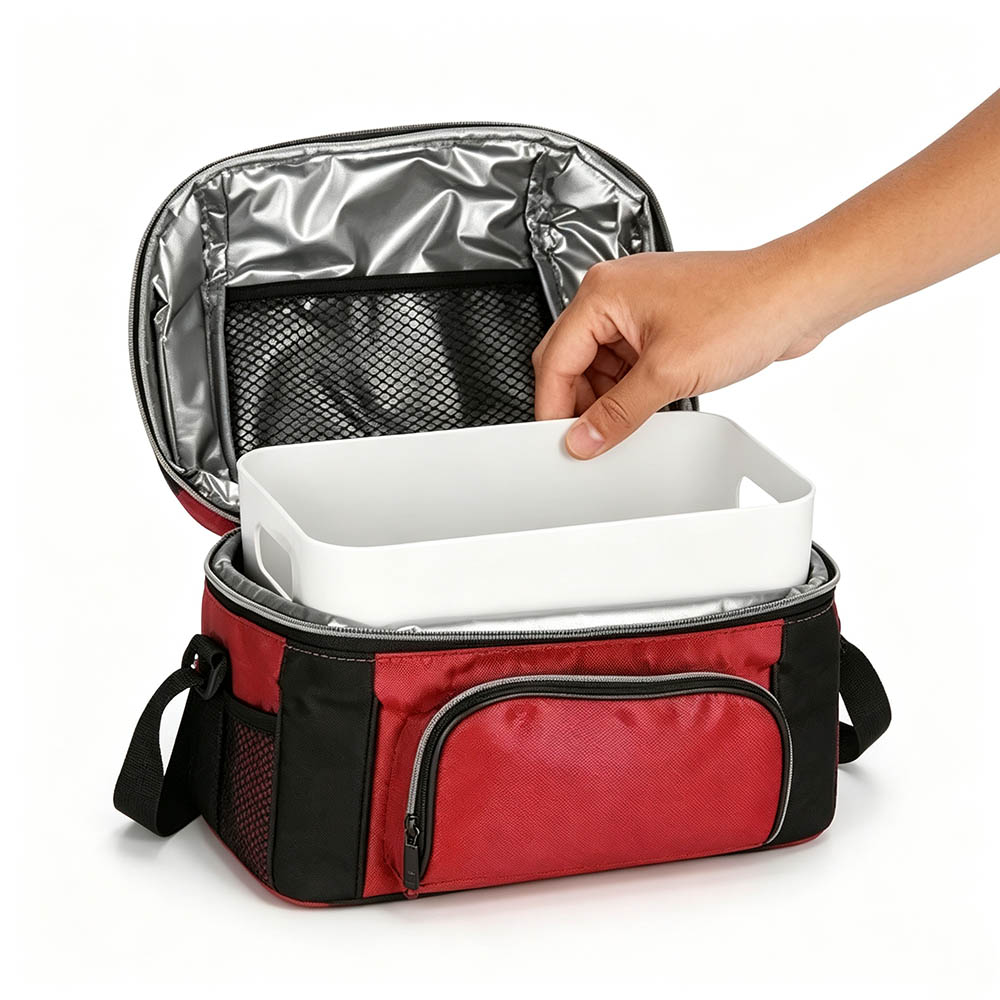
In addition to seams, there are two other components that will affect leak resistance:
What “Waterproof” Really Means in Product Descriptions
Various brands often use waterproof‑related terms loosely. Here’s how to understand these terms:
| Term | What It Usually Means | Implication for Buyers |
|---|---|---|
| Water-resistant | Splash protection only; not sealed | Expect leaks if tipped over |
| Waterproof | Seams are sealed or welded; zipper may still be a weak point | Good for most uses, but verify zipper type |
| Leakproof | Fully sealed liner + waterproof closure system | Safest choice for boats, cars, and tip-prone environments |
When choosing soft coolers, you can ask yourself three questions:
- Are the liner seams RF-welded or stitched?
- Does the closure use a waterproof zipper (YKK or equivalent)?
- Do user comments mention water leakage after tipping over?
If you cannot confirm all three points, proceed with caution, especially when you plan to use coolers in scenarios that are prone to tipping, such as boats, kayaks, or cars.
What Materials and Features Make a Soft Cooler Durable Enough for Real Outdoor Use?
Whether a soft cooler is good or not depends on its materials. Even if the insulation performance is top-notch, if the shell tears when it hits a stone, or if the strap is torn off from the joint on the first day of use, it will be all in vain.
Outer Shell, Insulation Core, and Food-Grade Liner: The Material Stack
Soft coolers with reliable quality are generally composed of three layers of functional materials:
- Shell. The fabric should be at least 600D polyester or nylon. “D” stands for denier and is used to measure fiber thickness. The higher the D value, the thicker the fabric and the more tear‑resistant it is. High‑end coolers will use 840D nylon with TPU coating, or a full‑TPU shell, which is more waterproof and easy to clean. In practical use, the most easily damaged parts of the shell are the stress points: corners, bottom edges, and strap attachment areas. Pay attention to whether there are reinforcement patches in these places when purchasing.
- Insulation core. The middle layer is mostly closed‑cell foam, which seals air in sealed pockets to slow down heat transfer. Compared with various proprietary foam names boasted by brands, thickness is more critical. To maintain effective ice retention, the closed‑cell foam should be at least 1 inch (25 mm) thick. Some high‑end styles will also add a thermal‑reflection layer, which is similar to aluminum foil, to reflect heat. Do not choose products with an insulation‑layer thickness below 15 mm; the ice will melt within a few hours.
- Liner. The inner layer must be food‑grade PEVA or TPU. These two materials meet FDA standards for food contact, are easy to wipe and clean, and do not easily develop mildew spots after drying. Avoid PVC liners; they give off a plastic odor, and responsible manufacturers rarely use this kind of material. If the product details page does not specify the liner material, the lack of this information itself is a signal that needs to be heeded.
Features That Actually Add Value (And Ones That Don’t)
Combined with the actual‑use feedback from a large number of user reviews, we objectively inventory the common configurations of soft coolers:
Worth paying for:
- Reinforced carry handles and shoulder straps: the most easily‑broken part of cheap coolers is the shoulder‑strap joint. Reinforcing the fixed points by stitching or bar‑tacking can greatly extend the service life of coolers.
- Non‑slip bottom: prevents the cooler from sliding back and forth in the trunk or on ship decks.
- Daisy chains / tie‑down loops: coolers can be fixed on kayaks, ATV shelves, or truck cargo beds.
- Built‑in bottle opener: it is a small feature, but it will be used frequently for tailgates and beaches.
- Outer quick‑access pocket: you do not need to open the main compartment for snacks and small items to avoid cold‑air leakage.
Not worth prioritizing:
- Fancy color schemes and matching accessories: they bring no improvement to actual performance.
- Complex multi‑pocket storage system: it not only increases the weight but also raises costs and is rarely used in outdoor scenarios.
- Gimmick functions such as “built‑in cutting board”: most of them are poor in workmanship, small in size, and low in practicality.
Are Soft Coolers Worth It? Common Myths and Buying Mistakes to Avoid
For most outdoor enthusiasts, a soft cooler with excellent quality is completely worth the cost—provided that you choose a style that meets your needs. Let’s talk about the pitfalls that need attention.
Do Budget Soft Coolers Work? Where Cheap Brands Cut Corners
Budget soft coolers under $50 can be used for short-duration outings, such as staying in the park for a few hours, bringing lunch to work, and picking up ingredients for a short time. However, we sorted out user reviews for this price segment and found that failure issues are highly concentrated:
- Insulation breakdown: after several months of use, the foam gets extruded, deformed, and crumbled, and the ice retention time is directly reduced to 6-8 hours or even shorter.
- Zipper failure: Unbranded zippers are the most commonly reported problem with cheap soft coolers.
- Liner splitting: thin PEVA liners are easy to crack when exposed to low temperatures or repeated
- Strap stitching pull-out: the shoulder strap works fine at first, but it will soon break down.
If the budget is less than $50, choose simple models first, and don’t pursue fancy functions. As long as the foam layer is thick and the handles are reinforced, the actual performance of a basic portable cooler will be much better than products with piled-on accessories and cheap internal materials. If you are not just using it casually and want a reliable mid-range model, the suggested budget is $80-$150.
Five Buying Mistakes First-Time Buyers Make
Conclusion: A Simple Framework for Choosing Your Soft Cooler
After reading this guide, please remember these four things:
Insulation first. Closed‑cell foam should be at least 1 inch thick. Pre‑cool the cooler in advance, match ice cubes and stored items according to a 2:1 ratio, and open the lid as little as possible.
Size realistically. The actual usable capacity is only about 70‑80% of the number of cans marked on the label. When you are uncertain between two sizes, choose the larger size for multi‑day trips, and choose the smaller size when you need to carry it by hand for a long time.
Leakproof means welded. If you will use the cooler on boats, in cars, or in other tip‑prone environments, it is a hard requirement to have RF‑welded seams paired with waterproof zippers (or magnetic closure structures).
Materials beat features. A simply configured cooler with an 840D TPU shell, thick closed‑cell foam, and a food‑grade PEVA liner will be more durable than feature‑packed styles with cheap workmanship.
At KingStar, we have built our reputation on portable hydration and cooling solutions that can stand the test of real‑world outdoor scenarios. Our soft cooler series is selected according to the standards in this guide—no gimmicks, no exaggerated claims. If you have any questions about soft cooler sourcing or cooler customization, welcome to contact us through sales@waterbottle.tech, We promise to reply as soon as possible.
FAQ
Reference
FoodSafety.gov — “Keeping Food Safe During an Emergency or Outdoors”
https://www.foodsafety.gov/food-safety-charts/food-safety-during-power-outage
Outdoorgearlab, The Best Coolers of 2026, https://www.outdoorgearlab.com/topics/camping-and-hiking/best-cooler
Gearjunkie, The Best Soft Coolers of 2026, https://gearjunkie.com/outdoor/best-soft-coolers
Outdoorgearlab, Comparing Soft Coolers, https://www.outdoorgearlab.com/topics/camping-and-hiking/best-soft-cooler/compare?gearid_array%5B%5D=55148#1
NewYork Times, The Best Coolers, https://www.nytimes.com/wirecutter/reviews/the-best-hard-cooler/?utm_source=the_wirecutter_show&utm_medium=podcast&utm_campaign=episode_number_b10#2

Specializing in custom manufacturing, quality control and marketing of vacuum-insulated drinkware and coolers.