Choosing a hard-sided cooler box is not as simple as it seems. There are many sizes, different functions, and large price spans in the market, which makes it easy to confuse the core purchase points. Many people will make the wrong choice in the end: either the box is too heavy, or the cold preservation effect is insufficient, or it does not meet their actual use needs at all.
Then this guide is aimed at solving this problem. Read on and get more information about how to choose an ideal hard-sided cooler according to your actual needs. And you can also learn more on our website.
What Is a Hard-Sided Cooler Box?
Definition and Key Features
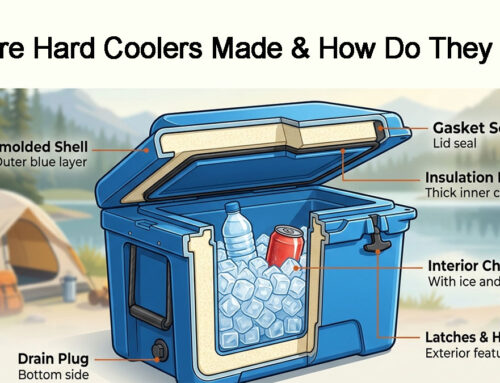
A hard-sided cooler box is a solid and hard heat-insulating container, which is specially designed for keeping food, drinks, and ice fresh for a longer time. It adopts a solid plastic or heavy-duty rotomolded structure, which is stable and durable. And it has excellent impact resistance and is more suitable for harsh outdoor environments and high-intensity use scenarios.
Excellent Temperature Lock Structure:
It’s featured with a thickened double-layer insulation box wall and a high-density sealed box cover, firmly locking internal cold air, isolating external hot air infiltration, and greatly reducing temperature loss.
Sturdy & User-Friendly Accessories:
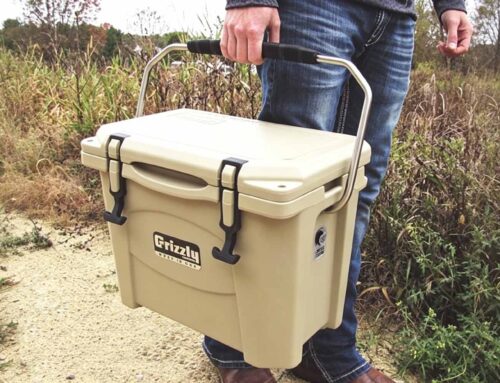
Solid and practical accessories come standard with a reinforced seal lock, non-slip hand position, and shoulder strap. Large-capacity models are equipped with durable wheels, which is labor-saving and convenient for outdoor handling.
Long-Lasting Ice Retention
Super-long cold endurance and excellent ice-locking and thermal insulation performance, and the ice cubes can be kept for several days, which makes it easy to adapt to long-distance outdoor travel for many days.
Durable & Heavy-Duty Performance
Durable and practical, the rigid construction is resistant to pressure, falls, wear, and manufacture. Although slightly higher, its performance is still stable, and it is essential equipment for camping, self-driving, hunting, beach outings, and outdoor gatherings.
Market Share & Trends
Hard-sided Cooler Boxes account for 59%-74% of the cooler market.73.52% in North America retail coolers (2024), 59.15% globally (2025), and 67.7% in outdoor coolers (2023). North America is the core leading market, and its global market share of hard-sided cooler boxes reaches 38%.
Every year, more than 160 million Americans participate in outdoor activities, covering 48% of the local population, which continues to drive the demand for coolers. It is estimated that in 2025, the annual sales volume of hard-sided cooler boxes will exceed 15 million units.

Hard Cooler vs Soft Cooler: What’s the Difference?
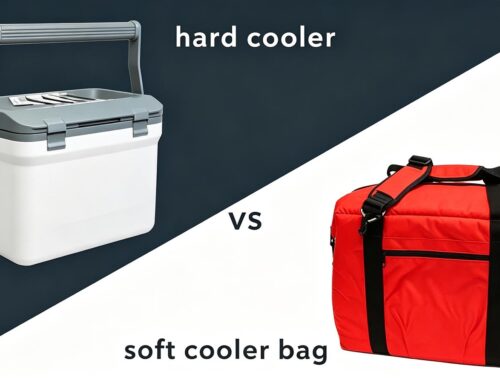
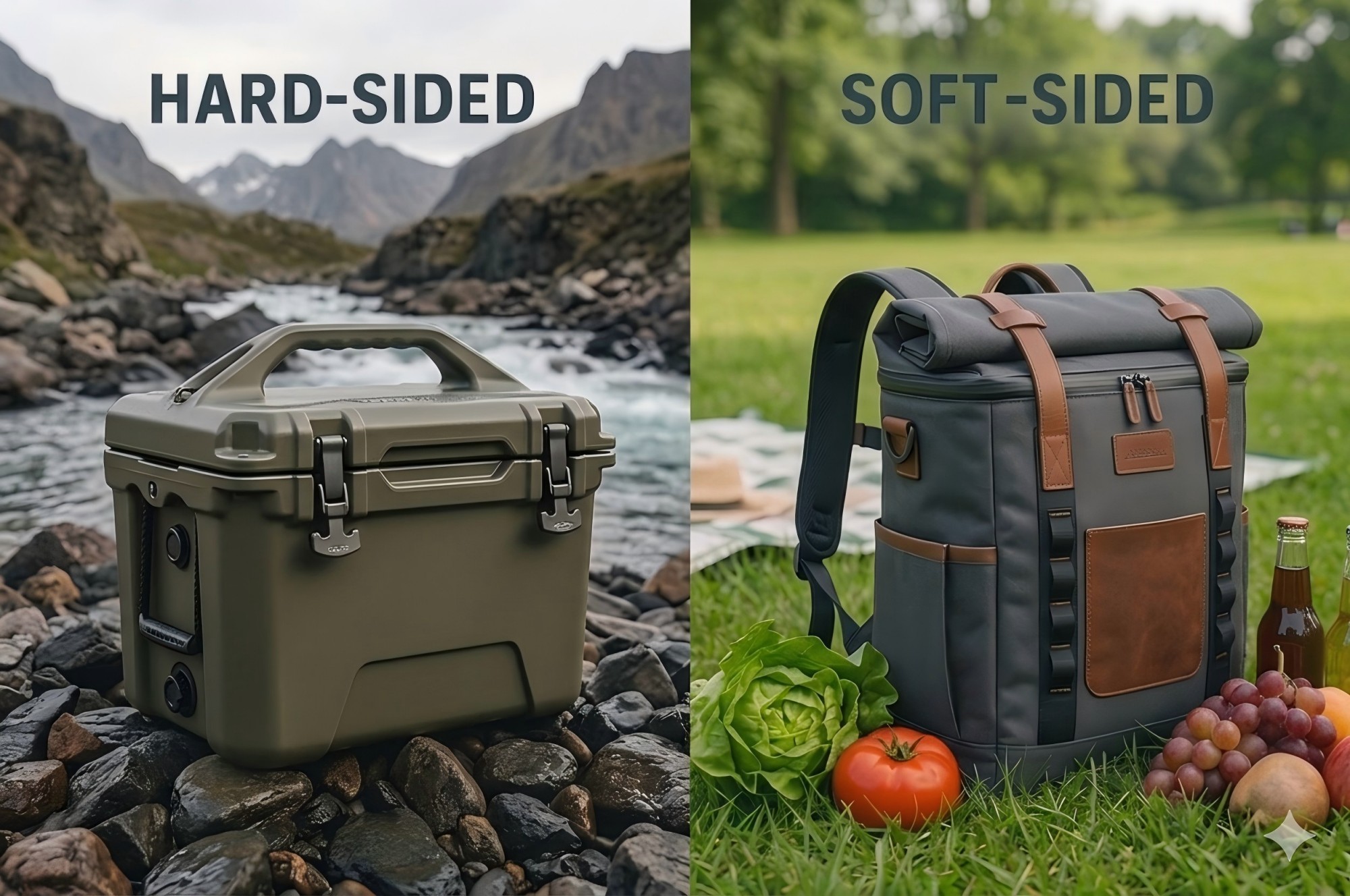
Compared to hard-sided cooler boxes, the outer layer of the soft-sided coolers is mostly made of fabric materials such as nylon, and the inner foam insulation layer is thinner, which is light and easy to carry, but the ice retention is limited and can only last for 1-2 days.
And this is a detailed comparison between hard and soft coolers.
| Aspect | Hard-Sided Coolers | Soft-Sided Coolers |
|---|---|---|
| Material | Thick plastic/rotomolded walls | Fabric/vinyl with foam |
| Ice Retention | 5-10 days | Hours to 2 days |
| Weight | Heavier, less portable | Lighter, easier to carry |
| Durability | Bear-resistant, rugged use | Everyday wear, puncture-resistant |
| Size/Capacity | Up to 50+ quarts | Up to 20-40 quarts |
| Price | Higher cost | More affordable |
Cooler Box Materials: Which One Is Best?
Rotomolded vs Injection vs Blow Molded Coolers
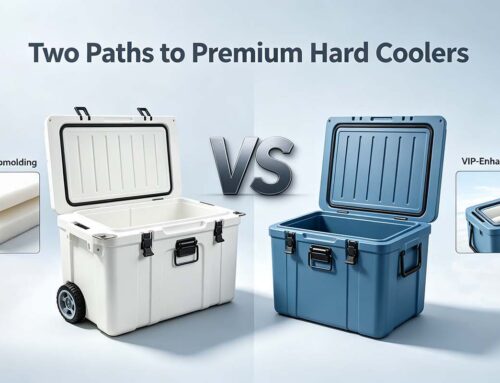
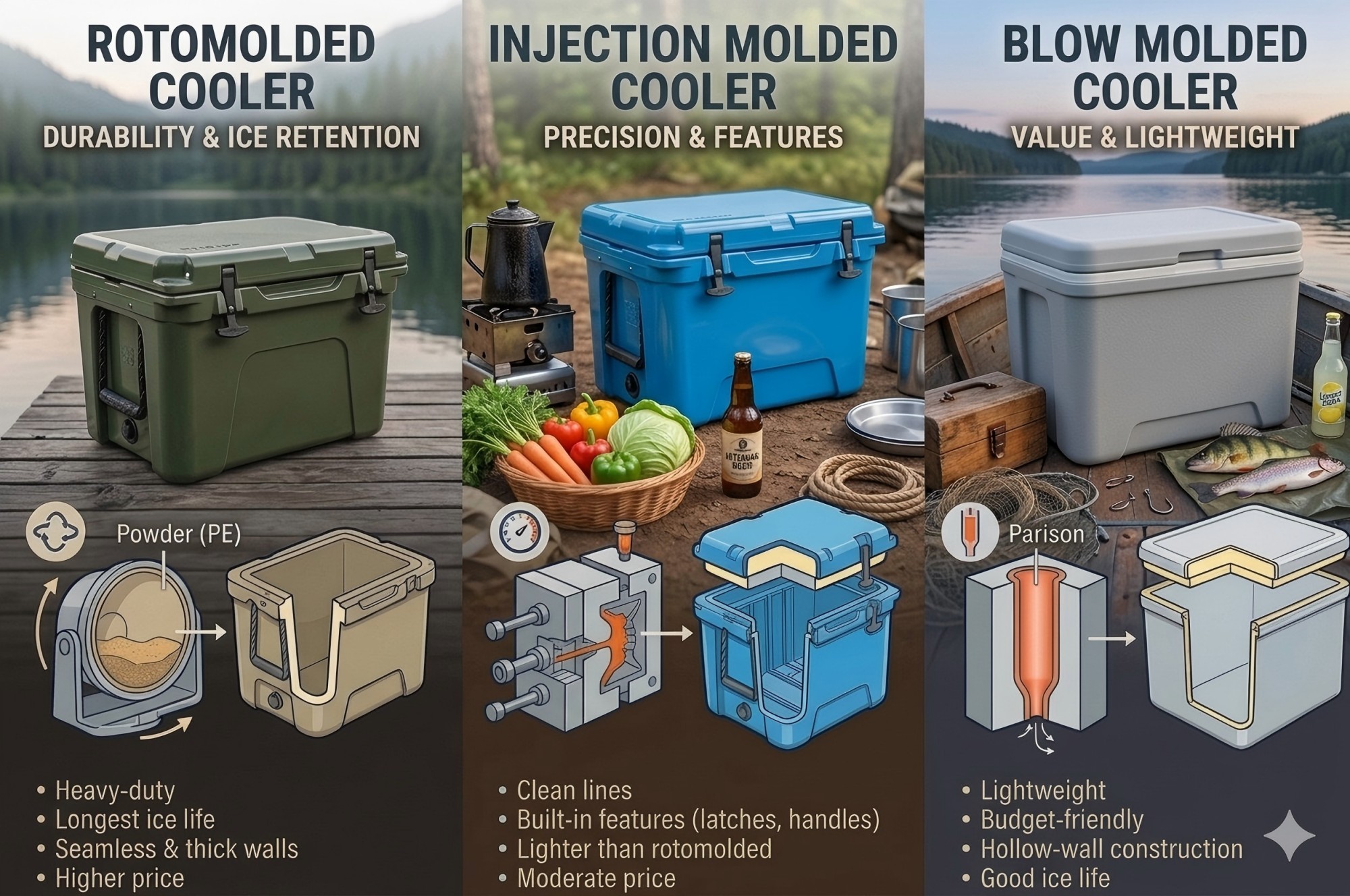
In rotomolding: Plastic powder is heated in a two-axis rotating mold, and the melted material is uniformly attached to the inner wall of the mold to form seamless hollow products with solid wall thickness, which are mostly used in the production of high-end coolers.
In injection molding: Plastic particles are melted at high temperature, injected into the cavity of a precision mold at high pressure, cooled and shaped, and then the components such as the box body and shell are produced separately and then spliced and assembled.
In blow molding: The hot-melt plastic tube is extruded first, then the mold is clamped, blown, and expanded to fit the outline of the die, and then cooled to form a thin-walled hollow box, which is suitable for the basic economic cooler boxes.
| Aspect | Rotomolded Coolers | Injection-Molded Coolers | Blow-Molded Coolers |
|---|---|---|---|
| Process | Plastic powder heated and rotated in mold for seamless shell | Melted plastic injected under pressure into mold; pieces joined | Plastic tube inflated in mold like a balloon |
| Durability | Highest; thick, uniform walls resist impacts, no seams | Good but seams may weaken; lighter duty | Basic; thinner walls prone to cracking |
| Weight | Heaviest due to thick plastic | 20-30% lighter than rotomolded | Lightest but least robust |
| Ice Retention | Best (5-10+ days); superior insulation | Solid but shorter than rotomolded | Fair; thinnest insulation |
| Cost | Premium | Mid-range | Cheapest |
| Examples | YETI, RTIC, Pelican | Igloo, Coleman premium | Basic Igloo/Coleman |
Insulation Materials Explained (PU Foam vs VIP Panels)
Besides VIPs, common insulation materials include fiberglass, mineral wool, cellulose, spray foam, and rigid foam boards such as polystyrene, polyisocyanurate, and polyurethane. And here is a detailed comparison between PU foam and VIP panels.
| Aspect | PU Foam (Polyurethane) | VIP Panels (Vacuum Insulation Panels) |
|---|---|---|
| Composition | Closed-cell foam from polyol/isocyanate reaction | Vacuum-sealed silica/fiberglass core in metal barrier |
| Thermal Conductivity | 0.02-0.03 W/m·K | 0.004-0.008 W/m·K |
| Durability | High; impact/moisture resistant | Fragile; puncture voids vacuum |
| Cost | Affordable, standard in coolers | Expensive, rare in portables |
| Typical Ice Retention | 3-7 days | 7-14+ days (if intact) |
What Size Cooler Box Do You Actually Need?
How to Choose the Right Capacity for Your Group Size
The size of the cooler boxes depends on the number of people, the number of days of travel, the total amount of food and drink, and the proportion of ice and things (1:2 golden ratio is recommended).
| Group Size | Recommended Quarts | Best For | Cans + Ice Capacity |
|---|---|---|---|
| 1-2 people | 20-30 | Day trips, solo hikes | 20-30 cans |
| 2-4 people | 30-50 | Overnight camping, picnics | 30-48 cans |
| 4-6 people | 50-70 | Weekend trips, BBQs | 48-60 cans |
| 6-8 people | 70-100 | Multi-day outings, parties | 60-96 cans |
| 8+ people | 100+ or multiple coolers | Large events, fishing | 96+ cans |
Cooler Size Guide by Using Scenarios
The cooler box is suitable for a wide range of scenarios, not limited to camping. The following are various common scenarios with practical capacity references.
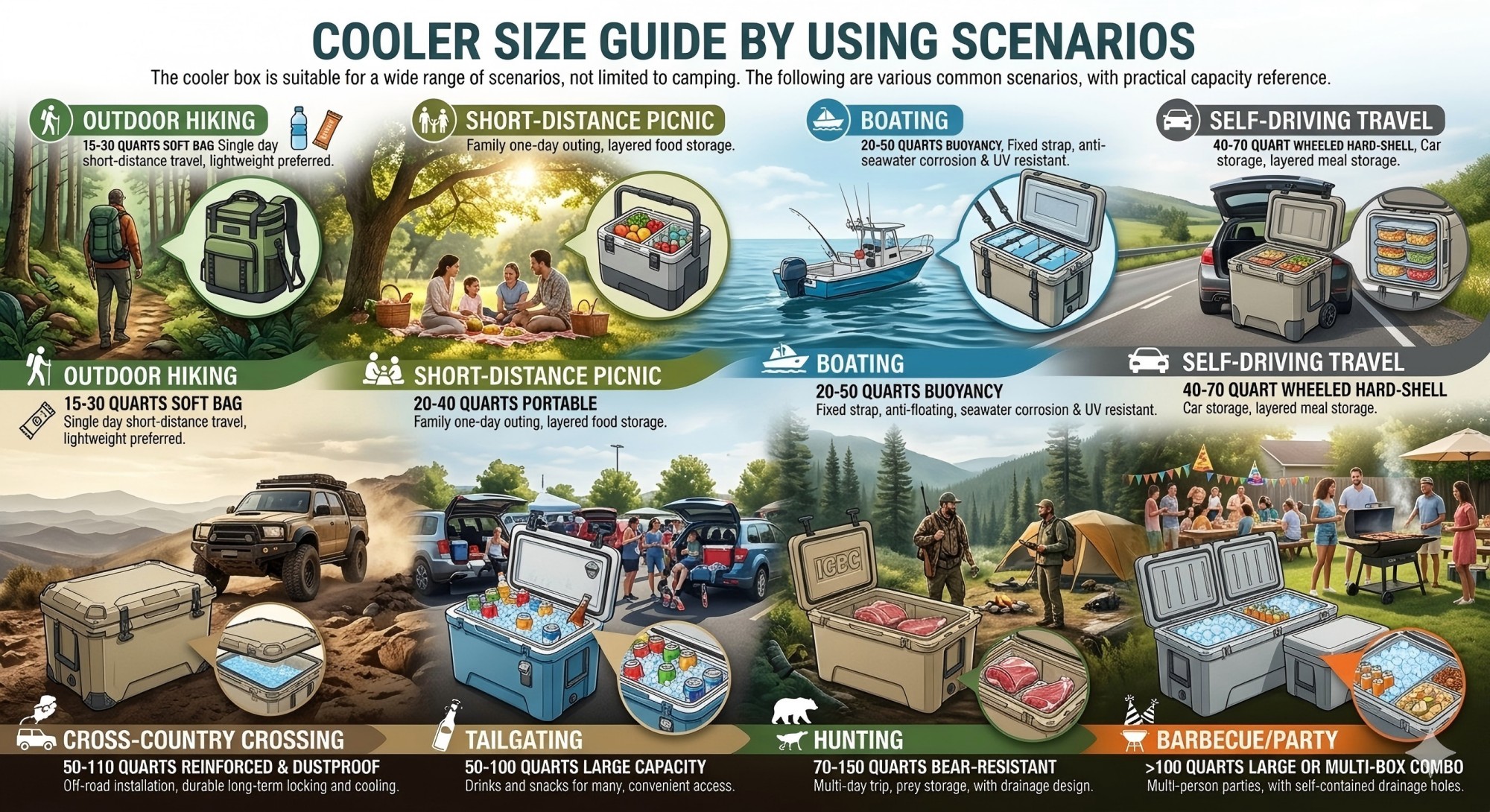
Tailgating: 50-100 quarts, which is suitable for storing drinks and snacks for many people, and the parking lot is convenient to access.
Outdoor hiking: a 15-30 quart soft bag, suitable for short-distance travel in a single day; lightweight is preferred.
Hunting: 70-150 quarts, bear-resistant, with drainage design, suitable for multi-day trips and prey storage.
Short-distance picnic: 20-40 quarts, portable, suitable for a family one-day outing, and can store ingredients in different areas.
Boating: 20-50 quarts buoyancy anti-floating style, fixed strap, seawater corrosion resistance, and ultraviolet resistance.
Self-driving travel: 40-70 quart wheeled hard-shell box, suitable for car storage and layered storage of meals.
Barbecue/party: large capacity or multi-box combination of more than 100 quarts with self-contained drainage holes, suitable for multi-person parties.
Cross-country crossing: 50-110 quarts, dustproof and reinforced, suitable for cross-country installation; long-term locking and cooling are more durable.
What Features Should You Look for in a Cooler Box?
Must-Have Features: What Really Affects Cooling Performance
When purchasing a hard cooler box, the importance of each feature is not the same. If your core need is to store food and drinks for a long time, just focus on the key design that affects the ability to keep cold.
Ice retention is the primary index, which determines whether the cooler can continuously and stably control the temperature. This performance mainly depends on several factors, such as outer materials, insulation layers, volumes, seals, and so on.
The overall workmanship of the box is equally critical, especially the closing accuracy of the box cover and the sealing of the gap. Even a slight air leakage will quickly weaken the retention effect. In a word, when it comes to choosing a right cooler, the ability of keeping cold is given priority.
Convenience Features: What Makes a Cooler Easier to Use
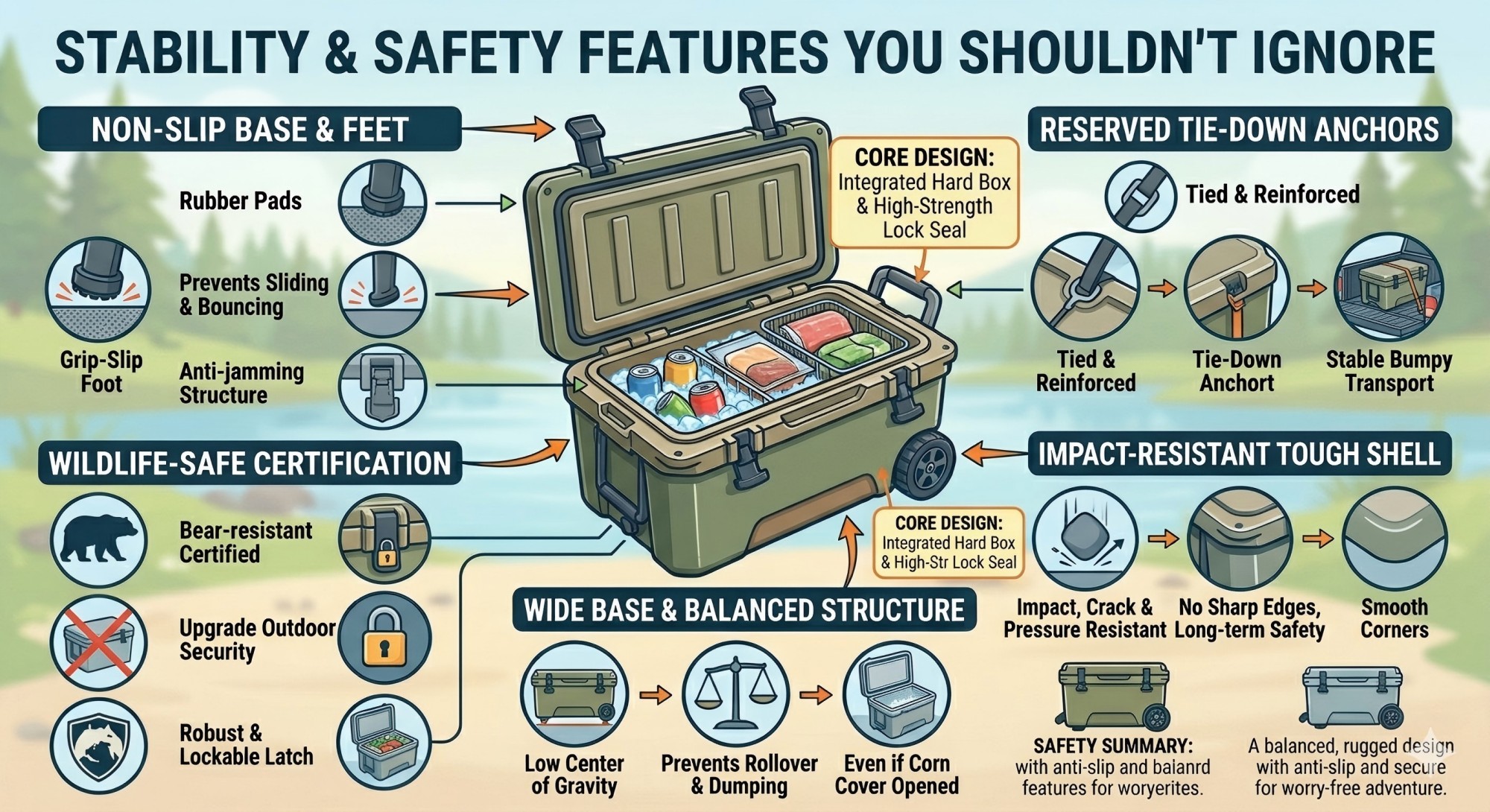
An easy-to-use hard cooler needs quick opening and closing, easy handling, and convenient cleaning. Some convenience features can greatly enhance the outdoor user experience, including easy-to-open box lids, ergonomic handles, anti-skid wheels, drain plugs, built-in bottle openers, and internal organizers.
Easy Opening & Sealing
Magnetic box lids, smooth latches, and anti-jamming closing structures support one-handed operation and ensure tight sealing to avoid cold air loss.
Portable Design
Lightweight structure, comfortable handle, and large-capacity style with wheels, making long-distance handling easier.
Drain Plug & Vent Valve
The drain plug and vent valve can quickly drain the melted ice water without emptying the ingredients, which is clean and worry-free.
Multifunctional Extras
Built-in accessories such as cup holders, bottle openers, and dry storage baskets are suitable for all kinds of outdoor scenes.
Easy-cleaning structure
Large opening and closing lids, detachable water trays, and a smooth inner corner design make daily care simple and efficient.
When you choose hard coolers for day trips and picnics, give priority to styles that are easy to open and close and light and easy to carry. If it’s for long-distance camping and multi-person gatherings, then focus on wheels, drainage systems, and internal organizers.
Stability & Safety Features You Shouldn’t Ignore
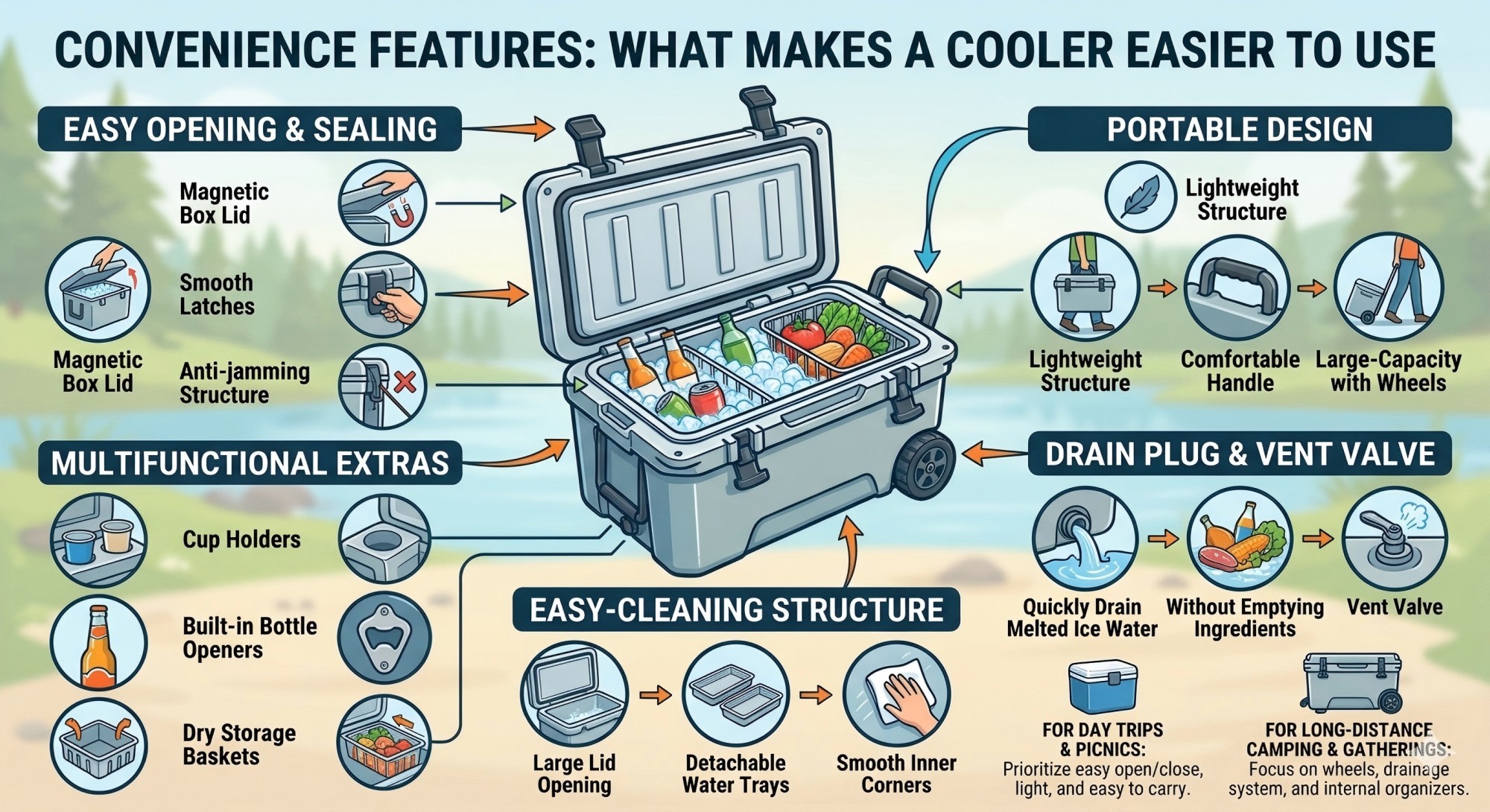
The stability and safety of hard coolers are mainly reflected in the aspects of anti-dumping, anti-leakage, anti-pressure, and anti-spilling. The core key design includes an integrated hard box, high-strength lock seal, non-slip base, and tie-down anchors, which improves the safety of use in all directions.
Non-slip bottom feet
Rubber non-slip base pads increase the shading design to prevent the box from sliding freely on the flat and bouncing ground.
Reserved tie-down anchors
Coolers can be tied and reinforced, and during the long-distance bumpy transportation, they can be very stable.
Wildlife-safe certification
Camping in wildlife areas, bear-resistant certified models can upgrade outdoor security.
Impact-resistant tough shell
If the outer shell is impact-resistant, crack-resistant, pressure-resistant, and durable, then the cooler is not easy to have damaged sharp edges, so it is safer for long-term use.
Wide base & balanced structure
A low center of gravity and widened base design effectively prevent rollover and dumping when the cover is opened or the items are unevenly placed.
Price Range: What Do You Really Pay For?
Cost Breakdown of Production
| Part / cost item | Cost | Share of total |
|---|---|---|
| LLDPE resin shell | $6.5 | 12% |
| PU foam insulation | $5.0 | 9% |
| Stainless hardware, latches, hinges, handle, drain | $7.5 | 14% |
| Rubber gasket, drain plug, seals | $1.5 | 3% |
| Manufacturing labor & energy | $8.0 | 15% |
| Packaging | $3.0 | 6% |
| Testing & certification amortization | $2.0 | 4% |
| Factory overhead & profit | $8.0 | 15% |
| Total cost | $41.5 | 100% |
Common Price Range for Coolers
| Cooler type | Typical price range | Example products |
|---|---|---|
| Budget hard coolers | $15.99–$79.00 | Igloo Tag Along Too Cooler $49.99; Coleman 316 Series 120QT Hard Chest Cooler $79.00 |
| Mid-range hard coolers | $80–$250 | Igloo Trailmate 50 Qt Cooler $99.99; Igloo Party Bar 125 Qt Cooler $239.99; RTIC 52 QT Ultra-Light Hard-Sided Ice Chest Cooler $229.00 |
| Premium hard coolers | $250–$500 | Bison 50 QT Cooler $349.99; Canyon Outfitter 35qt V2 $259.99; YETI Tundra 45 $325.00 |
| Extra-large premium coolers | $500+ | Bison 125 QT Cooler $599.99; YETI Tundra 125 $625.00; YETI Tundra 350 $1,595.00 |
There is a simple reference rule: the entry-level small hard coolers usually cost less than $100; the starting price of rotomolded or premium models is generally above $250.
The better the box capacity, heat insulation material, wheels, and reinforced hardware fittings, the higher the product price will be.
Conclusion: Find the Perfect Cooler for Your Needs
There are many kinds of hard-sided coolers in the market in terms of size, material, technology, and functions. The core of choosing the right products is to fit their actual use scenarios.
Priority should be given to its ice retention performance. Then, according to different activities such as picnicking, driving, hunting, water travel, long-distance outdoor activities, etc., match the appropriate capacity, portable design, and additional accessories. Considering practicality, functionality, and cost performance, we can easily select an ideal hard-sided cooler that is suitable for daily and outdoor travel and durable and reliable.
And if you have any questions about production and customization about hard-sided coolers or any other coolers, please contact us, Kingstar, the professional manufacturer of sports bottles and coolers.. Send an email to sales@waterbottle.tech or leave online message, and we will reply within 24 hours.
FAQ:Hard-sided Coolers Buying Guides
Reference
Grandviewresearch, 2025, North America Retail Cooler Market (2025 – 2030), https://www.grandviewresearch.com/industry-analysis/north-america-retail-cooler-market-report
Peakcamper, 2025, Hard-Sided vs Soft-Sided Coolers: Best Choice Explained (2025 Guide), https://peakcamper.com/blogs/news/hard-sided-vs-soft-sided-coolers-best-choice-explained-2025-guide
Acmetools, 2024, Cooler Comparison: Hard-Sided vs. Soft-Sided Coolers, https://www.acmetools.com/tool-crib/ac605849/benefits-of-hard-sided-vs-soft-sided-coolers-acme-tools/
Wikipedia, 2025, Blow molding, https://en.wikipedia.org/wiki/Blow_molding
Outdoorgearlab, 2025, The Best Coolers, https://www.outdoorgearlab.com/topics/camping-and-hiking/best-cooler

Specializing in custom manufacturing, quality control and marketing of vacuum-insulated drinkware and coolers.