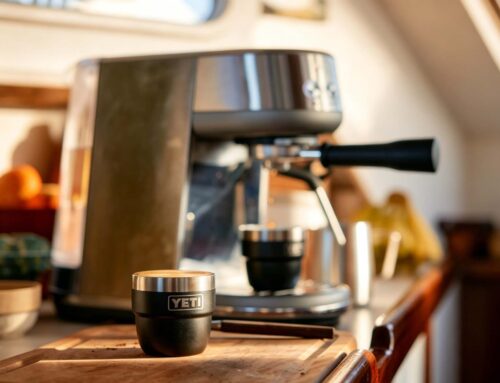

Many people who take subways, buses, or private cars to travel and work often struggle to choose a durable water bottle for all-day daily use. Daily commuting scenarios usually bring many minor troubles related to water bottles. Common problems include liquid leakage that wets laptops and the inconvenience of holding mobile phones, bags, and water cups at the same time.
As a leading stainless steel drinkware manufacturer, we strictly control the production processes and material selection for these two water bottles. Furthermore, based on our years of manufacturing expertise and material application knowledge, we have conducted a comprehensive comparative analysis of these two bottles, Stanley Quencher H2.0 vs. Owala FreeSip, in order to help you make an ideal choice. The actual usage needs of daily commuting should be the core standard for product selection. Beyond individual use, this comparison also serves as a practical reference for B2B buyers—whether you’re sourcing employee rewards, promotional merchandise, or evaluating market benchmarks for private-label development.
What Are the Key Design Differences Between Stanley Quencher H2.0 and Owala FreeSip?
| Feature | Owala FreeSip | Stanley Quencher H2.0 |
|---|---|---|
| Brand Heritage | Launched 2020, modern innovator | Founded 1913, American classic |
| Insulation | Double-layer vacuum | Double-wall vacuum |
| Drinking System | FreeSip dual-mode (straw + wide spout) | FlowState 3-position lid (straw/drink/close) |
| Handle | Carry loop (doubles as lock) | Integrated oversized handle |
| Straw | Concealed under lid | Exposed |
| Colors | ~20+ vibrant options | 60+ colorways |
| Base Design | Standard (24oz fits cupholders) | Tapered cone—fits all cupholders |
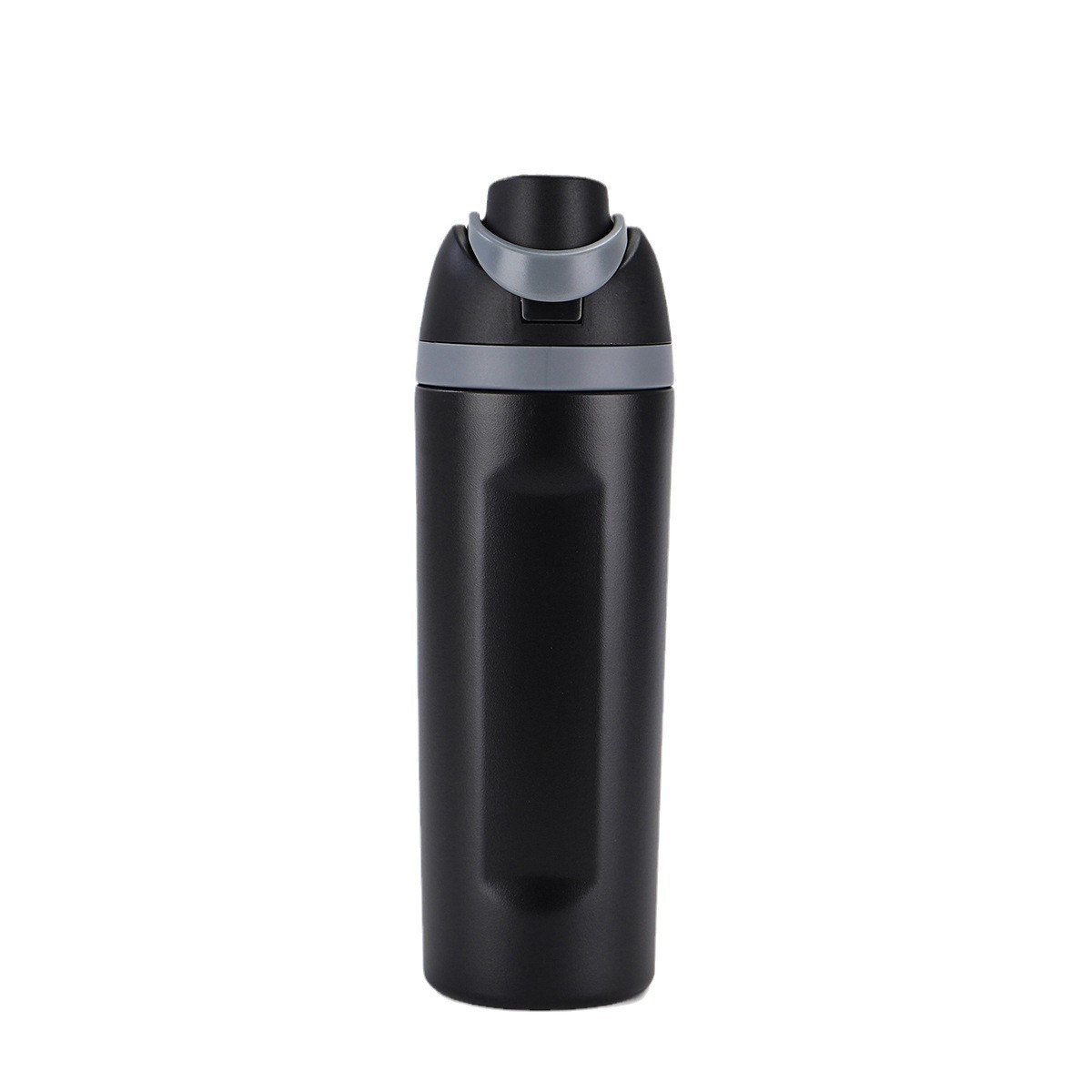
Owala FreeSip: Innovation First
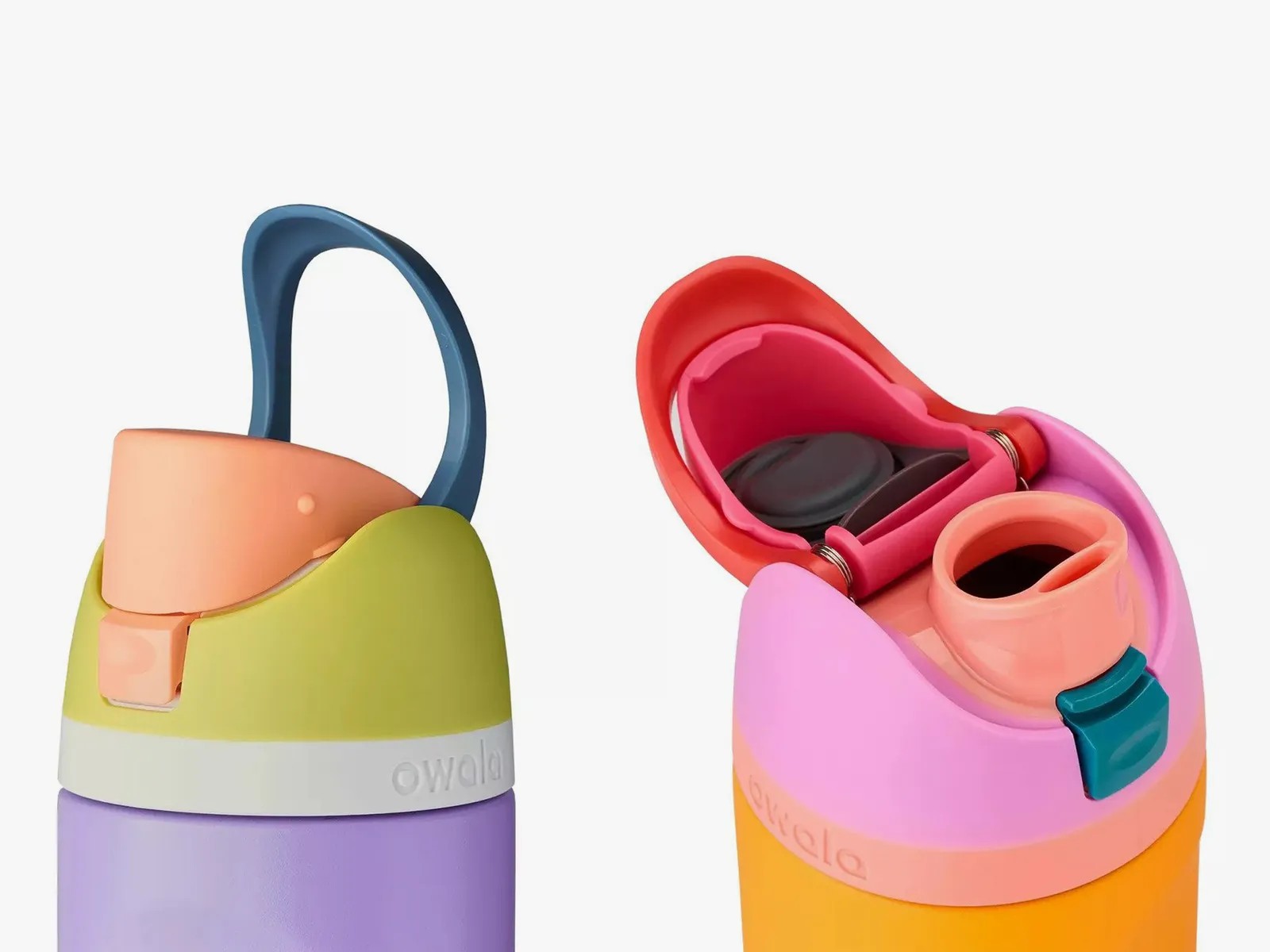
Owala entered the consumer market in 2020 and rapidly gained great popularity among users. The brand’s exclusive patented FreeSip lid serves as its most prominent product feature. Users can use a built-in straw to drink water in an upright posture, or they can tilt the cup to drink directly through the wide mouth of the cup. The push-button structure of the cup lid can achieve tight locking, and the portable ring on the cup can also function as an additional locking structure.
This bottle adopts double-layer vacuum insulation, which is a key technical advantage we’ll explore in the next section. Owala officially confirms that all its water bottles do not contain BPA, lead, or phthalate.
Stanley Quencher H2.0: The Heritage Heavyweight
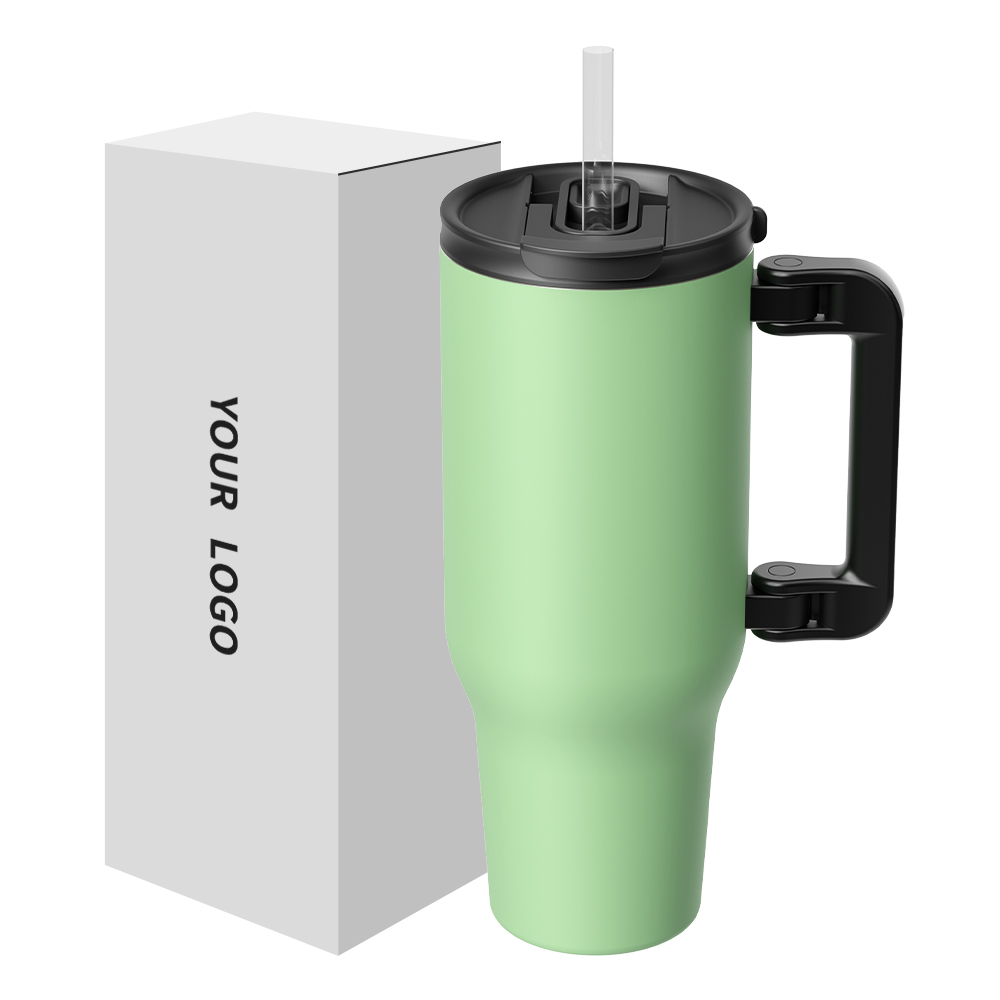
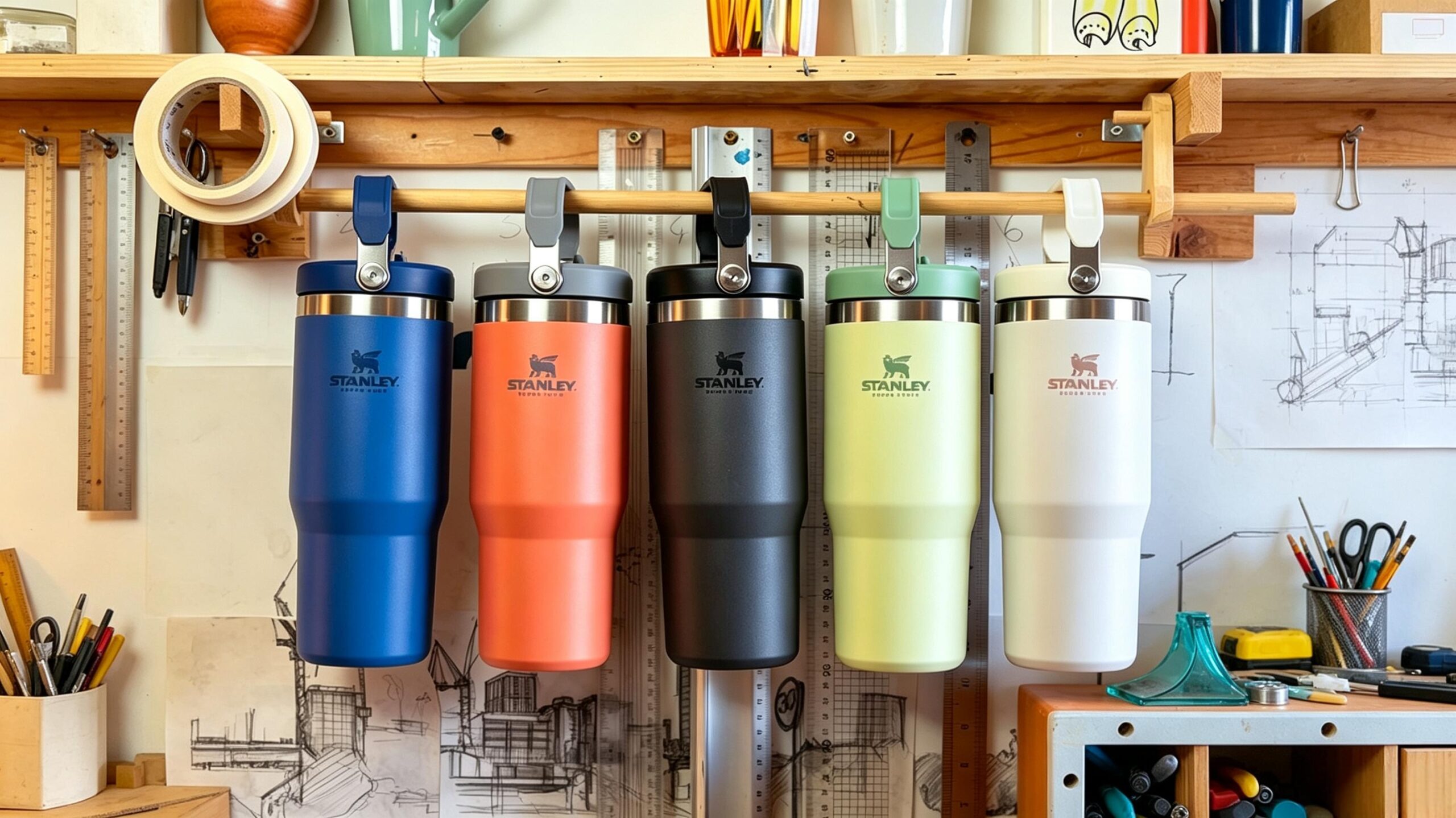
The Stanley Quencher H2.0 model is equipped with a double-wall vacuum-insulated stainless steel main body. It matches a FlowState lid that supports three different working modes, including straw opening, drinking opening, and full close.
The tapered bottom design of the tumbler is a major highlight of its overall structure. The structure allows the bottle to adapt to most standard car cup holders. The large-size handle can bring a comfortable gripping experience for users. However, the exposed straw structure of the tumbler leads to a non-fully leakproof performance—a crucial detail for commuters.

Does Your Cup Holder Actually Fit Both Bottles? A Compatibility Deep Dive
How SAE J1908 Standards Apply to Modern Commuters
Most American and mainstream models usually have an inner diameter of about 2.5–3.0 inches. This size range will directly affect the fixing effect of daily drinking water bottles in the car. Drivers may encounter sudden braking or fast lane change when commuting every morning, and these driving scenes are not uncommon in urban commuting.
According to the actual measurement and accessories ecology, Owala water bottle can improve the cup holder adaptability by narrowing the bottom: 24oz can be put directly in most models, while 32 oz and 40 oz may be tight in some compact cup holders or need expanders. Stanley’s 20 oz and 30 oz cans fit into most car cup holders, but there may be obvious shaking in the cup grooves of some models.
What Happens During Emergency Maneuvers
According to our experiences, the performances of these two bottles during emergency maneuvers are as follows.
| Test Condition | Owala FreeSip | Stanley Quencher H2.0 (40oz) | Stanley Quencher H2.0 (30oz) |
|---|---|---|---|
| Stable at rest | ✓ Secure | ✓ Secure | ✓ Secure |
| In typical car cup holders (ambient) | ✓ No/minimal movement | △ Minor shift (model-dependent) | △ Minor shift (model-dependent) |
| Emergency stop / sharp lane change (dynamic) | ✓ Remains seated (lower tip risk) | ✗ Tip-over risk (higher) | ✗ Tip-over risk (higher) |
| Tilted / inverted or under pressure (leak test) | ✓ Zero leakage (leak-proof) | ✗ Minor seepage (splash-resistant) | △ Occasional seepage (splash-resistant) |
| Drop / pothole impact (simplified) | ✓ No leaks | △ Possible seal micro-movement / seepage | △ Possible seal micro-movement / seepage |
Many commuters drive cars with outdated cup holder structures, or they often travel on bumpy and damaged roads. For these groups of users, Owala’s slim bottom design brings obvious practical benefits. If users take stable bottle placement in car cup holders as a primary demand for daily driving, the 40 oz Stanley water bottle is not a suitable choice for regular trips.
Which Sizes Should You Avoid for Vehicle Compatibility?
| Bottle Model | Capacity | Base Diameter | Car Cup Holder Fit / Risk |
|---|---|---|---|
| Owala FreeSip | 24oz | ~3.0″ ( D≈3.12″) | Very Low |
| Owala FreeSip | 32oz | ~3.2–3.3″ ( D≈3.43″) | Low–Moderate |
| Owala FreeSip | 40oz | ~3.4–3.5″ (D≈3.60″) | Moderate |
| Stanley Quencher H2.0 | 20oz | ~3.4–3.6″ | Low–Moderate |
| Stanley Quencher H2.0 | 30oz | ~3.5–3.7″ | Moderate |
| Stanley Quencher H2.0 | 40oz | ~3.5–3.8″ | Moderate–High |
| Stanley Quencher H2.0 | 64oz | ~3.8″+ | Not Compatible |
The 64 oz Stanley model explicitly fails cup holder compatibility requirements for any standard automotive configuration. Commuters requiring large-capacity hydration without compromising vehicle safety should consider alternative storage solutions like seat-back pockets or trunk placement rather than risking damage to cup holder mechanisms.
Is the Leak Proof Difference Worth Your Wallet? Performance Breakdown
Real Leak Prevention Data From Independent Testing
Leak prevention became the key feature that set these two competing water bottle brands apart. Owala advertises its products as fully sealed against liquid leaks, yet Stanley describes its Quencher H2.0 model as only resistant to accidental spills instead of completely leak-free; real test results showed clear gaps between the two products in this practical function.
- 1
Owala FreeSip: the seal structure built around its sliding drinking mouth and lock button helped it reach a high level of leak-blocking performance. we did not find any liquid outflow in all trials, even when the bottles stayed upside down for a long time, or went through shaking and flipping tests that copied the scene of putting the bottle inside a moving car bag.
- 2
Stanley Quencher H2.0: Its ability to block leaks only reached a medium standard; clear liquid seepage would happen once users tilted the bottle to around 45 degrees or flipped it fully upside down. This test result matches many bad comments left by buyers on mainstream shopping websites. Most negative feedback about this Stanley product talks about unexpected liquid leaks, while similar complaints related to liquid seepage from Owala bottles are far less common.
What Causes Leaks and When Do They Happen?
Understanding failure modes helps commuters make informed decisions:
| Failure Mode | Owala FreeSip | Stanley Quencher H2.0 |
|---|---|---|
| Tilted position | None detected | Minor seepage at 45° angle |
| Inverted for 1 hour | Zero leakage | Visible water exit observed |
| After 3 months use | Consistent performance | Increased cap looseness reported |
| Extreme temperature cycling | Minimal impact | Significant cap degradation noted |
Long-term repeated use will slowly wear down the flip straw setup fitted on Stanley bottles; this kind of damage becomes much more obvious if the bottle stays inside cars where temperatures rise and fall constantly. Daily drivers who travel more than 50 miles each day often deal with shifting outdoor weather and long stretches under hot sunlight. This lack of stable performance will create extra expenses to clean damaged car interiors.
Why Structural Design Matters More Than Marketing Claims
Owala’s magnetic slider system can stay fixed in place and stop unintended opening during daily use; Stanley’s design makes use of spring parts instead. These elastic pieces slowly lose strength after a while; direct sunlight inside cars speeds up this damage. Summer heat inside closed vehicles can push internal air temperatures higher than 120°F most days.
Car safety also needs to be considered when discussing liquid spill prevention. Modern vehicles carry many electronic devices close to cup holder spaces; these devices include car entertainment screens, navigation displays, and airbag detection parts. A large liquid spill while driving can break these electronic parts; repair fees for standard mid-sized cars often go above $500.
Where Does Price Fit Into Your Decision Matrix?
Market Pricing Analysis Across Major Retail Channels
Current pricing shows Owala maintaining a clear cost advantage across comparable capacity ranges:
| Capacity Range | Owala FreeSip | Stanley Quencher H2.0 | Price Differential (Stanley − Owala) |
|---|---|---|---|
| 20–24 oz | $28–32 (24 oz) | $25–35 (20 oz) | −$3 to +$7 (roughly parity) |
| 30–32 oz | $32–35 (32 oz) | $35–45 (30 oz) | +$3 to +$13 |
| 40 oz | $32–35 (40 oz) | $40–45 (40 oz) | +$5 to +$13 |
Most of Stanley’s sales income comes from water bottles priced between $40-50, the 40oz Quencher H2.0 model sells for nearly $45 and forms the main source of this income stream. Owala earns nearly all its sales money, about 97%, from items that cost $30-33, this tight focus on one price range shows the brand’s simple plan to rely mostly on one popular product. Such separate price setups match the different customer groups each brand wants to attract and their separate market positioning plans.
Total Cost of Ownership Considerations
People cannot judge product prices without looking at other related factors; researchers suggest calculating the full long-term spending required to own each water bottle, and this calculation covers several key points.
How Many Times Per Week Should You Wash Your Bottle?
Dishwasher Safety Comparison
Most people who travel to work every day have tight schedules filled with different meetings and arrangements. Few people pay attention to the cleaning-related transport issues of water bottles, yet this part actually carries real practical value. Two popular water bottle brands are Owala and Stanley, and they have big differences in how easy they are to clean.
| Cleaning Feature | Owala FreeSip | Stanley Quencher H2.0 |
|---|---|---|
| Full dishwasher safe | Yes (top rack) | Partially limited |
| Component removal required | No tools needed | Some disassembly needed |
| Bottle body safe | Yes | Hand wash recommended |
| Lid/straw safe | All parts top rack | Lid only top rack |
All parts of Owala bottles can be safely washed inside dishwashers. Users who own Stanley bottles need to finish several extra cleaning steps by hand. The extra work mainly comes from the complicated sealing parts, which have to be scrubbed with small cleaning brushes manually.
Many families have small kids at home, and some users also hold strict rules for daily cleanliness. For these groups, the easier cleaning experience makes the slightly higher selling price of both bottle brands a reasonable choice.
Stanley bottles use a flip-lid structure with narrow slits near the hinge. These narrow gaps can lock in water inside the bottle. It is hard for users to let these hidden spots fully dry out, especially if users do not open the bottle lid wide after each drink. This structural flaw leads to two common problems. The first problem is that unpleasant smells stay on the bottle surface for a long time. The second problem is that more tiny bacteria will gather in these wet hidden areas over time.
Long-term Hygiene Performance Data
The Owala bottles barely produced strange odors. Just 5% of participants mentioned running into smell issues while using the product. As for Stanley bottles, obvious stench built up easily. Around 22% of all tested bottles had this problem within the initial three months of usage. Stanley’s flip lid has narrow openings around its hinge part. These small spaces hold water inside and cannot dry thoroughly. This situation becomes even worse if people fail to fully open the bottle cap after each sip. Such a structural flaw makes bad smells stick longer and lets more tiny germs collect over time.
Recommended Cleaning Schedule Based on Usage Patterns
| Usage Frequency | Cleaning Frequency | Method Recommendation |
|---|---|---|
| Daily single rider | 2-3 times weekly | Dishwasher safe preferred |
| Family shared use | Daily wash required | Full dishwasher cycles |
| High-sweat activities | After each use | Complete disassembly needed |
| Occasional use | Weekly inspection | Basic rinse sufficient |
Which One Makes More Sense for Corporate Gifting, Office Supply, and Promotional Use?
Bulk Pricing and Customization
From a B2B perspective, the calculus shifts. Stanley’s large cylindrical body and wide handle offer a superior canvas for brand logos—your company emblem gets maximum visibility, making it the better choice for high-impact promotional campaigns and executive gifts. On the cost side, however, Owala holds the advantage—bulk pricing runs roughly $18–$24 per unit (500+ MOQ) versus Stanley’s $25–$32, making Owala more accessible for small-to-medium corporate orders. Lead times also differ: Owala bulk orders typically ship in 2–4 weeks, while Stanley’s custom orders often take 4–8 weeks.
| Dimension | Owala FreeSip | Stanley Quencher H2.0 |
|---|---|---|
| Bulk unit price (500+ MOQ) | $18–$24 | $25–$32 |
| Logo printing surface | Limited (curved body) | Excellent (large flat area) |
| Lead time | 2–4 weeks | 4–8 weeks |
| Best for | Budget-conscious bulk orders | High-visibility brand campaigns |
Employee Satisfaction and Use Case Fit
When looking at how satisfied staff members feel with these two water bottle styles, obvious differences show up among different age groups. Owala comes with bright, fun color choices and up-to-date outer looks. These features fit well with workers from the millennial and Gen Z age brackets. This brand therefore gains great popularity in creative working firms and newly founded tech businesses.
Stanley keeps a timeless outer shape, and the brand has existed for a hundred years. Its charm works for people of all age ranges. Most people see this bottle as a high-end present, so it fits perfectly when companies buy gifts for management staff and teams with mixed age groups.
From daily workplace usage perspectives, Owala does not leak at all in all scenarios. This trait works well for sales staff who travel outside offices and put water bottles inside their bags. On the other hand, most parts of Stanley can be cleaned in dishwashers without trouble. This makes it a better pick when many employees share bottles inside staff lounge areas.
Conclusion: Making Your Final Choice With Confidence
Pick Owala FreeSip if:
- You often put your water bottle inside bags that also hold electronic devices
- You cannot accept any risk of liquid leaks at all
- You hope to open and drink from the bottle using only one hand
- You want reliable temperature retention performance within an affordable budget
Pick Stanley Quencher H2.0 if:
- You spend lots of time driving and need a bottle that fits vehicle cup holders perfectly
- You hope every component can be cleaned conveniently using a household dishwasher
- You enjoy gathering different colored bottle versions or admire this brand’s long history
- You do not find it inconvenient to store the bottle standing straight all the time
Companies also follow clear standards when purchasing these bottles as team supplies. If their staff are young people who follow new popular trends, Owala is the better option. If the employee group covers different age ranges and cares a lot about well-known classic brands, Stanley becomes more fitting.
No matter which bottle style you end up buying, you should select one that matches your real daily schedule instead of only picking products that look good on social media pictures. If you have any questions about water bottle selection or want to build your own business, just send us an email at sales@waterbottle.tech and we’ll be happy to offer help.
FAQ
References
Sunday, Emelia. “Stanley v Owala: The Big Bottle Debate.” The BYU Design Review, 21 July 2025. https://www.designreview.byu.edu/collections/stanley-v-owala-the-big-bottle-debate
Ralph’s Way. “Owala Vs. Stanley: I Tested Both—Here’s The Winner That Changed My Hydration Game.” 26 Nov. 2025. https://ralphsway.com/owala-vs-stanley/
Reviewed.com. “Owala vs. Stanley: Which new water bottle wins our heart?” 7 Feb. 2024. https://www.reviewed.com/health/features/owala-stanley-water-bottle-review
Serious Eats. “Leakproof and Lovely: We Tested 12 Water Bottles to Find the Best Ones for Staying Hydrated.” 21 Feb. 2024. https://www.seriouseats.com/best-water-bottles-8557037

Specializing in custom manufacturing, quality control and marketing of vacuum-insulated drinkware and coolers.