California Proposition 65 is the most stringent chemical right-to-know regulation for Amazon water bottle sellers in 2026. This practical guide is completely updated, which takes you through the latest violation data, specific chemicals controlled by law enforcement, the formal laboratory testing practices recognized by Amazon, the rigid specifications of warning labels in 2026, and the complete response plan after receiving the 60-day violation rectification notice.
At the same time, it will also make it clear why the geographical restrictions on sales simply don’t work and why it is not enough to keep the store safe just by marking “BPA-free.”
It is recommended to bookmark this article: Once the California Environmental Health Hazard Assessment Office (OEHHA) updates the chemical list and safety limits, we will update the contents synchronously on a quarterly basis.
If you want to start your own business or consult for more information about water bottles, tumblers, coolers, or other containers, Kingstar is here to help you. Because we’re an experienced manufacturer with more than 900 employees, and we’re dedicated to providing professional help for everyone.
Contents:
- Why Is California Prop 65 a Critical Compliance Issue for Water Bottle Sellers in 2026?
- What Hazardous Chemicals Under Prop 65 Are Commonly Found in Water Bottles?
- How to Conduct Effective Prop 65 Testing for Your Water Bottles
- What Are the 2026 Requirements for Prop 65 Warning Labels and Amazon Listings?
- How Can Sellers Resolve a Prop 65 Violation or Citizen Lawsuit to Reinstate Their Business?
- Conclusion
- FAQ: California Proposition 65 & water bottles
- Reference
- Related Posts
Why Is California Prop 65 a Critical Compliance Issue for Water Bottle Sellers in 2026?
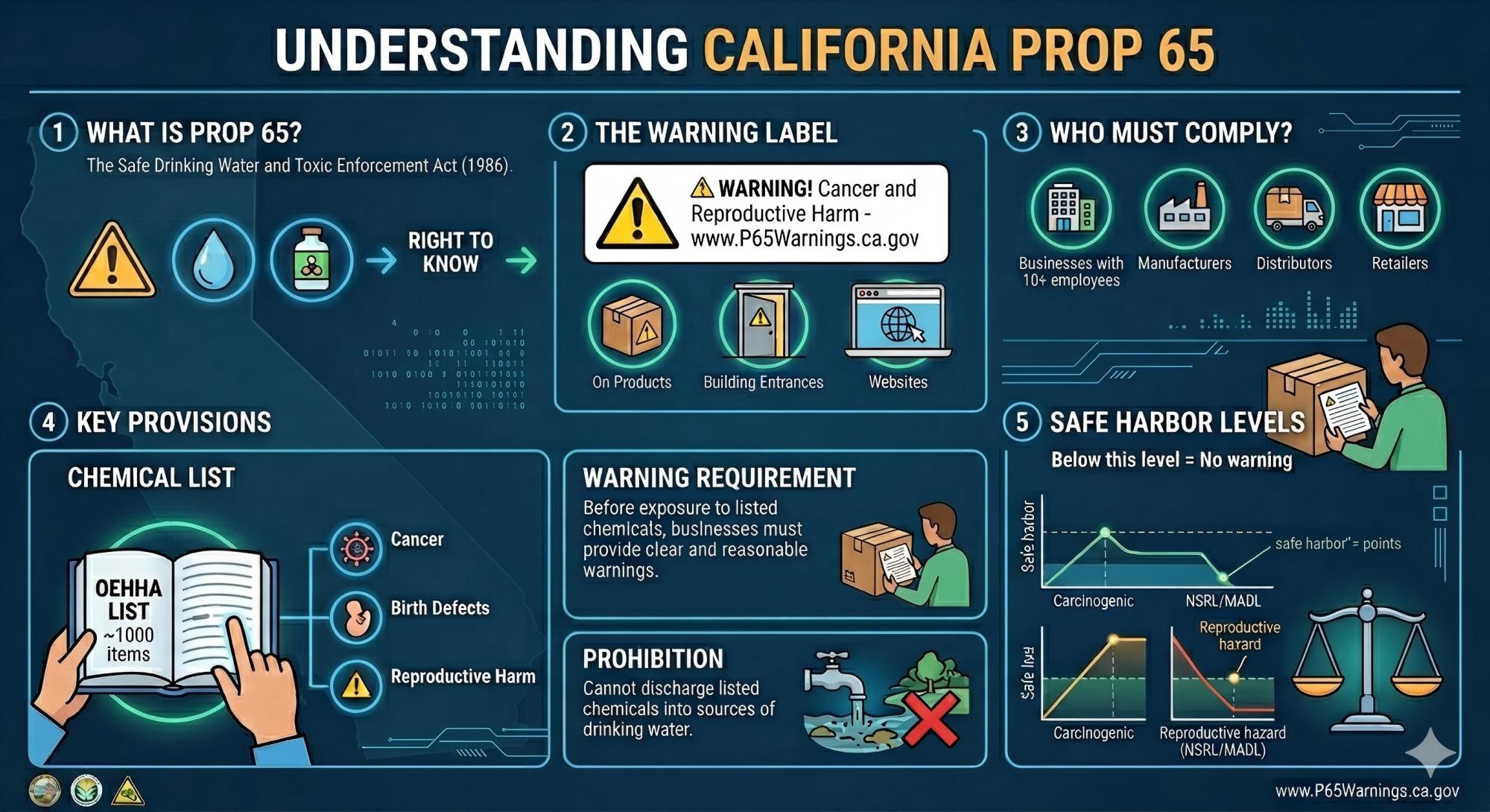
California Proposition 65, officially named “Safe Drinking Water and Toxic Enforcement Act of 1986,” requires businesses to give clear warnings to California residents if the products contain chemicals that are easy to cause cancer, birth defects, or reproductive harm.
For Amazon water bottle sellers, the horror of this regulation is not only the wide scope of control but also the inherent mode of e-commerce performance and the civil accountability and rights protection mechanism of the bill.
The Unavoidable Reach: How FBA, National Distribution, and Online Sales Trap Sellers
Many Amazon sellers mistakenly believe that as long as they don’t do the California market and set geographical restrictions on the sale of goods, they can avoid the control of Prop. 65. For the seller of Amazon FBA, this is completely a misunderstanding.
As long as the goods join the FBA distribution, you can’t control the actual storage location of the goods. The Amazon warehouse allocation algorithm only cares about the distribution timeliness, regardless of the geographical boundaries of laws and regulations. Even if you have never deliberately targeted California customers, your water bottles are often distributed to California storage centers such as San Bernardino, Stockton, and Fresno.
Every year, we review Amazon’s own restricted goods policy according to the new regulations of the California Attorney General’s Office: as long as the goods are in California warehouses and California consumers can place orders, they must abide by Prop 65. There is no such thing as a geographical restriction and exemption for FBA inventory. Not only that, but the self-delivery seller can’t stay out of it. California residents can buy any foreign goods online and mail them into the state, which will also trigger legal constraints. To put it bluntly, all water bottles sold on the Amazon platform must comply with the standards that will flow to California consumers.
Beyond the Lawsuit: The Real Cost of Non-Compliance
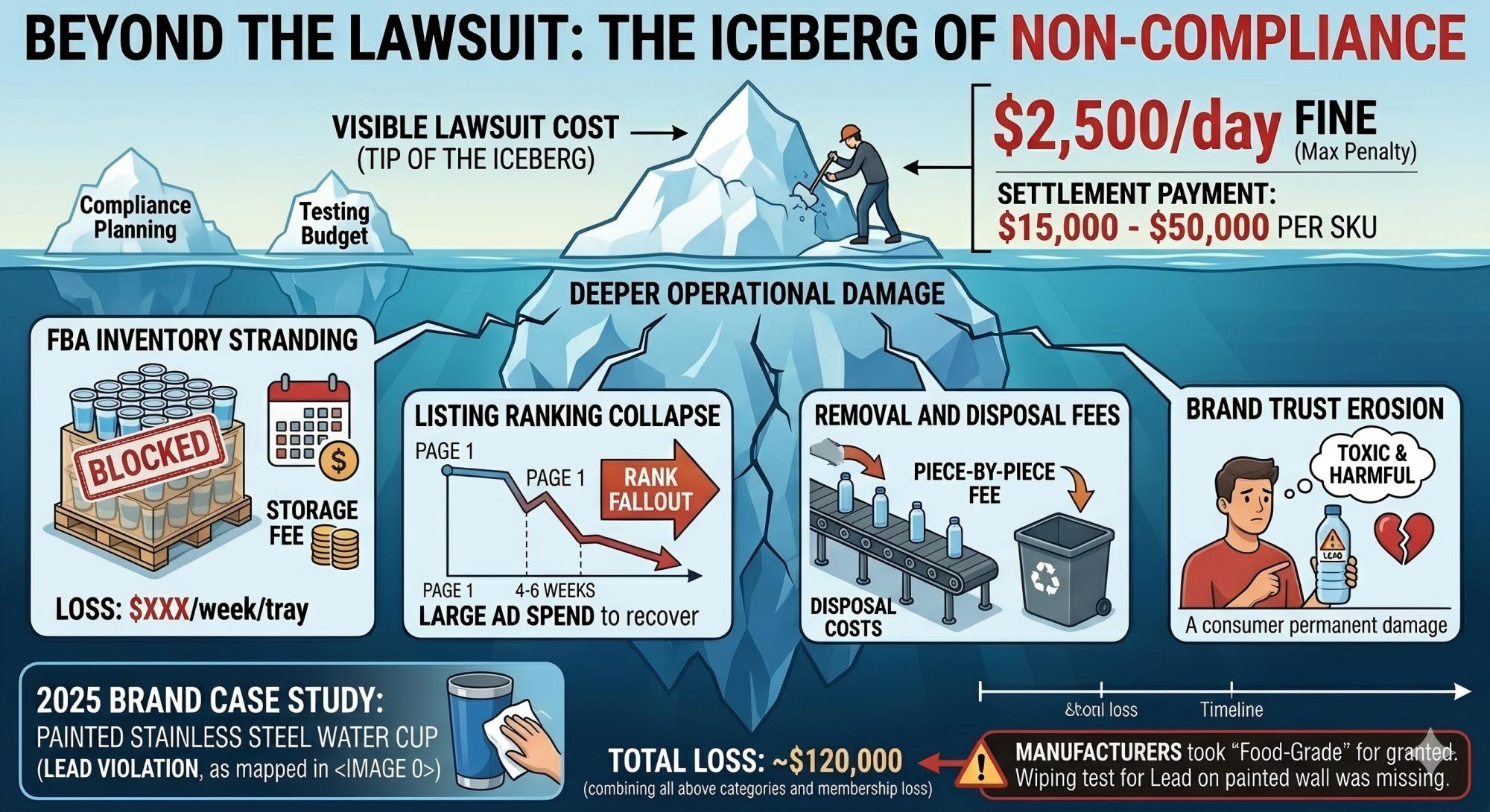
Huge fines are always eye-catching: civil penalties for a single violation can reach up to $2,500 a day. But senior sellers know that losing money in a lawsuit is just the tip of the iceberg. The truly deeper operational damage also includes:
| Cost Category | Real-World Impact |
|---|---|
| FBA Inventory Stranding | Once the goods are blocked by Amazon's demotion because of Prop 65, the inventory that has entered FBA will be unsalable directly. The goods are overstocked, but the storage fee is still deducted monthly. The weekly loss of a standard tray of water cups can be as high as hundreds of dollars. |
| Listing Ranking Collapse | Once ASIN is blocked, the natural search ranking will be completely faulted. Even if the link is lucky to recover after four to six weeks, it will take another large amount of advertising expenses to get back to the exposure traffic. |
| Removal and Disposal Fees | If you choose to recall and deal with non-compliant inventory, Amazon will also charge a removal fee on a piece-by-piece basis, plus the disposal costs. |
| Settlement Payments | Private prosecutors usually ask for settlement compensation, including civil fines (part of which is turned over to the state government), legal fees, and also require products to be re-formulated and re-labeled. In the case of a single water cup SKU, the settlement amount is generally between $15,000 and $50,000. |
| Brand Trust Erosion | Once consumers see Pro 65 warning labels such as lead and phthalates, even if the actual risk is far below the legal red line, they will label the brand as "toxic and harmful" and their goodwill will be permanently damaged. |
These losses will add up. At the end of 2025, we served a brand case: a medium-sized merchant was sued by civil compliance because the lead content on the surface of a painted stainless steel water cup exceeded the legal safety limit, and the total loss was as high as about $120,000, including the loss of members’ daily activities.
Manufacturers took it for granted that as long as it was food-grade stainless steel, the whole product was compliant, and there was no lead residue wiping test on the painted outer wall.
What Hazardous Chemicals Under Prop 65 Are Commonly Found in Water Bottles?
If you want to make products compliant, you must first find out where the risks are hidden. Different materials of water bottles have different hidden dangers of chemical exposure. In this section, the high-risk illegal substances are mapped to each part of the water bottle one by one to help you plan the testing budget accurately without wasting money.
Heavy Metals: Why Lead and Cadmium Are the Top Violations
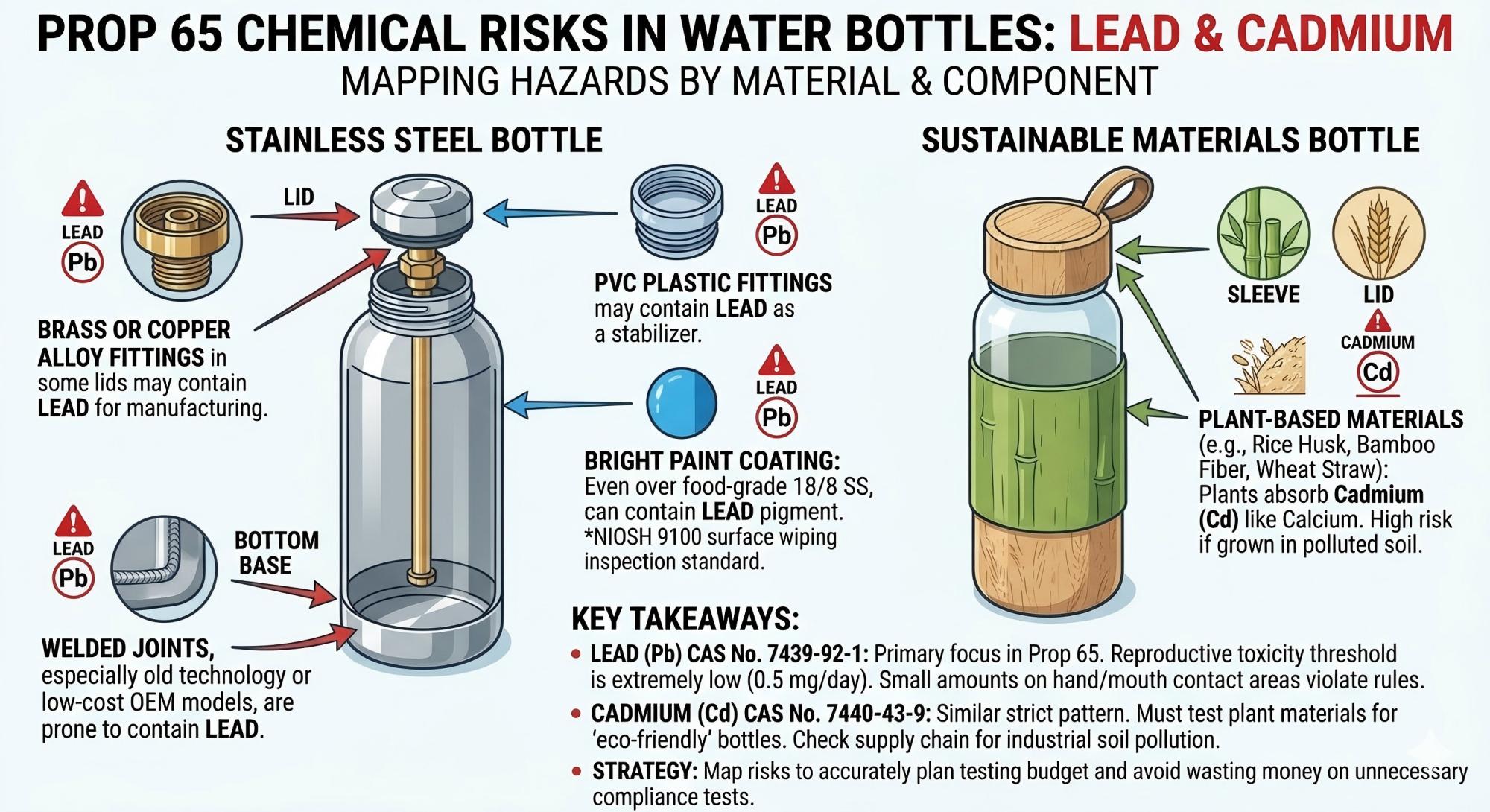
Lead (CAS No. 7439-92-1) is the No. 1 focus of law enforcement investigation of water bottles in Prop 65. Its reproductive toxicity is only 0.5 mg per day. To put it another way, this standard threshold is extremely low. As long as there is a small amount of lead in the parts of the water bottle that contact the hand or mouth, it is easy to violate the rules.
Common sources of lead in water bottles mainly include these:
- Brass or copper alloy fittings used in some bottle lids and outlets often contain lead for convenient manufacturing.
- The welded joints of stainless steel bottles, produced by old technology or low-cost OEM models, are more prone to containing lead.
- Even if the interior of the bottle is made of qualified 18/8 food-grade stainless steel with a bright paint coating, it may be mixed with lead pigment. California regulators often use the NIOSH 9100 standard to do surface wiping inspections on paint surfaces.
There are also PVC plastic fittings with lead as a stabilizer.
Cadmium (CAS No. 7440-43-9) has a similar pattern. It requires special attention to eco-friendly water bottles that are made of plant-based materials. The physiological principle is that plants absorb cadmium in the soil and take the same absorption path as calcium.
Popular sustainability materials such as rice husk, bamboo fiber, and wheat straw are often used to make bottle sleeves and lids, which can easily increase cadmium in the environment. If the plant-composite raw materials used in your supply chain are produced in industrially polluted soil areas, then cadmium content detection is by no means an option but a must.
The Plastic Problem: BPA, BPS, and Phthalates
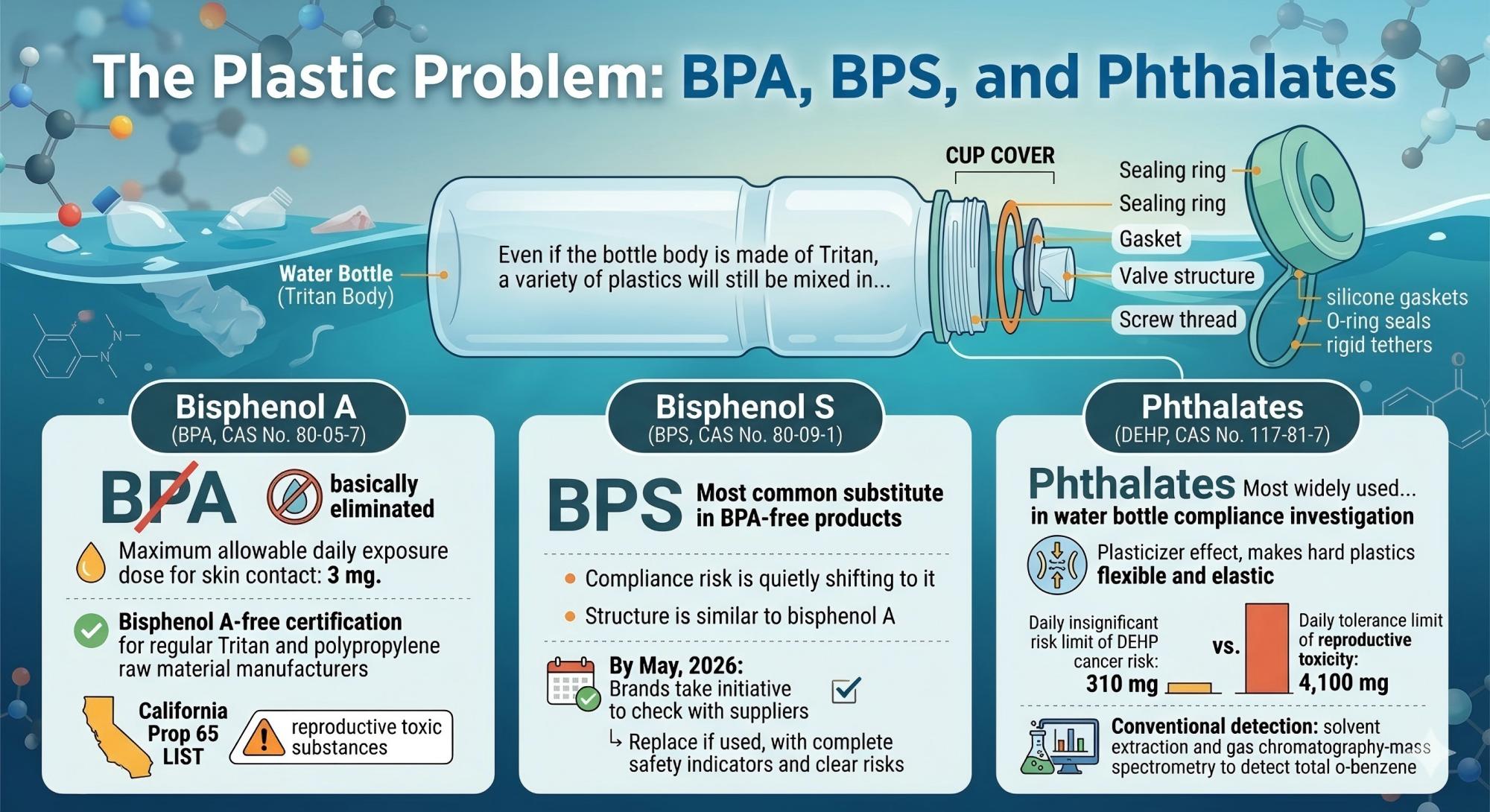
The plastics ecosystem of water bottles is far more complicated than most sellers think. Even if the bottle body is made of Tritan, a variety of plastics will still be mixed in the sealing ring, gasket, valve structure,, and screw thread of the cup cover.
Bisphenol A (BPA, CAS No. 80-05-7):
As we all know, this substance has been basically eliminated by mainstream plastic for water cups. Its maximum allowable daily exposure dose for skin contact is 3 mg.
Most regular terephthalate and polypropylene raw material manufacturers can provide bisphenol A-free certification. However, bisphenol A is still on the list of California Prop 65, which belongs to reproductive toxic substances.
Bisphenol S (BPS, CAS No. 80-09-1):
Compliance risk is quietly shifting to it. It is the most common substitute material in BPA-free products, and its structure is similar to bisphenol A.
As of May, 2026, it is suggested that all brands take the initiative to check with plastic raw material suppliers whether they contain bisphenol S; If it is used, replace it with materials with complete safety indicators and clear risks as soon as possible.
Phthalates (mainly DEHP, CAS No. 117-81-7):
DEHP is the most widely used phthalate in the water bottle compliance investigation. It is a commonly used plasticizer, which can make hard plastics flexible and elastic. It can meet the material requirements of accessories such as silicone gaskets, O-ring seals, and rigid tethers.
The daily insignificant risk limit of DEHP cancer risk is 310 mg, but the daily tolerance limit of reproductive toxicity is much looser, which is 4,100 mg. Conventional detection methods are solvent extraction and gas chromatography-mass spectrometry to detect the total amount of o-benzene.
| Chemical | CAS Number | Prop 65 Listing Basis | Key Threshold | Common Water Bottle Source |
|---|---|---|---|---|
| Lead | 7439-92-1 | Carcinogen, Reproductive Toxicity | MADL: 0.5 μg/day | Paints, brass fittings, solder, PVC |
| Cadmium | 7440-43-9 | Carcinogen | MADL: 4.1 μg/day (oral) | Plant-based composites, pigments |
| BPA | 80-05-7 | Reproductive Toxicity | MADL: 3 μg/day (dermal) | Polycarbonate, epoxy liners |
| BPS | 80-09-1 | Reproductive Toxicity | No Safe Harbor Level established | BPA-Free" replacement polymers |
| DEHP | 117-81-7 | Carcinogen, Reproductive Toxicity | NSRL: 310 μg/day; MADL: 4,100 μg/day | Gaskets, seals, soft plastic components |
How to Conduct Effective Prop 65 Testing for Your Water Bottles
Testing is the only way to move from a compliance blind spot to sound compliance.
However, finding the wrong institution and doing the wrong detection is almost equivalent to not doing it at all.
Amazon’s compliance audit team is now more and more professional, and any report that does not meet the qualification certification and testing standards will be directly rejected.
From Surface to Leachate: Understanding Testing Protocols
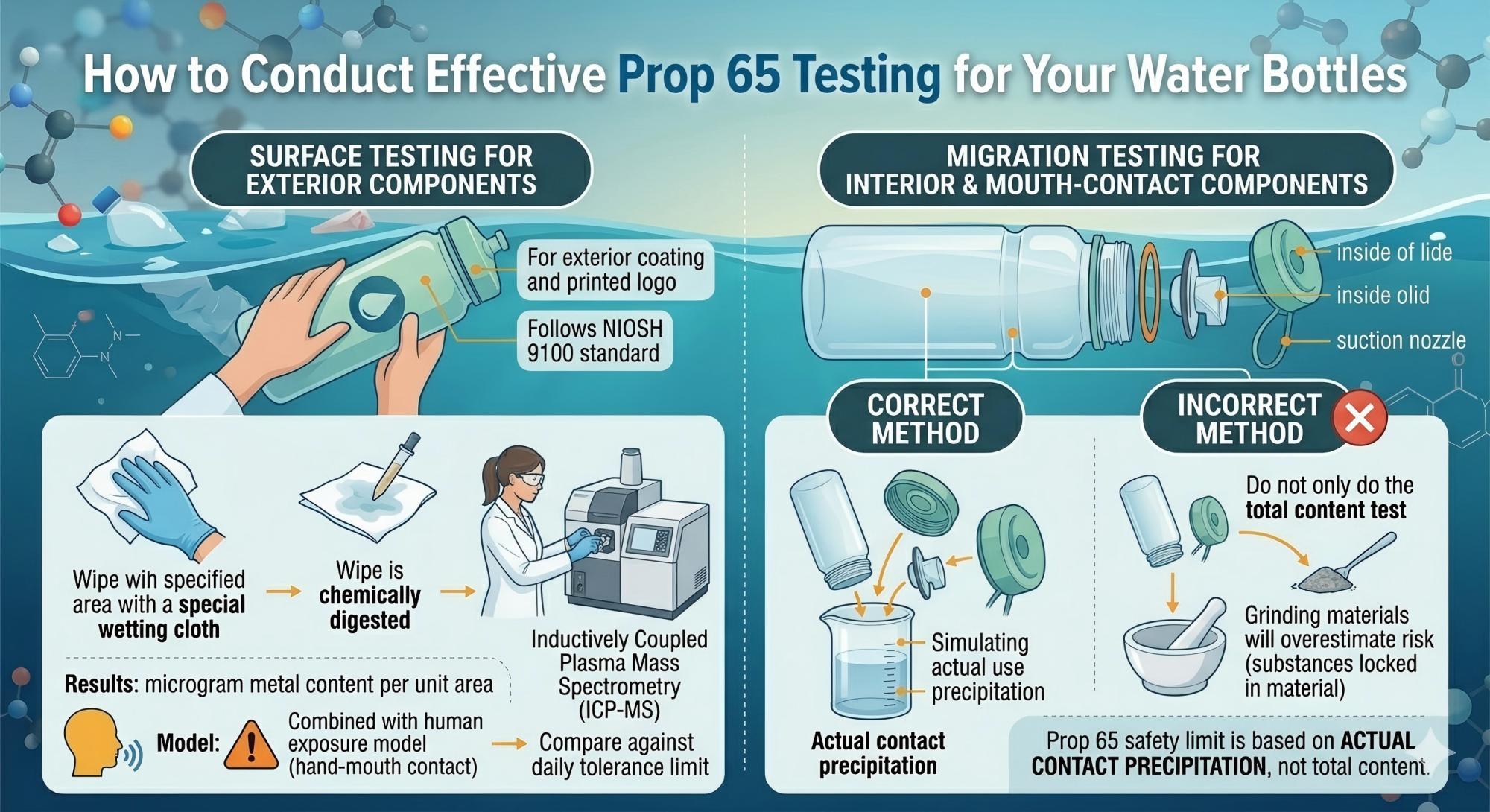
The detection method must match the exposure pathway. There are two main types of water bottle testing:
Surface Testing for Exterior Components
If you are worried about lead in hand contact parts such as exterior coating and printed logo, you need to do a surface wiping test, which generally follows NIOSH 9100 standard.
The inspectors wiped the surface of a specified area with a special wetting cloth, then digested the wipe, and analyzed the target metal content by Inductively Coupled Plasma Mass Spectrometry (ICP-MS).
The test results are presented as microgram metal content per unit area, and then combined with the human exposure model of hand-mouth contact; the compliance is judged against the corresponding daily tolerance limit.
Migration Testing for Interior and Mouth-Contact Components
All the parts that come into contact with drinking water, such as the inner container, the inner side of the lid, and the suction nozzle, must be tested for compliance.
Many sellers are easy to step on the pit: they only do the total content test, grind the materials, and directly measure the overall composition. This method will overestimate the actual risk, because many substances are locked in plastic matrix and metal material and will not precipitate into drinking water or skin at all.
The safety limit of California’s Proposition 65 only depends on the actual contact precipitation, not the total content of materials.
Why Your Lab Needs ISO 17025 Accreditation
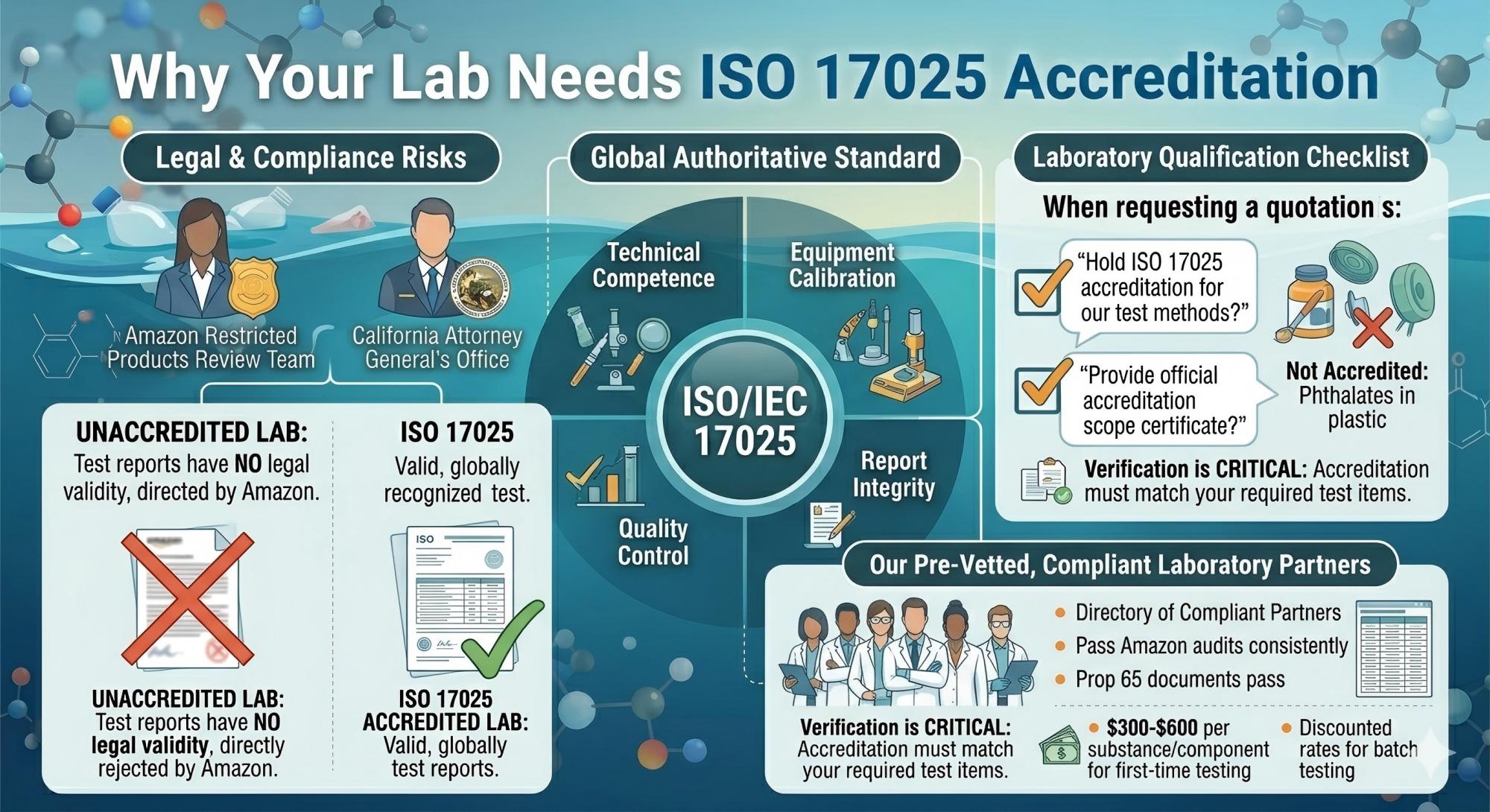
The Amazon Restricted Products Review Team and the California Attorney General’s Office strictly audit testing laboratory qualifications. Test reports issued by non-accredited laboratories hold no legal validity whatsoever.
ISO/IEC 17025 is the globally recognized authoritative standard for testing and calibration laboratories, covering technical competency, equipment calibration, quality control, and report integrity.
When requesting a quotation from a testing laboratory, you must explicitly confirm:”Does your facility hold ISO 17025 accreditation for our specified test methods? Can you provide your official accreditation scope certificate?”
Some laboratories are accredited only for lead testing in coatings, but not for phthalate testing in plastic materials. It is critical to verify accreditation specifically for your required test items.
We have compiled a directory of compliant, pre-vetted testing partners. All Prop 65 test documents issued by these labs have consistently passed Amazon’s compliance audits. For first-time testing arrangements, the cost typically ranges from $300 to $600 per substance per component. Discounted rates are available for batch testing of multiple components.
Practical Testing Matrix for a Standard Water Bottle
Rather than testing every substance on every component blindly, use a risk-based matrix:
| Component | Material | Priority Tests | Estimated Cost Range |
|---|---|---|---|
| Bottle body (interior) | Stainless steel 18/8 | Pb, Cd, Ni migration | 150–250 |
| Bottle body (exterior) | Painted coating | Pb, Cd wipe test (NIOSH 9100) | 100–200 |
| Lid housing | Polypropylene | Total Pb, Cd | 100–150 |
| Gasket/seal | Silicone or TPE | Phthalates (DEHP, DINP, DIDP) | 200–350 |
| Mouthpiece | Tritan or polypropylene | BPA, BPS, phthalates migration | 250–400 |
| Carry loop tether | Soft plastic | Phthalates, Pb | 150–250 |
What Are the 2026 Requirements for Prop 65 Warning Labels and Amazon Listings?
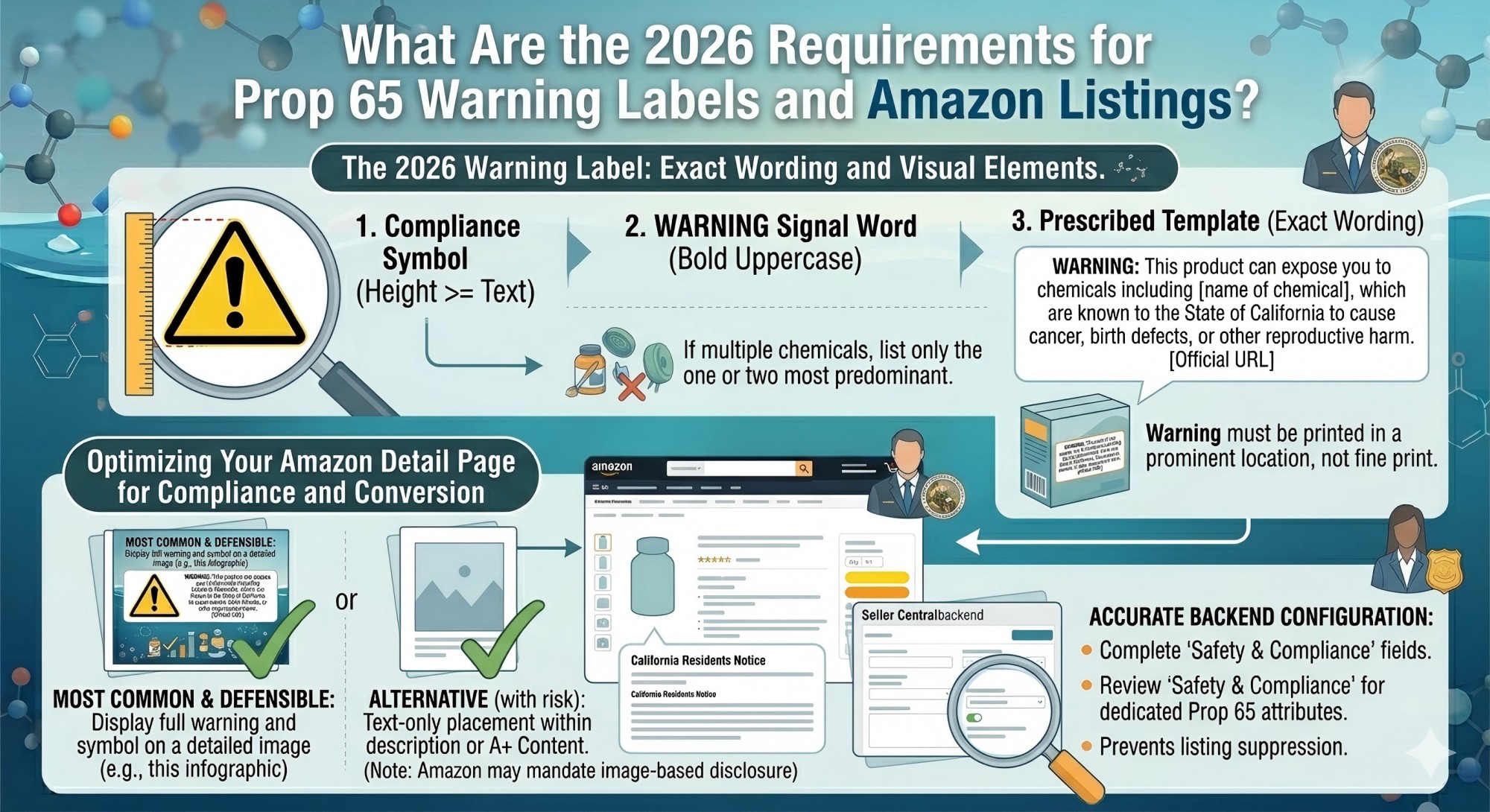
If your product contains any Prop 65 listed chemical above the Safe Harbor level, you have only two options: either reformulate the product to eliminate chemical exposure entirely, or affix a clear, legally compliant warning label. Regulatory refinements to warning label requirements took effect in 2018, and Amazon enforces these rules rigorously and consistently.
The 2026 Warning Label: Exact Wording and Visual Elements
A proper Safe Harbor warning—the legally recognized compliant warning format — must include three required elements:
- A yellow equilateral triangle containing a bold black exclamation mark. This symbol shall be positioned to the left of the warning text and must be at least as tall as the text font.
- The signal word WARNING in bold uppercase letters.
- The warning statement must follow this exact prescribed template:
WARNING: This product can expose you to chemicals including [name of chemical], which are known to the State of California to cause cancer, birth defects, or other reproductive harm.
If multiple chemicals are present, list only the one or two most predominant substances. The official URL at the end is mandatory and may not be omitted.
The warning must be printed on the product label or packaging in a prominent location. It cannot be placed in obscure fine print at the bottom of the product box.
Optimizing Your Amazon Detail Page for Compliance and Conversion
On Amazon, Prop 65 warnings must be visible to customers prior to purchase.
The most common and legally defensible method is to display the full warning statement and official symbol on one of your product detail page images—typically an infographic placed at the end of the image gallery.
Many sellers are concerned this will hurt conversion rates. As an alternative, you may place the warning within the product description or an A+ Content module under the subheading California Residents Notice. Note, however, that Amazon may mandate image-based disclosure for certain product categories; text-only placement is not considered compliant in such cases.
Additionally, review the Safety & Compliance fields in your Seller Central listing backend. Amazon has added dedicated attributes for Proposition 65 warnings. Accurately completing these fields can significantly lower the risk of automated listing suppression caused by customer inquiries.
For complete guidelines on optimizing your listing structure, refer to our full Amazon compliance setup guide. It covers backend attribute configuration, image compliance requirements, and A+ Content best practices.
How Can Sellers Resolve a Prop 65 Violation or Citizen Lawsuit to Reinstate Their Business?
If you have already received a Notice of Violation, time is your most critical resource. This 60-day notice period is not a traditional grace period—it is a window of opportunity you must act on promptly. Once missed, private plaintiffs may formally file a lawsuit.
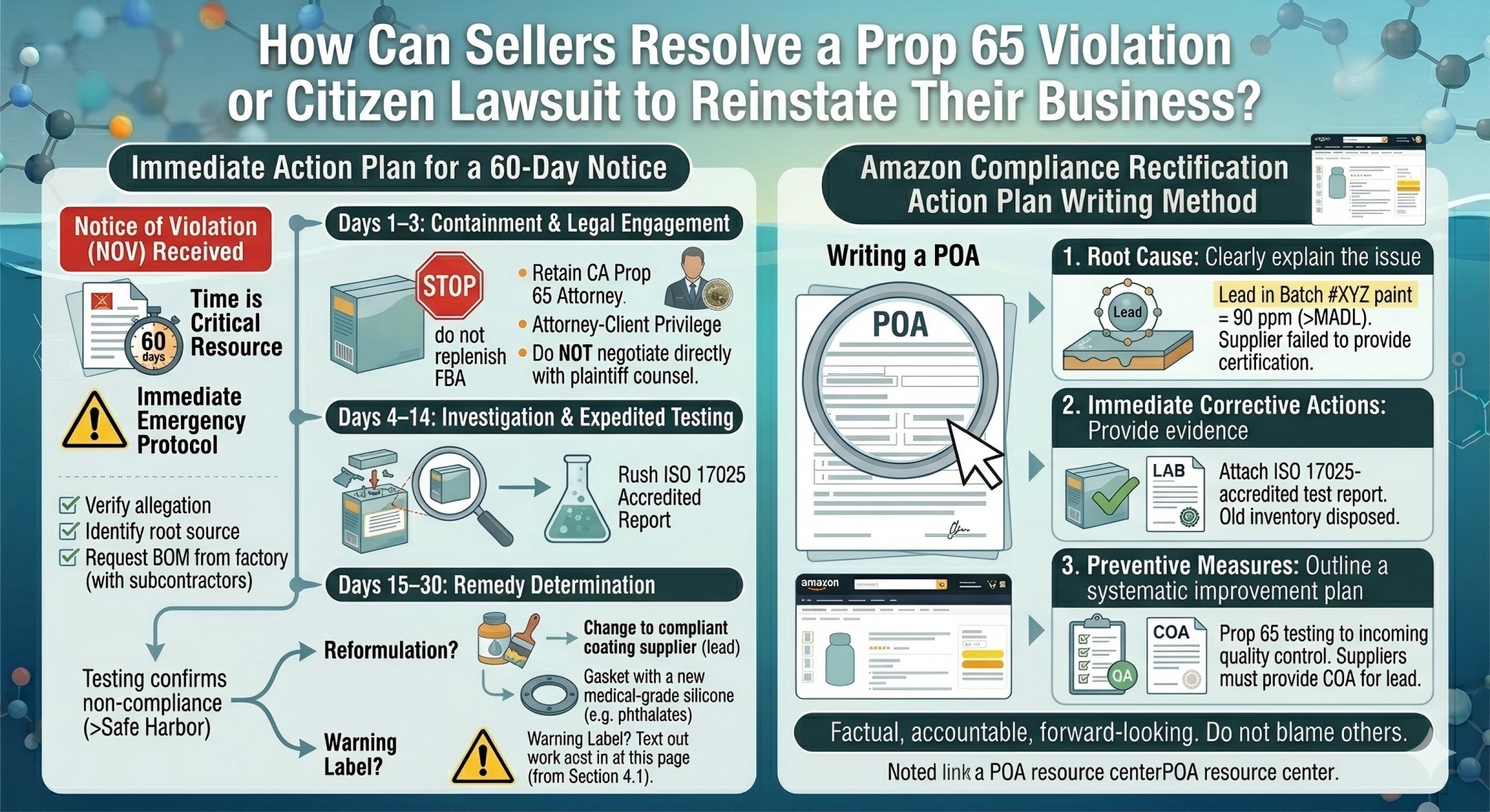
Immediate Action Plan for a 60-Day Notice
The standard emergency protocol we recommend to all clients takes effect immediately upon receipt of the notice:
Days 1–3: Containment & Legal Engagement
Immediately suspend all shipments of the affected ASIN. Cease FBA replenishments and pause any ongoing production runs. Promptly retain a California-licensed attorney who specializes in Prop 65 defense. Do not attempt to negotiate directly with the plaintiff’s counsel without legal representation. Attorney-client privilege protects all communications related to your defense strategy from disclosure.
Days 4–14: Investigation & Expedited Testing
Commission expedited, targeted testing for the specific components cited in the notice. Request a rush ISO 17025-accredited report that focuses exclusively on the listed chemical(s). Simultaneously, contact your manufacturing facility and request a complete bill of materials (BOM) for the product, including chemical input details from all subcontractors. The core objectives are to: verify whether the allegation is substantiated, and if so, identify the root source of the non-compliance.
Days 15–30: Remedy Determination
If testing confirms non-compliance (exceeding Safe Harbor levels), evaluate the feasibility of reformulation. For a painted bottle with excessive lead, a viable solution may be switching to a compliant coating supplier. For a gasket containing excessive phthalates, consider sourcing a medical-grade silicone alternative. If immediate reformulation is not possible, promptly revise and update the product label in accordance with the Safe Harbor warning format outlined in Section 4.1 above.
Amazon Compliance Rectification Action Plan Writing Method
Once you can provide a test report demonstrating that the product meets compliance requirements after reformulation or label standardization, you must submit a Plan of Action (POA) to Amazon to request reinstatement of the product listing. An effective POA must include three core components:
1. Root Cause: Clearly explain the issue
Example: “The lead content in the paint coating of Batch #XYZ is 90 ppm, exceeding the Maximum Allowable Dose Level (MADL) of 0.5 micrograms per day. Our previous paint supplier failed to provide certification for lead-free decorative coatings.”
2. Immediate Corrective Actions: Provide relevant evidence
Example: “Attached is an ISO 17025-accredited lead wipe test report (dated [specific date]) issued by [Lab Name], which shows the new coating contains less than 10 ppm lead and meets compliance requirements. We have disposed of all non-compliant inventory in Amazon FBA warehouses.”
3. Preventive Measures: Outline a systematic improvement plan
Example: “We have added Prop 65 lead content testing to our incoming quality control checklist for all painted components. Prior to production, we require all paint suppliers to provide a Certificate of Analysis (COA) for lead content.”
The writing tone should be factual, accountable, and forward-looking. Do not blame Amazon, testing laboratories, or plaintiffs. For more POA templates and examples, please visit our POA and listing reinstatement resource center.
Conclusion
If you are evaluating the supply chain for new water bottles and need technical guidance on material selection, please contact us. Just send an email to sales@waterbottle.tech. As a reliable manufacturer of water bottles, we will assist your brand in identifying chemical risks, screening qualified testing institutions, and formulating compliant testing protocols.
In the current regulatory landscape, a single oversight in paint pigment compliance can result in a six-figure fine. In fact, thorough compliance work is not an extra expense—it is the most cost-effective risk protection available.
FAQ: California Proposition 65 & water bottles
Reference
California Office of Environmental Health Hazard Assessment (OEHHA). Proposition 65 List of Chemicals. Updated 2026. https://oehha.ca.gov/proposition-65/proposition-65-list
California Proposition 65 Guide for US Importers & Amazon Sellers. https://www.compliancegate.com/california-proposition-65/
What Is Prop 65? The California Warning Label Every US Seller Must Know. https://www.bagglove.com/what-is-prop-65-the-california-warning-label-every-us-seller-must-know/
Navigating California Proposition 65: Your Quick Guide to the Latest Changes. https://www.complianceandrisks.com/blog/navigating-california-proposition-65-your-quick-guide-to-the-latest-changes/

Specializing in custom manufacturing, quality control and marketing of vacuum-insulated drinkware and coolers.