Last Updated: 5 November, 2026
Cleanliness and hygiene are very important. Whether you’re running a restaurant, managing an office, or just keeping your bathroom at home neat and tidy, a soap dispenser actually plays a bigger role than you might think. Among various types of dispensers available, stainless steel soap dispensers have become a favorite. Why? Because they combine style and functionality into one sleek package.
At our core, we focus on the practical side of hydration and dispensing equipment—materials, mechanics, and long-term performance. As a professional wholesale custom stainless steel water bottle manufacturer, we understand that material science dictates product lifespan. This guide explores the key advantages of using food-grade stainless steel in both residential and commercial settings, from hygiene and durability to environmental impact and cost efficiency. From material science to maintenance routines, here is what you need to know before choosing your next reusable container.
Durability That Lasts
One of the biggest reasons people choose stainless steel soap dispensers is that they’re built to last.
Corrosion and Rust Resistance: What the Metallurgy Says
Soap dispenser is located in one of the most severe use environments in the building: long-term humidity, frequent contact with surfactants and salts, and contact with various clean chemicals. Plastic soap dispensers will fade and crack after long-term use, while low-quality metals will rust easily. Stainless steel is outstanding because its chromium oxide passivation layer can resist rust, corrosion and moisture.
However, the quality of stainless steel is uneven. The most commonly used brands of soap dispensers are 304 and 201. The comparative study on the brands of kitchen and bathroom equipment shows that the chromium content of 304 stainless steel is about 18.24%, while that of 201 stainless steel is only about 13.00%. The lower chromium content makes 201 more susceptible to corrosion, especially in the environment containing chloride or acidic soap. Another study on stainless steel in wastewater environment confirmed that the corrosion rate of 304 was much lower than that of 201, whether it was continuous immersion or alternate immersion. This difference is very important for the soap dispenser placed beside the sink all the year round.
Ideal for High-Use Environments
Stainless steel soap dispenser is very suitable for schools, hotels, restaurants, hospitals and office places with large crowds and frequent use. It is not easy to crack and deform, and its performance is stable and reliable. The pump head is the most easily damaged part of the whole soap dispenser, and the advantages of using stainless steel are also obvious. High-quality stainless steel pump head is corrosion-resistant in humid environment, suitable for high-frequency daily use, smooth pressing and not easy to get stuck.
| Property | 304 Stainless Steel | 201 Stainless Steel |
|---|---|---|
| Chromium content | ~18.24% | ~13.00% |
| Corrosion resistance | High | Moderate |
| Suitable for humid environments | Yes | Limited |
| Cost | Higher | Lower |
| Best use case | Commercial restrooms, kitchens, healthcare | Light-duty residential use |
Modern and Versatile Design
Matching Interior Styles Without Trying Too Hard
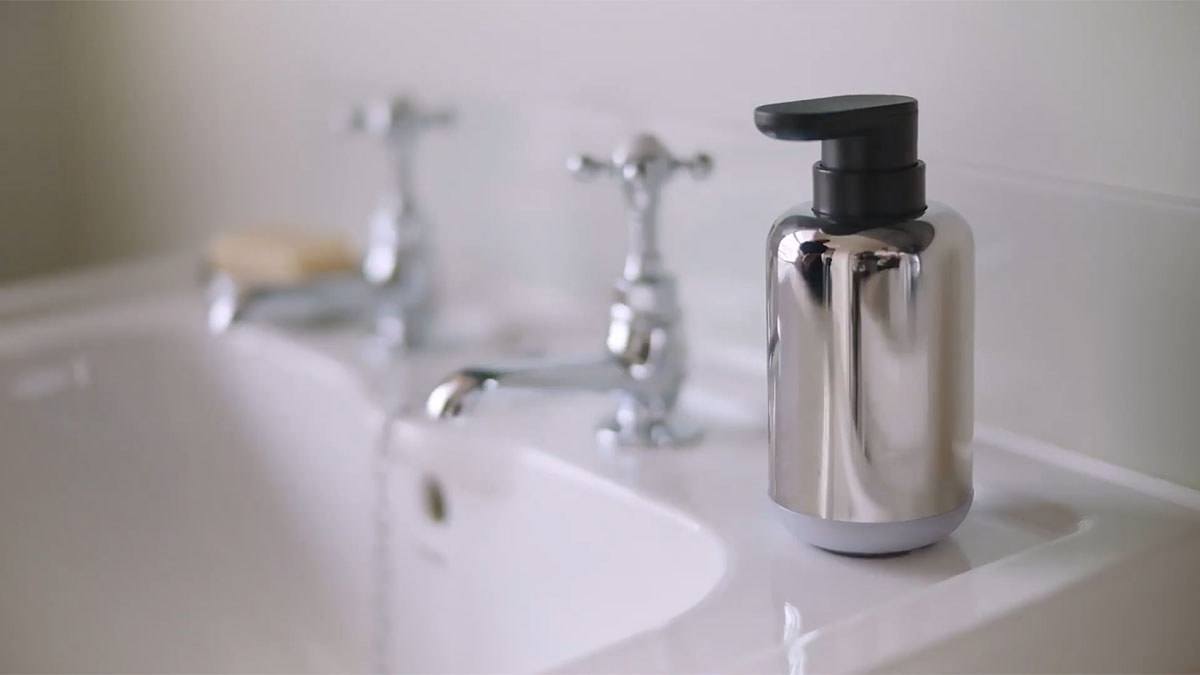
The appearance of stainless steel emulsion bottle is also outstanding. Simple lines, polished or brushed surfaces, and glossy texture can adapt to almost all kinds of space styles. Whether the space is a modern minimalist style or a warm traditional style, stainless steel can be well integrated. It goes well with marble, wood, tiles and most countertop materials. The brushed nickel and stainless steel finish metal has a softer texture, and it is not easy to leave obvious fingerprints, while maintaining a delicate texture.
Countertop, Wall-Mounted, and Customization Options
The countertop is suitable for kitchen or household bathroom, with elegant shape and convenient access. Small toilets or commercial toilets can choose wall-mounted stainless steel soap dispenser to save space and keep the environment clean and tidy. In the business scene, the impression of the bathroom will convey the brand image, and the metal soap dispenser can create a professional and clean impression.
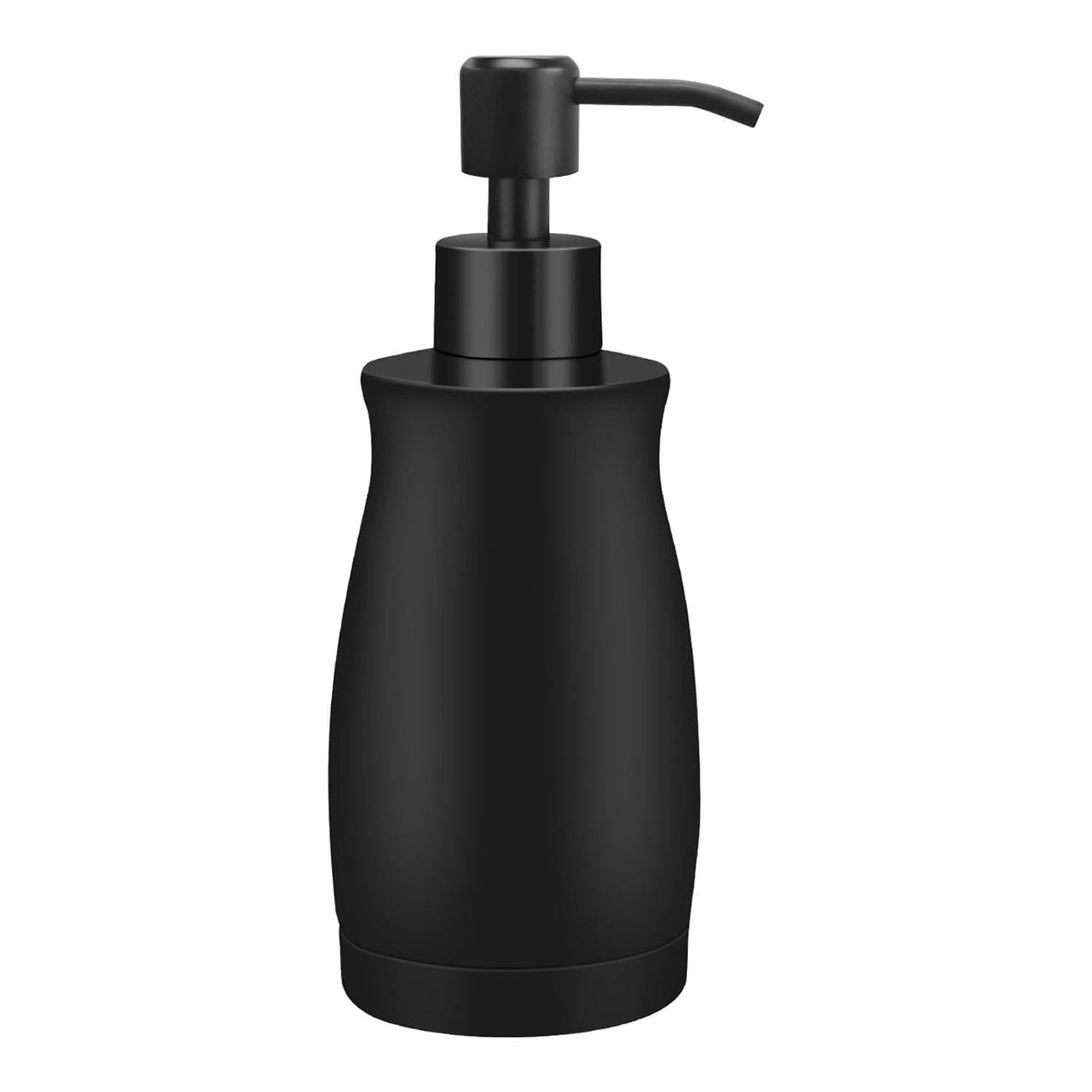
If the enterprise wants to unify the supporting style, it also supports customized production. From logo printing, surface technology selection (polishing, wire drawing, matte black or custom coating) to round and square shapes, stainless steel soap dispensers can be customized to show brand characteristics. If you want to know more about Custom Molding and Custom Manufacturing capabilities beyond soap dispensers, we can introduce you to a full set of customized services.
Finish Selection: Polished, Brushed, and Matte
The choice of surface technology will affect both appearance and maintenance difficulty. Polished stainless steel has the highest reflectivity and presents a classic mirror effect, but it is the easiest to leave fingerprints and water stains. The brushed surface has directional texture, which can scatter light and cover stains. It is a practical choice for commercial toilets with high crowds. Matte or powder-sprayed coating has a modern appearance, which can also add an extra layer of protection to the surface, but it needs to be handled gently when cleaning the coating surface to prevent paint from falling off the corners. Household toilets value the face value and will be wiped frequently, and polished models are still popular; For offices and public facilities, drawing models are generally preferred.

Promotes Hygiene and Handwashing
Reducing Cross-Contamination: Dispensers vs. Bar Soap
Keeping your hands clean is the foundation of health. Stainless steel soap dispenser is easy to use, which helps people to develop the habit of washing their hands frequently and carefully and improve the hygiene level. Traditional soap is easy to breed bacteria and spread germs, and the risk is higher when it is shared by many people. The liquid or foam soap dispenser can solve this problem: the liquid is quantitatively discharged, and the soap directly falls on the hands without directly contacting the soap body. Research on public toilets and industry norms all show that soap dispenser is more sanitary than soap in shared scenes.
Supporting Health and Safety Standards
In business places, it is a hard requirement to abide by hygiene standards. Stainless steel soap dispenser meets strict hygiene standards and is easy to clean. It is a reliable choice for catering, medical care, education and other industries. The non-porous surface of stainless steel is not easy to accumulate residues, which is convenient for rapid disinfection between uses. For facility managers who need to keep cleaning records, stainless steel surface is more convenient for visual inspection to confirm that cleaning is in place than textured plastic which is easy to hide dirt in tiny scratches.
| Property | 304 Stainless Steel | 201 Stainless Steel |
|---|---|---|
| Chromium content | ~18.24% | ~13.00% |
| Corrosion resistance | High | Moderate |
| Suitable for humid environments | Yes | Limited |
| Cost | Higher | Lower |
| Best use case | Commercial restrooms, kitchens, healthcare | Light-duty residential use |
Manual vs. Touch-Free Dispensing: Choosing Based on Risk
Stainless steel soap dispenser is divided into manual pump type and induction non-contact type. The manual pump has a simpler structure, lower cost and no power supply, but there are contact points for many people to touch in turn. Contact-free sensor eliminates the risk of contact, and is mostly used in medical treatment, catering and public toilets with large flow of people and high risk of cross-contamination. The disadvantage is that the initial investment is higher, batteries or wiring are needed, and the induction and motor components also need extra maintenance. For home scenes, stainless steel hand pumps are generally enough; In medical places or food processing environments, contact-free payment is preferred for better safety.

Eco-Friendly
More consumers today care about sustainability and reducing plastic waste, and stainless steel dispensers align perfectly with these values.
Quick and Clean Refills
Maintaining cleanliness should not be a hassle. Stainless steel soap dispensers are simple in design and easy to use. Most models are equipped with large fillers or detachable top covers, which makes fluid replacement easy. Some parts have transparent windows, which can check the remaining amount of soap solution and avoid sudden liquid interruption. If you are comparing different soap dispenser structures and pump body schemes, you can explore our wide range of Metal Dispensers to understand the actual working characteristics of various pump heads and liquid storage bins.
Simple Cleaning Routines (and What Not to Do)
Simply wipe it with a wet cloth and the stainless steel surface will be as clean as new. This material has no pores and is not easy to accumulate residual stains. However, there are still important maintenance precautions: the original maintenance instructions of stainless steel soap dispenser generally remind you not to use solvents, bleaches, acid cleaners or ammonia-containing cleaners, which will destroy the passivation layer and cause pitting or discoloration. The brown deposits around the pump head and cover are not rust, but mostly soap scale, which can be removed with warm soapy water and a soft brush. If the soap dispenser is idle for a period of time and the pump head is unsmooth and blocked, pour warm water into the liquid storage bottle and gently press the pump head repeatedly, so that it can be dredged without disassembly.
| Do | Don’t |
|---|---|
| Use warm water and mild soap | Use bleach, ammonia, or acidic descalers |
| Wipe with a soft microfiber cloth | Use steel wool or hard brushes |
| Rinse the pump with warm water if clogged | Insert pins or sharp objects into the nozzle |
| Switch to pH-neutral soap if residue appears | Leave harsh soap residue on the surface |
Troubleshooting Common Dispenser Issues
The faults of soap dispenser are mostly mechanical problems, not the damage of the material itself. The pump head can’t suck liquid, usually the suction pipe is not installed in place, sucking air, or the viscosity of soap is too high; It can be solved by diluting the soap solution with a little warm water or replacing it with a low viscosity soap solution. The liquid output is less, usually the nozzle is blocked by dry residue, which can be dredged by soaking in warm water. The leakage at the bottom is mostly due to the aging of the sealing gasket or the overfilling of the liquid storage bin. The stainless steel bottle body itself is rarely damaged. A set of spare pump head components can prolong the service life of the whole machine at a very low cost, which is very important for the property logistics that needs to maintain multiple soap dispensers.

Cost-Effective in the Long Run
Controlled Dispensing Saves Soap
While stainless steel dispensers might cost more upfront than plastic ones, they quickly pay for themselves through long-term savings. Most dispensers are engineered to release just the right amount of soap with each press. This helps prevent waste and ensures consistent use. In commercial settings where hundreds of people wash hands daily, over-dispensing from a free-flowing pump can waste liters of soap per week. A measured pump mechanism eliminates that waste.
Refillable Means Lower Ongoing Costs
Buying soap in bulk for refilling is far cheaper than purchasing individual bottles repeatedly. For businesses managing multiple washrooms, this can significantly cut operational expenses. Durability also means fewer replacements and fewer maintenance costs. A stainless steel dispenser that lasts five to ten years eliminates the recurring cost of replacing cracked or failed plastic units every twelve to eighteen months.
| Cost Factor | Plastic Dispenser | Stainless Steel Dispenser |
|---|---|---|
| Initial unit cost | Low | Moderate |
| Replacement frequency | Every 1–2 years | Every 5–10 years |
| Soap cost (bulk refill) | Same | Same (or lower with measured dosing) |
| Maintenance labor | Higher (frequent replacement) | Lower |
| Waste generation | High (discarded units) | Minimal |

Suitable for Multiple Occasions
For Homes
At home, metal soap dispensers are both practical and stylish. They look great in any kitchen or bathroom and are easy to keep clean. Many families use them for hand soap in bathrooms, dish soap at the kitchen sink, or even hand sanitizer near entrances. The weight of a stainless steel dispenser also provides stability—it will not tip over as easily as a lightweight plastic bottle when pressed one-handed.
For Offices and Commercial Buildings
In offices, malls, restaurants, and hotels, stainless steel dispensers not only provide soap but also help maintain a professional image. Their long lifespan means fewer replacements and less maintenance for facility managers. Coordinating dispenser finishes across multiple restrooms creates a consistent, intentional look that reflects attention to detail.
For Healthcare, Food Service, and Hospitality
Stainless steel dispensers are not just for soap. They can be used for lotion, shampoo, conditioner, or hand sanitizer. This flexibility makes them suitable for diverse applications, from home care to commercial use. If you are sourcing dispensers alongside other custom-manufactured components, exploring our custom manufacturing engineering blog can provide context on materials and production processes that affect product longevity. Click and learn more: Top Trends in Soap Dispenser Design and Functionality.
Beyond Soap
Stainless steel dispensers are not just for soap. They can be used for lotion, shampoo, conditioner, or hand sanitizer. This flexibility makes them suitable for diverse applications, from home care to commercial use. If you are sourcing dispensers alongside other custom-manufactured components, exploring our blog can provide context on materials and production processes that affect product longevity.


Conclusion
No matter what usage scenario, the stainless steel soap dispenser has stable performance, refreshing appearance and reliable function. It is durable, hygienic, environmentally friendly and cost-effective. The core point is to choose the right material grade: 304 stainless steel should be used in humid and high-frequency environments instead of 201 stainless steel; At the same time, follow the correct maintenance method and avoid using strong irritating chemicals.
At waterbottle, we believe that the best dispensing equipment is the kind you do not have to think about: it works smoothly, looks appropriate for its setting, and lasts long enough that replacing it is not part of your annual routine. Whether you are equipping a single bathroom or coordinating dispensers across a multi-site facility, the material and mechanism choices you make today determine how well that equipment serves you for years to come. As a leading Insulated Stainless Steel Water Bottle Manufacturer, we bring the same material expertise to every dispensing and drinkware product we create. We also offer comprehensive OEM Manufacturing and Amazon FBA support for global brands looking to scale their product lines seamlessly.
Sourcing Stainless Steel Soap Dispensers for Your Brand?
Kingstar brings 20+ years of stainless steel manufacturing experience to custom soap dispenser production. From 304 stainless steel body fabrication and surface finishing (brushed, polished, painted) to custom logo and packaging, we support OEM/ODM projects with flexible MOQ. → Write to sales@waterbottle.tech or leave online message for a sourcing consultation.
Frequently Asked Questions
References
Comparative study of stainless steel 304, 316, and 201 for kitchen equipment applications. Discover Materials, 2025. https://link.springer.com/content/pdf/10.1007%2Fs43939-025-00182-1.pdf
Corrosion behavior of stainless steel 201, 304, and 316L in simulated wastewater pipe conditions. Environmental Science, 2014. https://www.hjkx.ac.cn/ch/reader/create_pdf.aspx?file_no=20140823
Frost Denmark. Soap Dispenser 1927 Care Instructions. https://frostdenmark.com/media_service/files/N1927.pdf
Gilchrist & Soames. Reduce, Reuse, Recycle: Dispenser Plastic Savings Data. https://hoteliers.gilchristsoames.com/reduce-reuse-recycle
KingStar Mold. Custom Manufacturing Engineering Blog. https://kingstarmold.com/blog/

Specializing in custom manufacturing, quality control and marketing of vacuum-insulated drinkware and coolers.