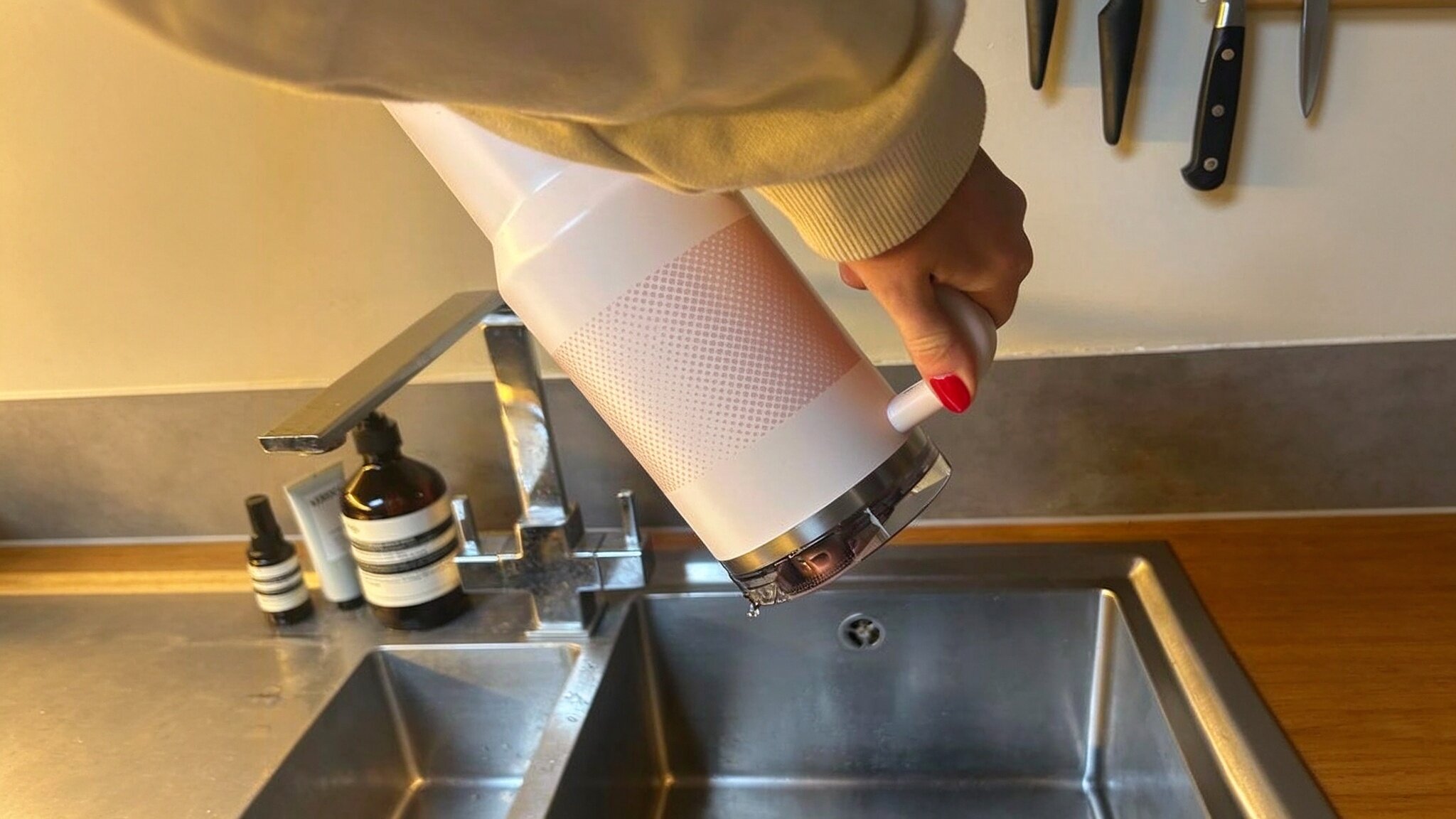
If you have ever pulled a soaked notebook out of your bag because the Stanley Quencher thermos cup rolled over, you must have experienced that sinking feeling. The Quencher is great for commuting, on the desktop and in car cup holders, but it was not designed from the start to be carried in a tote bag.
That distinction matters—not just for consumers, but for anyone building a drinkware brand. This is exactly where manufacturing experience makes the difference. Since 2002, we have been producing insulated stainless steel water bottles, tumblers & mugs, shaker bottles, and the lid sealing architectures that sit on top of them. Lid sealing is one of the most common technical conversations we have with brand owners. The leak problem isn’t about tightening the lid harder. It’s about air pressure, gasket compression, and mold tolerance—manufacturing problems that get solved at the factory, not in your kitchen.
This article takes into account two types of readers: how ordinary users should understand and reduce leakage from the Quencher; and if a brand wants to build a truly leak-proof travel cup, what requirements should it put forward to the factory?
Why Does Your Stanley Quencher Leak in Your Bag?
The straw opening is an open channel when tilted
The original design intent of the Quencher’s original FlowState lid was to drink directly through a straw, not to carry it in a sealed way. When the companion cup tilts in the bag, the liquid will go up along the straw channel and leak from the cup lid. A large number of verified buyer reviews have repeatedly confirmed this point: “The cup tipped over in my daughter’s bag, the lid was tightened, and water still leaked out from the upper straw position.” There is no closed structure at the straw opening, and it is useless to tighten the cup lid again.
The air-return path is the hidden leak route
Even if the straw opening is sealed, there is still an air return groove in the cup lid to balance air pressure when drinking. When the cup is inverted or tilted, the liquid will enter this channel and seep out along the edge of the cup lid. This is why some users report that the leak location is “the side of the cup lid,” not the straw opening itself: this passage itself is not designed to be liquid-tight when tilted.
What Actually Makes a Tumbler Lid Leakproof?
This is where consumer understanding meets manufacturing reality. If you’re evaluating a tumbler—or sourcing one for your brand—these are the engineering variables that determine whether “leakproof” is a real claim or a marketing one.
A managed air path, not a thicker gasket
A truly leak-proof cup lid depends not only on a sealing ring with stronger sealing performance. It needs a set of closure structures to seal both the drinking water channel and the air pressure balance channel at the same time when not in use. On the production level, the air return channel is either equipped with a one-way valve, or it is blocked by a solid sealing structure when the straw nozzle/straw is closed. Without this design, the cup lid can only have a certain spill-proof ability at a specific placement angle, which is not reliable.
Silicone compression set: the spec that determines long-term performance
One of the performance indexes of a food-grade silicone sealing ring is compression set: that is, the proportion of residual deformation after the material is compressed and released. The sealing force of a sealing ring with poor compression set will gradually decrease with use, especially after repeated cleaning and temperature changes. For the brand, this is a technical index that needs to be requested from the sealing ring supplier: it should correspond to the compression set test data at the working temperature, not just the material certificate.
Tolerance stack-up: why your sample leaked but your production order didn’t (or vice versa)
The matching accuracy of the cup lid and the cup body depends on the accumulation of several tolerances, such as the threaded injection molding of the cup lid, the diameter of the cup mouth and the thickness of the sealing ring. In the mass production process, mold wear will bring about gradual dimensional deviation. For a cup lid that sealed well in the T1 sampling stage, if the mold is not maintained and the specifications of the sealing ring are not locked, the production parts made after half a year may leak. This also shows that in-process leak detection is more critical than random sampling at the end.
The four tests a leakproof lid should pass
| Test | Method | What It Reveals |
|---|---|---|
| 45° tilt static | Fill to capacity, tilt 45°, hold 10 min | Gasket seal integrity under sustained angle |
| Inverted shake | Fill, invert, shake 3× | Straw port and air-path closure effectiveness |
| Simulated bag compression | Place in bag with weighted items, carry 30 min | Real-world performance under pressure and movement |
| Thermal cycle | Fill with iced water, seal, allow to reach room temp, invert | Seal behavior under internal pressure change |
A lid that passes all four in production batches—not just lab samples—can credibly claim leakproof for bag transport.
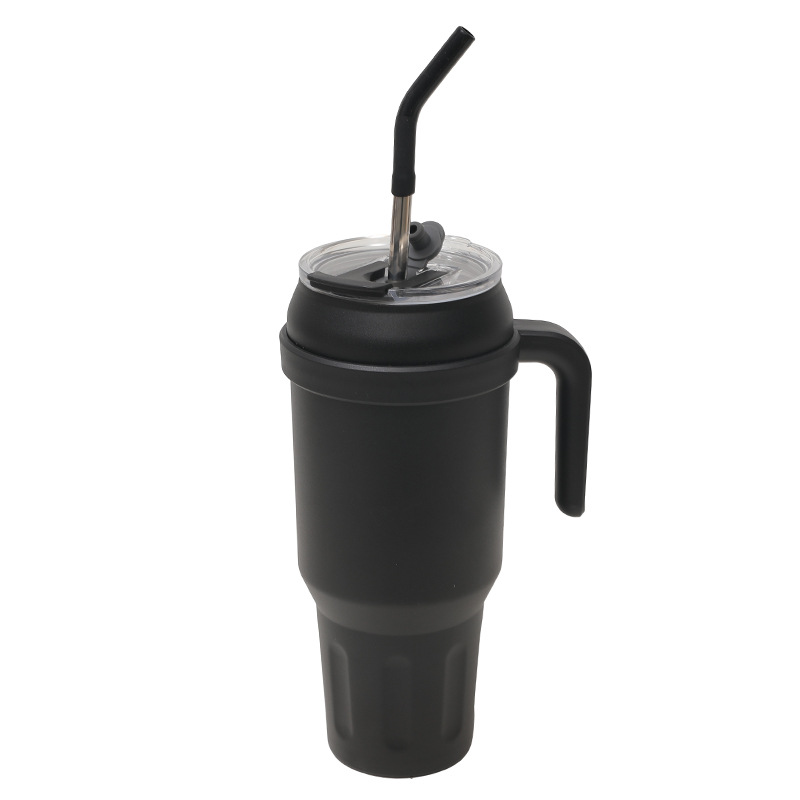
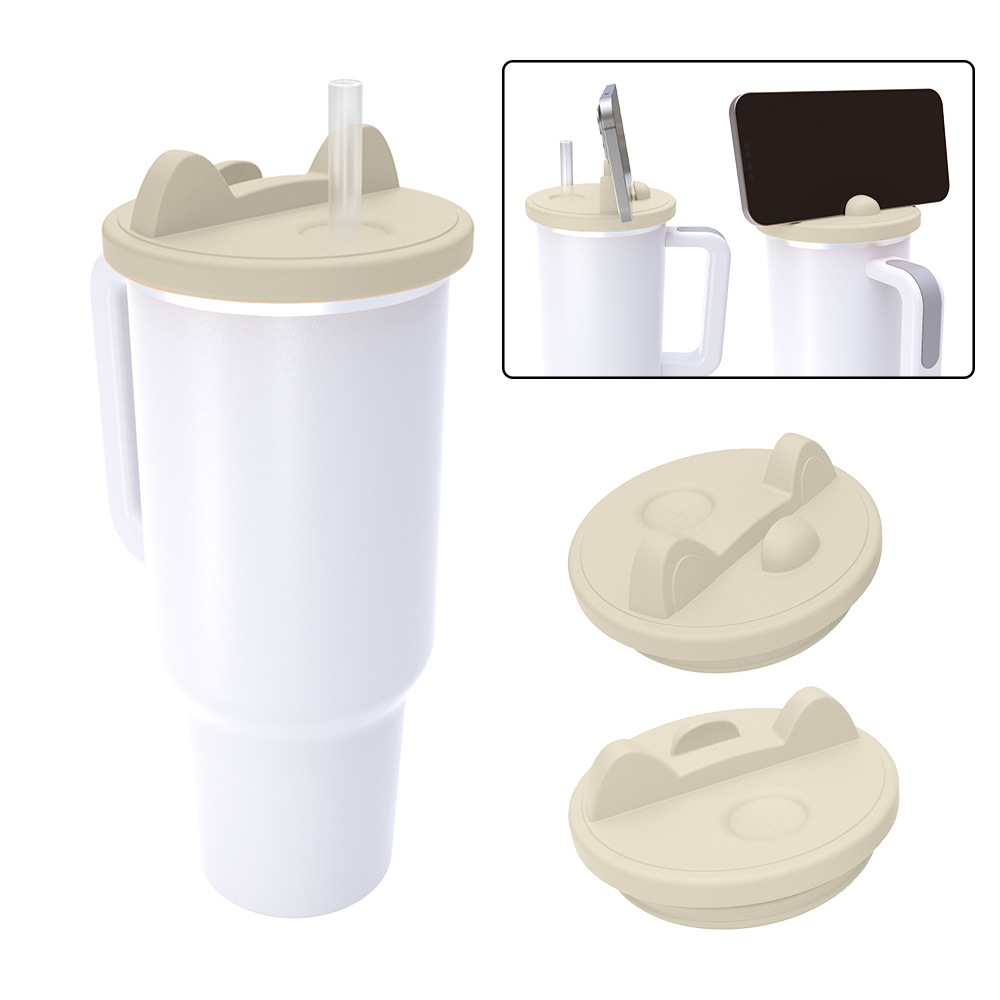
Can You Fix a Leaking Quencher Without Buying a New Lid?
What works (temporarily)
- Screw the lid tighter: This only provides a small improvement, and a Well.ca buyer reported that the ProTour model even had to be screwed very tight to barely seal. However, excessive tightening will accelerate the aging and wear of the sealing ring.
- Take out the straw before carrying it in the bag: one leakage channel can be blocked, but the air return channel is still open.
- Use a cup lid or a sealed storage bag: this just catches the leaked water, not prevents it from leaking at the root, and is barely adequate for a short commute.
When a third-party lid makes sense
Only when a third-party replacement lid meets the following conditions can it be regarded as a reliable option: it clearly marks the specific Quencher model and capacity it fits, has FDA or LFGB food-contact material documentation, and has real user reviews based on several months of use—not just unboxing reviews. Even if these requirements are met, the sealing effect is still affected by the cup opening diameter, and there are slight differences in cup opening size between production batches.
If your Quencher cup body is intact and you only need to carry it in your bag occasionally, a well-reviewed third-party cup lid can be tried at low cost. But if you commute frequently, don’t expect a third-party cup lid to be comparable to the original companion cup designed for leak prevention.
The real fix is at the manufacturing stage
For brands reading this article, the takeaway is different. The root of the Quencher water leakage problem is that the original design prioritizes straw-drinking convenience rather than sealing and carrying performance. If you are building a companion cup brand, there is an opportunity here: integrate leak-proof requirements into the mold design from the beginning, instead of adding cup lid accessories to remedy it later. Our engineering team will evaluate these key points with brand customers at the custom molding (Design for Manufacturing) stage: seal structure modeling, seal ring specifications, and airflow channel closure scheme, all of which are completed before mold opening.
| Fix Approach | Effectiveness | Cost | Risk | Best For |
|---|---|---|---|---|
| Tighten lid harder | Low | Free | Gasket wear | Temporary desk use |
| Remove straw | Medium | Free | Inconvenience | Short trips |
| Cup sleeve / pouch | Medium (containment) | Low | None | Short commutes |
| Third-party lid | Variable | Low–medium | Fit, food-contact | Occasional use |
| Purpose-built leakproof tumbler | High | Medium | None if verified | Daily bag transport |

What Should Brand Owners Demand from an OEM Water Bottle Manufacturer?
Lid mold development capability, not just bottle bodies
Many factories can blow-mold or weld stainless steel cups, but the cup lid mold is another capability with a higher threshold: it requires a multi-cavity precision mold, with the insert injection process for valve parts, and it also needs to be cross-batch, so that the thread tolerance of the cup lid and the cup opening can be accurately matched. You can ask the factory for the profile or exploded view of the cup lid. If the factory can’t provide it, it means that they just assemble the cup lid with ready-made accessories, rather than independently researching and developing the design.
In-process leak testing, not just final inspection
In terms of mass production scale, this difference is crucial. Final inspection is about picking out defective products after the products have been processed and value added; in-process inspection uses a calibrated inclined fixture at the assembly station to test, and problems such as sealing ring misalignment and thread damage can be detected before the product flows into the next process.
MOQ and the startup reality
Large-scale manufacturers with high-capacity production lines set MOQ according to production cost. When a start-up brand opens a new model for the first time, the minimum order quantity is usually 2,000–3,000. For existing mature styles, we support flexible ordering: depending on the style and customization, orders can be placed as low as 50–500 pieces; however, newly opened custom molds generally require a larger order volume to share the mold cost.
The key point is not to pursue the lowest minimum order quantity, but to find a supplier whose order quantity matches your sales expectation and whose quality control process you can verify at that order volume.
| Supplier Type | Typical MOQ (Existing Design) | Typical MOQ (Custom Mold) | Leak Testing Capability |
|---|---|---|---|
| High-volume mega-factory | 2,000–5,000 | 5,000+ | Final inspection only |
| Mid-size OEM | 50–500 | 3,000+ | In-process + final |
| Trading company | 500–1,000 | N/A (outsourced) | Unverified |
How to Start a Water Bottle Brand with a Chinese OEM Factory?
Define the leakproof specification before contacting any factory
Bring a written specification instead of competing pictures to the factory. The specification needs to specify: the use case (carrying in a bag, fitness, commuting), the type of cup lid (straw, flip lid, direct-drink spout), the required certification and the estimated first order quantity. When the factory gets clear specifications, it will be able to judge within a few days whether your demand can reach the target price. If you just say “I want a cup similar to Stanley, but better to use,” it will only waste time for both sides.
Vet lid engineering, not just the catalog
Ask the supplier for the profile of the cup lid, confirm the material of the sealing ring and its compression set index, and ask how the air return channel is sealed when the straw nozzle is closed. Suppliers who can clearly answer these questions show that the cup lid is independently developed; if the other party just generally deflects with “our quality is very good,” then they are only selling parts and assemblies.
Sample first, mass production second
Test the sample according to the customer’s real use scenario: tilt it at 45 degrees, shake it upside down, and put it in a bag with heavy objects for 30 minutes. Record the test conditions and test results. This record will be used as the inspection standard for your mass production.
Budget for tooling, not just unit price
A leakproof lid mold requires tighter tolerances and often insert molding for valve components. Tooling cost is higher than a standard lid mold, but it’s amortized across production volume. A $0.40 unit price with a lid that leaks in transit will cost more in returns and brand damage than a $0.55 unit with verified sealing.
| Cost Component | Typical Range (Custom Leakproof Tumbler) | Notes |
|---|---|---|
| Lid tooling | $8,000–$18,000 | Higher for multi-cavity + valve inserts |
| Body tooling | $5,000–$12,000 | Depends on capacity and wall thickness |
| Unit cost (1,000–3,000 pcs) | $4.50–$8.00 | Varies with steel grade and coating |
| Leak test fixture (optional) | $500–$1,500 | For incoming inspection |
Conclusion
The Stanley Quencher leak problem is not a user error. It’s a design decision: the original lid was built for sipping at a desk, not for surviving a commute inside a bag. ProTour improved the closure, but user reports show it still requires near-excessive tightening to seal reliably. If you want a tumbler that genuinely handles bag transport, the solution has to come from the lid’s engineering—not from how hard you twist.
For consumers, that means accepting that no accessory will fully transform a Quencher into a leakproof travel cup, and choosing a purpose-built alternative when bag transport is a priority. For brand owners, it means something more valuable: an opening in the market. The Quencher’s dominance made leakproof tumbler lids a known pain point. A product designed from the mold up to solve it—without copying protected designs—addresses a demand that millions of users have already articulated.
To turn a leak-proof concept into a production-ready product, you need a partner who controls the entire process. As a custom water bottle manufacturer, KingStar backs your project with in-house engineering, in-process QC, and strict FDA/LFGB/Prop 65 compliance. If you’re developing a leakproof tumbler program, our team can review your lid concept and provide a DFM assessment before tooling. We work with startups and established brands under NDA, with flexible MOQs for existing designs. Whether you need Amazon FBA preparation or full OEM Manufacturing, we are ready to support your brand.
Frequently Asked Questions
References
KingStar Industries. Standard Mouth Water Bottle Soft Touch Stainless Steel Metal Handle Hydro Vacuum Flask S192499 – Product Specifications. https://www.waterbottle.tech/product/standard-mouth-water-bottle-soft-touch-stainless-steel-metal-handle-hydro-vacuum-flask-s192499/
U.S. Food and Drug Administration. Guidance for Industry: Preparation of Premarket Submissions for Food Contact Substances (Chemistry Recommendations). https://www.fda.gov/regulatory-information/search-fda-guidance-documents/guidance-industry-preparation-premarket-submissions-food-contact-substances-chemistry
European Commission. Commission Regulation (EU) No 10/2011 on plastic materials and articles intended to come into contact with food. EUR-Lex. https://eur-lex.europa.eu/legal-content/EN/TXT/?uri=CELEX:32011R0010

Specializing in custom manufacturing, quality control and marketing of vacuum-insulated drinkware and coolers.