
Last Updated: September 29th, 2026
If U.S. companies intend to customize Christmas drinkware gifts, it is suggested that product selection and supplier finalization should be started in late summer or early autumn. Later, time should be reserved to confirm pattern design, proofing, mass production, quality inspection, shipping, receiving, and internal distribution.
The product with the highest cost performance is not necessarily the one with the lowest unit price. Appropriate selection needs to comprehensively consider the gift object, purchase quantity, customization process, packaging scheme, compliance documents, and final delivery date. And if you want to get your private corporate gifting plan, as an experienced manufacturer of premium water bottles and tumblers, we’re happy to offer help.
Why Corporate Christmas Gifts Need Early Planning
Planning corporate Christmas gifts is often regarded as marketing work, but it is also a supply chain project in essence. A branded tumbler or insulated water bottle must go through product selection, pattern design, physical proofing, production confirmation, quality inspection, international transportation, and local receipt in the United States, and finally it can be delivered to employees or customers as a thoughtful gift. If it starts too late, businesses can still find a product, but the optional space will be greatly reduced in the customization scheme, packaging, quality control audit, and cost control.
This guide is aimed at U.S. companies, promotional items distributors, and private brand buyers to help you plan customized drinkware gifts before the Christmas season. We will explain how to choose the appropriate product style, write the available RFQ, compare suppliers under the unified standard, and at the same time control the delivery date and documents related to food contact materials, packaging, and performance risks. The goal is not to choose the trendiest tumbler. It is to deliver a drinkware gift that recipients will use and that your operations team can actually execute.
A Christmas Gift Program Is a Supply-Chain Project
A successful corporate holiday gift depends not only on more than product aesthetics. You need a written brief that clearly states recipients, quantity, budget, destination, and required warehouse receipt date. It is also necessary to backdate from the final delivery date, formulate a pragmatic time schedule, reserve buffer time, and deal with various emergencies such as sample confirmation, production failure, freight delay, and warehousing.
Many projects are overturned, not because the products themselves are not good, but because the preparations are too late, or the key decisions are delayed again and again. A gift that arrives in January does not support a December recognition event. If the tumbler is stuck in the warehouse, this gift will not convey the brand image because the packaging and label have not been finalized.
| Buyer role | What they are trying to achieve | Typical holiday question | Problems that will arise without early planning |
|---|---|---|---|
| HR/ personnel | Condolences to employees, shaping corporate culture | What kind of gifts can employees really use? | Gifts arrived later than staff activities and could not be distributed on time |
| Marketing team | Promotes brand exposure and maintains customers' goodwill | How to make our logo look advanced instead of cheap advertising? | Logo, surface technology or packaging style are inconsistent with brand tonality |
| Procurement team | Controls cost, quality and delivery risk | Can the quotations of various suppliers really be directly compared? | The lid, coating, packaging and supporting documents are different, and the low-price quotation has hidden traps |
| Promotional products distributors | Set up a complete set of gift solutions for customers | Can suppliers get the patterns, proofing, packaging and delivery on time? | Temporary modification of the plan will lead to rework, loss of profits and even missed activity time |
| Founder / operations lead | Selects practical gifts, and the plan can be controlled | What is the lowest-risk option for our budget and timeline?"delivery?" | The selected products do not match each other in terms of performance cost, transportation mode and recipient's expectation |
Choosing Custom Drinkware That People Actually Want to Use
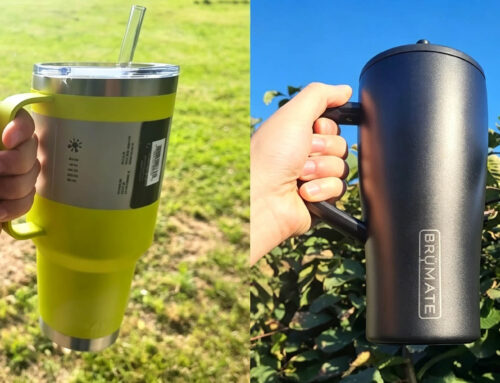
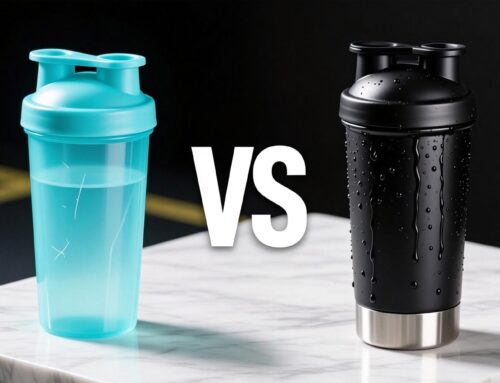
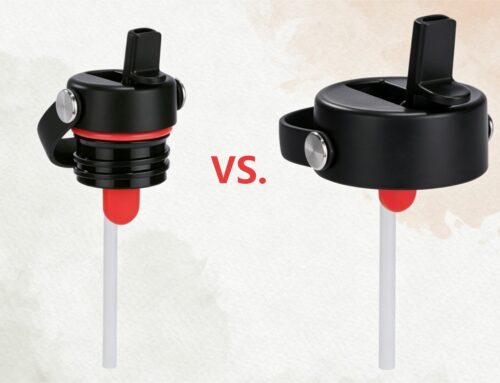
Not every drinkware product fits every gifting scenario. Whether the product selection is appropriate depends on who will receive it, how the goods are transported and distributed, and what brand look and feel you want to create.
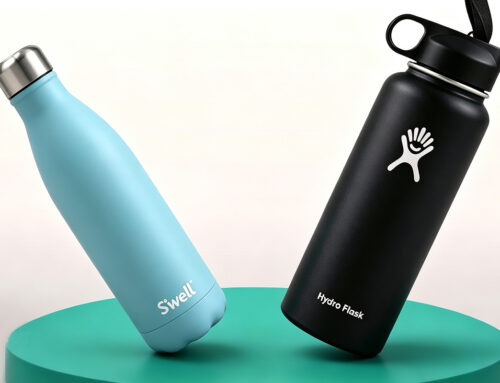
What Stanley, YETI, and Hydro Flask Have Changed
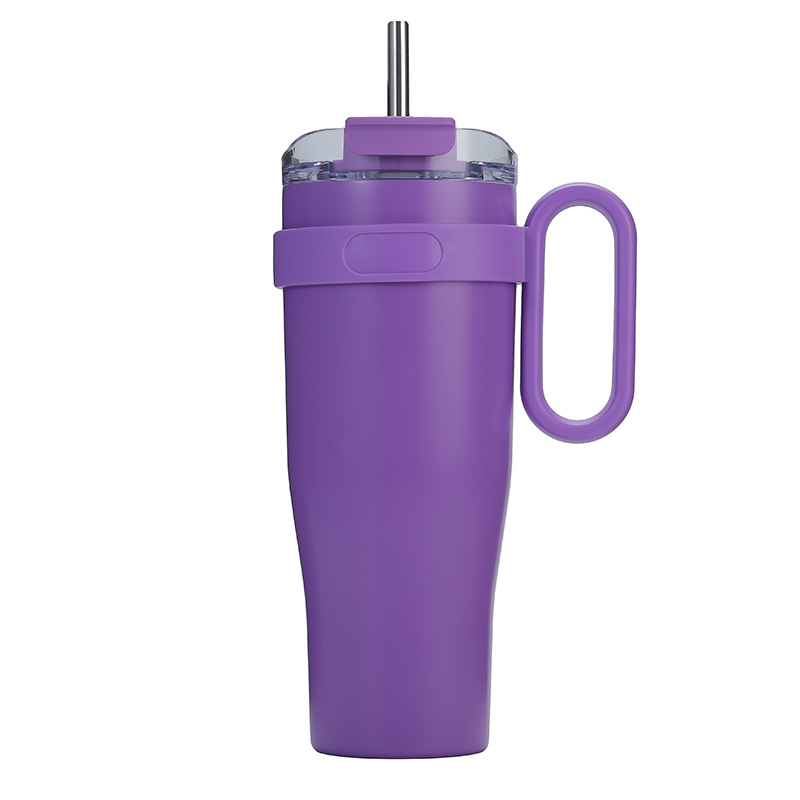
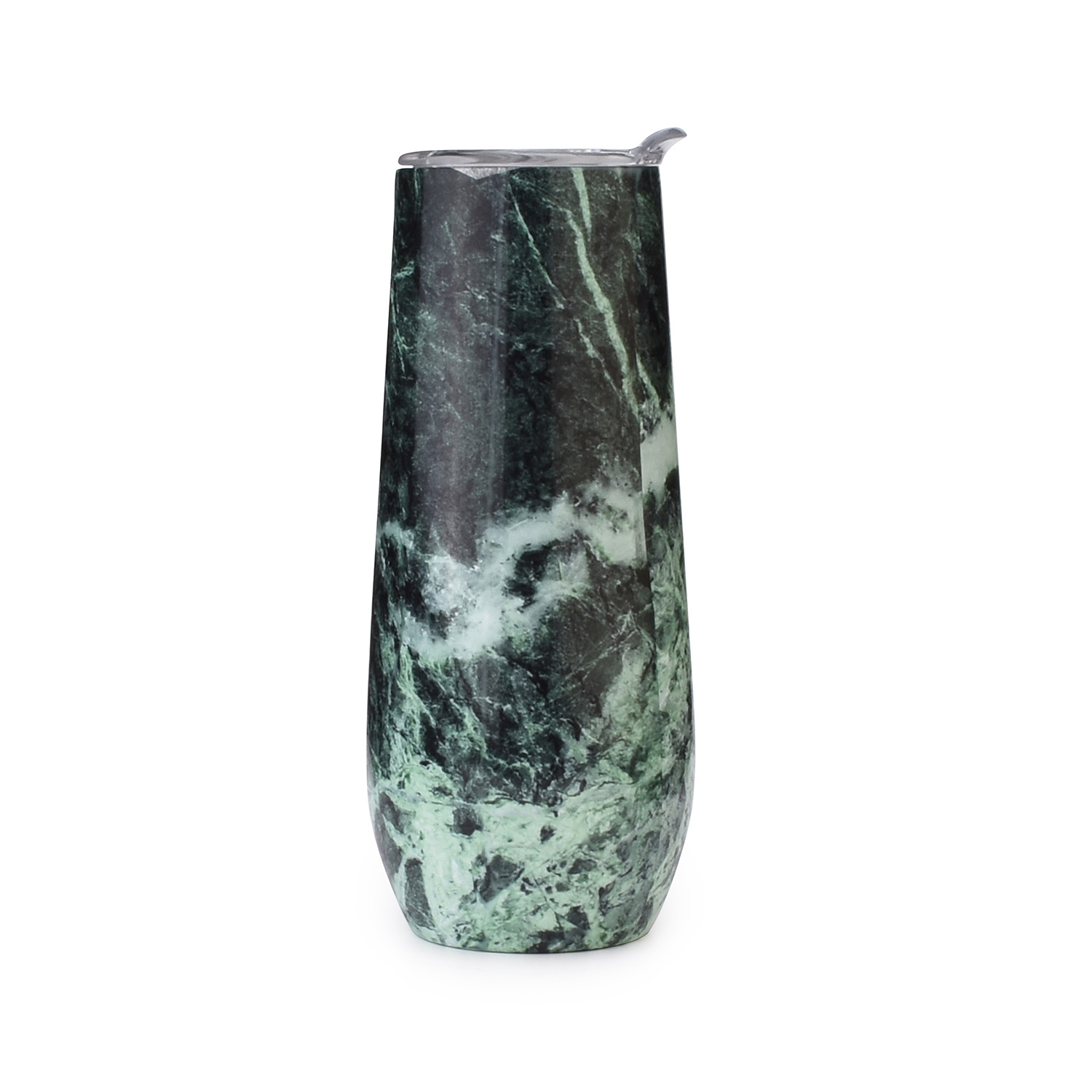
The key point is not to blindly copy these big brands. Instead, for this gift project, the core product characteristics are defined: recipient lifestyle, lid usability, branding area, package size, shipping method, and budget.
Product Selection Matrix for Corporate Gifting
| Gift objective | Best-fit drinkware format | Recipient profile | Strength | Watch-out before ordering |
|---|---|---|---|---|
| Everyday employee appreciation | 40 oz handled tumbler | Office employees, hybrid workers, sales teams | High visibility and frequent daily use | Larger carton size and higher shipping cost |
| Wellness / onboarding kit | 18–24 oz insulated bottle | New hires, gym users, commuters | Portable and suitable for a wide range of scenarios | Confirm cap type, leak-proof standard, and logo printing area |
| Client appreciation | Premium tumbler or bottle | Customers, channel partners, prospects | Practical with a premium feel | Packaging and decoration should match brand positioning |
| Executive / VIP holiday gift | Wine tumbler, champagne flute, or curated gift set | Executives, core customers, important partners | Higher perceived value | Lower quantities may increase unit cost; gift box quality matters |
| Event / conference giveaway | Standard tumbler or compact bottle | Attendees and prospects | Good budget scalability, suited for large quantities | Simplify decoration and packaging to control lead time |
| Outdoor / field-team recognition | Rugged insulated bottle | Construction, logistics, field service, outdoor teams | Functional and durable | Confirm lid usability, grip design, coating wear resistance, and transport protection |
Building a Corporate Drinkware RFQ That Produces Comparable Quotes
A clear RFQ (Request for Quotation) can reduce repeated communication, improve the accuracy of quotation, and let suppliers accurately understand your real needs.
The Specifications That Change Your Real Cost
- 1
The product type and capacity (e.g., 40 oz tumbler, 18 oz bottle, 12 oz wine tumbler) and target quantity should be stated in the inquiry form; destination (U.S. state or region, warehousing or direct delivery to customers); and target delivery date (based on the warehouse receipt time, not just the arrival time).
- 2
At the same time, attach the logo file (vector format preferred) and the printing position description; if the process has been determined, indicate the preferred decoration method (laser engraving, screen printing, thermal transfer, etc.); color requirements (if necessary for powder spraying or printing, provide the Pan Tong color number); and packaging scheme (bulk, single color box, gift box, customized lining, etc.). In addition, the label and bar code requirements required for warehouse delivery or retail shall be stated.
- 3
Finally, it is necessary to clarify the quality standards (appearance, color reproduction, logo firmness, cup cover fit, etc.) and the requirements of food contact-related documents (material declaration, applicable test report and compliance certificate corresponding to cup body, cup cover, straw, sealing ring, coating, and colorant); inspection requirements (pre-shipment inspection, AQL acceptance level, and special test items); and the environmental protection-related selling points you plan to publicize, as well as the supporting documents needed for these publicity.
For U.S. projects, buyers need to ask for compliance documents of all food contact parts in the finished product. Whether food contact materials comply with laws and regulations depends on every substance that may precipitate into food and drink, and it cannot be considered as compliance simply by labeling it “stainless steel.”
Artwork, Packaging, and Sample Approval
In the process of pattern confirmation, it is necessary to specify the size, placement position, and color specification of the logo; set the acceptable error range of color difference and logo alignment; formulate the inspection standard of appearance and function; and keep the sample confirmation record and additional conditions. The standard is vague, and it is easy to produce quality disputes in the follow-up.
A physical sample can truly present the color and surface texture under natural light, the size, position, and clarity of the logo, and can also see the fit of the cup lid, the alignment of the straw, the overall assembly process, and the packaging feel and protection ability. These effects cannot be restored by electronic renderings. It is an important step to control the risk to confirm the physical samples before the production of large goods.
Packaging will affect many aspects: unit cost (color box, lining, and customized printing will increase the cost); damage risk (suitable cushioning materials and strong outer boxes can reduce bumps and depressions); gift perception (exquisite packaging will enhance the sense of value, and inferior packaging will lower the grade); and the performance efficiency (boxes with uniform specifications are convenient for warehouse handling and delivery). Communicate the packaging plan as soon as possible, and if conditions permit, be sure to ask for packaging samples.
RFQ Cost Elements That Affect Comparability
| Cost element | What changes the cost | Why two quotes may differ | What the buyer should verify |
|---|---|---|---|
| Base product | Capacity, steel grade, insulation structure, lid configuration | Similar-looking tumblers may use different internal components and manufacturing processes | Complete product specification and parts list |
| Decoration | Laser engraving, screen printing, heat transfer, multi-color artwork, number of logo locations | A one-color front logo is not comparable with wraparound multi-color branding | Decoration method, artwork complexity, print area, color count |
| Packaging | Bulk cartons, individual boxes, custom gift boxes, inserts | Premium packaging materially increases unit cost and changes carton dimensions | Carton material, inserts, carton pack-out, drop-protection requirements |
| Sampling / tooling | New molds, custom lid parts, prototype development, logo setup | Some quotes exclude sampling, setup, or development costs | Whether sampling/setup/tooling fees are included, refundable, or charged separately |
| Quality assurance | In-process inspection, pre-shipment inspection, product testing, document review | A low quote may include no third-party inspection or incomplete documentation | QC scope, sampling method, inspection timing, acceptance criteria |
| Freight and delivery | Shipping mode, Incoterms, customs, destination, final-mile distribution | FOB, CIF, DDP, and local delivery quotes are not directly comparable | Incoterms, port, customs responsibility, final warehouse delivery |
| Contingency | Rework, delay buffer, replacement units, warehouse handling | Tight timelines leave little room to correct defective units | Recommended buffer quantity and time buffer |
Managing Timeline, Quality, and Compliance Before Holiday Delivery
A Backward Timeline From U.S. Warehouse Receipt
Take the final receipt date of the warehouse as the benchmark node, and then set each key milestone backwards. First, finalize the list of gift requirements (recipients, purchase quantity, budget, and delivery time), determine product configuration and printing process, and prepare and submit pattern documents. If the final selection or design is delayed again and again, all subsequent links will be squeezed and hit the holiday season.
From September to early October, we will receive and evaluate the physical samples, confirm logo placement, color, finish, lid function, and packaging, and then issue a written sample confirmation form to approve the mass production. Never take the electronic renderings as the final confirmation; otherwise, unexpected problems will easily occur in large goods.
From October to early December (depending on the purchase quantity and logistics plan), continuously follow up on the production progress and deal with problems as soon as possible; Arrange pre-shipment inspection as required, arrange shipping, customs clearance, and warehousing, and plan internal sorting and labeling before distribution to employees or customers. It is easy to miss the delivery deadline by planning only the arrival time and ignoring the warehousing link.
Reserve a buffer period at these nodes: sample confirmation stage (allowing modification time), production stage (dealing with sudden delay and shortage of raw materials), freight and customs clearance stage (port congestion, document problems), and warehouse receipt stage (scheduling reservation and time-consuming warehousing). Many people will take it for granted that “everything will be fine,” which is a common misunderstanding. A buffer of 1-2 weeks is reserved on the overall timeline, which can avoid the sudden situation near the holiday.
Holiday Drinkware Delivery Timeline
| Project phase | Main output | Decision owner | What should be confirmed | Holiday-delay risk |
|---|---|---|---|---|
| Project brief | Written gifting brief | HR, marketing, procurement | Recipients, quantity, budget, destination, required warehouse receipt date | Starting product research before the final delivery date is confirmed |
| Product selection | Product specification | Buyer and supplier | Capacity, material, lid, finish, decoration, packaging | Comparing products with different specifications or quotes with incomplete information |
| Artwork and sample | Approved physical sample | Brand / marketing lead | Logo size, placement, color, coating, packaging, product suitability | Approving only a digital mockup without verifying a physical sample |
| Bulk production | Production release | Buyer and supplier | Final specification, QC plan, documentation checklist | Last-minute artwork changes or suppliers privately substituting raw materials |
| Inspection and shipment | Inspection result and shipping plan | Procurement / QC / logistics | Inspection timing, document review, transportation mode, export documents | Mistaking production completion for overall project completion |
| U.S. receiving and distribution | Ready-to-distribute inventory | Warehouse / operations | Customs, warehouse appointment, labeling, kitting, internal distribution | Goods arrive at port but miss the deadline for distributing gifts to employees or clients |
A Practical Plan for Your 2026 Corporate Holiday Gifting Program
Corporate Christmas drinkware programs succeed because of early planning, keeping all decisions on file, and doing a good job of risk control in the whole supply chain. Reverse the schedule with the final delivery date, select products suitable for the recipients, and make clear the requirements of customization, packaging and documents, so that you can create a festive gift scheme that is effective and practical.
A Five-Step Project Plan
- 1
Define your brief: confirm the recipient, quantity, budget, destination and the latest receipt date of the warehouse.
- 2
Product selection and customization process: determine the capacity, cup lid style, surface treatment process, printing method, and packaging scheme.
- 3
Confirm the physical sample: before approving the production of bulk goods, check the color, logo, lid function, and packaging effect.
- 4
Finalize quality and compliance documents: delimit the inspection scope, and define the relevant documents and acceptance standards of food contact materials.
- 5
Plan transportation and distribution: arrange freight, customs clearance, warehousing, and internal distribution, and reserve buffer time.
When to Request Samples and Quotes
If you are preparing corporate Christmas gifts and need support in product selection, customization, or compliance documents, you can apply for exclusive project quotation or browse our corporate gift series.
Conclusion
A well-done gift project is far more than just getting logistics done. It is a real expression of how a company values its people and partners.
Companies that stand out from the crowd in corporate gifts may not have the highest budget. It’s those teams that plan ahead, carefully select models, set clear standards, and implement them steadily. By treating holiday drinkware and gifts as brand assets and supply chain projects at the same time, U.S. teams can turn a holiday intention into long-term goodwill. This gift can not only shape the corporate culture and consolidate the cooperative relationship but also reflect the quality of the enterprise itself. And if you have any questions about corporate gifting, welcome to contact us through sales@waterbottle.tech, and we’ll reply within 24 hours.
FAQ
Reference
Vistaprint. Corporate Gift Ideas To Boost Motivation & Loyalty. https://www.vistaprint.com/hub/corporate-gifts-survey
U.S. Food and Drug Administration (FDA). Determining the Regulatory Status of Components of a Food Contact Material.
https://www.fda.gov/food/packaging-food-contact-substances-fcs/determining-regulatory-status-components-food-contact-material
Federal Trade Commission (FTC). Environmental Claims: Summary of the Green Guides.
https://www.ftc.gov/business-guidance/resources/environmental-claims-summary-green-guides
U.S. Customs and Border Protection (CBP). Basic Importing and Exporting.
https://www.cbp.gov/trade/basic-import-export

Specializing in custom manufacturing, quality control and marketing of vacuum-insulated drinkware and coolers.