Last Updated in July 21st, 2026
When it comes to packing lunch, most people think of a standard single-layer lunch box: plastic or stainless steel, with a lid. But the bento lunch box is a completely different category. Ordinary lunch boxes only solve the problem of putting food together and carrying it along. But stainless steel bento lunch boxes can do better—they can keep your food in its best condition until it’s time to eat.
The core differences between them are obvious: independent compartment, temperature retention, and leak-proof portability. This is not only a few more small functions but also a fundamental change in design conceptions.
KingStar is an experienced manufacturer of customized stainless steel containers, mainly engaged in lunch boxes, undertaking OEM/ODM customization cooperation. Based on our manufacturing experiences and public research data, this article analyzes the reasons why the comprehensive strength of stainless steel bento lunch boxes far exceeds that of standard lunch boxes and breaks down what they mean to consumers, retail brands, and B2B buyers.
What Does the Science Say About Food Safety—Stainless Steel vs. Plastic Lunch Boxes?
Nowadays, more and more people pay attention to health, and the safety of containers in direct contact with food has become the most concerned thing for everyone. What everyone is entangled in is not whether the plastic lunch box can be safe but whether it reliably is—and whether stainless steel offers a demonstrably better alternative.
The BPA Problem — What Independent Research Reveals
Bisphenol A (BPA) is a chemical substance that can disturb the human endocrine system, and it is widely used to make polycarbonate plastics and epoxy resins. In 2011, Chemosphere, an authoritative peer-reviewed journal, published a study to specifically detect BPA migration from various kinds of reusable bottles. The results are very surprising: at room temperature, polycarbonate plastic bottles leached 0.2-0.3 mg/L of BPA.
What is even worse is that BPA migration from epoxy-lined aluminum bottles is sometimes higher than others, ranging from 0.08 to 1.9 mg/L, depending on manufacturers. And if boiling water is poured, BPA in epoxy-lined bottles will be precipitated in larger quantities.
Why Stainless Steel Is the Clear Winner for Food Contact Safety
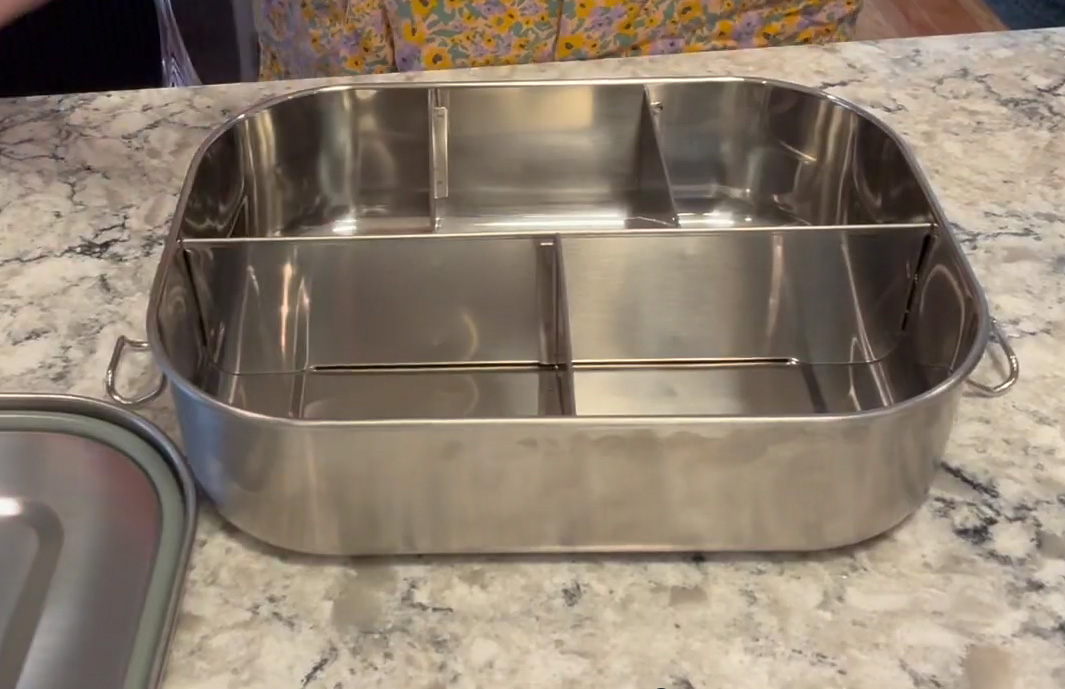
The same study also found that BPA could not be detected in water contained in uncoated stainless steel bottles. This is closely related to the material characteristics of stainless steel itself: it is stable, non-reactive, does not need additional chemical coatings for food-contact, and does not precipitate harmful substances that interfere with endocrine function in daily use.
The study cited CDC biomonitoring data, which shows that more than 93% of Americans have BPA detected in their urine. Therefore, stainless steel food containers have become a safer choice for all consumers as well as B2B buyers.
Beyond BPA — Other Hidden Risks in Plastic Containers
It’s not just BPA that worries people. Many plastic products also contain phthalates and other additives, which will migrate when exposed to heat or repeated use. Plastic lunch boxes will age after being used for a long time, and the surface will be covered with micro-scratches, which will not only provide perfect living conditions for bacteria but also absorb odors and colors from foods.
In comparison, stainless steel is not easy to leave stains on and is more impact-resistant. Even after years of use, it still remains non-porous—a point that is widely noted by users and manufacturers.
How Do Stainless Steel Bento Boxes Compare to Standard Lunch Containers in Daily Use?
| Feature | Standard Lunch Container | Stainless Steel Bento Box |
|---|---|---|
| Primary Design | Single compartment, one “bowl” | Multiple compartments, partitioned |
| Temperature Retention | Minimal / dependent on material | Vacuum-insulated models retain heat 4-6 hours |
| Leak Protection | Basic; often relies on friction seal | Silicone-sealed, multi-latch closure |
| Food Integrity | Mixed flavors, soggy textures | Dry/wet separation, preserved texture |
| Durability | Varies; plastic degrades over time | Stainless steel, long-life recyclable |
Design Philosophy — Compartmentalization vs. “One Big Bowl”
Compartmentalization is the core difference between bento lunch boxes and standard containers.
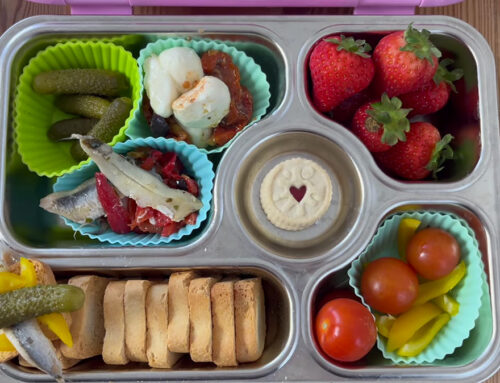
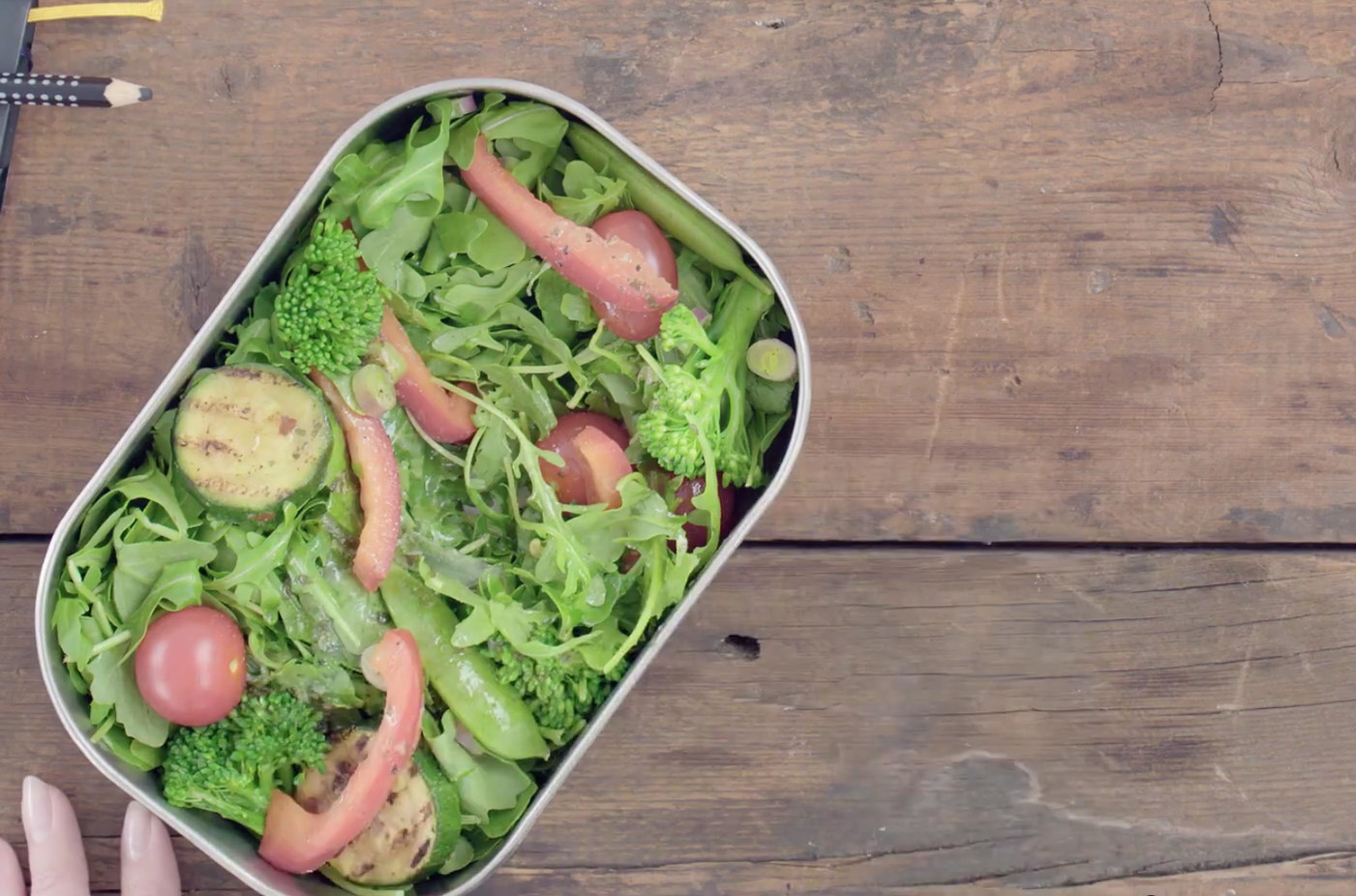
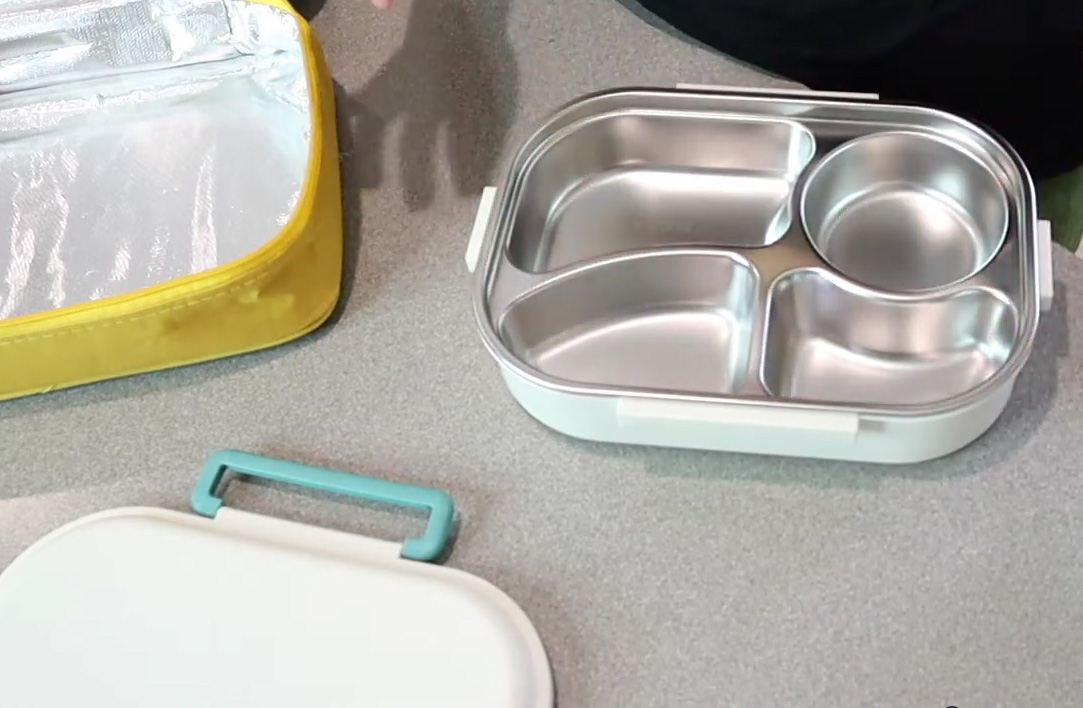
A standard lunch box is a big box in which everything is piled together and all mixed up when they are taken out. A bento lunch box is usually divided into several independent compartments, each with its own functions: one for meat, one for vegetables, and one for rice.
This design is not only good-looking but also practical. You can keep salad greens crisp rather than steamed by adjacent hot food, preventing sauces from soaking into rice and allowing cold fruit to stay cold while a main course stays warm.
Temperature Retention — Insulated Bento vs. Uninsulated Standard Containers
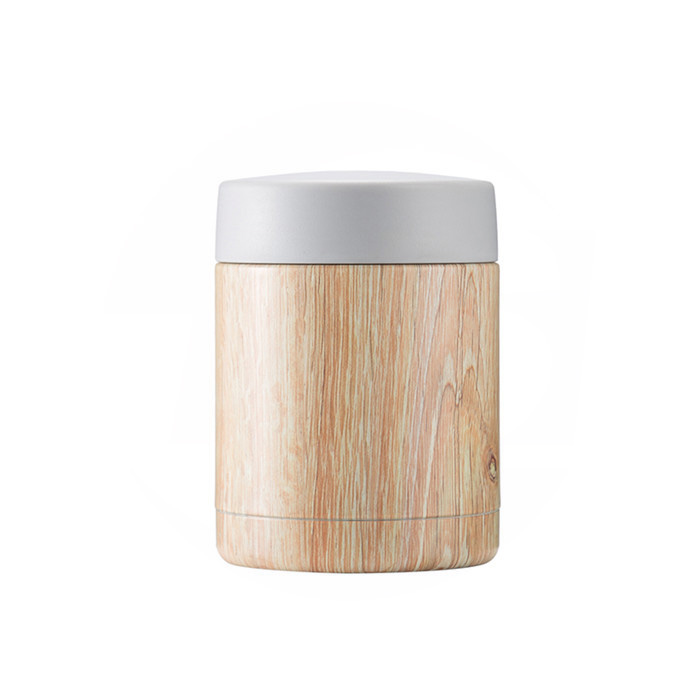
A vacuum-insulated stainless steel bento lunch box can maintain food temperature for a long time.
After 6 hours, the internal food temperature in some premium lunch boxes can still be maintained at 127°F to 162°F, and the hot dishes are completely in line with the safe temperature standards.
On the other hand, ordinary non-insulated lunch boxes have almost no heat retention effects. If there is no extra heating, the food will be completely cold in just 1-2 hours. Many people don’t have a microwave oven in the office or don’t want to wait in line for hot meals. They just want to open the lid and eat hot meals without another heating process. So this difference in temperature retention is really decisive for them.
Sealing and Leak-Proof Performance — What Actually Stays Closed?
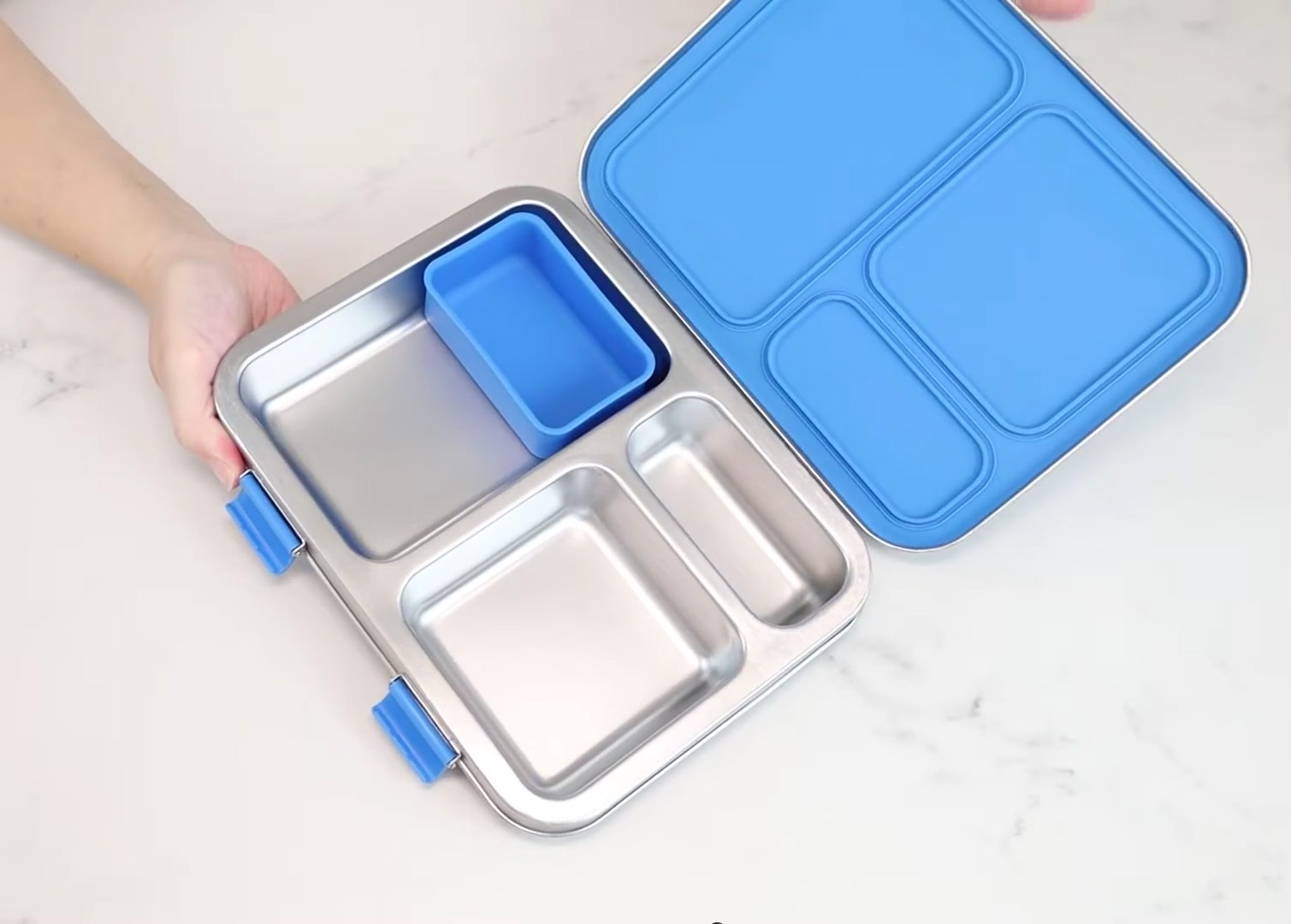
The modern stainless steel bento lunch box has a silicone-sealed lid and multiple locking points.
This is a real functional upgrade because most ordinary lunch boxes only have single-button or push-type lids. Tight sealing is particularly important if you don’t want to spill your soup, dressings, or juicy fruits.
A large number of users’ comments also confirm this point: the lunch boxes with proper sealing is the most popular, and wet and dry ingredients can be put in the same box and carried around without mixing with each other.
Is Stainless Steel Really More Sustainable Than Single-Use or Plastic Alternatives?
It’s publicly acknowledged that stainless steel is more eco-friendly, but most of them can’t support it with actual data. A 2024 peer-reviewed life cycle assessment (LCA) from Chalmers University of Technology provides solid evidence.
What the Life Cycle Assessment (LCA) Data Actually Shows
This study was conducted by Rahul Aggarwal and published in Cleaner Environmental Systems. The experimental scene was selected in a college student canteen, and the environmental differences between recyclable lunch boxes and disposable takeaway lunch boxes were compared.
The functional unit was 122,000 take-away meals served over one year.
| Impact Category | Reusable (20 uses) | Single-Use | Change |
|---|---|---|---|
| Climate Change Impact | Baseline (100%) | +59% higher | Reusable reduces by 59% |
| Water Consumption | Baseline (100%) | -99% lower | Reusable consumes 99% more |
| Energy Consumption | Baseline (100%) | -62% lower | Reusable consumes 62% more |
| Economic Cost | 3.3% higher | Baseline | Reusable costs more per use cycle |
The findings obtained from the study are as follows: Assuming that the reusable lunch box can be recycled 20 times, the climate change impact can be reduced by 59%. However, the cleaning process will consume a lot of resources, with 99% more water consumption and 62% more energy consumption. But when these resources’ costs are spread across hundreds of uses, the environmental benefits will far exceed the energy and water spent on cleaning.
Economically, if it is only used for 20 times, its cost will be 3.3% higher. The key point is that the more times you reuse it, the more obvious the environmental advantages will be. Researchers suggest that the use cycle of lunch boxes should be extended as much as possible in order to maximize their environmental advantages. This just proves that stainless steel lunch boxes with durable and long service lives are more worth choosing.
Recyclability — Stainless Steel’s End-of-Life Advantage vs. Plastic Degradation
Stainless steel can be 100% recycled and recycled repeatedly without material degradation. That contrasts with plastics, which belong to “downcycling.” That means they lose quality with each recycling loop. Meanwhile, there are also a large number of disposable lunch boxes that can only end up in landfills or incineration.
The reuse model evaluated in the LCA also assumes a scheme: the reusable lunch boxes will be recycled in a unified way, and suppliers will also give discounts to customers who return the boxes. This model fully aligns with circular economy principles.
Why Sustainability Matters for Brands — Beyond the Marketing Pitch
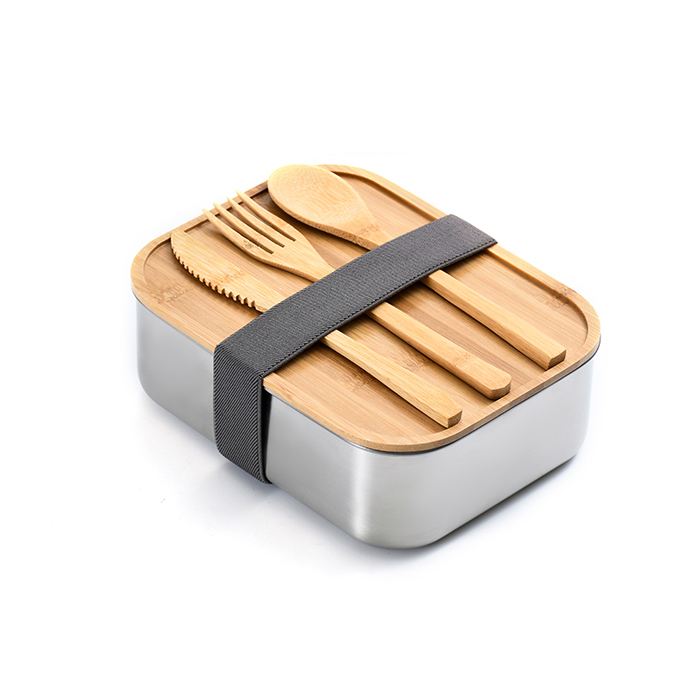
For major brands, stainless steel bento lunch boxes not only bring selling points of environmental protection but also provide an excellent opportunity to create differentiated products.
The global stainless steel lunch box market is expanding: the total market value will reach $1.6 billion US dollars in 2024, and it is expected to grow to $2.4 billion in 2031, with a CAGR of 4.5%.
The eco-friendly stainless steel lunch box is no longer a niche track. Now it has become the mainstream trend in the industry.
Choosing stainless steel bento lunch boxes is equivalent to conveying its own business philosophy of durability, safety, and environmental protection to consumers. Nowadays, more and more customers who have health and environmental awareness will regard these concepts as an important reference for decision-making.
What Are the Most Common Objections to Stainless Steel Bento Boxes?
No product is perfect. Here are some common objections from consumers of stainless steel bento lunch boxes as well as some evidence-based responses.
| Component | Quality Indicator | Red Flag |
|---|---|---|
| Stainless Steel Grade | 304 or 316 food-grade | Unspecified grade |
| Seal Material | Food-grade silicone | Unspecified rubber/plastic |
| Latching Mechanism | Multi-point metal or reinforced plastic | Single-point, thin plastic |
| Surface Finish | Smooth, non-porous, free of sharp edges | Uneven, discolored, or rough finish |
For brands looking for OEM/ODM partners, it is necessary to verify these quality issues in order to reduce customer complaints and returns.
Why Should B2B Buyers Choose Stainless Steel Bento Boxes for Their Product Lines?
In 2024, the global lunch box market will reach $2 billion, and it is expected to increase to $3.8 billion by 2035, with a GAGR of 6%. Among them, the stainless steel lunch box subdivides the track, with a market scale of $720 million in 2024 and a steady growth momentum, and it is estimated that it will reach $1.25 billion in 2035.
| Material Segment | 2024 Value (USD Million) | 2035 Value (USD Million) | CAGR |
|---|---|---|---|
| Plastic | 880 | 1,550 | ~5.4% |
| Stainless Steel | 720 | 1,250 | ~5.2% |
| Glass | Moderate growth | Increasing | — |
| Silicone | Gaining traction | Expanding | — |
All the data can show a clear upward trend. Nowadays, consumers pay more attention to environmental protection and durability when purchasing lunch boxes, instead of just price, and the stainless steel lunch box track continues to expand.
North America and Asia-Pacific are the two core regions that drive market growth. There are huge market opportunities for B-end purchasing customers such as brands, purchasing leaders, and corporate gift purchasing. The addition of stainless steel lunch boxes to the product line just fits the current consumer trend of pursuing health, environmental protection, and high quality.
What to Look for in a Reliable OEM/ODM Partner
It is very important to choose the right manufacturer. Key considerations are as follows.
- Material qualification: 304/316 food-grade stainless steel, with FDA and LFGB safety certification.
- Process quality: Welding precision, seal integrity, surface finish
- Customization options: support LOGO printing, multi-color selection, and exclusive packaging customization.
- Track record: real user comments, product durability test data
Competitive Differentiation
Nowadays, the competition in the market tends to be saturated, and only by making product differentiation can sales be boosted.
The stainless steel bento lunch box has its own unique propaganda logic: it is not only a simple container but also represents a pursuit of life health, sustainability and design quality. For the brand, this lunch box should be positioned as a lifestyle product, not a cheap commodity. For retailers, it means offering a product that commands a premium price while delivering demonstrable value.
Conclusion: What’s the Verdict on Stainless Steel Bento Boxes?
Comparing stainless steel bento lunch boxes with ordinary lunch boxes, the core difference can be summarized as follows: they solve different problems. Besides storing food, stainless steel bento lunch boxes can also categorize food and preserve its flavor, temperature, and texture.
For B2B buyers, the market trend is very clear: the stainless steel bento lunch box market continues to expand, and consumers’ demand for eco-friendly and durable lunch boxes only increases.
KingStar, your reliable manufacturer of containers, supports the mass production of stainless steel lunch boxes, self-owned branding, and OEM/ODM customization cooperation in the whole process. Whether you plan to develop a brand-new product line or purchase high-end lunch boxes as corporate gifts, welcome to contact us through sales@waterbottle.tech for more information.
FAQ
References
Cooper, J. E., Kendig, E. L., & Belcher, S. M. (2011). Assessment of bisphenol A released from reusable plastic, aluminum, and stainless steel water bottles. Chemosphere, 85(6), 943-947. https://www.sciencedirect.com/science/article/abs/pii/S004565351100717X
Aggarwal, R. (2024). Comparative life cycle assessment of reusable and single-use takeaway lunch boxes used in student restaurants. Cleaner Environmental Systems, 14. https://doi.org/10.1016/j.cesys.2024.100223
WiseGuy Reports. (2025). Global Bento Lunch Box Market Research Report 2024-2035. https://www.wiseguyreports.com/reports/bento-lunch-boxe-market
6Wresearch. (2025). Global Stainless Steel Lunchbox Market (2025-2031). https://www.6wresearch.com/industry-report/global-stainless-steel-lunchbox-market

Specializing in custom manufacturing, quality control and marketing of vacuum-insulated drinkware and coolers.