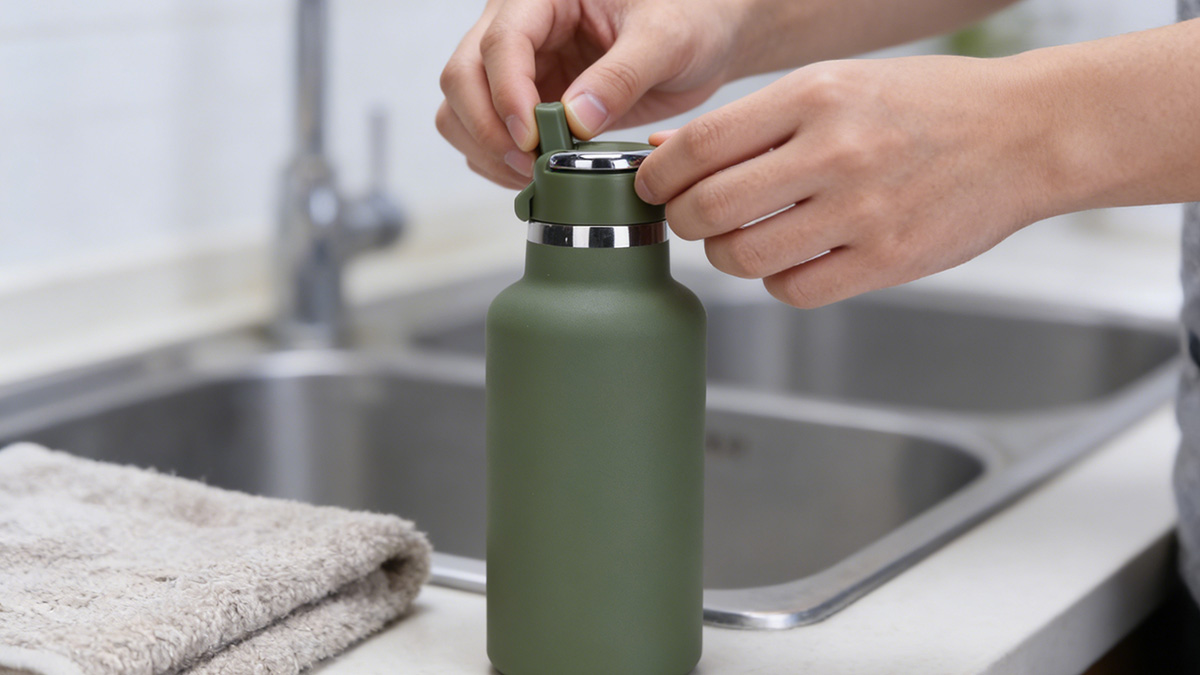
Reach for your bottle, and you expect a clean twist, a refreshing sip. You twist, and no budge. You twist again, no budge, and again. The lid remains sealed shut. It has apparently decided to test your patience quietly on its own.
Small inconveniences like this might look small, but as common as it is, small inconveniences might feel unbearable if you have to face it every day, especially when all you want is to stay hydrated. No good water bottle cap design should leave their customers in such crisis. It is, more often, the result of pressure difference, scrap material accumulation, different material properties behavior, or overtightening. Understanding why caps are so difficult to open is the first step towards solving the problem calmly, safely, and without damaging your bottle, or your hands.
After observing millions of bottles, moving down the production line and in daily use, one lesson stands out to us clearly: stuck caps can be resolved with simple techniques, just apply them in the right order, here are some facts for your information.
Why Are Bottle Caps So Difficult to Open
What seems like a sloppy arm failure, is actually physics to blame. Whether the bottle is plastic or stainless steel, caps should be engineered to seal tightly in order to preserve freshness and prevent leaks. Obviously, sometimes they succeed a little too well.
One of the most common causes is the internal pressure. When a bottle is filled, sealed, and exposed to certain temperature changes, the air inside can expand or contract depending on the hot or cold. Cooling the liquids inside, in particular, can create a slight vacuum in pressure that pulls the cap downward, effectively locking it in place. This effect is especially noticeable in insulated bottles, but not just in them.
Sugary drinks, flavored water, protein shakes, and even drinks rich in mineral can leave behind microscopic leftovers for you to scratch your head. Leftover drinks could contribute to the awkward moment, as well. Over time, these residues dry and behave like adhesive glue, increasing the friction exactly where you do not want it.
Plastic caps and bottle bodies respond differently to temperature changes, expanding and contracting at different rates. Add a tight grip material to the mix, often done “just to be safe”, and the result will be a immovable magical cap.
The table below summarises the most common causes given above, and how challenging they typically are to resolve:
| Primary Cause | Typical Severity | How It Happens | Ease of Resolution |
| Internal pressure | High | Temperature changes after sealing | Moderate |
| Residue buildup | Medium | Sugary or protein-based drinks | Easy |
| Material expansion | Low | Rapid heating or cooling | Easy |
| Overtightening | Medium | Excessive closing force | Easy |
How to Open a Stuck Bottle Cap
When faced with a stubborn cap, restraint is often more effective than strength. The most reliable approach is to begin with methods that can increase control and decrese friction before tearing the bottle cap into pieces.
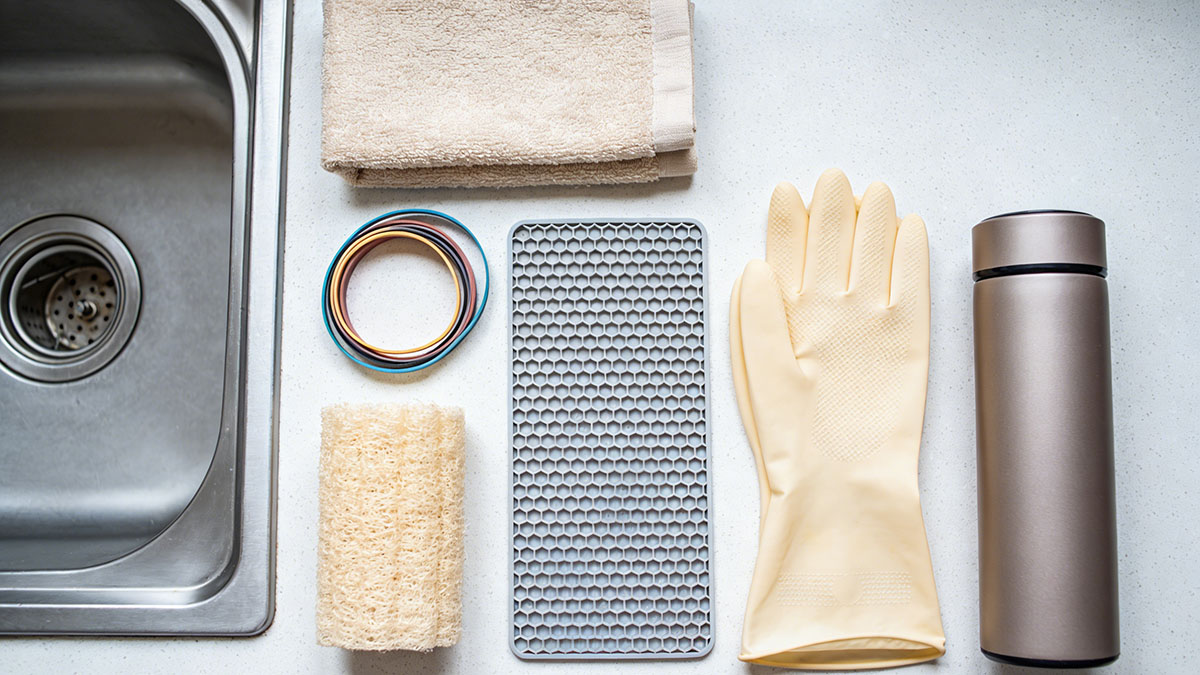
Using a dry towel, rubber band, silicone pad, or rubber gloves significantly increases friction between your hand and the cap. This allows you to apply steady rotational force without slipping, which is often all that is required to break the seal.
Improving the grip is the safest starting point. But if upgrading your grip alone is not enough, it would be time to turn up the heat, literally. Running warm (not boiling) water over the cap for a short period encourages the cap material to expand slightly. This small change is often sufficient to loosen the hold. It is important to heat only the cap area and avoid fully submerging insulated bottles, as excessive heat can damage internal insulation.
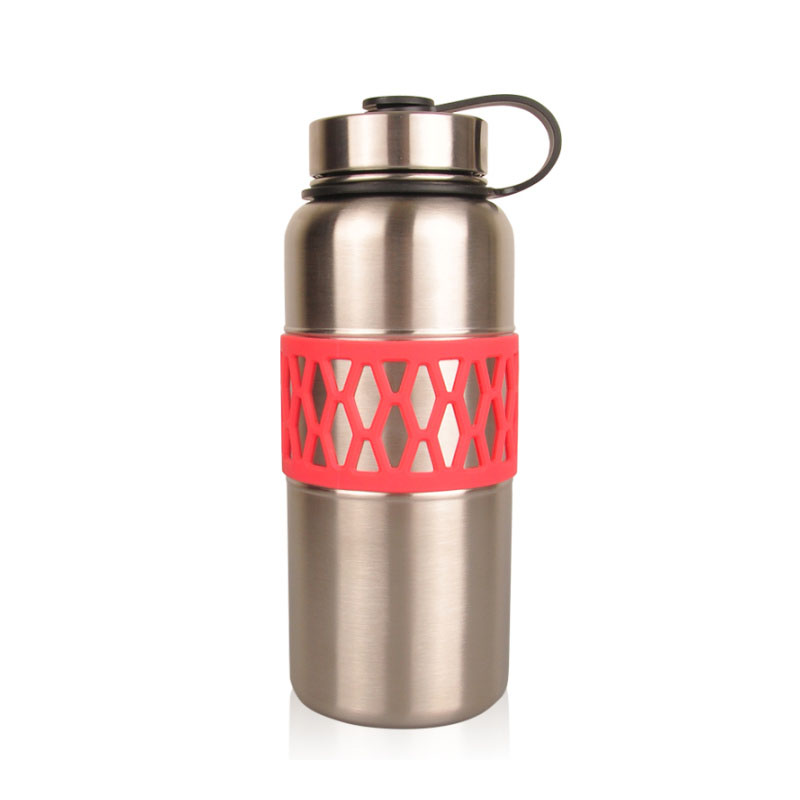
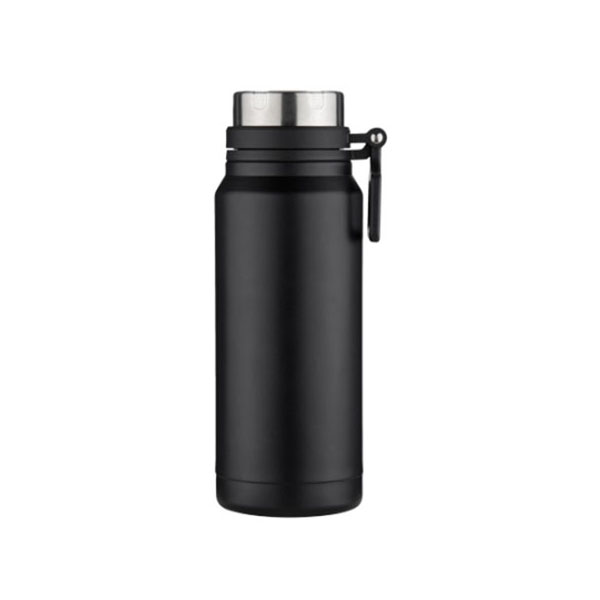
Bottles with loops or handles allow a utensil, such as a spoon handle, to be threaded through the loop to extend your turning radius. Leverage can also be effective when used thoughtfully. Applied slowly and evenly, this method increases torque without stressing the bottle.
Based on field testing by our scientists, the following table illustrates how these methods typically perform:
| Method | Typical Success Rate | Risk Level | Time Required |
| Grip enhancement | High | Very low | Seconds |
| Warm water | Very high | Low | One minute |
| Leverage | Moderate | Medium | One minute |
| Gentle tapping | Moderate | Medium | Two minutes |
How to Prevent Caps from Getting Stuck in the First Place
While opening techniques are useful, why not try to avoid stuck lids from the first place? Small habit can eliminate the vast majority of stuck-cap situations, leave them not a chance to occur.
Allowing hot liquids to vent briefly before sealing reduces the likelihood of pressure-related issues. Even a short pause, give the steam some time to escape, could prevent vacuum formation as the contents cool. This single habit accounts for a significant reduction in stuck caps.
Clean after yourself matters! A small brush can make a noticeable difference over time. Thoroughly washing and drying both the cap threads and bottle neck removes residues that would otherwise accumulate invisibly.
Once resistance is felt, a slight additional turn is sufficient. Proper tightening technique is equally important. The internal seal is designed to do the work; excessive force rarely improves performance and often creates future problems.
For long-term users, a minimal amount of food-safe lubricant applied to clean, dry threads can further reduce friction without compromising hygiene or safety.
Can I Forcefully Pry Open the Stuck Cap?
Unfortunately, the methods below will solve one problem by creating several new ones. It is a road less traveled by, but still worth a try. We know the frustration you may come across while suppressing that urge to smash open the bottle.
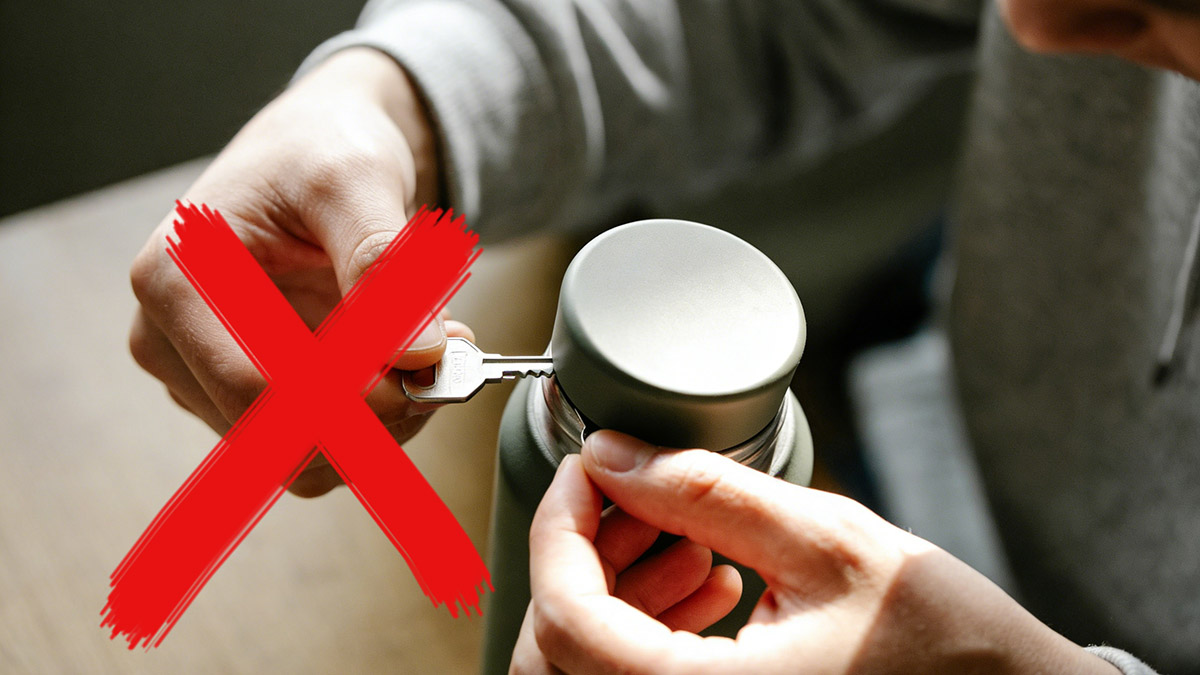
Prying with knives, keys, or rings applies force in the wrong direction, stressing components that are designed to rotate, not flex. Pliers and wrenches can frequently damage caps and threads, they leave scratches that make a perfect nesting place for bacteria and destroys the sealing.
Dental repairs are significantly more expensive than any bottle replacement, and the risk is never justified. So just as a friendly reminder, as glory as the history of our civilization may reach, as humans, we have evolved hands to use tools instead of teeth. So please do think twice before going full King-Kong.
In short, if a method relies on force rather than control, it is unlikely to be the best solution.
Conclusion
Your bottle should support your day, not interrupt it. A stuck water bottle cap only causes you inconvenience, not a crisis. With a clear understanding of why caps become difficult to open and a methodical approach to resolving the issue, most situations can be handled quickly and safely.
When it does throw a tantrum and become difficult to deal with, a calm hand and a little tap will usually put them down.
Would you like to know more about the manufacturing process/material guide/usage tips related to water bottles? Welcome to browse KingStar’s blog articles. If you wish to purchase stainless steel or plastic water bottles, tumblers & mugs, or liquor flasks, you can also directly send an email to our team at sales@waterbottle.tech. We will contact you within 24 hours and provide you with an exclusive quote for your project.
Order Custom Water Bottles & Tumblers
Get competitive price and premium custom drinkware from KingStar, the leading wholesale water bottle manufacturer!