Liquid Volume Converter
Convert between liters, milliliters, gallons, quarts, pints, cups, and fluid ounces.
Have you ever been completely baffled trying to follow a beautiful American recipe, wondering exactly how many milliliters are in “1 Cup”? Or when mixing cocktails or beverages, do you stare at the oz markings on the recipe, but with a ml measuring cup at hand? Or when refueling during a cross-border trip, do you get lost in thought when looking at the unit of fuel capacity (gallons vs liters)?
Volume units touch every aspect of our lives: If you accidentally miscalculate how many oz are in 100 ml, you might be forced to discard your carefully subpackaged cosmetics at the airport security check; when calculating the amount of water to drink based on exercise volume at the gym according to a ml-based calculation, your bottle marked with oz might disrupt your hydration plan, etc. In today’s globalized world, mastering the conversion between Metric, Imperial, and US Customary systems is a crucial skill that saves you time and trouble.
But with current technology, you don’t need to memorize so many conversion formulas just to know how to tap the right coefficient on a calculator. As a drinkware & cooler manufacturer with years of experience, we introduce you to our Volume Conversion Tool on this page. Just input the number, select the volume you’re trying to convert, and there you are – getting conversion results real-time. We recommend that you bookmark this page so that you can open it up directly up in your browser’s bookmark bar whenever you need to perform a conversion.
What Are the Differences Between Metric, Imperial, and US Customary Volume Units?
Before starting the conversion, we must understand why there are so many different units. Currently, there are three main measurement systems in existence worldwide:
1. The Metric System (SI)
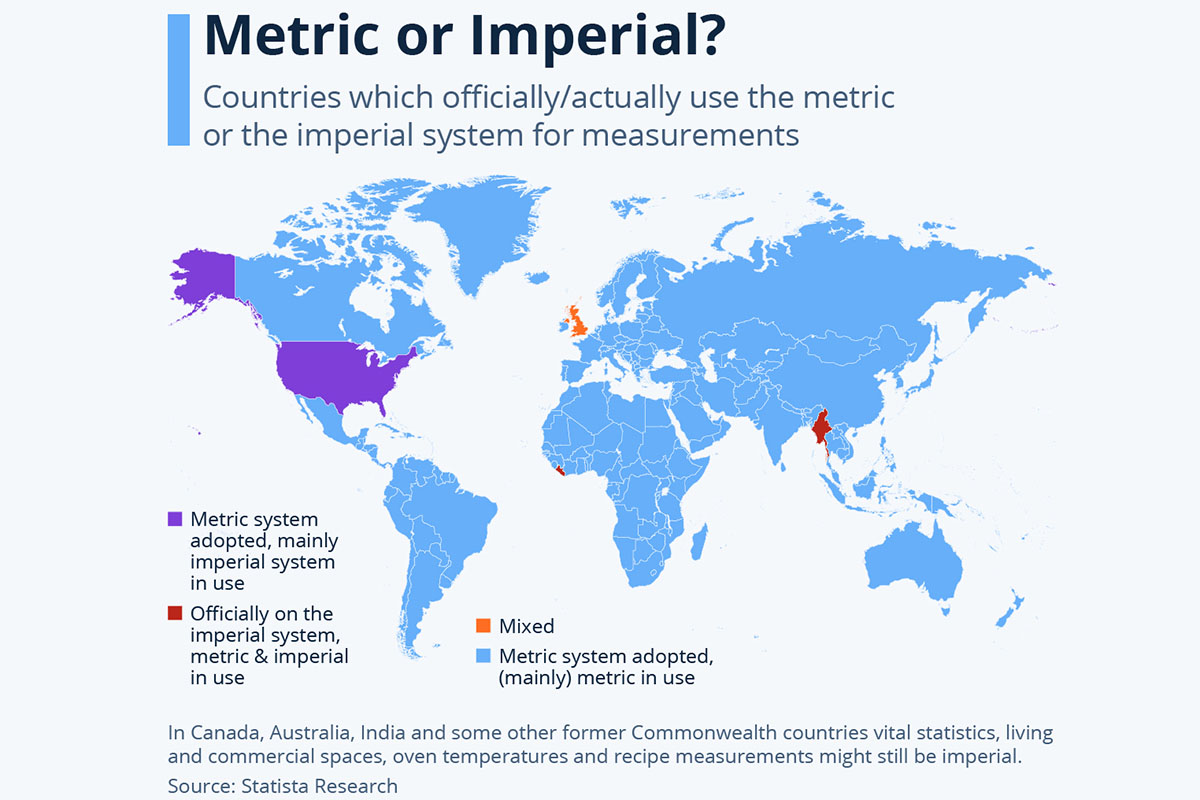
The Metric System is the standard used by the vast majority of countries and scientific communities around the world. The most commonly used capacity units are milliliters (ml) and liters (L). It is based on the “decimal system” and the conversion is very simple:
1 L = 1,000 ml
Its advantage is that there is no regional bias, unlike ounces, quarts, and gallons, which can be confusing. In any country, 1 liter is always equal to 1,000 milliliters.
2. US Customary System
The United States (together with some European countries) is currently one of the few major countries that still adheres to the non-Metric system. The volume units of the US are widely used in the food, retail, and daily life of the United States.
Core units: Fluid Ounce (fl oz), Cup, Pint, Quart, Gallon.
3. The Imperial System
The Imperial System originated in the United Kingdom. Although the UK has largely completed the “Metrication”, in pubs (beer pints), transportation, and some old industries, people still habitually use Imperial units.
Core units: The same as US, also Fluid Ounce (fl oz), Cup, Pint, Quart, Gallon, but the values are different from those of the US system.
Because the scope and number of users of the Imperial system are currently smaller, most of the fl oz, Cup, Pint, Quart, Gallon mentioned in market products and online recipes refer to the US system; but strictly speaking, if we want to refer to the US customary volume, “US” should be placed in front of these words, like US fl oz, US Gallon, etc.
Avoid these pitfalls!
Pitfall 1: US Gallon vs. UK Gallon
This is the most common mistake made by many self-driving tourists.
- 1 US Gallon ≈3.785 Liters
- 1 UK Gallon ≈4.546 Liters
The UK gallon is 20% larger than the US gallon! Note that if you calculate fuel consumption in the UK based on US standards, you might run out of fuel halfway.
Pitfall 2: Fluid Ounce vs. Weight Ounce
- Fluid Ounce (fl oz): Measures volume (how much space it occupies).
- Weight Ounce (oz): Measures weight (how heavy it is).
Only when the thing being measured is “water” is 1 fl oz of water approximately equal to 1 oz of weight (because by definition, 1 US fluid ounce (fl oz) of water weighs 1 ounce (oz)); if measuring honey or engine oil, due to different densities, these two are never equal: since oil is lighter than water, so 1 fl oz of oil < 1 oz, and honey is heavier than water, thus 1 fl oz of honey > 1 oz, and so on.
Common Volume Quick Conversion Table: Oz, Gallons, Liters, and More
For ease of reference, we have divided the conversions into three levels: small volume, medium volume, and large volume.
1. Conversion Between Small and Medium Volumes
These units are commonly found in cosmetics, beverages, and laboratory equipment.
Table 1: Small Volume Conversion (Ounce, Milliliter, Pint, Quart)
| From (Unit) | To (Unit) | Conversion Factor (Forward) | Conversion Factor (Reverse) |
| US fl oz | ml | 1 fl oz = 29.57 ml | 1 ml = 0.0338 fl oz |
| fl oz (UK) | ml | 1 fl oz = 28.41 ml | 1 ml = 0.0352 fl oz |
| US Pint | fl oz (US) | 1 pt = 16 fl oz | 1 fl oz = 0.0625 pt |
| Pint (UK) | fl oz (UK) | 1 pt = 20 fl oz | 1 fl oz = 0.05 pt |
| US Quart | Fluid Ounce (US) | 1 qt = 32 fl oz | 1 fl oz = 0.03125 qt |
| US Pint | ml | 1 pt = 473.17 ml | 1 ml = 0.00211 pt |
| US Quart | ml | 1 qt = 946.35 ml | 1 ml = 0.00105 qt |
2. Conversion Between Medium Volume and Large Volume
These units are commonly used in household water usage, large-sized beverages, and fuel.
Table 2: Medium to Large Volume Conversion (Quart, Gallon, Liter)
| From (Unit) | To (Unit) | Conversion Factor (Forward) | Conversion Factor (Reverse) |
| US Gallon | L | 1 gal = 3.785 L | 1 L = 0.264 gal |
| Gallon (UK) | L | 1 gal = 4.546 L | 1 L = 0.219 gal |
| US Quart | US Gallon | 4 qt = 1 gal | 1 gal = 4 qt |
| US Quart | L | 1 qt = 0.946 L | 1 L = 1.057 qt |
| US Pint | L | 1 pt = 0.473 L | 1 L = 2.113 pt |
| US Pint | US Gallon | 8 pt = 1 gal | 1 gal = 8 pt |
3. Conversion Between Small and Large Volumes
When dealing with highly concentrated chemical reagents or precise additives (or simply approximating the volume using the units you are familiar with), you may need to perform such conversions directly.
Table 3: Fluid Ounces to Gallons/Liters Cross-Conversion
| Unit A | Unit B | Formula |
| US fl oz | US Gallon | 1 Gallon = 128 fl oz |
| fl oz (UK) | Gallon (UK) | 1 Gallon = 160 fl oz |
| ml | US Gallon | 1 Gallon = 3785.41 ml |
| US fl oz | L | 1 Liter = 33.814 fl oz |
Kitchen Measurement Conversion
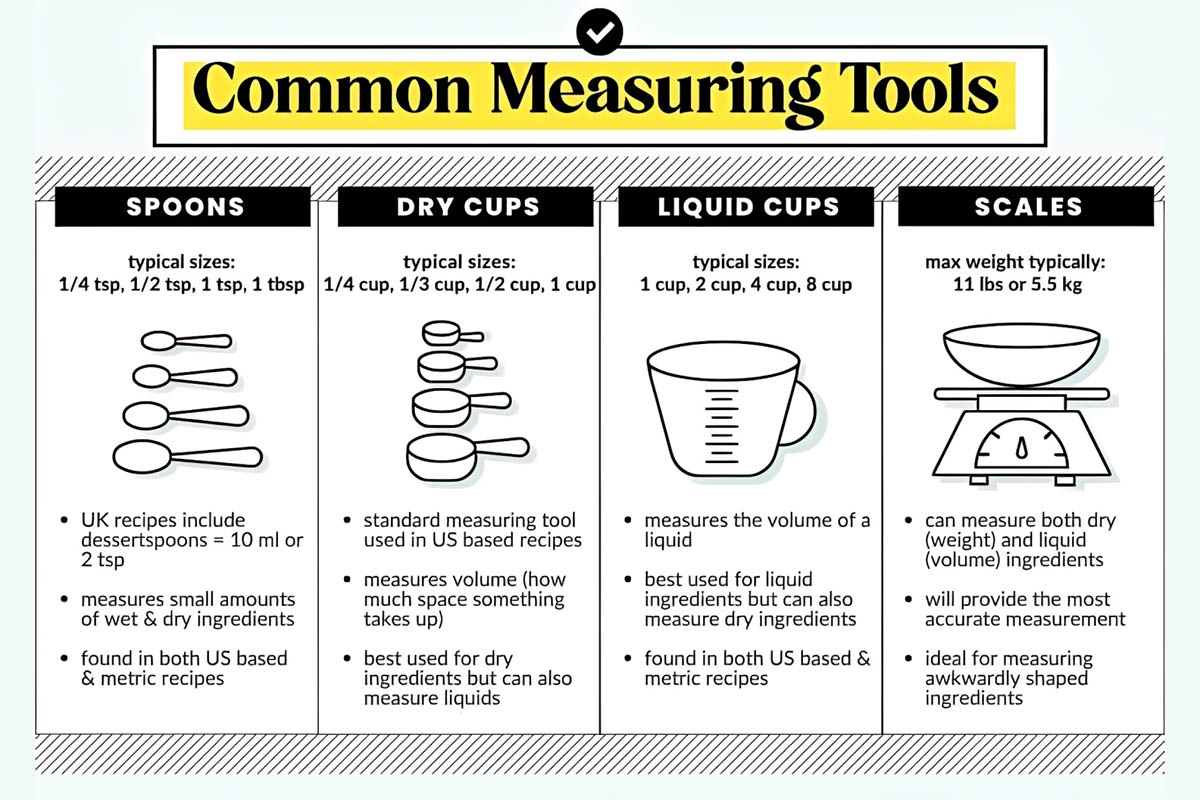
When cooking, the precise amount of ingredients and seasonings determines the success or failure of a dish (especially for novice cooks). There are many commonly used units in recipes, besides ounces and milliliters, most frequently used units also include cups, teaspoons and tablespoons.
Table 4: Kitchen Measurements (Cup, Tablespoon, Teaspoon)
| Unit | Abbreviation | To Milliliter (ml) | To Fluid Ounce (US) |
| US Cup | cup | 236.59 ml | 8 fl oz |
| Metric Cup | cup | 250 ml | 8.45 fl oz |
| Tablespoon | tbsp | 14.78 ml | 0.5 fl oz |
| Teaspoon | tsp | 4.93 ml | 0.166 fl oz |
Practical Tips:
- Cup to ml: If you are using American recipes, typically 1 Cup = 240 ml (for ease of calculation). However, if you are in Australia or Europe, 1 Cup usually refers to 250 ml.
- Tbsp to oz: Remember that 2 Tablespoons = 1 Fluid Ounce, which is very useful when seasoning and making sauces.
Gym / Outdoor Sports Hydration Conversion
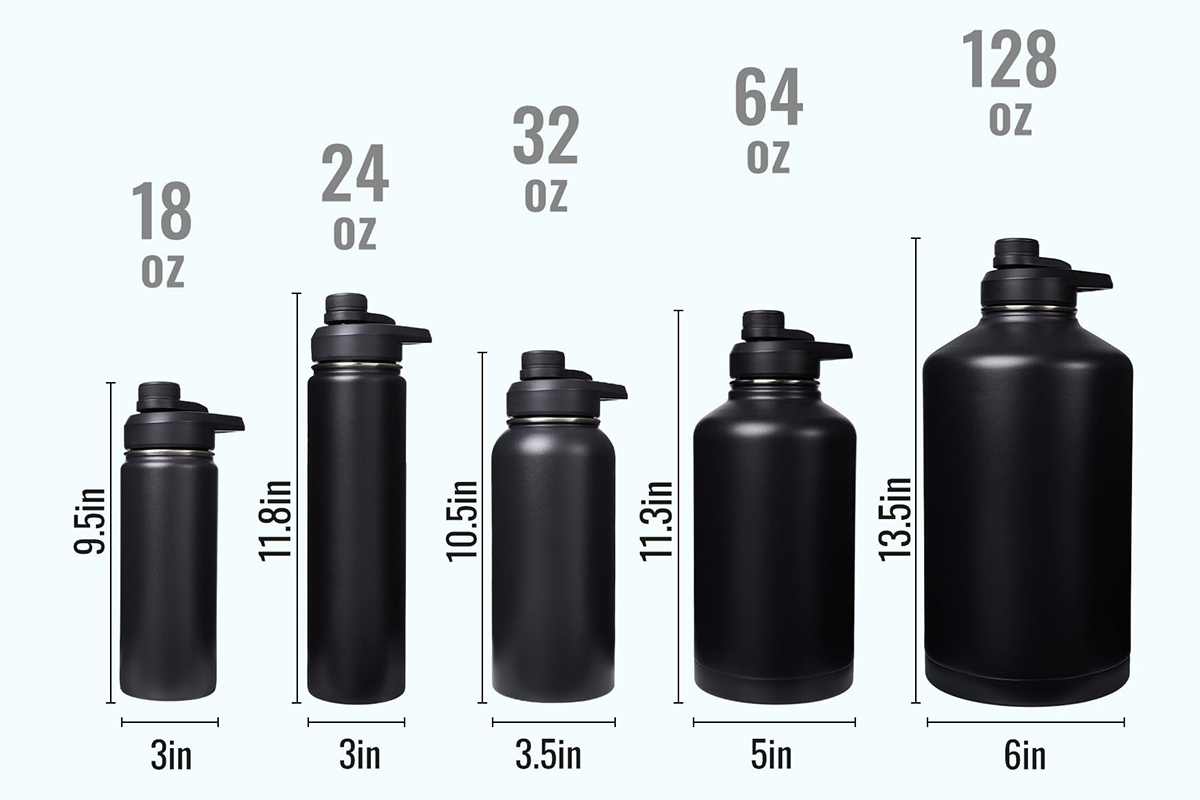
As a fan of sports shaker bottles and high-performance insulated thermos, you may often see 24oz, 32oz, 64oz, or even 128oz-sized water bottles on online malls or walmart. But how big of a bottle they really are? And what size should you choose for different activities?
Table 5: Common Sports Bottle Capacities
| Bottle Size (oz) | Capacity in ml | Capacity in Liters | Best Use Case |
| 24 oz | 710 ml | 0.71 L | Short-Circuit Cycling / Daily commute |
| 32 oz | 946 ml | 0.95 L | Standard gym workout |
| 40 oz | 1,183 ml | 1.18 L | Long hiking trips |
| 64 oz (Half Gallon) | 1,893 ml | 1.89 L | All-day hydration / Bodybuilding |
| 128 oz (One Gallon) | 3,785 ml | 3.79 L | Intense training / Long-Duration Camping |
What’s the appropriate protein powder and water ratio when using a shaker cup?
The spoon capacity included in regular protein powder is usually 5g (a flat spoon), approximately 5-6 scoops of protein powder (25-30g) are recommended with 10 fl oz of water (about 295ml). Of course, you can adjust the ratio according to your preference. If you prefer a thinner taste, add more water; if you prefer a thicker taste, add less water.
Coffee Brewing Units Conversion
For coffee enthusiasts, unit conversion is not just a matter of volume; it is also about the precise control of the Brew Ratio.
1. The Commonly Referred Weights and Volumes for Brewing Coffee
grams (g) vs. milliliters (ml)
In coffee making, we usually use an electronic scale to weigh in “grams” because it is more precise than observing the liquid level.
Golden rule: 1g of water is approximately equal to 1ml of water.
Note the difference: Although the water ratio is 1:1, the volume and weight of the Brewed Coffee, due to the presence of oils and dissolved substances, will have a slight deviation. Usually, the final product is still measured in grams as the standard.
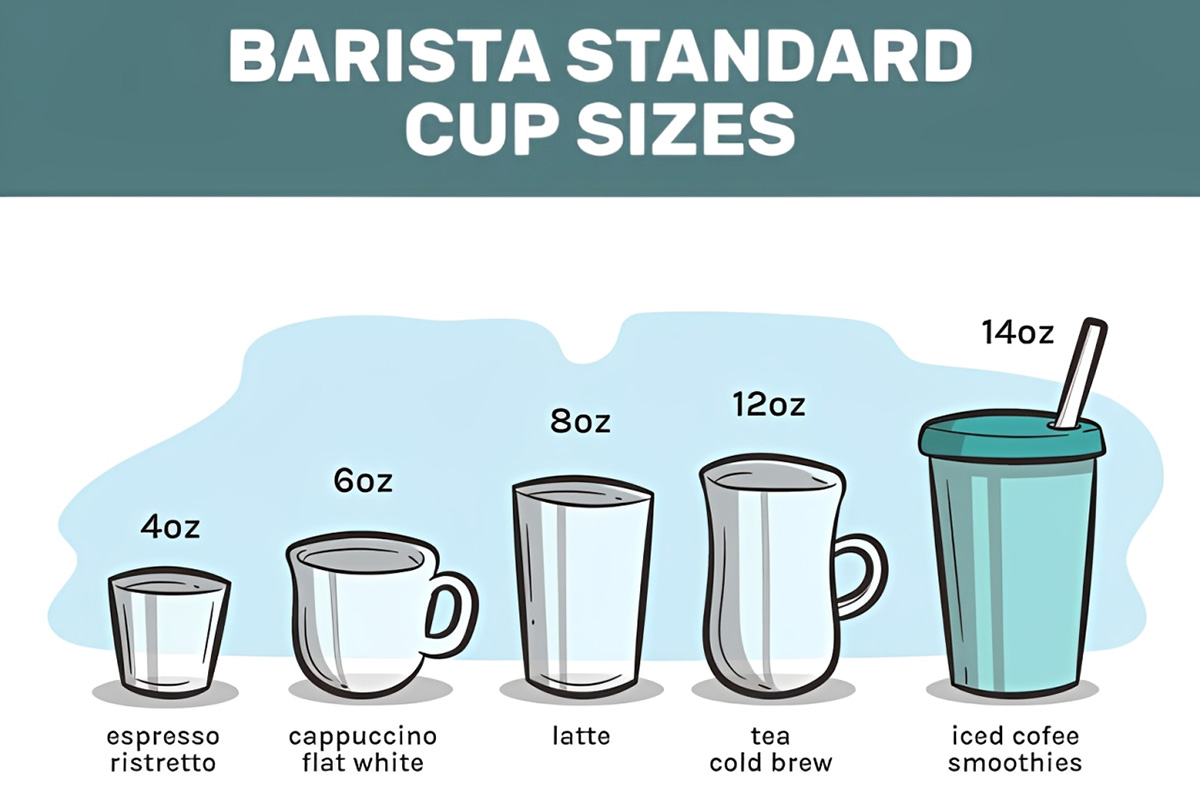
2. How Large is a “Cup of Coffee”? (Standard Coffee Cup Size)
In recipes, “cup” is a standard unit, but on coffee machine labels, it is extremely misleading:
- American Standard Cup (US Cup): 236.59 ml (approximately 8 fl oz)
- Metric Cup: 250 ml
The marks typically indicated by most drip coffee makers usually stand for only 5 oz or 150 ml, which is much less than the standard measuring cup.
3. Common Units for Italian Espresso
- Single Shot (standard size): Approximately 1.5 US fluid ounces (about 44 ml).
- Double Shot: Usually 2 – 2.5 ounces.
Coffee powder weight: It is usually measured in grams (g). The typical amount of powder for a double filter basket is 18g – 20g.
4. Quick Reference Chart for Common Coffee Brewing Container Capacities
| Container | Common Unit Marking | ml | US fl oz |
| Standard Mug | 12 oz | 355 ml | 12 fl oz |
| Large Latte | 16 oz | 473 ml | 16 fl oz |
| Gooseneck Kettle | 1.0 L | 1,000 ml | 33.8 fl oz |
| AeroPress | 10 oz | 295 ml | 10 fl oz |
Gas Station Fuel Conversions
In cross-border self-driving trips, the conversion between fuel prices and fuel tank capacities is of great significance.
- In Europe/China: The prices are usually marked as “yuan per L” or “euro per L”.
- In the United States: The price is expressed as “dollars per US gallon”.
- Note that the imperial gallon is approximately 20% larger than the US gallon. If you are from the UK and are on a self-driving trip in the US, you should use the US gallon for calculation; otherwise, it will result in insufficient fuel.
Quick Conversion Tips:
- To roughly convert USD/Gal to liters, divide by 3.785.
- The fuel tank of a mid-sized car is usually 13-16 US Gallons, which is approximately 50-60 Liters.
Conversion Used in Travel & Airport Security Limits
1. 100ml Liquid Limitation
According to the standards of the International Civil Aviation Organization (ICAO), the total volume of liquid items carried on board must not exceed 100ml per piece.
- 100ml ≈4 US fluid ounces.
- If you are subpackaging cosmetics at home, be sure to choose bottles labeled 3.4 oz or less.
2. Hotel Bathing Products
The shampoo and body gel provided by hotels usually come in two sizes:
- Small size: 30ml – 50ml (1.0 – 1.7 oz)
- Large / Luxury size: 75ml – 100ml (2.5 – 3.4 oz)
Common Container Sizes and Capacities Around the World
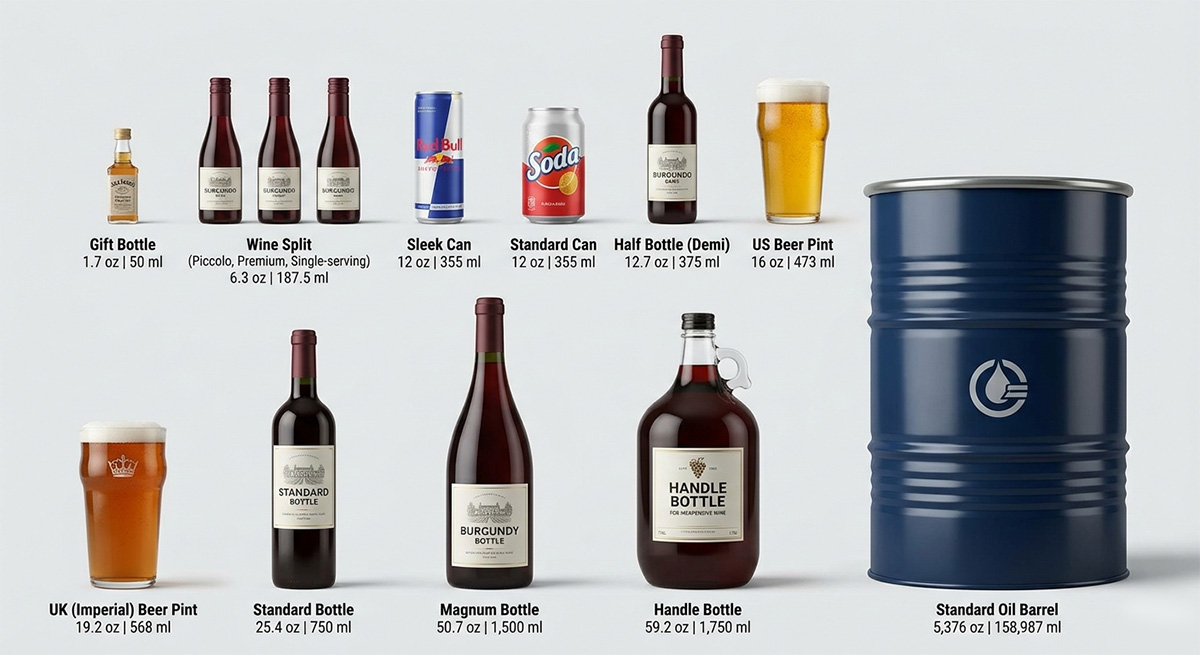
By comparing common containers seen in daily life, you can have a more intuitive understanding of the abstract volume units you’re not familiar with.
Cans
- Standard
- Sleek
Bottles
- Quarter bottle
- Half bottle
- Standard bottle
- Magnum
- Handle
Wine splits
- Premium
- Single-serving
- Gift bottles
Oil barrel
- Standard
Beer pint
- UK
- US
Table 6: Common Container Capacity Comparison
| Container | US fl oz | Milliliters (ml) |
| Standard can | 12 oz | 355 ml |
| Sleek can | 12 oz | 355 ml |
| Quarter bottle (Piccolo) | 6.3 oz | 187.5 ml |
| Half bottle (Demi) | 12.7 oz | 375 ml |
| Standard bottle | 25.4 oz | 750 ml |
| Magnum bottle | 50.7 oz | 1,500 ml |
| Handle bottle | 59.2 oz | 1,750 ml |
| Premium wine split | 6.3 oz | 187.5 ml |
| Single-serving wine split | 6.3 oz | 187.5 ml |
| Gift Bottle wine split (Miniature) | 1.7 oz | 50 ml |
| Standard oil barrel | 5,376 oz | 158,987 ml |
| UK (Imperial) beer pint | 19.2 oz | 568 ml |
| US beer pint | 16 oz | 473 ml |
Volume Conversion Memorizing Hacks
Remembering the following commonly used “golden rules” can help you quickly estimate without a calculator nearby:
- 1 Liter = 33.8 oz (approximately 34 ounces, which is about 1 medium-sized sports water bottle plus a little more).
- 750ml Wine = 25 oz (a bottle of wine can be poured into approximately 5 5oz glasses).
- 2 Tablespoons = 1 oz (2 tablespoons equal 1 ounce).
- 1 Shot (Standard) = 1.5 oz (the standard volume of a shot of spirits, approximately 44ml).
- 1 Gallon = 3.8 Liters (close to 4 liters, but remember to subtract 0.2 when calculating fuel consumption).
- 12 oz = 355 ml (the capacity of a standard can of cola).
- 16 oz to ml / 32 oz to ml: 473 / 946ml (common sizes of water bottles)
- 750ml to oz: 750 mL = 25.36 oz (alcohol bottles or standard water bottles)
- 500ml to oz: 500 mL = 16.91 oz (the most commonly used medium-sized bottle capacity worldwide)
Frequently Asked Questions about Volume Conversion
How many ounces are in a gallon?
- In the US: 128 fluid ounces.
- In the UK: 160 fluid ounces.
Which is larger, UK fl ounce or the US fl ounce?
The UK liquid ounce is slightly smaller than the US liquid ounce.
- 10 UK fl oz = 13 mL
- 10 US fl oz = 74 mL
Which is larger, UK/Imperial gallon or US gallon? Why?
This stems from the historical differences in definitions. The United States retained the “wine gallon” from the British colonial period (approximately 231 cubic inches), while the United Kingdom redefined the imperial gallon in 1824, setting it as the volume of 10 pounds of water under specific conditions.
You may have noticed that the UK fl oz is smaller than the US fl oz, but the imperial gallon contains more ounces, so the imperial gallon is larger in volume.
- 1 UK gallon = 160 UK fl oz
- 1 US gallon = 128 US fl oz
Is a fluid ounce the same as an ounce?
No. Fluid ounce (fl oz) is for volume (space), and ounce (oz) is for weight (mass). Only for pure water at room temperature are they numerically close. For lead, 1 fl oz weighs much more than 1 oz; for feathers, it’s the opposite.
How many liters/gallons does the large jug of water contain?
The most common specs of large jug of water on market is 5 gallon. To convert it to liters, multiply by 3.785 and you will get the answer:
5 Gallon×3.785=18.927 L≈19L
How to easily convert ml to oz?
A simple quick calculation method is: multiply ml by 0.034, or divide ml by 30. Although it’s not completely accurate, it’s already quite usable when purchasing beverages or skin care products in daily life.
Conclusion
Converting volume units might seem tedious at first glance, but it holds deep historical context and significant practical value.
Find the conversion formulas too hard to remember? No problem! Just add this page to your browser bookmarks. Next time you need to convert units, open this page from your bookmarks and use the Volume Conversion Tool at the top – simply input your numbers to get the most authoritative real-time conversion results.
As an experienced drinkware and outdoor gear supplier producing stainless steel insulated tumblers & mugs as well as outdoor cooler boxes, jug coolers, and soft-sided cooler bags, we’ve compiled these commonly used volume conversion tips to share with you. If you have any needs for purchasing or customizing water bottles or coolers, feel free to contact our professional team at sales@waterbottle.tech.